MedicalResearch.com Interview with:
[caption id="attachment_71837" align="alignleft" width="150"]

Dr. Holly Kramer[/caption]
Dr. Holly Kramer MD, MPH
Professor of Public Health Sciences and Medicine
Division of Nephrology and Hypertension
Loyola University Chicago
MedicalResearch.com: What is the background for this survey? How is UACR measured? Would you explain the significance of albumin in the urine and what creatinine represents?
Response: Approximately
36 million people live with type 2 diabetes (T2D) in the U.S. today, with cardiovascular disease (CVD) being the number one cause of death for this patient population. About
1 in 3 adults with T2D has UACR
>30 mg/g with prevalence approaching
40% in older patients.
Compared to patients with T2D alone, those with elevated UACR face:
-
- 5-times higher risk of hospitalization for heart failure
- 4-times higher risk of CV mortality
- 3-times higher risk of myocardial infarction
Interestingly, once thought of as a traditional renal biomarker, urine albumin-to-creatinine ratio (UACR)
>30 is also a critical biomarker and urgent signal of cardiovascular (CV) risk.
When checking UACR, we look at two things: the amount of albumin leaking into the urine and the creatinine level. Albumin shouldn’t be getting through the kidneys’ filters at all, so when we see a UACR
>30 mg/g, it’s a sign of systemic vascular endothelial dysfunction. So, if albumin is leaking through the blood vessels inside the kidneys, there’s also damage in the vessels across other organs, like the heart.
UACR is such an important early indicator of CV risk in T2D because even small increases follow a clear ‘rule of three’s’. Healthy kidneys secrete 3 mg/g of albumin to creatinine per day, but when it rises to 30 mg/g, a tenfold increase that signals vascular dysfunction and increasing CV risk. At 300 mg/g, another tenfold increase, the damage is more advanced, and CV risk accelerates.
Patients with eGFR >
60 BUT UACR >30 mg/g can have up to 3.6 times increased risk of CV mortality.
As a nephrologist, I’ve been vocal about the potential for this common urine test that we regularly perform, a UACR test, in helping detect CV risk, not just kidney damage, in more patients.

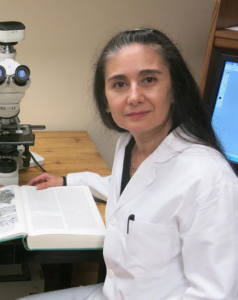




 Dr. Shah[/caption]
Silvi Shah, MD,MS,FASN,FACP
Associate Professor
Internal Medicine | College of Medicine
University of Cincinnati College of Medicine
MedicalResearch.com: What is the background for this study?
Response: AKI (Acute Kidney Injury) is a major contributor to end-stage kidney disease (ESKD).
About a third of patients with ESKD recover kidney function due to AKI. The study looked at the health outcomes of 22,922 patients from the U.S. Renal Data System from 2005 to 2014 to construct a clinical scoring system to predict kidney recovery within 90 days and 12 months after the start of dialysis for kidney failure patients due to acute kidney injury (AKI)
Dr. Shah[/caption]
Silvi Shah, MD,MS,FASN,FACP
Associate Professor
Internal Medicine | College of Medicine
University of Cincinnati College of Medicine
MedicalResearch.com: What is the background for this study?
Response: AKI (Acute Kidney Injury) is a major contributor to end-stage kidney disease (ESKD).
About a third of patients with ESKD recover kidney function due to AKI. The study looked at the health outcomes of 22,922 patients from the U.S. Renal Data System from 2005 to 2014 to construct a clinical scoring system to predict kidney recovery within 90 days and 12 months after the start of dialysis for kidney failure patients due to acute kidney injury (AKI)




 Dr. Lu Qi[/caption]
Lu Qi, MD, PhD, FAHA
Interim Chair, Department of Epidemiolog
HCA Regents Distinguished Chair and Professor
Tulane University School of Public Health and Tropical Medicine
Director, Tulane University Obesity Research Center
Director, Tulane Personalized Health Institute
New Orleans, LA 70112
MedicalResearch.com: What is the background for this study?
Response: Adding salt to foods is a behavior reflecting long-term preference to salty diets. High sodium intake is a major risk factor for chronic kidney disease.
In our previous studies, we have found that adding salt to foods at the table is related to various disorders including cardiovascular diseases, diabetes, and mortality.
Dr. Lu Qi[/caption]
Lu Qi, MD, PhD, FAHA
Interim Chair, Department of Epidemiolog
HCA Regents Distinguished Chair and Professor
Tulane University School of Public Health and Tropical Medicine
Director, Tulane University Obesity Research Center
Director, Tulane Personalized Health Institute
New Orleans, LA 70112
MedicalResearch.com: What is the background for this study?
Response: Adding salt to foods is a behavior reflecting long-term preference to salty diets. High sodium intake is a major risk factor for chronic kidney disease.
In our previous studies, we have found that adding salt to foods at the table is related to various disorders including cardiovascular diseases, diabetes, and mortality. 

 Prof. Hiddo Lambers Heerspink, PhD PHARMD
Department of Clinical Pharmacy and Pharmacology
University Medical Center Groningen
Groningen
Prof. Hiddo Lambers Heerspink, PhD PHARMD
Department of Clinical Pharmacy and Pharmacology
University Medical Center Groningen
Groningen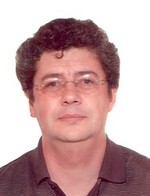



 Dr. Wong[/caption]
Susan P. Y. Wong, MD MS
Assistant Professor
Division of Nephrology
University of Washington
VA Puget Sound Health Care System
MedicalResearch.com: What is the background for this study? What are the main findings?
Response: Very little is known about the care and outcomes of patients who reach the end stages of kidney disease and do not pursue dialysis. We conducted a systematic review of longitudinal studies on patients with advanced kidney disease who forgo dialysis to determine their long-term outcomes.
We found that many patients survived several years and experienced sustained quality of life until late in the illness course. However, use of acute care services was common and there was a high degree of variability in access to supportive care services near the end of life.
Dr. Wong[/caption]
Susan P. Y. Wong, MD MS
Assistant Professor
Division of Nephrology
University of Washington
VA Puget Sound Health Care System
MedicalResearch.com: What is the background for this study? What are the main findings?
Response: Very little is known about the care and outcomes of patients who reach the end stages of kidney disease and do not pursue dialysis. We conducted a systematic review of longitudinal studies on patients with advanced kidney disease who forgo dialysis to determine their long-term outcomes.
We found that many patients survived several years and experienced sustained quality of life until late in the illness course. However, use of acute care services was common and there was a high degree of variability in access to supportive care services near the end of life.