

18 Sep Hebrew University Study: How E.coli Rewires Its Attachment Strategy to Overcome Resistance
MedicalResearch.com Interview with:
Noam Yedidi PhD Student
Prof. Ilan Rosenshine, PhD Etta Rosensohn Chair in Bacteriology
Institute for Medical Research Israel-Canada (IMRIC) Hebrew University of Jerusalem
Enteropathogenic Escherichia coli (EPEC) is a leading cause of diarrheal illness in children worldwide, capable of impairing physical and cognitive development and progressing to life-threatening disease. New research from the Hebrew University of Jerusalem now reveals how so-called atypical EPEC strains — which lack the surface structures used by classical EPEC to grip intestinal cells — have evolved a compensatory attachment strategy. The findings, published in Gut Microbes, combine experimental evolution with clinical bacterial genomics to identify the same evolutionary solution independently in both lab and patient-derived bacteria. According to the NIAID (National Institute of Allergy and Infectious Diseases), pathogenic E. coli strains — including those causing intestinal and urinary tract infections — remain a major global public health burden, and understanding their attachment mechanisms is central to developing new anti-adhesion therapies that could help address rising antibiotic resistance.
[caption id="attachment_76125" align="aligncenter" width="500"]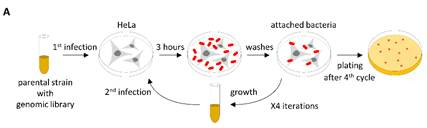 Description: How to direct evolution in the lab: e. coli bacteria lacking their major attachment capabilities were incubated with human cells in a petri dish. After infection, the plate was washed repeatedly to remove the floating bacteria, and the few bacteria that were able to attach to the human cells remained in the plate. These few bacteria were collected and grown, then used for another cycle of infection. Four successive cycles of selection generated bacteria with highly efficient attachment ability. Credit: Noam Yedidi, Ilan Rosenshine's lab.[/caption]



 L. Levi[/caption]
Liran Levi, PhD student
Faculty of Medicine at Hebrew University
MedicalResearch.com: What is the background for this study?
Response: Motivated behavior is driven by a group of brain regions called collectively the reward system. This neural system is at the heart of every decision we make about our actions - it integrates information about the world and decides whether to perform a behavior or not based on the predicted reward/benefit. The key molecule in this process is dopamine - whenever we perform a behavior that provides a reward dopamine is released in the reward system and reinforces this behavior. Drugs of abuse exploit this system - they cause abnormally high levels of dopamine, and thus force the reward system to seek drugs constantly, even after prolonged withdrawal. From a neurobiological perspective, that is how we view substance dependence - the reward system drives people to seek for the reward.
L. Levi[/caption]
Liran Levi, PhD student
Faculty of Medicine at Hebrew University
MedicalResearch.com: What is the background for this study?
Response: Motivated behavior is driven by a group of brain regions called collectively the reward system. This neural system is at the heart of every decision we make about our actions - it integrates information about the world and decides whether to perform a behavior or not based on the predicted reward/benefit. The key molecule in this process is dopamine - whenever we perform a behavior that provides a reward dopamine is released in the reward system and reinforces this behavior. Drugs of abuse exploit this system - they cause abnormally high levels of dopamine, and thus force the reward system to seek drugs constantly, even after prolonged withdrawal. From a neurobiological perspective, that is how we view substance dependence - the reward system drives people to seek for the reward.


 Shani Vaknine[/caption]
Shani Vaknine, Ph.D. candidate
Brain and Behavioral Sciences
The Hebrew University
MedicalResearch.com: What is the background for this study?
Response: We’ve long known that maternal stress during pregnancy can affect her baby’s development, but the molecular mechanisms behind this remained unclear. In our study, we explored how psychosocial stress experienced by the mother in late pregnancy influences tiny molecular fragments in the newborn’s blood. These fragments, called transfer RNA fragments or tRFs, were considered for many years to be disposable, but have recently been shown to have important biological functions.
Shani Vaknine[/caption]
Shani Vaknine, Ph.D. candidate
Brain and Behavioral Sciences
The Hebrew University
MedicalResearch.com: What is the background for this study?
Response: We’ve long known that maternal stress during pregnancy can affect her baby’s development, but the molecular mechanisms behind this remained unclear. In our study, we explored how psychosocial stress experienced by the mother in late pregnancy influences tiny molecular fragments in the newborn’s blood. These fragments, called transfer RNA fragments or tRFs, were considered for many years to be disposable, but have recently been shown to have important biological functions.




 Prof. Monsonego Ornan[/caption]
Efrat Monsonego Ornan, Ph.D
Head of School of Nutritional Sciences
Institute of Biochemistry and Nutrition
The Robert H. Smith Faculty of Agriculture,
Food and Environment
The Hebrew University of Jerusalem
MedicalResearch.com: What is the background for this study?
Response: Food supplies in recent decades have been dominated by heavily processed, ready-to-eat products. Essentially, 75% of all world food sales are of processed foods. Over the past 30 years, children’s ultra-processed food intake has increased markedly, with 50% of the children in the US consuming these foods. Only in the US does UPF comprise 58% of energy intake, of which 90% is derived from added sugars. This reflects children’s excessive consumption of food and drink that are high in fat and refined sugars but do not provide appropriate levels of the proteins, vitamins and minerals required for growth.
The negative health outcomes of excessive consumption of Ultra-processed food are well known, include obesity, metabolic syndrome and diabetes, and considered as the current world epidemic; the fact that children, during their postnatal development period (birth to adolescent), are the target of the Ultra-processed food industry is very disturbing in terms of public health. Bone development and growth are the characteristic phenomena of the childhood period. Yet, in spite of the huge importance of nutrition to bone development, the impact of Ultra-processed food consumption on skeleton development during childhood has never been studied directly, and this was the purpose of our study.
To this end, we used young rats which are an excellent pre-clinical model for growth and fed them with either the recommended diet for their age or a diet comprised of a typical Ultra-processed meal (a roll, hamburger, tomatoes, lettuce, ketchup and French fries) and a caloric soft drink.
Prof. Monsonego Ornan[/caption]
Efrat Monsonego Ornan, Ph.D
Head of School of Nutritional Sciences
Institute of Biochemistry and Nutrition
The Robert H. Smith Faculty of Agriculture,
Food and Environment
The Hebrew University of Jerusalem
MedicalResearch.com: What is the background for this study?
Response: Food supplies in recent decades have been dominated by heavily processed, ready-to-eat products. Essentially, 75% of all world food sales are of processed foods. Over the past 30 years, children’s ultra-processed food intake has increased markedly, with 50% of the children in the US consuming these foods. Only in the US does UPF comprise 58% of energy intake, of which 90% is derived from added sugars. This reflects children’s excessive consumption of food and drink that are high in fat and refined sugars but do not provide appropriate levels of the proteins, vitamins and minerals required for growth.
The negative health outcomes of excessive consumption of Ultra-processed food are well known, include obesity, metabolic syndrome and diabetes, and considered as the current world epidemic; the fact that children, during their postnatal development period (birth to adolescent), are the target of the Ultra-processed food industry is very disturbing in terms of public health. Bone development and growth are the characteristic phenomena of the childhood period. Yet, in spite of the huge importance of nutrition to bone development, the impact of Ultra-processed food consumption on skeleton development during childhood has never been studied directly, and this was the purpose of our study.
To this end, we used young rats which are an excellent pre-clinical model for growth and fed them with either the recommended diet for their age or a diet comprised of a typical Ultra-processed meal (a roll, hamburger, tomatoes, lettuce, ketchup and French fries) and a caloric soft drink.