MedicalResearch.com Interview with:
[caption id="attachment_56209" align="alignleft" width="200"]

Dr. McHill[/caption]
Andrew W. McHill, PhD
Research Assistant Professor
Oregon Institute of Occupational Health Sciences
Oregon Health & Science University, Portland OR
Portland, OR 97239
MedicalResearch.com: What is the background for this study?
Response: It has long been known that there is a home court advantage in sports, whether it be due to the home fans cheering, playing within familiar settings, or travel of the opposing team. However, the contribution of travel to home-court advantage could never be fully teased apart due to all the confounds of the other aspects of playing at home.
In March, the National Basketball Association had to pause their season due to COVID-19 concerns, only to start again several months later with the top 22 teams playing in a “bubble” environment where no teams were required to travel. This created a ‘natural experiment’ wherein we could test the impact of travel on winning and performance before the COVID-19 shutdown with games played in the bubble environment with no travel.


 Dr. Piantino[/caption]
Juan Piantino, M.D., MCR
Assistant Professor of Pediatrics
Division of Neurology, School of Medicine
Director, Inpatient Child Neurology
Oregon Health Sciences University
MedicalResearch.com: What is the background for this study?
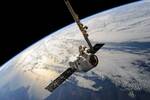
Response: Astronauts are exposed to several stressors during spaceflight, including radiation, lack of gravity, and sleep deprivation. The effects of those stressors on the brain remain unknown. Is it safe to travel to space? For how long can humans survive in space? What are the effects of spending months under zero gravity? With more extended missions, and an increased number of civilians traveling to space, there is increased interest in understanding what happens to our brains when we leave earth.
Dr. Piantino[/caption]
Juan Piantino, M.D., MCR
Assistant Professor of Pediatrics
Division of Neurology, School of Medicine
Director, Inpatient Child Neurology
Oregon Health Sciences University
MedicalResearch.com: What is the background for this study?
Response: Astronauts are exposed to several stressors during spaceflight, including radiation, lack of gravity, and sleep deprivation. The effects of those stressors on the brain remain unknown. Is it safe to travel to space? For how long can humans survive in space? What are the effects of spending months under zero gravity? With more extended missions, and an increased number of civilians traveling to space, there is increased interest in understanding what happens to our brains when we leave earth.