30 Apr Fecal Microbiota Transplant For Multi-Drug-Resistant Organisms: Improved clinical Outcomes Beyond Intestinal Decolonization
Posted at 16:23h
in Author Interviews, C. difficile, Gastrointestinal Disease, Imperial College, Infections, Transplantation
MedicalResearch.com Interview with:
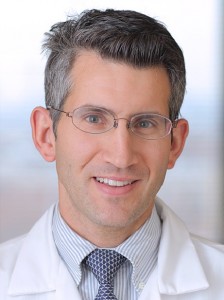
[caption id="attachment_54022" align="alignleft" width="149"] Prof. Marchesi[/caption]
Prof. Julian Marchesi PhD
Professor of Digestive Health
Faculty of Medicine, Department of Metabolism, Digestion and Reproduction
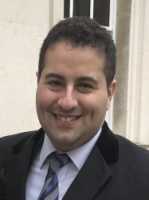
[caption id="attachment_54021" align="alignleft" width="149"] Prof. Mullish[/caption]
Dr. Benjamin Mullish PhD
Faculty of Medicine, Department of Metabolism, Digestion and Reproduction
NIHR Clinical Lecturer
Imperial College London
MedicalResearch.com: What is the background for this study?
Response: Many patients are colonized with bacteria that are resistant to nearly all the antibiotics that we currently have. This antibiotic resistance is a huge public health problem, not least because it may lead to the scenario where a bacterial species moves from the gut and into the bloodstream, causes an infection, and cannot be treated. Such scenarios particularly occur in patients who are particularly prone to getting multiple and frequent courses of antibiotics; this may include patients with particular kidney conditions (who may be vulnerable to recurrent urinary tract infections (UTIs)), and patients with blood cancers (such as leukaemia, who have weak immune systems and are therefore prone to infections).
Furthermore, in both sets of patients, to help treat their disease, they may be offered transplants, either a new kidney or new bone marrow. When this transplant happens, the clinician needs to ‘switch off’ their immune system to allow the transplant to work. When the immune system is dialled down, it can no longer stop any invading bacteria, increasing the chance of antibiotic resistance bacteria causing infections, which frequently leads to patient death.
Prof. Marchesi[/caption]
Prof. Julian Marchesi PhD
Professor of Digestive Health
Faculty of Medicine, Department of Metabolism, Digestion and Reproduction
[caption id="attachment_54021" align="alignleft" width="149"] Prof. Mullish[/caption]
Dr. Benjamin Mullish PhD
Faculty of Medicine, Department of Metabolism, Digestion and Reproduction
NIHR Clinical Lecturer
Imperial College London
MedicalResearch.com: What is the background for this study?
Response: Many patients are colonized with bacteria that are resistant to nearly all the antibiotics that we currently have. This antibiotic resistance is a huge public health problem, not least because it may lead to the scenario where a bacterial species moves from the gut and into the bloodstream, causes an infection, and cannot be treated. Such scenarios particularly occur in patients who are particularly prone to getting multiple and frequent courses of antibiotics; this may include patients with particular kidney conditions (who may be vulnerable to recurrent urinary tract infections (UTIs)), and patients with blood cancers (such as leukaemia, who have weak immune systems and are therefore prone to infections).
Furthermore, in both sets of patients, to help treat their disease, they may be offered transplants, either a new kidney or new bone marrow. When this transplant happens, the clinician needs to ‘switch off’ their immune system to allow the transplant to work. When the immune system is dialled down, it can no longer stop any invading bacteria, increasing the chance of antibiotic resistance bacteria causing infections, which frequently leads to patient death.

 Dr. Marra[/caption]
Alexandre R. Marra, MD PhD
Iowa Infection Prevention Research Group
University of Iowa Carver College of Medicine
Division of Medical Practice, Hospital Israelita Albert Einstein
São Paulo, Brazil
MedicalResearch.com: What is the background for this study?
Response: This is a comprehensive systematic literature review evaluating the burden of C. difficile infections in the U.S healthcare system. The literature has diverse studies with variable outcomes. Thus, we only included incidence estimates derived from multicenter studies. In our meta-analysis to calculate incidence, data were pooled only with denominators using the same unit (patient-days) to avoid comparisons with different denominators. For length of stay (LOS), we only included studies that used advanced statistical methods (e.g., propensity score matching).
Dr. Marra[/caption]
Alexandre R. Marra, MD PhD
Iowa Infection Prevention Research Group
University of Iowa Carver College of Medicine
Division of Medical Practice, Hospital Israelita Albert Einstein
São Paulo, Brazil
MedicalResearch.com: What is the background for this study?
Response: This is a comprehensive systematic literature review evaluating the burden of C. difficile infections in the U.S healthcare system. The literature has diverse studies with variable outcomes. Thus, we only included incidence estimates derived from multicenter studies. In our meta-analysis to calculate incidence, data were pooled only with denominators using the same unit (patient-days) to avoid comparisons with different denominators. For length of stay (LOS), we only included studies that used advanced statistical methods (e.g., propensity score matching).

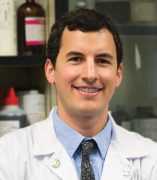


![MedicalResearch.com Interview with: David M. Aronoff, MD, FIDSA, FAAM Professor & Addison B. Scoville Jr. Chair in Medicine Director, Division of Infectious Diseases Department of Medicine Vanderbilt University Medical Center MedicalResearch.com: What is the background for this study? Response: Clostridium difficile infection (CDI) is a major cause of antibiotic-associated colitis and diarrhea and a leading cause of hospital-acquired infection. It is caused by the toxin-producing, anaerobic, spore-forming bacterium Clostridium difficile. Antibiotic use is a major risk factor for CDI but epidemiological studies suggest that other factors, some modifiable, some not, can also increase the risk for CDI. Older age is an example of a non-modifiable risk factor for CDI. Some epidemiological studies suggested that taking the prostaglandin synthesis inhibiting drugs called non-steroidal anti-inflammatory drugs (NSAIDs) might also increase the risk for CDI. NSAIDs include medications such as ibuprofen, naproxen, indomethacin, and others. Because NSAID use is so common, if it is a risk factor for the acquisition of, or severity of, CDI, that would be important because that would be a modifiable risk factor. We therefore sought to determine the impact of NSAID exposure on CDI severity in a mouse model of antibiotic-associated CDI. We also sought evidence for possible mechanisms whereby NSAIDs might increase the risk for CDI. MedicalResearch.com: What are the main findings? Response: Exposure of mice to indomethacin (an NSAID) for two days prior to infection with Clostridium difficile in antibiotic-exposed mice increased the severity of disease and this was associated with severe inflammation, changes to the bacterial populations in the colon and increased damage to the protective epithelial lining of the colon. MedicalResearch.com: What should readers take away from your report? Response: Our studies provide evidence in a mouse model of CDI that support human epidemiological studies linking NSAID use with CDI. MedicalResearch.com: What recommendations do you have for future research as a result of this work? Response: Studies in humans are needed to see if NSAID use is indeed a causal risk factor for CDI acquisition or severity. MedicalResearch.com: Is there anything else you would like to add? Response: This work was funded by the National Institutes of Health and the Crohn’s and Colitis Foundation of America. Dr. Aronoff has served as Consultant for Synthetic Biologics, Inc, Biocidium, NAEJA-RGM and BLC-USA on projects unrelated to this study. He also has research funding from Pfizer unrelated to this study. Citation: Damian Maseda, Joseph P. Zackular, Bruno Trindade, Leslie Kirk, Jennifer Lising Roxas, Lisa M. Rogers, Mary K. Washington, Liping Du, Tatsuki Koyama, V. K. Viswanathan, Gayatri Vedantam, Patrick D. Schloss, Leslie J. Crofford, Eric P. Skaar, David M. Aronoff. Nonsteroidal Anti-inflammatory Drugs Alter the Microbiota and Exacerbate Clostridium difficile Colitis while Dysregulating the Inflammatory Response. mBio, 2019; 10 (1) DOI: 10.1128/mBio.02282-18 [wysija_form id="3"] [last-modified] The information on MedicalResearch.com is provided for educational purposes only, and is in no way intended to diagnose, cure, or treat any medical or other condition. Always seek the advice of your physician or other qualified health and ask your doctor any questions you may have regarding a medical condition. In addition to all other limitations and disclaimers in this agreement, service provider and its third party providers disclaim any liability or loss in connection with the content provided on this website.](https://medicalresearch.com/wp-content/uploads/Dr-David-M.-Aronoff.jpg)














 Dr. Nicole Shen[/caption]
Dr. Nicole Shen
New York-Presbyterian/Weill Cornell Medical College
MedicalResearch.com: What is the background for this study?
Dr. Shen: Clostridium difficile infection (CDI) is a persistent, healthcare associated infection with significant morbidity and mortality that costs the US billions of dollars annually. Prevention is imperative, particularly for patients at high risk for infection – hospitalized adults taking antibiotics. Trials have suggested probiotics may be useful in preventing CDI. We conducted a systematic review with meta-analysis in this high-risk population, hospitalized adults receiving antibiotics, to evaluate the current evidence for probiotic use for prevention of CDI.
Dr. Nicole Shen[/caption]
Dr. Nicole Shen
New York-Presbyterian/Weill Cornell Medical College
MedicalResearch.com: What is the background for this study?
Dr. Shen: Clostridium difficile infection (CDI) is a persistent, healthcare associated infection with significant morbidity and mortality that costs the US billions of dollars annually. Prevention is imperative, particularly for patients at high risk for infection – hospitalized adults taking antibiotics. Trials have suggested probiotics may be useful in preventing CDI. We conducted a systematic review with meta-analysis in this high-risk population, hospitalized adults receiving antibiotics, to evaluate the current evidence for probiotic use for prevention of CDI.
 Dr. Casey Theriot[/caption]
MedicalResearch.com Interview with:
Casey M. Theriot, Ph.D.
Assistant Professor Infectious Disease
College of Veterinary Medicine
Department of Population Health and Pathobiology
North Carolina State University
Raleigh, NC 27607
Medical Research: What is the background for this study? What are the main findings?
Dr. Theriot: This study is an extension of the work we did in 2014 in our Nature Communications paper (Theriot et al. Antibiotic-induced shifts in the mouse gut microbiome and metabolome increase susceptibility to Clostridium difficile infection, 2014). We really wanted to know how different antibiotics that varied in their mechanism of action altered the gut microbiota in different ways and also in turn how this altered the bile acids present in the small and large intestine of mice. Primary bile acids are made by the host and are further converted to secondary bile acids by members of the microbiota in the large intestine. We know from previous work that secondary bile acids can inhibit the growth of C. difficile, but no one has looked in depth at the bile acid makeup in the actual gut before in the context of C. difficile. In this study we show that specific antibiotics that significantly alter the large intestinal gut microbiota and deplete all secondary bile acids allow for
Dr. Casey Theriot[/caption]
MedicalResearch.com Interview with:
Casey M. Theriot, Ph.D.
Assistant Professor Infectious Disease
College of Veterinary Medicine
Department of Population Health and Pathobiology
North Carolina State University
Raleigh, NC 27607
Medical Research: What is the background for this study? What are the main findings?
Dr. Theriot: This study is an extension of the work we did in 2014 in our Nature Communications paper (Theriot et al. Antibiotic-induced shifts in the mouse gut microbiome and metabolome increase susceptibility to Clostridium difficile infection, 2014). We really wanted to know how different antibiotics that varied in their mechanism of action altered the gut microbiota in different ways and also in turn how this altered the bile acids present in the small and large intestine of mice. Primary bile acids are made by the host and are further converted to secondary bile acids by members of the microbiota in the large intestine. We know from previous work that secondary bile acids can inhibit the growth of C. difficile, but no one has looked in depth at the bile acid makeup in the actual gut before in the context of C. difficile. In this study we show that specific antibiotics that significantly alter the large intestinal gut microbiota and deplete all secondary bile acids allow for