MedicalResearch.com interview with:
[caption id="attachment_40533" align="alignleft" width="200"]

Dr. Chase Spurlock[/caption]
Dr. Chase Spurlock, PhD
CEO, IQuity, Specialty Diagnostic Technologies
Faculty, Vanderbilt University Medical Center
Dr. Spurlock discusses IQuity's release of IsolateFibromyalgia, the first RNA-based blood test to detect fibromyalgia.
MedicalResearch.com: What is the background for this test? Would you briefly explain what fibromyalgia is, whom it affects and why it has been difficult to definitely diagnosis?
Dr. Spurlock: We developed the Isolate
Fibromyalgia™ test using our established RNA assay platform, IQ
Isolate™, to help clinicians receive timely and accurate information. This technology has evolved from over a decade of research at Vanderbilt University and continues at IQuity funded by both the National Institutes of Health (NIH) as well as private investors. We discovered that differences in RNA expression patterns could be detected in patients with a variety of human conditions spanning infection to more complex inflammatory diseases. With our focus on autoimmune disease, we identified and validated RNAs capable of distinguishing multiple sclerosis, IBS, Crohn’s, ulcerative colitis and fibromyalgia syndrome. In the case of fibromyalgia, our research involved almost 600 subjects including healthy individuals, patients with endocrine conditions, dermatologic conditions and rheumatologic diseases — rheumatoid arthritis, Sjogren’s syndrome and systemic lupus erythematosus. Reported sensitivity and specificity of this assay is 92 percent and 96 percent, respectively.
Fibromyalgia syndrome is characterized by widespread musculoskeletal pain often initially localized to the neck and shoulders. Patients typically describe pain throughout the muscles but may also report pain in the joints. Furthermore, fibromyalgia is usually accompanied by fatigue as well as cognitive disturbance. Patients most afflicted are women between ages 20 and 55. Fibromyalgia affects approximately as many as 6-10 million people in the U.S.
The difficulty in reaching a definitive diagnosis lies in two important issues. First, the cause of the syndrome is unknown, and the way the condition presents and progresses can vary among patients. Secondarily, fibromyalgia syndrome mimics many other conditions due to the multiple nonspecific symptoms associated with fibromyalgia. Patients look well, there are no obvious abnormalities on physical examination other than tenderness, and laboratory and radiologic studies are normal. With no discernable abnormalities in routine clinical laboratory testing or imaging, the diagnosis is based on subjective reporting of symptoms.
The difficulties and complex nature of receiving a correct fibromyalgia diagnosis are apparent. Despite improved awareness among primary care clinicians, many continue to be uncomfortable with making this diagnosis. Fibromyalgia patients on average wait almost a year after experiencing symptoms before seeing a physician and end up visiting on average 3.7 different physicians before a diagnosis. The diagnostic journey can take years. Isolate
Fibromyalgia provides the clinician and patient actionable information with 94 percent accuracy.



 Dr. Wallis[/caption]
Christopher Wallis, MD, PhD
Assistant Professor of Urology
Department of Surgery
University of Toronto and Urologic Oncologist
Mount Sinai Hospital
MedicalResearch.com: Could you give a little context - what was the question you were looking at?
Dr. Wallis[/caption]
Christopher Wallis, MD, PhD
Assistant Professor of Urology
Department of Surgery
University of Toronto and Urologic Oncologist
Mount Sinai Hospital
MedicalResearch.com: Could you give a little context - what was the question you were looking at?

 Dr. Mosley[/caption]
Jonathan Mosley, MD, PhD
Associate Professor
Division of Clinical Pharmacology
Departments of Internal Medicine and Biomedical Informatics
Vanderbilt University Medical Center
MedicalResearch.com: What is the background for this study?
Response: Prostate cancer is an important source of morbidity and mortality among men. Earlier detection of disease is essential to reduce these adverse outcomes. Prostate cancer is heritable, and many single nucleotide polymorphisms (SNPs) associated with disease risk have been identified. Thus, there is considerable interest in using tools such as polygenic risk scores, which measure the burden of genetic risk variants an individual carries, to identify men at elevated risk of disease.
Dr. Mosley[/caption]
Jonathan Mosley, MD, PhD
Associate Professor
Division of Clinical Pharmacology
Departments of Internal Medicine and Biomedical Informatics
Vanderbilt University Medical Center
MedicalResearch.com: What is the background for this study?
Response: Prostate cancer is an important source of morbidity and mortality among men. Earlier detection of disease is essential to reduce these adverse outcomes. Prostate cancer is heritable, and many single nucleotide polymorphisms (SNPs) associated with disease risk have been identified. Thus, there is considerable interest in using tools such as polygenic risk scores, which measure the burden of genetic risk variants an individual carries, to identify men at elevated risk of disease.


 Dr. Blumenthal[/caption]
Kimberly G. Blumenthal, MD, MSc
Massachusetts General Hospital
The Mongan Institute
Boston, MA 02114
[caption id="attachment_57828" align="alignleft" width="100"]
Dr. Blumenthal[/caption]
Kimberly G. Blumenthal, MD, MSc
Massachusetts General Hospital
The Mongan Institute
Boston, MA 02114
[caption id="attachment_57828" align="alignleft" width="100"] Dr. Krantz[/caption]
Matthew S. Krantz, MD
Division of Allergy, Pulmonary and Critical Care Medicine
Department of Medicine,
Vanderbilt University Medical Center,
Nashville, Tennessee
MedicalResearch.com: What is the background for this study?
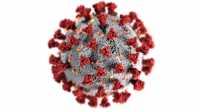
Response: During the initial COVID-19 vaccine campaign with healthcare workers in December 2020, there was an unexpected higher than anticipated rate of immediate allergic reactions after Pfizer and Moderna mRNA vaccines. This prompted both patient and provider concerns, particularly in those with underlying allergic histories, on the associated risks for immediate allergic reactions with the mRNA vaccines.
Because of the significantly improved effectiveness of two doses of an mRNA vaccine compared to one dose, it was important to determine if those who experienced immediate allergic reaction symptoms after their first dose could go on to tolerate a second dose safely.
Dr. Krantz[/caption]
Matthew S. Krantz, MD
Division of Allergy, Pulmonary and Critical Care Medicine
Department of Medicine,
Vanderbilt University Medical Center,
Nashville, Tennessee
MedicalResearch.com: What is the background for this study?
Response: During the initial COVID-19 vaccine campaign with healthcare workers in December 2020, there was an unexpected higher than anticipated rate of immediate allergic reactions after Pfizer and Moderna mRNA vaccines. This prompted both patient and provider concerns, particularly in those with underlying allergic histories, on the associated risks for immediate allergic reactions with the mRNA vaccines.
Because of the significantly improved effectiveness of two doses of an mRNA vaccine compared to one dose, it was important to determine if those who experienced immediate allergic reaction symptoms after their first dose could go on to tolerate a second dose safely. 
 Dr. Jeffrey Smith[/caption]
Jeffrey R. Smith, MD PhD
Department of Medicine, Division of Genetic Medicine
Vanderbilt-Ingram Cancer Center, and Vanderbilt Genetics Institute
Vanderbilt University Medical Center
Medical Research Service
Tennessee Valley Healthcare System, Veterans Administration
Nashville, TN
MedicalResearch.com: What is the background for this study?
Response: Roughly 20% of men with prostate cancer have a family history of the disease, and 5% meet criteria for hereditary prostate cancer. Although prostate cancer has the greatest heritability of all common cancers (twice that of breast cancer), extensive heterogeneity of its inherited causes has presented a considerable obstacle for traditional pedigree-based genetic investigative approaches. Inherited causes across, as well as within families are diverse.
This study introduced a new familial case-control study design that uses extent of family history as a proxy for genetic burden. It compared a large number of men with prostate cancer, each from a separate family with a strong history of the disease, to screened men with no personal or family history. The study comprehensively deconstructs how the 8q24 chromosomal region impacts risk of hereditary prostate cancer, introducing several new analytical approaches. The locus had been known to alter risk of prostate, breast, colon, ovarian, and numerous additional cancers.
Dr. Jeffrey Smith[/caption]
Jeffrey R. Smith, MD PhD
Department of Medicine, Division of Genetic Medicine
Vanderbilt-Ingram Cancer Center, and Vanderbilt Genetics Institute
Vanderbilt University Medical Center
Medical Research Service
Tennessee Valley Healthcare System, Veterans Administration
Nashville, TN
MedicalResearch.com: What is the background for this study?
Response: Roughly 20% of men with prostate cancer have a family history of the disease, and 5% meet criteria for hereditary prostate cancer. Although prostate cancer has the greatest heritability of all common cancers (twice that of breast cancer), extensive heterogeneity of its inherited causes has presented a considerable obstacle for traditional pedigree-based genetic investigative approaches. Inherited causes across, as well as within families are diverse.
This study introduced a new familial case-control study design that uses extent of family history as a proxy for genetic burden. It compared a large number of men with prostate cancer, each from a separate family with a strong history of the disease, to screened men with no personal or family history. The study comprehensively deconstructs how the 8q24 chromosomal region impacts risk of hereditary prostate cancer, introducing several new analytical approaches. The locus had been known to alter risk of prostate, breast, colon, ovarian, and numerous additional cancers. 





 Kathryn M. Edwards, M.D.
Sarah H. Sell and Cornelius Vanderbilt Chair in Pediatrics
Professor of Pediatrics
Vanderbilt University School of Medicine
Dr. Edwards discusses the statement from the Infectious Diseases Society of America (IDSA) regarding the Centers for Disease Control and Prevention’s new data on child vaccine rates across the United States.
MedicalResearch.com: What is the background for this study? What are the main findings?
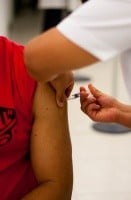
Response: To monitor the uptake of vaccines the CDC conducts a National Immunization Survey each year. This survey is conducted by random-digit dialing (cell phones or landlines) of parents and guardians of children 19-35 months of age. The interviewers ask the families who provides the vaccines for their children and if these providers can be contacted to inquire about the immunizations received. The overall response rate to the telephone survey was 26% and immunization records were provided on 54% of the children where permission was granted. Overall 15, 333 children had their immunization records reviewed.
When comparing immunization rates for 2017 and 2016, the last two years of the study, several new findings were discovered.
First the overall coverage rate for 3 doses of polio vaccine, one dose of MMR, 3 doses of Hepatitis b, and 1 dose of chickenpox vaccine was 90%, a high rate of coverage. Children were less likely to be up to date on the hepatitis A vaccine (70%) and rotavirus vaccine (73%). Coverage was lower for children living in rural areas when compared with urban areas and children living in rural areas had higher percentages of no vaccine receipt at all (1.9%) compared with those living in urban areas (1%).
There were more uninsured children in 2017 at 2.8% and these children had lower immunization rates. In fact 7.1% of the children with no insurance were totally unimmunized when compared with 0.8% unimmunized in those with private insurance. Vaccine coverage varies by state and by vaccine.
Kathryn M. Edwards, M.D.
Sarah H. Sell and Cornelius Vanderbilt Chair in Pediatrics
Professor of Pediatrics
Vanderbilt University School of Medicine
Dr. Edwards discusses the statement from the Infectious Diseases Society of America (IDSA) regarding the Centers for Disease Control and Prevention’s new data on child vaccine rates across the United States.
MedicalResearch.com: What is the background for this study? What are the main findings?
Response: To monitor the uptake of vaccines the CDC conducts a National Immunization Survey each year. This survey is conducted by random-digit dialing (cell phones or landlines) of parents and guardians of children 19-35 months of age. The interviewers ask the families who provides the vaccines for their children and if these providers can be contacted to inquire about the immunizations received. The overall response rate to the telephone survey was 26% and immunization records were provided on 54% of the children where permission was granted. Overall 15, 333 children had their immunization records reviewed.
When comparing immunization rates for 2017 and 2016, the last two years of the study, several new findings were discovered.
First the overall coverage rate for 3 doses of polio vaccine, one dose of MMR, 3 doses of Hepatitis b, and 1 dose of chickenpox vaccine was 90%, a high rate of coverage. Children were less likely to be up to date on the hepatitis A vaccine (70%) and rotavirus vaccine (73%). Coverage was lower for children living in rural areas when compared with urban areas and children living in rural areas had higher percentages of no vaccine receipt at all (1.9%) compared with those living in urban areas (1%).
There were more uninsured children in 2017 at 2.8% and these children had lower immunization rates. In fact 7.1% of the children with no insurance were totally unimmunized when compared with 0.8% unimmunized in those with private insurance. Vaccine coverage varies by state and by vaccine. 












 Dr. Mayur Patel[/caption]
MedicalResearch.com Interview with:
Mayur Patel, MD, MPH, FACS
Assistant Professor of Surgery & Neurosurgery
Vanderbilt University Medical Center
Staff Surgeon and Surgical Intensivist
Nashville VA Medical Center
Medical Research: What is the background for this study?
Dr. Patel: Post-traumatic stress disorder (PTSD) can occur in patients after the traumatizing events of critical illness. Survivors of critical illness have reported PTSD symptoms months to even years after critical illness, possibly related to nightmare-like experiences, safety restraints creating communication barriers, and protective mechanical ventilation causing feelings of breathlessness and fear of imminent death. But, the epidemiology of PTSD after critical illness is unclear with wide ranging estimates (0-64%) and largely fails to distinguish past PTSD from new PTSD specifically resulting from the critical care experience.
Our study provides estimates on new cases of
Dr. Mayur Patel[/caption]
MedicalResearch.com Interview with:
Mayur Patel, MD, MPH, FACS
Assistant Professor of Surgery & Neurosurgery
Vanderbilt University Medical Center
Staff Surgeon and Surgical Intensivist
Nashville VA Medical Center
Medical Research: What is the background for this study?
Dr. Patel: Post-traumatic stress disorder (PTSD) can occur in patients after the traumatizing events of critical illness. Survivors of critical illness have reported PTSD symptoms months to even years after critical illness, possibly related to nightmare-like experiences, safety restraints creating communication barriers, and protective mechanical ventilation causing feelings of breathlessness and fear of imminent death. But, the epidemiology of PTSD after critical illness is unclear with wide ranging estimates (0-64%) and largely fails to distinguish past PTSD from new PTSD specifically resulting from the critical care experience.
Our study provides estimates on new cases of