[caption id="attachment_61496" align="alignleft" width="125"]

Dr. Thomas Robert[/caption]
MedicalResearch.com Interview with:
Thomas Robert, MD, AIX
Associate Professor of Nephrology
APHM (Assistance Publique - Hopitaux de Marseille)
Marseille, Provence-Alpes-Côte d'Azur, France
[caption id="attachment_61498" align="alignleft" width="132"]

Dr. Letavernier[/caption]
Prof. Emmanuel Letavernier,
MD PhD
Nephrologist at Tenon Hospital
Paris, France
MedicalResearch.com: What is the background for this study?
Response: Our work was prompted by emerging concerns surrounding the potential nephrotoxic effects of hair-straightening products containing glyoxylic acid. This inquiry was instigated by a patient who experienced three repeated acute episodes of kidney injury in June 2020, April 2021, and July 2022, each occurring shortly after a hair-straightening procedure. Notably, these episodes resolved with hydration.
Upon examining the composition of the hair product used by the patient, which contained glyoxylic acid, and considering the patient's report of painful ulcer scalp during application and subsequent scalp scarring, we suspected a potential link between exposure to glyoxylic acid and kidney injury. Consulting with my colleague, Professor Emmanuel Letavenier, a specialist in crystalline nephropathy at Paris, confirmed this suspicion.
In summer 2023, cases series have been reported by an Israeli team (
https://pubmed.ncbi.nlm.nih.gov/36610611/), who described 26 patients presenting with acute renal injuries after hair straightening treatments. Biopsies revealed calcium oxalate crystals in the kidneys. The Israeli researchers suspected an effect of formaldehyde and glycolic acid, another substance found in many cosmetic products, including hair straightening products, but were unable to provide conclusive evidence.


 Dr. Lopez[/caption]
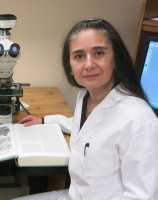
Maria Luisa S. Sequeira Lopez, MD, FAHA
Harrison Distinguished Professor in Pediatrics and Biology
University of Virginia
Charlottesville, VA 22908
MedicalResearch.com: What is the background for this study?
Response: The renin-angiotensin system (RAS) is crucial in the regulation of the blood pressure (BP). Synthesis and secretion of renin is the key regulated event in the operation of the RAS.
One of the main mechanisms that control renin synthesis and release is the baroreceptor mechanism whereby a decrease in blood pressure results in increased release of renin by juxtaglomerular (JG) cells.
In spite of its enormous importance, the nature and location of the renal baroreceptor was still unknown. This was due in great part to the lack of appropriate in vitro and in vivo models to confidently allow tracking of the fate and isolation of renin cells, and the lack of tools to study the chromatin in scarce cells.
Dr. Lopez[/caption]
Maria Luisa S. Sequeira Lopez, MD, FAHA
Harrison Distinguished Professor in Pediatrics and Biology
University of Virginia
Charlottesville, VA 22908
MedicalResearch.com: What is the background for this study?
Response: The renin-angiotensin system (RAS) is crucial in the regulation of the blood pressure (BP). Synthesis and secretion of renin is the key regulated event in the operation of the RAS.
One of the main mechanisms that control renin synthesis and release is the baroreceptor mechanism whereby a decrease in blood pressure results in increased release of renin by juxtaglomerular (JG) cells.
In spite of its enormous importance, the nature and location of the renal baroreceptor was still unknown. This was due in great part to the lack of appropriate in vitro and in vivo models to confidently allow tracking of the fate and isolation of renin cells, and the lack of tools to study the chromatin in scarce cells. 

 Prof. Pottel[/caption]
Prof. Dr. Hans Pottel PhD
Professeur Invité (titre honorifique)
Faculté de Médecine
Université de Liège
KULeuven-KULAK, Kortrijk, Belgium
MedicalResearch.com: What is the background for this study? Why do we need a new GFR?
Response: The currently recommended equations have flaws, mainly because there is one equation (CKiD) recommended for children, and one recommended (CKD-EPI) for adults (by KDIGO). When transitioning from pediatric nephrology care to adult nephrology care, the switch from CKiD to CKD-EPI causes implausible jumps (of more than 50%), mainly because CKD-EPI largely overestimates GFR in young adults (18-30 years). The new equation overcomes this problem as it applies for all ages (for children and adults) and overcomes the known flaws of the currently most used equations. The new equation is less biased and more precise across the full age spectrum and for the full range of serum creatinine concentrations.
The equation was developed in 11 251 participants from 7 cohorts (development and internal validation datasets) and validated in 8 378 participants from 6 cohorts (external validation dataset). Data were coming from European and American nephrology centers. No patients of African-American ancestry were included. Actually, the previously published FAS-equation served as the basic mathematical form for the equation, but we adjusted the power coefficients for serum creatinine (very much like it was done in the CKD-EPI equation). You could say that we used properties of both the FAS and CKD-EPI equation to come to an improved equation to estimate GFR.
Prof. Pottel[/caption]
Prof. Dr. Hans Pottel PhD
Professeur Invité (titre honorifique)
Faculté de Médecine
Université de Liège
KULeuven-KULAK, Kortrijk, Belgium
MedicalResearch.com: What is the background for this study? Why do we need a new GFR?
Response: The currently recommended equations have flaws, mainly because there is one equation (CKiD) recommended for children, and one recommended (CKD-EPI) for adults (by KDIGO). When transitioning from pediatric nephrology care to adult nephrology care, the switch from CKiD to CKD-EPI causes implausible jumps (of more than 50%), mainly because CKD-EPI largely overestimates GFR in young adults (18-30 years). The new equation overcomes this problem as it applies for all ages (for children and adults) and overcomes the known flaws of the currently most used equations. The new equation is less biased and more precise across the full age spectrum and for the full range of serum creatinine concentrations.
The equation was developed in 11 251 participants from 7 cohorts (development and internal validation datasets) and validated in 8 378 participants from 6 cohorts (external validation dataset). Data were coming from European and American nephrology centers. No patients of African-American ancestry were included. Actually, the previously published FAS-equation served as the basic mathematical form for the equation, but we adjusted the power coefficients for serum creatinine (very much like it was done in the CKD-EPI equation). You could say that we used properties of both the FAS and CKD-EPI equation to come to an improved equation to estimate GFR. 





 alResearch.com Interview with:
David C. Johnson, MD, MPH
Department of Urology
University of North Carolina School of Medicine
Medical Research: What are the main findings of the study?
Dr. Johnson: The first main finding from this study is that the likelihood of benign pathology after surgical removal of a renal mass suspected to be malignant based on pre-operative is inversely proportionate to size. This concept is well-established, however we systematically reviewed the literature for surgical series that published rates of benign pathology stratified by size and combined these rates to determine a single pooled estimate of benign pathology of pre-operatively suspicious renal masses for each size strata. Using benign pathology rates from US studies only, we found that 40.4% of masses < 1 cm, 20.9% of masses 1-2 cm, 19.6% of masses 2-3 cm, 17.2% of masses 3-4 cm, 9.2% of masses 4-7 cm, and 6.4% of masses >7 cm are benign.
The more novel finding from this study was the quantification of a previously unmeasured burden of over treatment in kidney cancer. By combining the above mentioned rates of benign pathology with epidemiological data, we estimated that the overall burden of benign renal masses surgically removed in the US to approach 6,000 per year in 2009. This represented an 82% increase over the course of a decade. Most importantly, we found an overwhelmingly disproportionate rise in the surgical treatment of renal masses in the smallest size categories – those which were most likely to be benign. We found a 233%, 189% and 128% increase in surgically removed benign renal lesions < 1 cm, 1-2 cm, and 2-3 cm, respectively from 2000 – 2009 in the US.
alResearch.com Interview with:
David C. Johnson, MD, MPH
Department of Urology
University of North Carolina School of Medicine
Medical Research: What are the main findings of the study?
Dr. Johnson: The first main finding from this study is that the likelihood of benign pathology after surgical removal of a renal mass suspected to be malignant based on pre-operative is inversely proportionate to size. This concept is well-established, however we systematically reviewed the literature for surgical series that published rates of benign pathology stratified by size and combined these rates to determine a single pooled estimate of benign pathology of pre-operatively suspicious renal masses for each size strata. Using benign pathology rates from US studies only, we found that 40.4% of masses < 1 cm, 20.9% of masses 1-2 cm, 19.6% of masses 2-3 cm, 17.2% of masses 3-4 cm, 9.2% of masses 4-7 cm, and 6.4% of masses >7 cm are benign.
The more novel finding from this study was the quantification of a previously unmeasured burden of over treatment in kidney cancer. By combining the above mentioned rates of benign pathology with epidemiological data, we estimated that the overall burden of benign renal masses surgically removed in the US to approach 6,000 per year in 2009. This represented an 82% increase over the course of a decade. Most importantly, we found an overwhelmingly disproportionate rise in the surgical treatment of renal masses in the smallest size categories – those which were most likely to be benign. We found a 233%, 189% and 128% increase in surgically removed benign renal lesions < 1 cm, 1-2 cm, and 2-3 cm, respectively from 2000 – 2009 in the US.
