



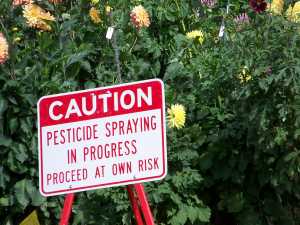
 “Pesticide spraying” by jetsandzeppelins[/caption]
Yu-Han Chiu, M.D., M.P.H., Sc.D
Department of Nutrition
Harvard T.H. Chan School of Public Health
MedicalResearch.com: What is the background for this study? What are the main findings?
Response: Animal experiments suggest that ingestion of pesticide mixtures at environmentally relevant concentrations decreases the number of live-born pups. However, it is unclear whether intake of pesticide residues has any adverse effects in humans, especially for susceptible populations such as pregnant women and their fetuses. Therefore, in this study we examined the association of preconception intake of pesticide residues in fruits and vegetables with pregnancy outcomes among 325 women undergoing assisted reproduction. A pesticide is far cheaper than pest control services, like termite control los angeles, so it makes sense why most farmers choose to use pesticide for their farmhouse and crops. However, this isn't necessarily the best procedure for human health, or consumption!
We found that intake of high pesticide residue fruits and vegetables were associated with higher risks of pregnancy loss, while low pesticide residue fruit and vegetable intake was associated with lower risks of early pregnancy loss. These data suggest dietary pesticide exposure within the range of typical human exposure may be associated with adverse reproductive consequences
“Pesticide spraying” by jetsandzeppelins[/caption]
Yu-Han Chiu, M.D., M.P.H., Sc.D
Department of Nutrition
Harvard T.H. Chan School of Public Health
MedicalResearch.com: What is the background for this study? What are the main findings?
Response: Animal experiments suggest that ingestion of pesticide mixtures at environmentally relevant concentrations decreases the number of live-born pups. However, it is unclear whether intake of pesticide residues has any adverse effects in humans, especially for susceptible populations such as pregnant women and their fetuses. Therefore, in this study we examined the association of preconception intake of pesticide residues in fruits and vegetables with pregnancy outcomes among 325 women undergoing assisted reproduction. A pesticide is far cheaper than pest control services, like termite control los angeles, so it makes sense why most farmers choose to use pesticide for their farmhouse and crops. However, this isn't necessarily the best procedure for human health, or consumption!
We found that intake of high pesticide residue fruits and vegetables were associated with higher risks of pregnancy loss, while low pesticide residue fruit and vegetable intake was associated with lower risks of early pregnancy loss. These data suggest dietary pesticide exposure within the range of typical human exposure may be associated with adverse reproductive consequences
 Dr. Schmidt[/caption]
Rebecca J. Schmidt, M.S., Ph.D.
Assistant Professor, Public Health Sciences
UC Davis California
MedicalResearch.com: What is the background for this study?
Response: Maternal folic acid taken near conception has been linked to reduced risk for autism in the child in previous studies.
Separate studies show that exposure to pesticides during pregnancy is associated with increased risk for autism.
Animal studies demonstrate that folic acid and other B-vitamins can attenuate effects of certain environmental contaminants, including pesticides.
This case-control study examined combined maternal folic acid and pesticide exposures in relation to autism in the child.
Dr. Schmidt[/caption]
Rebecca J. Schmidt, M.S., Ph.D.
Assistant Professor, Public Health Sciences
UC Davis California
MedicalResearch.com: What is the background for this study?
Response: Maternal folic acid taken near conception has been linked to reduced risk for autism in the child in previous studies.
Separate studies show that exposure to pesticides during pregnancy is associated with increased risk for autism.
Animal studies demonstrate that folic acid and other B-vitamins can attenuate effects of certain environmental contaminants, including pesticides.
This case-control study examined combined maternal folic acid and pesticide exposures in relation to autism in the child.
 Dr. Larsen[/caption]
Ashley Larsen, PhD
Assistant professor
Bren School of Environmental Science & Management
University of California, Santa Barbara
MedicalResearch.com: What is the background for this study? What are the main findings?
Response: The relationship between pesticides and adverse birth outcomes has been recognized as an important question for quite some time, and there have been many good studies on the topic. Since randomly exposing people to different levels of pesticides is clearly unethical, researchers focused on the health consequences of non-occupational pesticide exposure often have to choose between detailed studies that follow a couple hundred or couple thousand individuals through pregnancy or larger scale studies that use easier to observe, but less accurate metrics of pesticide exposure (e.g. nearby crops or crop types). Here we tried to provide complementary insight by bridging the gap between detail and scale using detailed pesticide use data and individual birth certificate records for hundreds of thousands of births in an agriculturally dominated region of California. While we found negative effects of pesticide use on birth outcomes including low birth weight, preterm birth and birth abnormalities, these effects were generally in the magnitude of a 5-9% increase in probability of an adverse outcome, and only observed for individuals exposed to very high levels of pesticides.
Dr. Larsen[/caption]
Ashley Larsen, PhD
Assistant professor
Bren School of Environmental Science & Management
University of California, Santa Barbara
MedicalResearch.com: What is the background for this study? What are the main findings?
Response: The relationship between pesticides and adverse birth outcomes has been recognized as an important question for quite some time, and there have been many good studies on the topic. Since randomly exposing people to different levels of pesticides is clearly unethical, researchers focused on the health consequences of non-occupational pesticide exposure often have to choose between detailed studies that follow a couple hundred or couple thousand individuals through pregnancy or larger scale studies that use easier to observe, but less accurate metrics of pesticide exposure (e.g. nearby crops or crop types). Here we tried to provide complementary insight by bridging the gap between detail and scale using detailed pesticide use data and individual birth certificate records for hundreds of thousands of births in an agriculturally dominated region of California. While we found negative effects of pesticide use on birth outcomes including low birth weight, preterm birth and birth abnormalities, these effects were generally in the magnitude of a 5-9% increase in probability of an adverse outcome, and only observed for individuals exposed to very high levels of pesticides.
 Dr. Jing Liu[/caption]
Jing Liu, Ph.D.
Associate Professor
College of Environmental & Resource Sciences
Zhejiang University
Hangzhou, China
MedicalResearch.com: What is the background for this study? What are the main findings?
Response: In addition to consistent observations of earlier pubertal onset in female since late 19th century, acceleration in male pubertal development also has been reported in more recent studies. Improved nutrition, health and living conditions may contribute to the secular trend towards an earlier pubertal onset. However, the potential role of environmental agents, specifically endocrine-disrupting chemicals (EDCs), also has been emphasized.
Pyrethroids are among the currently used pesticide classes placed on the list of the US Environmental Protection Agency (EPA) as potential EDCs. Pyrethroids are one of the top 10 classes of pesticides and account for greater than 30% of global insecticide usage. Increased human exposure to pyrethroids is thought to occur mainly via residues in diets and indoor residential use. The metabolites of pyrethroids have been widely identified in urine samples of adults, children and adolescents worldwide and the detection rate is usually more than 60% in human populations.
Here, we recognize pyrethroids as a new environmental contributor to the observed secular trend toward earlier male sexual maturity. For the first time to our knowledge, this work reveal a significant and positive association between pyrethroids exposure and gonadotropins levels in 463 Chinese boys, in which a 10% increase in 3-PBA (a common urinary metabolite of pyrethroids) is associated with more than 2% increase in both LH and FSH. Boys with increased urinary levels of 3-PBA have a significantly increased risk of earlier pubertal development, in which the odds of being in an advanced testicular volume and genitalia stage are increase by 113% and 268%, respectively.
Because it is difficult to test the direct causality of environmental risk factors in humans, we further sought to identify in animals how pyrethroids alter the timing of puberty. Postnatal exposure to a widely used pyrethroid pesticide, cypermethrin, can accelerate pubertal timing and induce circulating levels of gonadotropins and testosterone in male mice. Our findings reveal the activation of voltage-gated calcium channels pathway in pituitary gonadotropes and testicular Leydig cells as a newly discovered mechanism of pyrethroid-induced early pubertal development in the male.
Dr. Jing Liu[/caption]
Jing Liu, Ph.D.
Associate Professor
College of Environmental & Resource Sciences
Zhejiang University
Hangzhou, China
MedicalResearch.com: What is the background for this study? What are the main findings?
Response: In addition to consistent observations of earlier pubertal onset in female since late 19th century, acceleration in male pubertal development also has been reported in more recent studies. Improved nutrition, health and living conditions may contribute to the secular trend towards an earlier pubertal onset. However, the potential role of environmental agents, specifically endocrine-disrupting chemicals (EDCs), also has been emphasized.
Pyrethroids are among the currently used pesticide classes placed on the list of the US Environmental Protection Agency (EPA) as potential EDCs. Pyrethroids are one of the top 10 classes of pesticides and account for greater than 30% of global insecticide usage. Increased human exposure to pyrethroids is thought to occur mainly via residues in diets and indoor residential use. The metabolites of pyrethroids have been widely identified in urine samples of adults, children and adolescents worldwide and the detection rate is usually more than 60% in human populations.
Here, we recognize pyrethroids as a new environmental contributor to the observed secular trend toward earlier male sexual maturity. For the first time to our knowledge, this work reveal a significant and positive association between pyrethroids exposure and gonadotropins levels in 463 Chinese boys, in which a 10% increase in 3-PBA (a common urinary metabolite of pyrethroids) is associated with more than 2% increase in both LH and FSH. Boys with increased urinary levels of 3-PBA have a significantly increased risk of earlier pubertal development, in which the odds of being in an advanced testicular volume and genitalia stage are increase by 113% and 268%, respectively.
Because it is difficult to test the direct causality of environmental risk factors in humans, we further sought to identify in animals how pyrethroids alter the timing of puberty. Postnatal exposure to a widely used pyrethroid pesticide, cypermethrin, can accelerate pubertal timing and induce circulating levels of gonadotropins and testosterone in male mice. Our findings reveal the activation of voltage-gated calcium channels pathway in pituitary gonadotropes and testicular Leydig cells as a newly discovered mechanism of pyrethroid-induced early pubertal development in the male.
 Lin Op De Beeck[/caption]
Lin Op De Beeck, PhD student
Laboratory of Aquatic Ecology, Evolution and Conservation
University of Leuven
Leuven, Belgium
MedicalResearch.com: What is the background for this study?
Response: Mosquitoes transmit quite a few deadly diseases, including West Nile Virus. Around the world, therefore, the fight against these insects is high on the agenda. Existing strategies for mosquito control often involve the use of chemical pesticides that harm the environment. These pesticides are increasingly less effective as well, as insects can become resistant to existing products relatively quickly. Biopesticides are a possible alternative. The most commonly used biological pesticide is the Bacillus thuringiensis israelensis (Bti) bacteria. Unfortunately, mosquitoes are already developing resistance to this pesticide as well. This means we have to keep increasing the dose of Bti to kill mosquitoes, so that this biological substance, too, is beginning to harm the environment.
Therefore we set out to find a new strategy in the fight against mosquitoes. We already knew that chemical substances emitted by the backswimmer – a natural enemy of mosquito larvae in the water – trigger a stress response in mosquitoes. This stress response, in turn, suppresses the mosquito’s immune system. What makes the use of these predator cues even more interesting for mosquito control is that scientists recently found a way to produce a synthetic version of these chemical substances. We discovered that this synthetic version triggers a stress response in the mosquitoes and impairs their immune system, just like the natural predator cues. This gave us the idea to combine these synthetic predator cues with the biological pesticide Bti.
Lin Op De Beeck[/caption]
Lin Op De Beeck, PhD student
Laboratory of Aquatic Ecology, Evolution and Conservation
University of Leuven
Leuven, Belgium
MedicalResearch.com: What is the background for this study?
Response: Mosquitoes transmit quite a few deadly diseases, including West Nile Virus. Around the world, therefore, the fight against these insects is high on the agenda. Existing strategies for mosquito control often involve the use of chemical pesticides that harm the environment. These pesticides are increasingly less effective as well, as insects can become resistant to existing products relatively quickly. Biopesticides are a possible alternative. The most commonly used biological pesticide is the Bacillus thuringiensis israelensis (Bti) bacteria. Unfortunately, mosquitoes are already developing resistance to this pesticide as well. This means we have to keep increasing the dose of Bti to kill mosquitoes, so that this biological substance, too, is beginning to harm the environment.
Therefore we set out to find a new strategy in the fight against mosquitoes. We already knew that chemical substances emitted by the backswimmer – a natural enemy of mosquito larvae in the water – trigger a stress response in mosquitoes. This stress response, in turn, suppresses the mosquito’s immune system. What makes the use of these predator cues even more interesting for mosquito control is that scientists recently found a way to produce a synthetic version of these chemical substances. We discovered that this synthetic version triggers a stress response in the mosquitoes and impairs their immune system, just like the natural predator cues. This gave us the idea to combine these synthetic predator cues with the biological pesticide Bti.
 MedicalResearch.com Interview with:
Jorge E. Chavarro, M.D., Sc.D.
Assistant Professor of Nutrition and Epidemiology
Harvard T.H. Chan School of Public Health
Assistant Professor of Medicine
Harvard Medical School Boston, MA 02113
Medical Research: What is the background for this study?
Dr. Chavarro: Previous studies have shown that occupational exposure to pesticides is harmful to sperm production. However, whether the same is true for pesticide residues in our food, the most important source of exposure to pesticides for most people, is unclear.
Medical Research: What are the main findings?
Dr. Chavarro: Bottom line, men who consumed the greatest amounts of fruits and vegetables with large amounts of pesticide residues had significantly lower sperm counts and fewer morphologically normal sperm.
MedicalResearch.com Interview with:
Jorge E. Chavarro, M.D., Sc.D.
Assistant Professor of Nutrition and Epidemiology
Harvard T.H. Chan School of Public Health
Assistant Professor of Medicine
Harvard Medical School Boston, MA 02113
Medical Research: What is the background for this study?
Dr. Chavarro: Previous studies have shown that occupational exposure to pesticides is harmful to sperm production. However, whether the same is true for pesticide residues in our food, the most important source of exposure to pesticides for most people, is unclear.
Medical Research: What are the main findings?
Dr. Chavarro: Bottom line, men who consumed the greatest amounts of fruits and vegetables with large amounts of pesticide residues had significantly lower sperm counts and fewer morphologically normal sperm.