


 Dr. Winterdahl[/caption]
Michael Winterdahl PhD
Associate Professor in Neuroimaging,
Department of Nuclear Medicine and PET Center
Aarhus University, Denmark
MedicalResearch.com: What is the background for this study?
Response: Opioids and dopamine mediate the rewarding effects of drugs. We aimed to determine whether the intake of palatable food could lead to changes in the brain similar to those triggered by addictive substances, so we studied the effects of repeated intermittent access to sugar on opioid and dopamine receptors in porcine brain using neuroimaging.
Dr. Winterdahl[/caption]
Michael Winterdahl PhD
Associate Professor in Neuroimaging,
Department of Nuclear Medicine and PET Center
Aarhus University, Denmark
MedicalResearch.com: What is the background for this study?
Response: Opioids and dopamine mediate the rewarding effects of drugs. We aimed to determine whether the intake of palatable food could lead to changes in the brain similar to those triggered by addictive substances, so we studied the effects of repeated intermittent access to sugar on opioid and dopamine receptors in porcine brain using neuroimaging.
 Dr. Bentley[/caption]
Professor Alex Bentley
Head of Anthropology
University of Tennessee
Knoxville TN
MedicalResearch.com: What is the background for this study? What are the main findings?
Response: In recent years, considerable evidence has accumulated suggesting that excess sugar consumption, e.g. in sugar-sweetened beverages, has been a major driver of the U.S. obesity crisis. Critics of this idea, however, have asked: why did the rise in sugar consumption precede the U.S. obesity crises by a decade or more, and why did obesity continue to rise even after sugar consumption began declining the early 2000s?
We modeled the delayed onset of obesity by assuming that diet is a cumulative process that begins in childhood. On average, each age cohort (birth year) has its own specific cumulative exposure to excess sugar in their diets. The inherent delay in our model links childhood consumption of excess sugar with propensity for adult obesity as an adult. Our model explains a simple process by which excess sugar in diets of children of the 1970s and 1980s could explain the sharp increase of adult obesity that began in the 1990s.
Dr. Bentley[/caption]
Professor Alex Bentley
Head of Anthropology
University of Tennessee
Knoxville TN
MedicalResearch.com: What is the background for this study? What are the main findings?
Response: In recent years, considerable evidence has accumulated suggesting that excess sugar consumption, e.g. in sugar-sweetened beverages, has been a major driver of the U.S. obesity crisis. Critics of this idea, however, have asked: why did the rise in sugar consumption precede the U.S. obesity crises by a decade or more, and why did obesity continue to rise even after sugar consumption began declining the early 2000s?
We modeled the delayed onset of obesity by assuming that diet is a cumulative process that begins in childhood. On average, each age cohort (birth year) has its own specific cumulative exposure to excess sugar in their diets. The inherent delay in our model links childhood consumption of excess sugar with propensity for adult obesity as an adult. Our model explains a simple process by which excess sugar in diets of children of the 1970s and 1980s could explain the sharp increase of adult obesity that began in the 1990s.


 Dr. Hwang[/caption]
Dr Daniel Hwang PhD
Postdoctoral Research Fellow
The University of Queensland Diamantina Institute
MedicalResearch.com: What is the background for this study?
Response: The aim of the this study is to understand the genetic basis of human taste perception. In this international collaboration project, we started by collecting sensory data from twins in the Australia and USA since 2003. Based on the difference in the genetic relatedness between identical and non-identical twins, our previous studies have quantified the amount of genetic influence on sweet taste perception (https://doi.org/10.1017/thg.2015.42) as well as the other sensory phenotypes (https://doi.org/10.1093/chemse/bjs070).
Dr. Hwang[/caption]
Dr Daniel Hwang PhD
Postdoctoral Research Fellow
The University of Queensland Diamantina Institute
MedicalResearch.com: What is the background for this study?
Response: The aim of the this study is to understand the genetic basis of human taste perception. In this international collaboration project, we started by collecting sensory data from twins in the Australia and USA since 2003. Based on the difference in the genetic relatedness between identical and non-identical twins, our previous studies have quantified the amount of genetic influence on sweet taste perception (https://doi.org/10.1017/thg.2015.42) as well as the other sensory phenotypes (https://doi.org/10.1093/chemse/bjs070).

 Dr. Vos[/caption]
Miriam Vos, MD, MSPH
Associate Professor of Pediatrics and Director
Pediatric Fatty Liver Program
Emory and Children’s Healthcare of Atlanta
MedicalResearch.com: What is the background for this study? What are the main findings?
Response: Fatty liver disease has quickly become a common problem in children and adolescents, affecting an estimated 7 million children in the U.S. This study resulted from our previous research demonstrating that fructose increases cardiometabolic risk factors in children with NAFLD in addition to other research that had demonstrated associations between NAFLD and sugar.
Dr. Vos[/caption]
Miriam Vos, MD, MSPH
Associate Professor of Pediatrics and Director
Pediatric Fatty Liver Program
Emory and Children’s Healthcare of Atlanta
MedicalResearch.com: What is the background for this study? What are the main findings?
Response: Fatty liver disease has quickly become a common problem in children and adolescents, affecting an estimated 7 million children in the U.S. This study resulted from our previous research demonstrating that fructose increases cardiometabolic risk factors in children with NAFLD in addition to other research that had demonstrated associations between NAFLD and sugar.

 Jennifer Woo Baidal, MD, MPH
Assistant Professor of Pediatrics
Director of Pediatric Weight Management,
Division of Pediatric Gastroenterology, Hepatology, and Nutrition,
Columbia University Medical Center &
New York-Presbyterian Morgan Stanley Children’s Hospital
MedicalResearch.com: What is the background for this study? What are the main findings?
Response: Childhood obesity prevalence is historically high, with most incident obesity among children occurring before age 5 years. Racial/ethnic and socioeconomic disparities in childhood obesity are already apparent by the first years of life. Latino/Hispanic children in low-income families are at-risk for obesity. Thus, understanding potentially effective ways to prevent childhood obesity, particularly in vulnerable populations, should focus on early life.
Sugar-sweetened beverage (SSB) consumption is a modifiable risk factor for obesity and is linked to other adverse health outcomes. Maternal SSB consumption in pregnancy and infant sugar-sweetened beverage consumption in the first year of life are linked to later childhood obesity.
We sought to describe beverage consumption in a modern cross-sectional cohort of 394 low-income, Latino families, and to examine the relationship of parental attitudes toward sugar-sweetened beverages with parental and infant SSB consumption.
Juliana F. W. Cohen, ScM, ScD
Department of Health Sciences
Merrimack College
North Andover MA 01845.
MedicalResearch.com: What is the background for this study? What are the main findings?
Response: Sugar consumption among Americans is above recommended limits and this excess intake may have important health implications.
This study examined the associations of pregnancy and offspring sugar consumption, as well as sugar-sweetened beverages, other beverages (diet soda, juice), and fruit consumption with child cognition.
This study found that when pregnant women or their children consumed greater quantities of sugar, as well as when women consumed diet soda during pregnancy, this was associated with poorer childhood cognition. However, children’s fruit consumption was associated with higher cognitive scores.
Jennifer Woo Baidal, MD, MPH
Assistant Professor of Pediatrics
Director of Pediatric Weight Management,
Division of Pediatric Gastroenterology, Hepatology, and Nutrition,
Columbia University Medical Center &
New York-Presbyterian Morgan Stanley Children’s Hospital
MedicalResearch.com: What is the background for this study? What are the main findings?
Response: Childhood obesity prevalence is historically high, with most incident obesity among children occurring before age 5 years. Racial/ethnic and socioeconomic disparities in childhood obesity are already apparent by the first years of life. Latino/Hispanic children in low-income families are at-risk for obesity. Thus, understanding potentially effective ways to prevent childhood obesity, particularly in vulnerable populations, should focus on early life.
Sugar-sweetened beverage (SSB) consumption is a modifiable risk factor for obesity and is linked to other adverse health outcomes. Maternal SSB consumption in pregnancy and infant sugar-sweetened beverage consumption in the first year of life are linked to later childhood obesity.
We sought to describe beverage consumption in a modern cross-sectional cohort of 394 low-income, Latino families, and to examine the relationship of parental attitudes toward sugar-sweetened beverages with parental and infant SSB consumption.
Juliana F. W. Cohen, ScM, ScD
Department of Health Sciences
Merrimack College
North Andover MA 01845.
MedicalResearch.com: What is the background for this study? What are the main findings?
Response: Sugar consumption among Americans is above recommended limits and this excess intake may have important health implications.
This study examined the associations of pregnancy and offspring sugar consumption, as well as sugar-sweetened beverages, other beverages (diet soda, juice), and fruit consumption with child cognition.
This study found that when pregnant women or their children consumed greater quantities of sugar, as well as when women consumed diet soda during pregnancy, this was associated with poorer childhood cognition. However, children’s fruit consumption was associated with higher cognitive scores.
![MedicalResearch.com Interview with: Robin Dando, PhD Assistant Professor Director, Cornell Sensory Evaluation Facility Department of Food Science Cornell University Ithaca, NY 14853 MedicalResearch.com: What is the background for this study? What are the main findings? Response: The study arose from a previous paper I authored in the Journal of Neuroscience, where we found Adenosine receptors in taste. We managed to prove that they were there to amplify sweet signals. This led us to wonder, what about the foods we consume, that would come into contact with these receptors in taste buds. It just happens that a lot of us habitually consume a powerful blocker of adenosine receptors every morning. Caffeine. So is our coffee impairing sweet signals? It turns out when we gave people sweetened coffee containing caffeine, they judged it as less sweet than the same coffee without the caffeine, sampled on a different day. Interestingly, this persisted, and sweet solutions they tested afterwards were still a little less sweet. Finally, just for kicks, we asked them to rate how much caffeine they thought was in either coffee, and how much more alert it made them feel. Turns out, there was no difference. They couldn’t tell which was deacf, and either coffee gave them just as much of an alertness boost. MedicalResearch.com: What should clinicians and patients take away from your report? Response: Readers should consider that they may be altering how their food tastes when consuming coffee. And perhaps also, they could be drinking decaf, and getting just as good a jolt from it (as long as someone else was preparing it for them, so they didn’t know). MedicalResearch.com: What recommendations do you have for future research as a result of this study? Response: We’re interested in how many factors we encounter in our every day lives change our perception, from the foods we’re consuming themselves, to our own bodies. We’re currently looking into how obesity, pregnancy and sleep can change our sense of taste, and the foods we crave. If you’d like to hear more about what we do, you can follow our work on twitter @DandoLab. MedicalResearch.com: Thank you for your contribution to the MedicalResearch.com community. 1.Citation: Ezen Choo, Benjamin Picket, Robin Dando. Caffeine May Reduce Perceived Sweet Taste in Humans, Supporting Evidence That Adenosine Receptors Modulate Taste. Journal of Food Science, 2017; DOI: 10.1111/1750-3841.13836 Note: Content is Not intended as medical advice. Please consult your health care provider regarding your specific medical condition and questions. [wysija_form id="5"]](https://medicalresearch.com/wp-content/uploads/Dr-Robin-Dando.jpg) Dr. Dando[/caption]Robin Dando, PhD
Assistant Professor
Director, Cornell Sensory Evaluation Facility
Department of Food Science
Cornell University
Ithaca, NY 14853
MedicalResearch.com: What is the background for this study? What are the main findings?
Response: The study arose from a previous paper I authored in the Journal of Neuroscience, where we found Adenosine receptors in taste. We managed to prove that they were there to amplify sweet signals. This led us to wonder, what about the foods we consume, that would come into contact with these receptors in taste buds.
It just happens that a lot of us habitually consume a powerful blocker of adenosine receptors every morning. Caffeine. So is our coffee impairing sweet signals? It turns out when we gave people sweetened coffee containing caffeine, they judged it as less sweet than the same coffee without the caffeine, sampled on a different day. Interestingly, this persisted, and sweet solutions they tested afterwards were still a little less sweet.
Finally, just for kicks, we asked them to rate how much caffeine they thought was in either coffee, and how much more alert it made them feel. Turns out, there was no difference. They couldn’t tell which was deacf, and either coffee gave them just as much of an alertness boost.
Dr. Dando[/caption]Robin Dando, PhD
Assistant Professor
Director, Cornell Sensory Evaluation Facility
Department of Food Science
Cornell University
Ithaca, NY 14853
MedicalResearch.com: What is the background for this study? What are the main findings?
Response: The study arose from a previous paper I authored in the Journal of Neuroscience, where we found Adenosine receptors in taste. We managed to prove that they were there to amplify sweet signals. This led us to wonder, what about the foods we consume, that would come into contact with these receptors in taste buds.
It just happens that a lot of us habitually consume a powerful blocker of adenosine receptors every morning. Caffeine. So is our coffee impairing sweet signals? It turns out when we gave people sweetened coffee containing caffeine, they judged it as less sweet than the same coffee without the caffeine, sampled on a different day. Interestingly, this persisted, and sweet solutions they tested afterwards were still a little less sweet.
Finally, just for kicks, we asked them to rate how much caffeine they thought was in either coffee, and how much more alert it made them feel. Turns out, there was no difference. They couldn’t tell which was deacf, and either coffee gave them just as much of an alertness boost.
 Dr. Thomas Farley[/caption]
Thomas Farley, MD, MPH
Health Commissioner
Department of Public Health
City of Philadelphia
MedicalResearch.com: What is the background for this study? What are the main findings?
Response: Messages in the mass media have been used in anti-smoking campaigns, but have not be used much for other health-related behaviors. Sugar-sweetened beverages are major contributors to the obesity epidemic in the United States, so they are an important public health target.
In this study we evaluated a brief counter-advertising campaign in a rural area of Tennessee, Virginia, and Kentucky designed to reduce consumption of these beverages. After the campaign, adults in the area were more wary of sugary drinks, and sales of sugary drinks fell by about 4% relative to changes in a matched comparison area.
Dr. Thomas Farley[/caption]
Thomas Farley, MD, MPH
Health Commissioner
Department of Public Health
City of Philadelphia
MedicalResearch.com: What is the background for this study? What are the main findings?
Response: Messages in the mass media have been used in anti-smoking campaigns, but have not be used much for other health-related behaviors. Sugar-sweetened beverages are major contributors to the obesity epidemic in the United States, so they are an important public health target.
In this study we evaluated a brief counter-advertising campaign in a rural area of Tennessee, Virginia, and Kentucky designed to reduce consumption of these beverages. After the campaign, adults in the area were more wary of sugary drinks, and sales of sugary drinks fell by about 4% relative to changes in a matched comparison area.
 Dr. Shu Wen Ng[/caption]
Shu Wen Ng, Ph.D., FTOS
Research Associate Professor, Department of Nutrition
Gillings School of Global Public Health
Fellow, Carolina Population Center
Duke-UNC Center for Behavioral Economics and Healthy Food Choice Research
University of North Carolina at Chapel Hill
MedicalResearch.com: What is the background for this study? What are the main findings?
Response: The Mexican government enacted a 1 peso per liter tax on sugar sweetened beverages (SSB) after studies showed that more than 70 percent of the country’s population was overweight or obese, and that in excess of 70 percent of the added sugar calories in the Mexican diet were coming from SSBs. We were interested in learning how purchases of SSBs and other beverages changed in the 2 years after the tax was implemented in Mexico. The Health Affairs study titled “In Mexico, Evidence Of Sustained Consumer Response Two Years After Implementing A Sugar-Sweetened Beverage Tax” found that in the two-year period spanning 2014 to 2015, the tax resulted in a 5.5 percent reduction in the first year and continued to decline, averaging 9.7 percent the second year, with lower socioeconomic households, for whom health care costs are most burdensome, lowered their purchases of sweetened beverages the most. Meanwhile, purchases of untaxed beverages such as bottled water increased 2.1 percent.
Dr. Shu Wen Ng[/caption]
Shu Wen Ng, Ph.D., FTOS
Research Associate Professor, Department of Nutrition
Gillings School of Global Public Health
Fellow, Carolina Population Center
Duke-UNC Center for Behavioral Economics and Healthy Food Choice Research
University of North Carolina at Chapel Hill
MedicalResearch.com: What is the background for this study? What are the main findings?
Response: The Mexican government enacted a 1 peso per liter tax on sugar sweetened beverages (SSB) after studies showed that more than 70 percent of the country’s population was overweight or obese, and that in excess of 70 percent of the added sugar calories in the Mexican diet were coming from SSBs. We were interested in learning how purchases of SSBs and other beverages changed in the 2 years after the tax was implemented in Mexico. The Health Affairs study titled “In Mexico, Evidence Of Sustained Consumer Response Two Years After Implementing A Sugar-Sweetened Beverage Tax” found that in the two-year period spanning 2014 to 2015, the tax resulted in a 5.5 percent reduction in the first year and continued to decline, averaging 9.7 percent the second year, with lower socioeconomic households, for whom health care costs are most burdensome, lowered their purchases of sweetened beverages the most. Meanwhile, purchases of untaxed beverages such as bottled water increased 2.1 percent.
 Dr. Bradley Johnston[/caption]
Bradley C. Johnston, PhD
Prevention Lab, Child Health Evaluative Sciences, The Hospital for Sick Children Research Institute
Peter Gilgan Centre for Research and Learning
Toronto, Ontario
MedicalResearch.com: What is the background for this study?
Response: I am scientist at The Hospital for Sick Children and a professor of clinical epidemiology at the University of Toronto and McMaster University in Canada. I have a particular interest in research methodology and preventive medicine. As a research methodologist I am interested in how researchers get to their conclusions. In particular I am interested in the “uncertainty” in estimated treatment or exposure effects.
Many guidelines have methodological issues but it was suspected that the nutritional guidelines were especially problematic. Our study in Annals of Internal Medicine set out to document the issues systematically with respect to sugar intake recommendations from authoritative guidelines.
Dr. Bradley Johnston[/caption]
Bradley C. Johnston, PhD
Prevention Lab, Child Health Evaluative Sciences, The Hospital for Sick Children Research Institute
Peter Gilgan Centre for Research and Learning
Toronto, Ontario
MedicalResearch.com: What is the background for this study?
Response: I am scientist at The Hospital for Sick Children and a professor of clinical epidemiology at the University of Toronto and McMaster University in Canada. I have a particular interest in research methodology and preventive medicine. As a research methodologist I am interested in how researchers get to their conclusions. In particular I am interested in the “uncertainty” in estimated treatment or exposure effects.
Many guidelines have methodological issues but it was suspected that the nutritional guidelines were especially problematic. Our study in Annals of Internal Medicine set out to document the issues systematically with respect to sugar intake recommendations from authoritative guidelines.
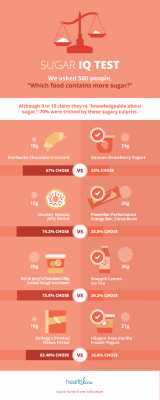 Healthline Sugar Survey[/caption]
Tracy Stickler, Editor in Chief
Healthline
Ms. Stickler discusses a Healthline survey of over 3000 Americans, regarding “their knowledge of sugar and how it affects the body to gauge their relationship about their own sugar consumption and the effects it has on them”.
MedicalResearch.com: What is the background for this study? What are the main findings?
Response: Our company surveyed over 3,000 Americans from across the country about their sugar consumption habits and awareness about added sugar in food.
What we learned is that while many people are aware of the threat overconsumption of sugar is to their health, they aren’t doing much about it. Why not? They don’t know how and quite often they don’t know how much sugar is contained in certain foods they eat. We have an awareness issue. Two out of 3 respondents answered incorrectly to our questions related to which food item contained more sugar.
Healthline Sugar Survey[/caption]
Tracy Stickler, Editor in Chief
Healthline
Ms. Stickler discusses a Healthline survey of over 3000 Americans, regarding “their knowledge of sugar and how it affects the body to gauge their relationship about their own sugar consumption and the effects it has on them”.
MedicalResearch.com: What is the background for this study? What are the main findings?
Response: Our company surveyed over 3,000 Americans from across the country about their sugar consumption habits and awareness about added sugar in food.
What we learned is that while many people are aware of the threat overconsumption of sugar is to their health, they aren’t doing much about it. Why not? They don’t know how and quite often they don’t know how much sugar is contained in certain foods they eat. We have an awareness issue. Two out of 3 respondents answered incorrectly to our questions related to which food item contained more sugar.
 Dr. Jennifer Kuk[/caption]
Jennifer L. Kuk, PhD
Associate Professor
York University
School of Kinesiology and Health Science
Toronto, Ontario
MedicalResearch.com: What is the background for this study? What are the main findings?
Dr. Kuk: Artificial sweeteners are used to help individuals manage their weight, however, individuals who consume aspartame (a type of artificial sweeteners) have worse glucose metabolism than individuals with the same body weight but do not consume aspartame. This observation was only true for adults with obesity. Further, saccharin and natural sugars were not associated with differences in health after considering differences in obesity.
Dr. Jennifer Kuk[/caption]
Jennifer L. Kuk, PhD
Associate Professor
York University
School of Kinesiology and Health Science
Toronto, Ontario
MedicalResearch.com: What is the background for this study? What are the main findings?
Dr. Kuk: Artificial sweeteners are used to help individuals manage their weight, however, individuals who consume aspartame (a type of artificial sweeteners) have worse glucose metabolism than individuals with the same body weight but do not consume aspartame. This observation was only true for adults with obesity. Further, saccharin and natural sugars were not associated with differences in health after considering differences in obesity.
 Dr.James DiNicolantonio[/caption]
MedicalResearch.com Interview with:
James J. DiNicolantonio, PharmD
Associate Editor BMJ Open Heart
Cardiovascular Research Scientist
Saint Luke's Mid America Heart Institute
Medical Research: What is the background for this study? What are the main findings?
Dr. DiNicolantonio: We comprehensively reviewed the literature looking at the cardiovascular effects of saturated fat and compared them with refined sugars (sucrose and high-fructose corn syrup). Our main finding is that saturated fat per se is not necessarily unhealthy. Importantly, people eat foods, not saturated fat, and depending on what foods are consumed determines if saturated fat associates with health risk. For example, the consumption of processed meat is associated with an increased risk of cardiovascular disease, whereas dairy is not. Importantly, the replacement of saturated fat with refined sugars seems to increase the risk of myocardial infarction. Hence, reducing added sugars should be the main focus rather than reducing saturated fat, as the latter could translate to reductions in healthy whole foods that just so happen to also be high in saturated fat (but also provide other healthy fats).
Dr.James DiNicolantonio[/caption]
MedicalResearch.com Interview with:
James J. DiNicolantonio, PharmD
Associate Editor BMJ Open Heart
Cardiovascular Research Scientist
Saint Luke's Mid America Heart Institute
Medical Research: What is the background for this study? What are the main findings?
Dr. DiNicolantonio: We comprehensively reviewed the literature looking at the cardiovascular effects of saturated fat and compared them with refined sugars (sucrose and high-fructose corn syrup). Our main finding is that saturated fat per se is not necessarily unhealthy. Importantly, people eat foods, not saturated fat, and depending on what foods are consumed determines if saturated fat associates with health risk. For example, the consumption of processed meat is associated with an increased risk of cardiovascular disease, whereas dairy is not. Importantly, the replacement of saturated fat with refined sugars seems to increase the risk of myocardial infarction. Hence, reducing added sugars should be the main focus rather than reducing saturated fat, as the latter could translate to reductions in healthy whole foods that just so happen to also be high in saturated fat (but also provide other healthy fats).
 Kawther Hashem[/caption]
MedicalResearch.com Interview with:
Kawther Hashem MSc RNutr (Public Health)
Nutritionist and Researcher
Action on Sugar
Wolfson Institute of Preventive Medicine,
Queen Mary, University of London
London UK
Medical Research: What is the background for this study? What are the main findings?
Response: The calculations showed that a 40% reduction in free sugars added to Sugar Sweetened Beverages (SSBs) over five years would lead to an average reduction in energy intake of 38 kcal per day by the end of the fifth year. This would lead to an average reduction in body weight of 1.20kg in adults, resulting in a reduction in overweight and obese adults by approximately half a million and 1 million respectively. This would in turn prevent between 274,000-309,000 obesity-related type 2 diabetes over the next two decades. Policies such as this will reduce cases of overweight and obesity and type 2 diabetes, this will have a major clinical impact and reduce healthcare costs.
Kawther Hashem[/caption]
MedicalResearch.com Interview with:
Kawther Hashem MSc RNutr (Public Health)
Nutritionist and Researcher
Action on Sugar
Wolfson Institute of Preventive Medicine,
Queen Mary, University of London
London UK
Medical Research: What is the background for this study? What are the main findings?
Response: The calculations showed that a 40% reduction in free sugars added to Sugar Sweetened Beverages (SSBs) over five years would lead to an average reduction in energy intake of 38 kcal per day by the end of the fifth year. This would lead to an average reduction in body weight of 1.20kg in adults, resulting in a reduction in overweight and obese adults by approximately half a million and 1 million respectively. This would in turn prevent between 274,000-309,000 obesity-related type 2 diabetes over the next two decades. Policies such as this will reduce cases of overweight and obesity and type 2 diabetes, this will have a major clinical impact and reduce healthcare costs.
 MedicalResearch.com Interview with:
Ekaterina Maslova PhD
Doctor of Science in Nutrition and Epidemiology
Center for Fetal Programming
Copenhagen, Denmark
Medical Research: What is the background for this study? What are the main findings?
Response: From prior studies we know that excessive gestational weight gain (GWG) in pregnancy is associated with complications for both the mother and the child, including gestational diabetes, hypertension, and high birth weight. Understanding the factors that determine gestational weight gain would allow for interventions early on to improve pregnancy outcomes. Dietary intake has been found to influence gestational weight gain in other studies, but evidence is conflicting and still quite limited. In non-pregnant populations a high-protein diet was shown to decrease weight and improve weight maintenance. We therefore hypothesized that a similar relation may exist for gestational weight gain in pregnant women.
In this study we had data on dietary intake of more than 45,000 Danish women who were pregnant between 1996 and 2002. We examined the relation between their intake of protein and carbohydrates and the rate of gestational weight gain (in grams per week). We found that women who consumed a high protein-to-carbohydrate (PC) ratio gained less gestational weight gain compared to women with a lower PC ratio in their diet. The results was stronger in women who started their pregnancy already overweight compared to normal weight women.
Since a high PC ratio may result from either a high protein intake or low carbohydrate intake, we decided to focus on a component of carbohydrates that may increase gestational weight gain: added sugar. We found that pregnant women with higher intake of sugar gained more weight in pregnancy compared to those who consumed less added sugar. This averaged out to about 1.4 kg (or 7%) higher weight gain across the entire pregnancy.
James J. DiNicolantonio, PharmD
Associate Editor BMJ Open Heart
Cardiovascular Research Scientist
Saint Luke's Mid America Heart Institute
Medical Research: What is the background for this study? What are the main findings?
Dr. DiNicolantonio: We performed a comprehensive literature review comparing the isocaloric exchange of added sugars (sucrose, also known as table sugar, or high fructose corn syrup) versus other types of carbohydrates (such as lactose found in milk, glucose, starch, or dextrose). Our main findings were that "a calorie isn't a calorie," i.e., that added sugars are more harmful than other carbohydrates even when matched for calories for promoting pre-diabetes and diabetes and the related morbidity and mortality associated with these diseases
MedicalResearch.com Interview with:
Ekaterina Maslova PhD
Doctor of Science in Nutrition and Epidemiology
Center for Fetal Programming
Copenhagen, Denmark
Medical Research: What is the background for this study? What are the main findings?
Response: From prior studies we know that excessive gestational weight gain (GWG) in pregnancy is associated with complications for both the mother and the child, including gestational diabetes, hypertension, and high birth weight. Understanding the factors that determine gestational weight gain would allow for interventions early on to improve pregnancy outcomes. Dietary intake has been found to influence gestational weight gain in other studies, but evidence is conflicting and still quite limited. In non-pregnant populations a high-protein diet was shown to decrease weight and improve weight maintenance. We therefore hypothesized that a similar relation may exist for gestational weight gain in pregnant women.
In this study we had data on dietary intake of more than 45,000 Danish women who were pregnant between 1996 and 2002. We examined the relation between their intake of protein and carbohydrates and the rate of gestational weight gain (in grams per week). We found that women who consumed a high protein-to-carbohydrate (PC) ratio gained less gestational weight gain compared to women with a lower PC ratio in their diet. The results was stronger in women who started their pregnancy already overweight compared to normal weight women.
Since a high PC ratio may result from either a high protein intake or low carbohydrate intake, we decided to focus on a component of carbohydrates that may increase gestational weight gain: added sugar. We found that pregnant women with higher intake of sugar gained more weight in pregnancy compared to those who consumed less added sugar. This averaged out to about 1.4 kg (or 7%) higher weight gain across the entire pregnancy.
James J. DiNicolantonio, PharmD
Associate Editor BMJ Open Heart
Cardiovascular Research Scientist
Saint Luke's Mid America Heart Institute
Medical Research: What is the background for this study? What are the main findings?
Dr. DiNicolantonio: We performed a comprehensive literature review comparing the isocaloric exchange of added sugars (sucrose, also known as table sugar, or high fructose corn syrup) versus other types of carbohydrates (such as lactose found in milk, glucose, starch, or dextrose). Our main findings were that "a calorie isn't a calorie," i.e., that added sugars are more harmful than other carbohydrates even when matched for calories for promoting pre-diabetes and diabetes and the related morbidity and mortality associated with these diseases
 MedicalResearch.com Interview with:
James J. DiNicolantonio, PharmD
Associate Editor BMJ Open Heart
Cardiovascular Research Scientist
Saint Luke's Mid America Heart Institute
Medical Research: What is the background for this study? What are the main findings?
Dr. DiNicolantonio: Cardiovascular disease is the leading cause of premature mortality in the developed world, and hypertension is its most important risk factor. Controlling hypertension is a major focus of public health initiatives, and dietary approaches have historically focused on sodium.
A reduction in the intake of added sugars, particularly fructose, and specifically in the quantities and context of industrially-manufactured consumables, would help not only curb hypertension rates, but would also help address broader problems related to cardiometabolic disease.
MedicalResearch.com Interview with:
James J. DiNicolantonio, PharmD
Associate Editor BMJ Open Heart
Cardiovascular Research Scientist
Saint Luke's Mid America Heart Institute
Medical Research: What is the background for this study? What are the main findings?
Dr. DiNicolantonio: Cardiovascular disease is the leading cause of premature mortality in the developed world, and hypertension is its most important risk factor. Controlling hypertension is a major focus of public health initiatives, and dietary approaches have historically focused on sodium.
A reduction in the intake of added sugars, particularly fructose, and specifically in the quantities and context of industrially-manufactured consumables, would help not only curb hypertension rates, but would also help address broader problems related to cardiometabolic disease.
 MedicalResearch.com Interview with:
Professor Aubrey Sheiham
Emeritus Professor of Dental Public Health
Department of Epidemiology & Public Health,
University College London, WC1E 6BT. UK.
Medical Research: What are the main findings of the study?
Prof Sheiham: There is a robust log-linear relationship of caries to sugar intakes from zero to 10% of sugars as a proportion of total energy intake. Furthermore our analyses showed that sugar intakes of 10%E sugars intake that is currently recommended as an upper limit for free sugars by the WHO and the Scientific Advisory Committee on Nutrition in England would induce a very costly burden of caries in most populations. Second, we found that free sugars* in the diet should make up no more than 3% of total energy intake. Above that level they cause a significant level of tooth decay across the lifecourse of most people in the developed world. Third, we were able to show that despite widescale fluoride use from both toothpastes and drinking water the mean numbers of decayed, missing and filled teeth (DMFT) and decayed and filled surfaces (DFS) for adults increased with sugar use despite the presence of fluoride.
*Free sugars are defined by the World Health Organisation Nutrition Guidance Adivisory Group as follows: “Free sugars include monosaccharides and disaccharides added to foods by the manufacturer, cook or consumer, and sugars naturally present in honey, syrups, fruit juices and fruit concentrates.”
MedicalResearch.com Interview with:
Professor Aubrey Sheiham
Emeritus Professor of Dental Public Health
Department of Epidemiology & Public Health,
University College London, WC1E 6BT. UK.
Medical Research: What are the main findings of the study?
Prof Sheiham: There is a robust log-linear relationship of caries to sugar intakes from zero to 10% of sugars as a proportion of total energy intake. Furthermore our analyses showed that sugar intakes of 10%E sugars intake that is currently recommended as an upper limit for free sugars by the WHO and the Scientific Advisory Committee on Nutrition in England would induce a very costly burden of caries in most populations. Second, we found that free sugars* in the diet should make up no more than 3% of total energy intake. Above that level they cause a significant level of tooth decay across the lifecourse of most people in the developed world. Third, we were able to show that despite widescale fluoride use from both toothpastes and drinking water the mean numbers of decayed, missing and filled teeth (DMFT) and decayed and filled surfaces (DFS) for adults increased with sugar use despite the presence of fluoride.
*Free sugars are defined by the World Health Organisation Nutrition Guidance Adivisory Group as follows: “Free sugars include monosaccharides and disaccharides added to foods by the manufacturer, cook or consumer, and sugars naturally present in honey, syrups, fruit juices and fruit concentrates.”
 MedicalResearch.com Interview with:
Maki Inoue-Choi, PhD, MS, RD
Division of Cancer Epidemiology and Genetics, National Cancer Institute
National Institute on Minority Health and Health Disparities, NIH
Rockville, MD 20850
MedicalResearch.com: What are the main findings of the study?
Answer: In our study, postmenopausal women who reported higher consumption of sugar-sweetened beverages were more likely to develop estrogen-dependent type I endometrial cancer, the most common type of this cancer.
MedicalResearch.com Interview with:
Maki Inoue-Choi, PhD, MS, RD
Division of Cancer Epidemiology and Genetics, National Cancer Institute
National Institute on Minority Health and Health Disparities, NIH
Rockville, MD 20850
MedicalResearch.com: What are the main findings of the study?
Answer: In our study, postmenopausal women who reported higher consumption of sugar-sweetened beverages were more likely to develop estrogen-dependent type I endometrial cancer, the most common type of this cancer.