MedicalResearch.com Interview with:
[caption id="attachment_61640" align="alignleft" width="110"]

Dr. Li Gan[/caption]
Dr. Li Gan PhD
Burton P. and Judith B. Resnick Distinguished Professor in Neurodegenerative Diseases
Brain and Mind Research Institute
Weill Cornell Medical College
[caption id="attachment_61627" align="alignleft" width="150"]

Dr. Shiaoching Gong[/caption]
Shiaoching Gong PhD
Helen and Robert Appel Alzheimer’s Disease Institute
Feil Family Brain and Mind Research Institute
Weill Cornell Medicine, New York, NY
MedicalResearch.com: What is the background for this study? Would you describe the process of making these neurons?
Response: Primary tauopathies are a group of progressive neurodegenerative diseases characterized by the pathological aggregation of 3R or 4R tau protein in neurons and/or glial cells, where 4R tauopathies are more common primary tauopathies. The exact pathological mechanisms remain elusive. There are currently no therapies available that can halt or reverse the spread of tau aggregates since the drug effects found in animal models are not always reproduced in human clinical trials. The development of tau therapies from human cells have become urgently needed. Induced human pluripotent stem cells (iPSCs) offer a unique model to better understand pathological mechanisms underlying human diseases and to develop human cell-based therapy. However, a major challenge to study 4R tauopathy is iPSC-derived neurons express very low levels of 4R Tau isoforms making it difficult to study 4R tauopathy and the mutations located in 4R Tau.
To address this need, we designed and engineered a robust human iPSC 4R tauopathy model using CRISPR/Cas9 technology. We first introduced specific mutations at the intron-exon 10 junctions and silent mutations within exon 10 to promote exon 10 inclusion, leading the increase of 4R isoforms expression in iPSC-derived neurons. Frontotemporal Dementia (FTD) mutation, P301S located in exon 10 is highly aggregation prone. To generate this human disease 4R tauopathy model, we then introduced this mutation to 4R iPSC to make it a 4RP301S iPSC line.





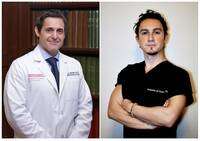
 Dr. Alexis[/caption]
Andrew F. Alexis, MD, MPH
Vice-Chair for Diversity and Inclusion
Department of Dermatology
Dermatologist
Center for Diverse Skin Complexions
Weill Cornell Medicine – NY
MedicalResearch.com: What are the main types of skin cancer? Is the incidence changing?
Response: The 3 main types of skin cancer are melanoma, squamous cell carcinoma (SCC) and basal cell carcinoma (BCC). Skin cancer is the most common cancer in the United States1 and 1 in 5 Americans will develop skin cancer in their lifetime. (2)
The overall incidence has changed as follows:
• Melanoma: Rates doubled over past 30 years from 1982 to 2011.3 It differs by age group.
o Adolescents and adults age 30 and younger: incidence rate is declining
o Older age groups (e.g. 80 and older): incidence rate is increasing
• Squamous Cell Cancer:
o Incidence increased 263% between 1976-1984 and 2000-20104
• Basal Cell Cancer:
o Incidence increased 145% between 1976-1984 and 2000-20104
Dr. Alexis[/caption]
Andrew F. Alexis, MD, MPH
Vice-Chair for Diversity and Inclusion
Department of Dermatology
Dermatologist
Center for Diverse Skin Complexions
Weill Cornell Medicine – NY
MedicalResearch.com: What are the main types of skin cancer? Is the incidence changing?
Response: The 3 main types of skin cancer are melanoma, squamous cell carcinoma (SCC) and basal cell carcinoma (BCC). Skin cancer is the most common cancer in the United States1 and 1 in 5 Americans will develop skin cancer in their lifetime. (2)
The overall incidence has changed as follows:
• Melanoma: Rates doubled over past 30 years from 1982 to 2011.3 It differs by age group.
o Adolescents and adults age 30 and younger: incidence rate is declining
o Older age groups (e.g. 80 and older): incidence rate is increasing
• Squamous Cell Cancer:
o Incidence increased 263% between 1976-1984 and 2000-20104
• Basal Cell Cancer:
o Incidence increased 145% between 1976-1984 and 2000-20104

 Dr. Khullar[/caption]
Dhruv Khullar, M.D., M.P.P.
Director of Policy Dissemination
Physicians Foundation Center for Physician Practice and Leadership
Assistant Professor of Health Policy and Economics
Weill Cornell Medicine, NYC
MedicalResearch.com: What is the background for this study?
Response: From prior research, we know that there are racial/ethnic differences in the acute impact of COVID-19, including higher rates of hospitalization and death among Black and Hispanic individuals compared to white individuals. Less is known about whether there are differences in the rates or types of long COVID by race and ethnicity.
Dr. Khullar[/caption]
Dhruv Khullar, M.D., M.P.P.
Director of Policy Dissemination
Physicians Foundation Center for Physician Practice and Leadership
Assistant Professor of Health Policy and Economics
Weill Cornell Medicine, NYC
MedicalResearch.com: What is the background for this study?
Response: From prior research, we know that there are racial/ethnic differences in the acute impact of COVID-19, including higher rates of hospitalization and death among Black and Hispanic individuals compared to white individuals. Less is known about whether there are differences in the rates or types of long COVID by race and ethnicity.
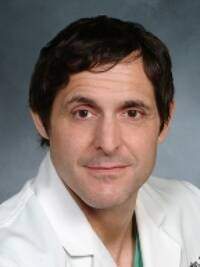
 Dr. Gaudino[/caption]
Mario FL Gaudino, MD, PhD, MSCE, FEBCTS, FACC, FAHA
Dr. Gaudino[/caption]
Mario FL Gaudino, MD, PhD, MSCE, FEBCTS, FACC, FAHA