Dental Research / 27.07.2023
Fluoride-Free Toothpaste Is Just As Good As Fluoridated Toothpaste, New Study Reveals
This article is for informational purposes only and is not a substitute for professional medical advice, diagnosis or treatment. Contact a qualified dentist or medical professional before engaging in any physical activity, or making any changes to your dental program, diet, medication or lifestyle,
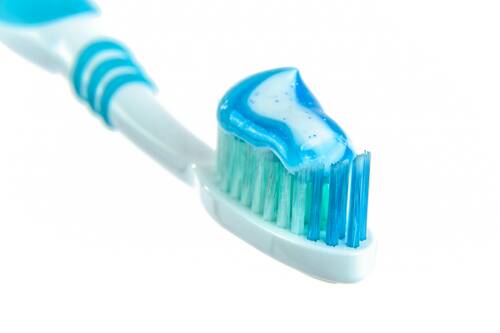
For years, medical research has found that fluoride in toothpaste helps to prevent tooth decay and protect against cavities. As a result, most toothpastes contain between 1,000 to 1,100 mg/L of sodium fluoride or monofluorophosphate. But a new study has found that fluoride-free toothpaste is just as effective at preventing cavities as fluoride-based toothpaste. So, does this mean the end of using toothpaste enhanced with fluoride?
The study’s key findings
Poznan University of Medical Sciences carried out a study involving 171 participants over a period of 18 months. The participants were split into two groups. One group used hydroxyapatite (fluoride-free) toothpaste and the other group used fluoridated toothpaste throughout the study. Six-monthly trips to a dental clinician were completed and a DIAGNOcam device and plaque-disclosing solution were used to check for signs of cavities and plaque. The end results revealed that almost 90% of people in both groups had no new cavities, which indicates that both hydroxyapatite toothpaste and fluoridated toothpaste keep cavities at bay.
Response: Cigarette smoking is one of the well-established causes of periodontitis, but the effect of using electronic cigarettes (e-cig), especially its long-term impact on periodontal health, is not yet clearly understood. Considering the increased popularity of e-cig use, especially among teenagers and young adults, and the known effect of high nicotine concentration in e-cigarette products, we conducted this clinical research to see if there were differences in periodontal health between e-cig users, traditional smokers, and nonsmokers. The study consisted of two visits, 6 months apart, where measures of oral and periodontal health were obtained.
Our data showed significantly greater clinical attachment loss in the e-cigarette users and cigarette smokers than in the non-smokers at both study visits. In only e-cigarette users, we observed an over 0.2 mm average increase in the clinical attachment loss after 6 months.
Dr. LaMonte[/caption]
Michael J. LaMonte, PhD, MPH
Research Professor (epidemiology)
Department of Epidemiology and Environmental Health
School of Public Health and Health Professions
Women’s Health Initiative Northeast Regional Center
University at Buffalo – SUNY
Buffalo, NY 14214
MedicalResearch.com: What is the background for this study? What are the main findings?
Dr. LaMonte: The rationale for this study was based on existing study results showing
Dr. Cabana[/caption]
Michael Cabana, M.D., M.A., M.P.H
Professor of Pediatrics
Albert Einstein College of Medicine.
Physician-in-chief , Children's Hospital at Montefiore
Chair of the Department of Pediatrics
Albert Einstein College of Medicine
Member, U.S. Preventive Services Task Force
MedicalResearch.com: What is the background for this study and recommendation statement?
Response: Dental caries, also known as cavities or tooth decay, is the most common chronic disease in children in the United States and can develop in any child whose teeth have come in. Many young children under five years old do not visit a dentist, so the Task Force reviewed the latest evidence on how primary care clinicians can help prevent tooth decay in young children.
The Task Force’s research led to two important findings: all young children whose teeth have come in should have fluoride varnish applied by their clinician, and all children six months and older whose water supply doesn’t contain enough fluoride should receive fluoride supplements. Both approaches can help prevent cavities in kids.
The Task Force also determined that there is not enough evidence to recommend for or against screening for tooth decay in the primary care setting for children under five. This is consistent with the Task Force’s 2014 recommendation on dental caries.
Dane Kim[/caption]
Dane Kim, Dental Student
University of Pennsylvania School of Dental Medicine
MedicalResearch.com: What is the background for this study?
Response: This large study was inspired, in part, by a previous publication, Gustatory Function After Third Molar Extraction (Shafer et al. 1999), which examined the effect of third molar extractions on human taste function. Their work was based upon more severe extractions and followed patients only up to six months after their surgery. Studies examining taste function over a longer period, i.e., beyond six months from the surgery, were non-existent.
The Smell and Taste Center of Penn Medicine, which is the only center of its type in the United States, has a large unique database of patients who have been thoroughly tested for both smell and taste function. This provided us with the opportunity to compare data from hundreds of persons who had previously received third-molar extractions to those who had not received such extractions. Importantly, the extracts had occurred years before thee taste testing.
Dr. Hwang[/caption]
Geelsu Hwang, Ph.D.
Assistant Professor
Department of Preventive and Restorative Sciences
Center for Innovation and Precision Dentistry (CiPD)
School of Dental Medicine
University of Pennsylvania
MedicalResearch.com: What is the background for this study? What is the significance of this oral biofilm?
Response: Dental caries is one of the most common and costly biofilm-dependent diseases that afflict children and adults worldwide. Particularly, Early Childhood Caries (ECC) is a hyper-virulent type of chronic tooth decay that most frequently afflicts underprivileged preschool children. The onset and progression of carious lesions in ECC are rapid and aggressive, causing rampant destruction of the smooth surfaces of teeth.
ECC is painful and often requires surgical procedure under general anesthesia, while current treatment modalities are inefficient and recurrence of ECC is common. Notably, interactions between a fungus, Candida albicans, and a bacterium, Streptococcus mutans, have been known to play important roles in the pathogenesis of dental caries.
Thus, we attempted to strategically develop a targeted measure to effectively prevent cross-kingdom interactions and subsequent biofilm development.
Prof. D'Aiuto[/caption]
Francesco D’Aiuto
Professor/Hon Consultant
Head of Periodontology Unit
UCL Eastman Dental Institute
MedicalResearch.com: What is the background for this study?
Response: This study was set out to further our understanding of the link between gum disease and high blood pressure. Recent evidence suggested that individuals with gum disease had a 20-70% increased risk of hypertension and systemic inflammation seemed to be a driver in mediating this association. Further research on the matter was needed. We recruited two relatively large groups of otherwise healthy participants (without a confirmed diagnosis of hypertension) who had gum disease one and healthy gums the other.
We found that diagnosis of periodontitis (gum disease) was consistently linked to higher systolic blood pressure independent of other cardiovascular risk factors.
Dr. Meyers[/caption]
Craig Meyers, PhD
Department of Microbiology and Immunology
Pennsylvania State College of Medicine
Hershey, PA
MedicalResearch.com: What is the background for this study?
Response: As nasal and oral cavities are major points of entry and transmission for human coronaviruses our team of physicians and scientists (Craig Meyers, Janice Milici, Samina Alam, David Quillen, David Goldenberg and Rena Kass of Penn State College of Medicine and Richard Robison of Brigham Young University) were interested in testing common over-the-counter oral antiseptics and mouthwashes for their efficacy to inactivate infectious human coronavirus, which is structurally similar to SARS-CoV-2, the virus that causes COVID-19. While we wait for a vaccine for COVID-19 to be developed, methods to reduce transmission are needed. We chose products that are readily available and often already part of people’s daily routines.
CDC PHIL image[/caption]
MedicalResearch.com: What is the background for this study?
Response: This report reviewed three measures of tooth loss among adults over 50 years old with selected chronic conditions. The report analyzed data from the 2011–2016 cycles of the National Health and Nutrition Examination Survey (NHANES) to compare the rates of total tooth loss, severe tooth loss (less than 8 teeth), and lacking functional dentition (less than 20 teeth) among people with and without selected chronic conditions.

Dr. Wiener and Christopher Waters, Research Labs Director, WVU School of Dentistry[/caption]
R. Constance Wiener, DMD, PhD
Associate Professor
West Virginia University School of Dentistry
MedicalResearch.com: What is the background for this study?
Response: Perfluoroalkyl and polyfluoroalkyl substances (PFAS) are chemical groups that have had a wide variety of uses due to their ability to their ability to repel water and stains. They might be found in food packaging, water-repellant clothing and carpeting, paints, fire-fighting foam, and water, for example. Although many are no longer manufactured in the United States, PFAS persist in the environment as they do not readily break down. Adverse health effects have been speculated especially for low birthweight babies, immunological effects, certain cancers and thyroid hormone disruption.1 With these considerations, we hypothesized that there may be an association of PFAS with tooth development and subsequent dental caries (cavities).


It was noted that the differentiation of the structures of the developing jaws is ahead of other divisions. The presence of chromophobic spindle-shaped cells migrating in the direction of the tooth rudiments and their location in the region surrounding the enamel organ indicates intercellular interactions in the development of teeth in humans that differ from these processes in lower vertebrates. At the present stage, it is known that ectomesenchyme is involved in cell assemblies participating in the development of dentin.