MedicalResearch.com Interview with:
[caption id="attachment_49434" align="alignleft" width="200"]

Dr. Suda[/caption]
Dr. Katie Suda, PharmD, M.S.
Associate Professor
College of Pharmacy
University of Illinois at Chicago
MedicalResearch.com: What is the background for this study?
Response: Dentists prescribe approximately 1 in every 10 antibiotics in the United States and are the top specialty prescriber. Dentists are the primary prescriber of clindamycin in the U.S., which is associated with a high risk of
C. difficile infection (an overgrowth of bacteria in the GI tract that can cause a life-threatening infection). Clinical guidelines recommend that patients with specific cardiac conditions receive a dose of antibiotics prior to undergoing invasive dental procedures to prevent infective endocarditis (an infection of the heart values). Taking a dose of antibiotics prior to a dental visit is referred to as antibiotic prophylaxis. Starting in 2007, these guidelines were narrowed secondary to poor evidence on the effectiveness of antibiotic prophylaxis and the risk of antibiotic-related adverse events. Antibiotic adverse events include antibiotic resistance,
C. difficile infection, and other general adverse events (nausea, vomiting, diarrhea).
While significant research has been conducted on unnecessary prescribing of antibiotics by medical providers, little work has described appropriateness of prescribing by dentists. We assessed if antibiotics prescribed for prophylaxis prior to dental procedures were consistent with clinical guidelines.

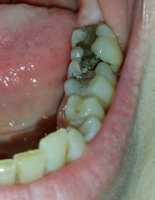
 Dr. Wiener and Christopher Waters, Research Labs Director, WVU School of Dentistry[/caption]
R. Constance Wiener, DMD, PhD
Associate Professor
West Virginia University School of Dentistry
MedicalResearch.com: What is the background for this study?
Response: Perfluoroalkyl and polyfluoroalkyl substances (PFAS) are chemical groups that have had a wide variety of uses due to their ability to their ability to repel water and stains. They might be found in food packaging, water-repellant clothing and carpeting, paints, fire-fighting foam, and water, for example. Although many are no longer manufactured in the United States, PFAS persist in the environment as they do not readily break down. Adverse health effects have been speculated especially for low birthweight babies, immunological effects, certain cancers and thyroid hormone disruption.1 With these considerations, we hypothesized that there may be an association of PFAS with tooth development and subsequent dental caries (cavities).
Dr. Wiener and Christopher Waters, Research Labs Director, WVU School of Dentistry[/caption]
R. Constance Wiener, DMD, PhD
Associate Professor
West Virginia University School of Dentistry
MedicalResearch.com: What is the background for this study?
Response: Perfluoroalkyl and polyfluoroalkyl substances (PFAS) are chemical groups that have had a wide variety of uses due to their ability to their ability to repel water and stains. They might be found in food packaging, water-repellant clothing and carpeting, paints, fire-fighting foam, and water, for example. Although many are no longer manufactured in the United States, PFAS persist in the environment as they do not readily break down. Adverse health effects have been speculated especially for low birthweight babies, immunological effects, certain cancers and thyroid hormone disruption.1 With these considerations, we hypothesized that there may be an association of PFAS with tooth development and subsequent dental caries (cavities).





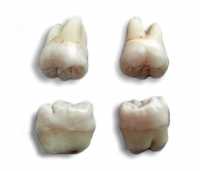




 It was noted that the differentiation of the structures of the developing jaws is ahead of other divisions. The presence of chromophobic spindle-shaped cells migrating in the direction of the tooth rudiments and their location in the region surrounding the enamel organ indicates intercellular interactions in the development of teeth in humans that differ from these processes in lower vertebrates. At the present stage, it is known that ectomesenchyme is involved in cell assemblies participating in the development of dentin.



 Prof. Thornhill[/caption]
Martin H. Thornhill MBBS, BDS, PhD, MSc, FDSRCS(Edin), FDSRCSI, FDSRCS(Eng)
Professor of Translational Research in Dentistry
Academic Unit of Oral & Maxillofacial Medicine Surgery & Pathology,
University of Sheffield School of Clinical Dentistry
MedicalResearch.com: What is the background for this study?
Response: Infective endocarditis is an infection of the heart valves that has a high death rate (around 30% in the first year). It requires intensive treatment often involving replacement of affected heart valves and frequently results in serious long-term illness and disability in those who survive as well as an increased risk of re-infection and high healthcare costs.
In ~40% of cases, bacteria from the mouth are implicated as the causal organism. Because of this, guideline committees around the world recommended that all those at risk of infective endocarditis should receive antibiotic prophylaxis before undergoing invasive dental procedures. Due to a lack of evidence for efficacy, however, guideline committees started to limit the use of antibiotic prophylaxis. And in 2007, the American Heart Association (AHA) guideline committee recommended that antibiotic prophylaxis should continue for those at high-risk but should cease for those at moderate risk of endocarditis. Most guideline countries around the world followed suite. Except in the UK, where the National Institute for Health and Care Excellence (NICE) recommended that the use of antibiotic prophylaxis should completely stop in 2008.
Prof. Thornhill[/caption]
Martin H. Thornhill MBBS, BDS, PhD, MSc, FDSRCS(Edin), FDSRCSI, FDSRCS(Eng)
Professor of Translational Research in Dentistry
Academic Unit of Oral & Maxillofacial Medicine Surgery & Pathology,
University of Sheffield School of Clinical Dentistry
MedicalResearch.com: What is the background for this study?
Response: Infective endocarditis is an infection of the heart valves that has a high death rate (around 30% in the first year). It requires intensive treatment often involving replacement of affected heart valves and frequently results in serious long-term illness and disability in those who survive as well as an increased risk of re-infection and high healthcare costs.
In ~40% of cases, bacteria from the mouth are implicated as the causal organism. Because of this, guideline committees around the world recommended that all those at risk of infective endocarditis should receive antibiotic prophylaxis before undergoing invasive dental procedures. Due to a lack of evidence for efficacy, however, guideline committees started to limit the use of antibiotic prophylaxis. And in 2007, the American Heart Association (AHA) guideline committee recommended that antibiotic prophylaxis should continue for those at high-risk but should cease for those at moderate risk of endocarditis. Most guideline countries around the world followed suite. Except in the UK, where the National Institute for Health and Care Excellence (NICE) recommended that the use of antibiotic prophylaxis should completely stop in 2008.








 Dr. Wactawski-Wende[/caption]
Jean Wactawski-Wende, PhD
Dean, SUNY Distinguished Professor
Professor, Department of Epidemiology and Environmental Health
School of Public Health and Health Professions
University of Buffalo
MedicalResearch.com: What is the background for this study? What are the main findings?
Response: There has been a growing interest in the role of periodontal disease in system chronic diseases, including cancer. We explored the association of periodontal disease history and incident cancer in the women's health initiative study of postmenopausal women. We found that women reporting periodontal disease history were at increased risk of developing cancer overall. In addition they were found to have significant increased risk of specific cancers including cancers of the lung, breast, esophagus, gallbladder and melanoma. The risk persisted after control for many other factors. In addition, the risk was seen in women regardless of their smoking history. Both ever smokers and never smokers were found to have increased risk of cancer associated with periodontal disease history.
Dr. Wactawski-Wende[/caption]
Jean Wactawski-Wende, PhD
Dean, SUNY Distinguished Professor
Professor, Department of Epidemiology and Environmental Health
School of Public Health and Health Professions
University of Buffalo
MedicalResearch.com: What is the background for this study? What are the main findings?
Response: There has been a growing interest in the role of periodontal disease in system chronic diseases, including cancer. We explored the association of periodontal disease history and incident cancer in the women's health initiative study of postmenopausal women. We found that women reporting periodontal disease history were at increased risk of developing cancer overall. In addition they were found to have significant increased risk of specific cancers including cancers of the lung, breast, esophagus, gallbladder and melanoma. The risk persisted after control for many other factors. In addition, the risk was seen in women regardless of their smoking history. Both ever smokers and never smokers were found to have increased risk of cancer associated with periodontal disease history.