MedicalResearch.com Interview with:
[caption id="attachment_54349" align="alignleft" width="142"]

Dr. Soumya Sen[/caption]
Soumya Sen PhD
McKnight Presidential Fellow
Mary & Jim Lawrence Fellow of Carlson School
Director of Research, MIS Research Center
Associate Professor, Information & Decision Sciences
Carlson School of Management
University of Minnesota, Minneapolis, MN
MedicalResearch.com: What is the background for this study?
Response: As the Covid-19 pandemic unfolded across the United States, one of the greatest barriers to understanding the extent of the problem was the lack of reliable and consistent data. Some of the metrics being reported, such as case count and death, are insufficient for hospital capacity planning. Case count is a conservative estimate of the actual number of infected individuals in the absence of community-wide serologic testing, while death count is a lagging metric and insufficient for proactive hospital capacity planning.
A more valuable metric for assessing the effects of public health interventions on the health care infrastructure is hospitalizations. Therefore, the
Medical Industry Leadership Institute (MILI) and the
Management Information Systems Research Center (MISRC) at the Carlson School of Management launched the
COVID-19 hospitalization tracking project in March to consistently track and report daily hospitalizations from all reporting states. Tracking daily hospitalization data is a major step forward in quantifying the current impact on local hospital systems, modeling and forecasting future utilization needs, and tracking the rate of change in the disease severity. It is also useful for understanding the role of health policy interventions in slowing or reducing the impact of the pandemic.

 Dr. Hooker[/caption]
Edmond A. Hooker, MD, DrPH
Professor, Department of Health Services Administration
MHSA Associate Director for Accreditation
Xavier University
Cincinnati, Ohio
MedicalResearch.com: What is the background for this study?
Response: Healthcare acquired infections are still a huge problem in the US. Most hospitals are not following the hospital bed manufacturers guidelines for cleaning these mattresses and bed decks (the metal bed frame). Many use only a single step, when the manufacturers recommend a 5-6 step process (pre-clean any obvious soil, clean, rinse off cleaner, disinfect, rinse off disinfectant, inspect mattress for damage). The problem is that, if done, this takes 45 minutes to 1 hours. Most hospitals turn over a hospital room in less than 30 minutes. The launderable bed cover allows the bed to be cleaned and turned over in minutes, not an hours.
Dr. Hooker[/caption]
Edmond A. Hooker, MD, DrPH
Professor, Department of Health Services Administration
MHSA Associate Director for Accreditation
Xavier University
Cincinnati, Ohio
MedicalResearch.com: What is the background for this study?
Response: Healthcare acquired infections are still a huge problem in the US. Most hospitals are not following the hospital bed manufacturers guidelines for cleaning these mattresses and bed decks (the metal bed frame). Many use only a single step, when the manufacturers recommend a 5-6 step process (pre-clean any obvious soil, clean, rinse off cleaner, disinfect, rinse off disinfectant, inspect mattress for damage). The problem is that, if done, this takes 45 minutes to 1 hours. Most hospitals turn over a hospital room in less than 30 minutes. The launderable bed cover allows the bed to be cleaned and turned over in minutes, not an hours.

 Dr. Schünemann[/caption]
Holger Schünemann, MD, PhD, FRCPC
Professor of Clinical Epidemiology and of Medicine
Co-Director, WHO Collaborating Centre for Infectious Diseases,
Research Methods and Recommendations
Director, Cochrane Canada and McMaster GRADE Centre
Department of Health Research Methods, Evidence, and Impact
Canada
MedicalResearch.com: What is the background for this study?
Response: Many countries and regions have issued conflicting advice about physical distancing to reduce transmission of COVID-19, based on limited information. In addition, the questions of whether masks and eye coverings might reduce transmission of COVID-19 in the general population, and what the optimum use of masks in healthcare settings is, have been debated during the pandemic.
Dr. Schünemann[/caption]
Holger Schünemann, MD, PhD, FRCPC
Professor of Clinical Epidemiology and of Medicine
Co-Director, WHO Collaborating Centre for Infectious Diseases,
Research Methods and Recommendations
Director, Cochrane Canada and McMaster GRADE Centre
Department of Health Research Methods, Evidence, and Impact
Canada
MedicalResearch.com: What is the background for this study?
Response: Many countries and regions have issued conflicting advice about physical distancing to reduce transmission of COVID-19, based on limited information. In addition, the questions of whether masks and eye coverings might reduce transmission of COVID-19 in the general population, and what the optimum use of masks in healthcare settings is, have been debated during the pandemic.









 Dr. Alladina[/caption]
Jehan Alladina MD
Massachusetts General Hospital
Pulmonary and Critical Care Medicine
Boston, Massachusetts
MedicalResearch.com: What is the background for this study?
Response: During the pandemic, clinicians around the world have shared anecdotal experiences to help inform care of patients with COVID-19. However, these anecdotes and observations, without careful analysis, can bias clinicians; many clinicians have even recommended experimental therapies based on this information alone.
To that end, the goal of our study was to rigorously examine the respiratory failure experienced by critically ill patients with COVID-19 and understand their response to the standards of care for respiratory failure.
Dr. Alladina[/caption]
Jehan Alladina MD
Massachusetts General Hospital
Pulmonary and Critical Care Medicine
Boston, Massachusetts
MedicalResearch.com: What is the background for this study?
Response: During the pandemic, clinicians around the world have shared anecdotal experiences to help inform care of patients with COVID-19. However, these anecdotes and observations, without careful analysis, can bias clinicians; many clinicians have even recommended experimental therapies based on this information alone.
To that end, the goal of our study was to rigorously examine the respiratory failure experienced by critically ill patients with COVID-19 and understand their response to the standards of care for respiratory failure.

 Prof. Dagna[/caption]
Prof. Lorenzo Dagna MD FACP
Ospedale San Raffaele and
Vita-Salute San Raffaele University
Milan, Italy
MedicalResearch.com: What is the background for this study?
Response: Upon encountering pathogens, our immune system produces pro-inflammatory mediators, called cytokines. Cytokines activate cells from the immune system. In most people, production of cytokines is an appropriate and protective response to infection. However, some individuals develop excessive and detrimental inflammatory responses, which are even more harmful than the pathogen itself to the host organism.
We hypothesized that some patients with COVID-19 might develop excessive and detrimental inflammation, and that treatment with anti-inflammatory agents might be beneficial in this population.
Anakinra is an inhibitor of the pro-inflammatory molecule interleukin 1 (IL-1). It was originally marketed for the treatment of rheumatoid arthritis, but is now mostly used to treat a variety of pediatric inflammatory diseases.
Prof. Dagna[/caption]
Prof. Lorenzo Dagna MD FACP
Ospedale San Raffaele and
Vita-Salute San Raffaele University
Milan, Italy
MedicalResearch.com: What is the background for this study?
Response: Upon encountering pathogens, our immune system produces pro-inflammatory mediators, called cytokines. Cytokines activate cells from the immune system. In most people, production of cytokines is an appropriate and protective response to infection. However, some individuals develop excessive and detrimental inflammatory responses, which are even more harmful than the pathogen itself to the host organism.
We hypothesized that some patients with COVID-19 might develop excessive and detrimental inflammation, and that treatment with anti-inflammatory agents might be beneficial in this population.
Anakinra is an inhibitor of the pro-inflammatory molecule interleukin 1 (IL-1). It was originally marketed for the treatment of rheumatoid arthritis, but is now mostly used to treat a variety of pediatric inflammatory diseases. 



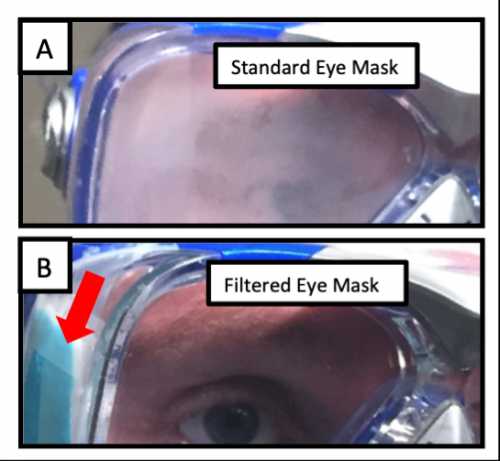

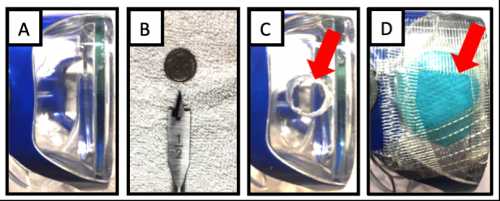 The building of the filtered eye mask prototype.[/caption]


 Vasily Giannakeas[/caption]
Vasily Giannakeas, MPH
Epidemiologist/ Dedicated ICES Analyst
Women's College Hospital
Toronto, Ontario, Canada
MedicalResearch.com: What is the background for this study?
Response: As some health care systems approach collapse, a pressing need exists for tools modeling the capacity of acute and critical care systems during the COVID-19 pandemic.
We developed an online tool to estimate the maximum number of COVID-19 cases that could be managed per day within the catchment area served by a health care system, given acute and critical care resource availability.
The COVID-19 Acute and Intensive Care Resource Tool (CAIC-RT) is open access and available at
Vasily Giannakeas[/caption]
Vasily Giannakeas, MPH
Epidemiologist/ Dedicated ICES Analyst
Women's College Hospital
Toronto, Ontario, Canada
MedicalResearch.com: What is the background for this study?
Response: As some health care systems approach collapse, a pressing need exists for tools modeling the capacity of acute and critical care systems during the COVID-19 pandemic.
We developed an online tool to estimate the maximum number of COVID-19 cases that could be managed per day within the catchment area served by a health care system, given acute and critical care resource availability.
The COVID-19 Acute and Intensive Care Resource Tool (CAIC-RT) is open access and available at