MedicalResearch.com Interview with:
[caption id="attachment_48076" align="alignleft" width="200"]

Anna Benevente[/caption]
Anna Benevente
Director of product, labeling, and ingredient review at Registrar Corp (
registrarcorp.com), an FDA consulting firm that helps companies comply with FDA regulations.
She has been assisting companies with U.S. FDA regulations since 2009.
She and her team have researched thousands of products to determine whether they meet FDA requirements for compliance.
In February 2019, the U.S. Food and Drug Administration (FDA) published a
proposed rule to put into effect a final monograph for over-the-counter (OTC) sunscreen drug products. If finalized, the rule will update conditions under which OTC sunscreen products may be marketed in the United States. Given the effect this rule could have on the pharmaceutical and cosmetic industries,
MedicalResearch.com sat down with Anna Benevente, Director of Product, Labeling, and Ingredient Review at FDA consulting firm Registrar Corp, to dig deeper into
the article they recently published on the rule.
MedicalResearch.com: What is the background for this announcement?
Response: FDA issues monographs for specific types of over-the-counter (OTC) drug products, which establish conditions under which a drug may be marketed without FDA approval of a New Drug Application (NDA) or Abbreviated New Drug Application (ANDA). The conditions that are established by the monograph include the active ingredients that have been deemed generally recognized as safe and effective (GRASE) and statements that must appear on the labeling in the form of a Drug Facts panel. Sunscreens have never had an effective final monograph. Instead, they have been largely regulated under enforcement discretion since 2001, when FDA issued a stay on a final monograph for OTC sunscreen drug products.
The Sunscreen Innovation Act (SIA) of 2014 calls for FDA to establish a final monograph for OTC sunscreen by November 26, 2019. If finalized, the rule proposed in February would lift the stay on the final monograph and amend certain regulations for OTC sunscreen drug products.
MedicalResearch.com: What is enforcement discretion?
Response: FDA rulemaking can take a considerable amount of time. During this process, FDA may issue guidance or an enforcement policy that specifies stipulations under which the Agency permits the marketing of certain products in the absence of codified regulations. While these documents are not legally-binding, they often outline provisions where FDA states that the Agency does not intend to take regulatory action. These provisions are often incorporated into an FDA rule, as we are seeing in the case of this new rule for sunscreen.
MedicalResearch.com: Would you explain what GRASE ingredients are?
Response: When FDA establishes a monograph for an OTC drug product, the Agency reviews scientific data on ingredients used for that product and classifies them into three categories:
Category I: The ingredient is generally recognized as safe and effective for its intended use.
Category II: The ingredient is not generally recognized as safe and effective for its intended use. This ingredient may be not safe as a whole, may be not be safe for the specific intended use, or may not be effective for the specific intended use relative to its health risk.
Category III: There is insufficient scientific data to determine whether the ingredient is safe and effective for its intended use.
While a monograph is still in the rulemaking stage, FDA permits the marketing of products formulated with active ingredients that are deemed Category I or Category III. At this time, industry may submit data to support a Category I designation for a Category III ingredient. When the final monograph is published, FDA no longer uses the terms "Category I", "Category II", and "Category III." Those ingredients that were deemed Category I become "monograph conditions," while Category II and III ingredients become "nonmonograph conditions" and may not be marketed after the compliance date identified in the final rule.
Q: What are the main products that would require a label change?
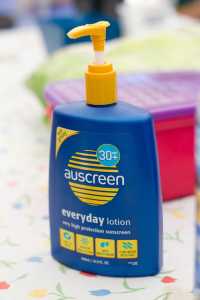
Response:The statement of identity for all sunscreen products would be required to list the sunscreen active ingredients in alphabetical order followed by “Sunscreen” and the product’s dosage form (e.g. “Titanium Dioxide, Zinc Oxide Sunscreen Lotion”). Additionally, the rule proposes formatting changes to sunscreen labels that would make SPF, broad spectrum, and water resistance statements more prominent.
The rule would require all products over 15 SPF to satisfy broad spectrum testing requirements and the associated labeling requirements for broad spectrum products. Products under 15 SPF that do not satisfy broad spectrum requirements would be required to include “*See Skin Cancer/Skin Aging Alert” next to the SPF value as a reference to the warning required under 21 CFR 201.327(d)(2).




















 Marissa Hall[/caption]
Marissa G. Hall, MSPH
Doctoral Candidate, Department of Health Behavior
Gillings School of Global Public Health
University of North Carolina at Chapel Hill
MedicalResearch.com: What is the background for this study? What are the main findings?
Response: The US Food and Drug Administration (FDA) requires pictorial warnings on cigarette packs, but implementation was stalled by a 2012 lawsuit by the tobacco industry. The US Court of Appeals for the DC Circuit ruled against pictorial warnings, saying that FDA had “not provided a shred of evidence” that the pictorial warnings reduce smoking. To address this critique, our randomized trial examined the impact on smoking behavior of adding pictorial warnings to the front and back of cigarette packs. We found that smokers with pictorial warnings on their packs were more likely to attempt to quit and to successfully quit than those whose packs had text-only warnings.
Marissa Hall[/caption]
Marissa G. Hall, MSPH
Doctoral Candidate, Department of Health Behavior
Gillings School of Global Public Health
University of North Carolina at Chapel Hill
MedicalResearch.com: What is the background for this study? What are the main findings?
Response: The US Food and Drug Administration (FDA) requires pictorial warnings on cigarette packs, but implementation was stalled by a 2012 lawsuit by the tobacco industry. The US Court of Appeals for the DC Circuit ruled against pictorial warnings, saying that FDA had “not provided a shred of evidence” that the pictorial warnings reduce smoking. To address this critique, our randomized trial examined the impact on smoking behavior of adding pictorial warnings to the front and back of cigarette packs. We found that smokers with pictorial warnings on their packs were more likely to attempt to quit and to successfully quit than those whose packs had text-only warnings.
 Dr. Victor Serebruany[/caption]
MedicalResearch.com Interview with:
Dr. Victor Serebruany[/caption]
MedicalResearch.com Interview with: Dr. Jennifer Stein[/caption]
MedicalResearch.com Interview with:
Dr. Jennifer Stein MD
Associate Professor
Department of Ronald O. Perelman
Department of Dermatology
NYU Langone Medical Center
Medical Research: What is the background for this FDA decision? What is the issue surrounding tanning beds?
Dr. Stein: This is an important proposal from the FDA because it restricts minors from tanning and requires adults to sign an acknowledgement stating they have been informed about the risks of tanning.
There is clear evidence that indoor tanning significantly increases a person’s risk for skin cancer, including melanoma, a potentially deadly form of skin cancer.
It is important to protect young people from the dangers of tanning beds, especially because many patients report that they started indoor tanning as teens. There are 1.6 million minors using tanning beds every year.
MedicalResearch: What is the problem with tanning? Isn't a tan better than a sunburn?
Dr. Stein: Tanning beds deliver intense amounts of UVA. We know that UVA penetrates deep into the skin and causes mutations that lead to skin cancers, including melanoma. Tanning is a sign that skin cells have been damaged by UV light.
Dr. Jennifer Stein[/caption]
MedicalResearch.com Interview with:
Dr. Jennifer Stein MD
Associate Professor
Department of Ronald O. Perelman
Department of Dermatology
NYU Langone Medical Center
Medical Research: What is the background for this FDA decision? What is the issue surrounding tanning beds?
Dr. Stein: This is an important proposal from the FDA because it restricts minors from tanning and requires adults to sign an acknowledgement stating they have been informed about the risks of tanning.
There is clear evidence that indoor tanning significantly increases a person’s risk for skin cancer, including melanoma, a potentially deadly form of skin cancer.
It is important to protect young people from the dangers of tanning beds, especially because many patients report that they started indoor tanning as teens. There are 1.6 million minors using tanning beds every year.
MedicalResearch: What is the problem with tanning? Isn't a tan better than a sunburn?
Dr. Stein: Tanning beds deliver intense amounts of UVA. We know that UVA penetrates deep into the skin and causes mutations that lead to skin cancers, including melanoma. Tanning is a sign that skin cells have been damaged by UV light.
 Dr. Wang[/caption]
MedicalResearch.com Interview with:
Cunlin Wang, MD, PhD
Division of Epidemiology I,
Office of Surveillance and Epidemiology,
Center for Drug Evaluation and Research
US Food and Drug Administration
MedicalResearch: What is the background for this study? What are the main findings?
Dr. Wang: IV Iron has been known for its risk of anaphylactic reaction, but there has been little research on the comparative safety of individual IV Iron products from a large population-based study. This study included 688,183 new users of IV iron not on dialysis from the U.S. Medicare program over a ten-year span (January 2003 to December 2013). The main findings of the study are: the risk for anaphylaxis at first exposure was higher for iron dextran than non-dextran IV iron products combined (iron sucrose, gluconate and ferumoxytol). When individual IV Iron products were compared, the data suggested that iron dextran has the highest risk of anaphylaxis and Iron sucrose has the lowest risk, estimated both at the first time exposure and after cumulative exposures. The low and high molecular weight dextran products could not be individually identified during most of study period. However, from January 2006 through March 2008, during which the use of two dextran products could be distinguished, there was very low use of high molecular weight dextran (Dexferrum@). This suggested that the study results likely represent the risk of the low molecular weight dextran (Infed@).
Dr. Wang[/caption]
MedicalResearch.com Interview with:
Cunlin Wang, MD, PhD
Division of Epidemiology I,
Office of Surveillance and Epidemiology,
Center for Drug Evaluation and Research
US Food and Drug Administration
MedicalResearch: What is the background for this study? What are the main findings?
Dr. Wang: IV Iron has been known for its risk of anaphylactic reaction, but there has been little research on the comparative safety of individual IV Iron products from a large population-based study. This study included 688,183 new users of IV iron not on dialysis from the U.S. Medicare program over a ten-year span (January 2003 to December 2013). The main findings of the study are: the risk for anaphylaxis at first exposure was higher for iron dextran than non-dextran IV iron products combined (iron sucrose, gluconate and ferumoxytol). When individual IV Iron products were compared, the data suggested that iron dextran has the highest risk of anaphylaxis and Iron sucrose has the lowest risk, estimated both at the first time exposure and after cumulative exposures. The low and high molecular weight dextran products could not be individually identified during most of study period. However, from January 2006 through March 2008, during which the use of two dextran products could be distinguished, there was very low use of high molecular weight dextran (Dexferrum@). This suggested that the study results likely represent the risk of the low molecular weight dextran (Infed@).