More on Gene Therapy on MedicalResearch.com
[caption id="attachment_20741" align="alignleft" width="200"]
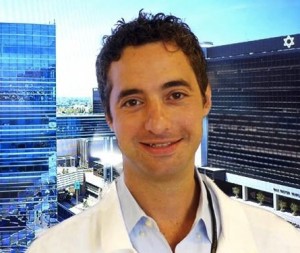
Dr. Benjamin Bakondi[/caption]
MedicalResearch.com Interview with:
Benjamin Bakondi, Ph.D. Postdoctoral Scientist
Laboratory of:
Shaomei Wang, M.D., Ph.D.
Institute Director:
Clive N. Svendsen, Ph.D.
Board of Governors Regenerative Medicine Institute
Cedars-Sinai Medical Center;
Dept. of Biomedical Sciences
Los Angeles, CA 90048
Medical Research: What is the background for this study? What are the main findings?
Dr. Bakondi: Retinitis Pigmentosa (RP) is an inherited disease that causes progressive retinal degeneration and continual vision loss. Over 130 mutations have been identified in over 60 genes that cause RP. Gene replacement therapy is being evaluated for the recessive form of RP, in which both inherited alleles are dysfunctional.
Retinitis Pigmentosa arising from dominant mutations however, would not benefit from such a strategy, and alternative options have not demonstrated clear efficacy.
The idea for a therapeutic based on our approach is to use CRISPR/Cas9 to ablate the mutant copy of an allele and leave the wild-type copy unaffected. Barring haploinsufficiency, the wild-type allele should restore function and prevent retinal degeneration at levels commensurate with Cas9 cleavage efficiency. Our experimental findings provide proof-of-principle that a single DNA nucleotide difference in the genomic sequence between mutant and wild-type genes is enough to distinguish the mutant transcript for Cas9 cleavage with high fidelity. Eliminating production of the mutant rhodopsin protein prevented retinal degeneration and preserved vision. While Cas9/gRNA delivery improvement is underway, it should be noted that translational applicability of this approach is restricted to dominant mutations, not all of which may be targetable for ablation therapy.










 Dr. Hui-Lin Pan[/caption]
Hui-Lin Pan, MD, PhD
Helen T. Hawkins Distinguished Professor
and Deputy Division Head for Research
Division of Anesthesiology and Critical Care, Unit 110
The University of Texas MD Anderson Cancer Center
Houston, TX
MedicalResearch.com: What is the background for this study?
Dr. Hui-Lin Pan: Chronic nerve pain caused by damage to the peripheral nerve is a debilitating health problem and remains very difficult to treat. Sensory neurons in the spinal cord are normally inhibited by inhibitory neurotransmitters (GABA and glycine) to regulate transmission of painful information. A major feature of nerve injury-induced chronic pain is reduced spinal cord inhibition, resulting from diminished activity of a chloride transporter called KCC2. In this study, we investigated whether increasing KCC2 expression at the spinal level using a lentiviral vector can restore KCC2 activity, thereby reducing chronic nerve pain.
Dr. Hui-Lin Pan[/caption]
Hui-Lin Pan, MD, PhD
Helen T. Hawkins Distinguished Professor
and Deputy Division Head for Research
Division of Anesthesiology and Critical Care, Unit 110
The University of Texas MD Anderson Cancer Center
Houston, TX
MedicalResearch.com: What is the background for this study?
Dr. Hui-Lin Pan: Chronic nerve pain caused by damage to the peripheral nerve is a debilitating health problem and remains very difficult to treat. Sensory neurons in the spinal cord are normally inhibited by inhibitory neurotransmitters (GABA and glycine) to regulate transmission of painful information. A major feature of nerve injury-induced chronic pain is reduced spinal cord inhibition, resulting from diminished activity of a chloride transporter called KCC2. In this study, we investigated whether increasing KCC2 expression at the spinal level using a lentiviral vector can restore KCC2 activity, thereby reducing chronic nerve pain.