
24 Jul Hockey Eye Injuries Rising in the U.S. — UCSD Study Finds 12% Are Vision-Threatening
MedicalResearch.com Interview with:
[caption id="attachment_75222" align="alignleft" width="200"] Dr. Don Kikkawa[/caption]
Don Kikkawa, MD Distinguished Professor, UC San Diego Viterby Family Department of Ophthalmology Chief, Division of Oculofacial Plastic and Reconstructive Surgery Vice-Chairman, Department of Ophthalmology UCSD
[caption id="attachment_75223" align="alignleft" width="125"]
 Dr. Leo Miller[/caption]
Leo Meller, MD
UC San Diego School of Medicine, Class of 2026
MedicalResearch.com: What is the background for this study?
Dr. Kikkawa and Dr. Meller: Hockey can put players at risk for eye injuries because of high-speed pucks, sticks, and close-contact play. While many sports-related eye injuries are preventable, there has been limited national data on the frequency and severity of hockey-related eye injuries across different types of hockey. Our research used 20 years of U.S. emergency department data to better understand these injuries. Similar work examining recreational sport eye injury trends — including our related research covered previously on MedicalResearch.com on serious and preventable eye injuries treated in emergency settings — underscores why population-level surveillance data matters for guiding prevention efforts.
[caption id="attachment_75224" align="aligncenter" width="500"] Photo by Luke Miller[/caption]





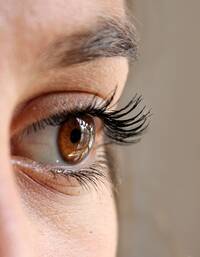
 Response: We were broadly interested in discovering instances of bacterial genes that have been acquired by diverse animal genomes over millions of years of evolution by the process of horizontal gene transfer (HGT). Since these events are quite rare and most previous discoveries have been serendipitous, we developed computational methods to identify genes acquired by HGT in animals. One of the exciting discoveries from our work was that vertebrate IRBP appeared to have originated in bacteria and is now a critical component of the vertebrate visual cycle, so this paper focuses on that one discovery.
IRBP or interphotoreceptor retinoid binding protein is an important protein present in the space between two major cell types in our eyes, photoreceptor cells and RPE cells. Our ability to see involves an intricate set of steps where light is first sensed by causing a change (isomerization) in the chemical structure of molecules in the eye called retinoids. This sensing of light occurs in our photoreceptor cells. Following this change in the chemical structure, the retinoid needs to be recycled back to the chemical structure that can again sense light. This recycling occurs in RPE cells. IRBP performs the essential function of shuttling retinoids between the photoreceptors and the RPE cells, which allows the cycle of sensing and regeneration to work. Supporting its importance, mutations in IRBP (also known as retinol binding protein 3 or RBP3) can cause several severe human eye diseases.
Response: We were broadly interested in discovering instances of bacterial genes that have been acquired by diverse animal genomes over millions of years of evolution by the process of horizontal gene transfer (HGT). Since these events are quite rare and most previous discoveries have been serendipitous, we developed computational methods to identify genes acquired by HGT in animals. One of the exciting discoveries from our work was that vertebrate IRBP appeared to have originated in bacteria and is now a critical component of the vertebrate visual cycle, so this paper focuses on that one discovery.
IRBP or interphotoreceptor retinoid binding protein is an important protein present in the space between two major cell types in our eyes, photoreceptor cells and RPE cells. Our ability to see involves an intricate set of steps where light is first sensed by causing a change (isomerization) in the chemical structure of molecules in the eye called retinoids. This sensing of light occurs in our photoreceptor cells. Following this change in the chemical structure, the retinoid needs to be recycled back to the chemical structure that can again sense light. This recycling occurs in RPE cells. IRBP performs the essential function of shuttling retinoids between the photoreceptors and the RPE cells, which allows the cycle of sensing and regeneration to work. Supporting its importance, mutations in IRBP (also known as retinol binding protein 3 or RBP3) can cause several severe human eye diseases.

 Dr. Pierce[/caption]
Karen Pierce, Ph.D.
Professor, Department of Neurosciences, UCSD
Co-Director, Autism Center of Excellence, UCSD
MedicalResearch.com: What is the background for this study?
Response: The mean age of ASD diagnosis and eventual treatment remains at ~52 months in the United States1 - years beyond the disorder’s prenatal origins2, and beyond the age when it can be reliably diagnosed in many cases3.
Currently the only way to determine if a child has autism spectrum disorder (ASD) is to receive a developmental evaluation from an experienced clinician (usually a licensed clinical psychologist). There are often long waiting lists, and only a small number of clinicians have the experience required to make early-age (i.e., between 12-36 months) diagnoses of ASD. Thus, there are many places in the country as well as world wide wherein children wait months or years to receive a formal diagnosis due to a lack of available expertise. Moreover, diagnostic evaluations are expensive and usually cost the parent and/or insurance approximately ~$2,000 or more per evaluation. Finally, clinical evaluations usually take between 2-3 hours to complete and result in fatigue for both the parent and toddler.
Eye-tracking, which generates biologically-relevant, objective, and quantifiable metrics of both visual and auditory preference profiles in babies and toddlers in just minutes, is a technology that can dramatically change how ASD is diagnosed.
Dr. Pierce[/caption]
Karen Pierce, Ph.D.
Professor, Department of Neurosciences, UCSD
Co-Director, Autism Center of Excellence, UCSD
MedicalResearch.com: What is the background for this study?
Response: The mean age of ASD diagnosis and eventual treatment remains at ~52 months in the United States1 - years beyond the disorder’s prenatal origins2, and beyond the age when it can be reliably diagnosed in many cases3.
Currently the only way to determine if a child has autism spectrum disorder (ASD) is to receive a developmental evaluation from an experienced clinician (usually a licensed clinical psychologist). There are often long waiting lists, and only a small number of clinicians have the experience required to make early-age (i.e., between 12-36 months) diagnoses of ASD. Thus, there are many places in the country as well as world wide wherein children wait months or years to receive a formal diagnosis due to a lack of available expertise. Moreover, diagnostic evaluations are expensive and usually cost the parent and/or insurance approximately ~$2,000 or more per evaluation. Finally, clinical evaluations usually take between 2-3 hours to complete and result in fatigue for both the parent and toddler.
Eye-tracking, which generates biologically-relevant, objective, and quantifiable metrics of both visual and auditory preference profiles in babies and toddlers in just minutes, is a technology that can dramatically change how ASD is diagnosed.



 Dr. Saha[/caption]
Abhishek Saha, PhD
Assistant Professor
Department of Mechanical and Aerospace Engineering
University of California San Diego
MedicalResearch.com: What is the background for this study?
Response: At a very early stage of COVID 19 pandemic, the scientific community identified that respiratory droplet is the primary mode of transmission of the SARS-CoV2 virus. Naturally, the health agencies have encouraged facemasks to restrict these droplets from spreading during respiratory events, like coughing, sneezing, talking, etc. While WHO recommended using either N95 masks or other types of three-layer masks, due to a sharp increase in demand and scarcity in supplies, a variety of either home-made or locally purchased masks became popular. Naturally, one wonders if these single- and double-layer masks provide enough protection. To provide some insight into this critical question, our team, which also includes Professor Swetaprovo Chaudhuri from the University of Toronto, and Professor Saptarshi Basu of the Indian Institute of Science, experimentally analyzed what happens to the respiratory droplets when they impact single- and multi-layer masks.
Dr. Saha[/caption]
Abhishek Saha, PhD
Assistant Professor
Department of Mechanical and Aerospace Engineering
University of California San Diego
MedicalResearch.com: What is the background for this study?
Response: At a very early stage of COVID 19 pandemic, the scientific community identified that respiratory droplet is the primary mode of transmission of the SARS-CoV2 virus. Naturally, the health agencies have encouraged facemasks to restrict these droplets from spreading during respiratory events, like coughing, sneezing, talking, etc. While WHO recommended using either N95 masks or other types of three-layer masks, due to a sharp increase in demand and scarcity in supplies, a variety of either home-made or locally purchased masks became popular. Naturally, one wonders if these single- and double-layer masks provide enough protection. To provide some insight into this critical question, our team, which also includes Professor Swetaprovo Chaudhuri from the University of Toronto, and Professor Saptarshi Basu of the Indian Institute of Science, experimentally analyzed what happens to the respiratory droplets when they impact single- and multi-layer masks. 
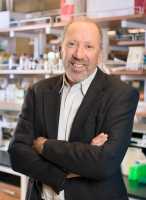












 Dr. Leas[/caption]
Eric Leas PhD, MPH
Stanford Prevention Research Center
University of California, San Diego
MedicalResearch.com: What is the background for this study? What are the main findings?
Response: Recent research has demonstrated the importance that neighborhood context has on life opportunity, health and well-being that can perpetuate across generations. A strongly defining factor that leads to differences in health outcomes across neighborhoods, such as differences in chronic disease, is the concurrent-uneven distribution of modifiable risk factors for chronic disease.
The main goal of our study was to characterize inequities in smoking, the leading risk factor for chronic disease, between neighborhoods in America's 500 largest cities. To accomplish this aim we used first-of-its-kind data generated from the 500 Cities Project—a collaboration between Robert Wood Johnson Foundation and the US Centers for Disease Control and Prevention—representing the largest effort to provide small-area estimates of modifiable risk factors for chronic disease.
We found that inequities in smoking prevalence are greater within cities than between cities, are highest in the nation’s capital, and are linked to inequities in chronic disease outcomes. We also found that inequities in smoking were associated to inequities in neighborhood characteristics, including race, median household income and the number of tobacco retailers.
Dr. Leas[/caption]
Eric Leas PhD, MPH
Stanford Prevention Research Center
University of California, San Diego
MedicalResearch.com: What is the background for this study? What are the main findings?
Response: Recent research has demonstrated the importance that neighborhood context has on life opportunity, health and well-being that can perpetuate across generations. A strongly defining factor that leads to differences in health outcomes across neighborhoods, such as differences in chronic disease, is the concurrent-uneven distribution of modifiable risk factors for chronic disease.
The main goal of our study was to characterize inequities in smoking, the leading risk factor for chronic disease, between neighborhoods in America's 500 largest cities. To accomplish this aim we used first-of-its-kind data generated from the 500 Cities Project—a collaboration between Robert Wood Johnson Foundation and the US Centers for Disease Control and Prevention—representing the largest effort to provide small-area estimates of modifiable risk factors for chronic disease.
We found that inequities in smoking prevalence are greater within cities than between cities, are highest in the nation’s capital, and are linked to inequities in chronic disease outcomes. We also found that inequities in smoking were associated to inequities in neighborhood characteristics, including race, median household income and the number of tobacco retailers.