MedicalResearch.com Interview with:
Nancy Dirubbo, DNP, FNP, FAANP, Certificate in Travel Health, American Association of Nurse Practitioners (AANP) Fellow
Cindy Cooke, DNP, FNP-C, FAANP, American Association of Nurse Practitioners (AANP) President of the Board
Medical Research: Can you provide some background on what is the Zika virus?
Response: Zika virus was first found in monkeys in the Zika Forest of Uganda in 1947 during a research project on mosquito borne viral diseases. From Africa, it spread to India, Indonesia and South East Asia over the next 20-30 years. Not much attention was paid to this illness, as it is often asymptomatic (perhaps as much as 80% of all cases). It causes few symptoms in adults (mild rash, conjunctivitis and headache) and so is often underdiagnosed or misdiagnosed as other self-limiting, viral diseases. Then fast forward to 2015, when a sudden increase in infants born in Brazil with
microcephaly occurred and a connection was made with a sharp increase in Zika viral infections, even though the direct mechanism for causing this birth defect is not known. In 2014, there were less than 150 cases of microcephaly in Brazil, and by October 2015, there were 4,700 cases reported.
Medical Research: What is the concern regarding pregnant women and their babies?
Response: The concern for pregnant women is that there appears to be a link between Zika virus and microcephaly, still birth and miscarriages. Children who do survive have severe intellectual disabilities. The virus is most often transmitted by mosquitos, but may also be sexually transmitted. According to the CDC, “Sexual transmission of Zika virus is possible, and is of particular concern during pregnancy. Current information about possible sexual transmission of Zika is based on reports of three cases.” The CDC also recommends, “Men who reside in or have traveled to an area of active Zika virus transmission who have a pregnant partner should abstain from sexual activity or consistently and correctly use condoms during sex (i.e., vaginal intercourse, anal intercourse or fellatio) for the duration of the pregnancy.” It has yet to be determined if Zika virus can be transmitted in other ways, including blood transfusions.


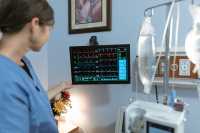 If you’re currently working as a nurse, you are probably well aware of just how rewarding and fulfilling a job role it can be. You get to help patients from all walks of life every single day and make a real difference to not only people’s health but their lives more generally. It’s also a career in which there is a lot of scope for progression. There are so many different spheres within the field of nursing that you can choose to specialize in, whether it’s a particular age group (like pediatrics or gerontology) or a particular health condition (like oncology or emergency care).
Some of these paths involve training on the job, whereas others require you to return to college to study and obtain a postgraduate qualification. Among these, one of the highest possible qualifications you can aim for is the DNP, or Doctor of Nursing Practice. DNP online programs and campus courses prepare you for a wide range of advanced nursing roles, including both direct patient care and indirect patient care positions. As such, they are a fantastic choice for nurses who want to reach the top levels in their field.
This article will cover everything you need to know about the DNP qualification to help you decide whether it is a degree program that you would like to pursue. This includes more detail about the course itself, the advantages it can bring you, as well as information about eligibility and how to apply.
MedicalResearch.com: What are DNP online programs?
DNP stands for Doctor of Nursing Practice, and it is a doctoral-level qualification in the field of nursing. It’s also a terminal degree, meaning that it is the highest level certification you can achieve in clinical nursing education. The idea of the program is to prepare registered nurses (RNs) for top career positions in areas such as advanced practice nursing, nursing education, healthcare administration, and healthcare policy.
DNP online programs and on-campus courses are becoming more popular, partly because the American Association of Colleges of Nursing has called for the qualification to become a requirement in order to work in advanced practice nursing. Although, in many cases, a Master’s qualification in nursing is sufficient, for those who wish to boost their clinical skills and knowledge to the highest level, a DNP is preferable.
If you’re currently working as a nurse, you are probably well aware of just how rewarding and fulfilling a job role it can be. You get to help patients from all walks of life every single day and make a real difference to not only people’s health but their lives more generally. It’s also a career in which there is a lot of scope for progression. There are so many different spheres within the field of nursing that you can choose to specialize in, whether it’s a particular age group (like pediatrics or gerontology) or a particular health condition (like oncology or emergency care).
Some of these paths involve training on the job, whereas others require you to return to college to study and obtain a postgraduate qualification. Among these, one of the highest possible qualifications you can aim for is the DNP, or Doctor of Nursing Practice. DNP online programs and campus courses prepare you for a wide range of advanced nursing roles, including both direct patient care and indirect patient care positions. As such, they are a fantastic choice for nurses who want to reach the top levels in their field.
This article will cover everything you need to know about the DNP qualification to help you decide whether it is a degree program that you would like to pursue. This includes more detail about the course itself, the advantages it can bring you, as well as information about eligibility and how to apply.
MedicalResearch.com: What are DNP online programs?
DNP stands for Doctor of Nursing Practice, and it is a doctoral-level qualification in the field of nursing. It’s also a terminal degree, meaning that it is the highest level certification you can achieve in clinical nursing education. The idea of the program is to prepare registered nurses (RNs) for top career positions in areas such as advanced practice nursing, nursing education, healthcare administration, and healthcare policy.
DNP online programs and on-campus courses are becoming more popular, partly because the American Association of Colleges of Nursing has called for the qualification to become a requirement in order to work in advanced practice nursing. Although, in many cases, a Master’s qualification in nursing is sufficient, for those who wish to boost their clinical skills and knowledge to the highest level, a DNP is preferable.









 Dr. Jeffrey Silber[/caption]
Jeffrey H. Silber, M.D., Ph.D.
The Nancy Abramson Wolfson Professor of Health Services Research
Professor of Pediatrics and Anesthesiology & Critical Care, The University of Pennsylvania Perelman School of Medicine
Professor of Health Care Management
The Wharton School
Director, Center for Outcomes Research
The Children's Hospital of Philadelphia
Philadelphia, PA 19104
Medical Research: What is the background for this study?
Response: We wanted to test whether hospitals with better nursing work environments displayed better outcomes and value than those with worse nursing environments, and to determine whether these results depended on how sick patients were when first admitted to the hospital.
Medical Research: What are the main findings?
Response: Hospitals with better nursing work environments (defined by Magnet status), and staffing that was above average (a nurse-to-bed ratio greater than or equal to 1), had lower mortality than those hospitals with worse nursing environments and below average staffing levels. The mortality rate in Medicare patients undergoing general surgery was 4.8% in the hospitals with the better nursing environments versus 5.8% in those hospitals with worse nursing environments. Furthermore, cost per patient was similar. We found that better nursing environments were also associated with lower need to use the Intensive Care Unit. The greatest mortality benefit occurred in patients in the highest risk groups.
Dr. Jeffrey Silber[/caption]
Jeffrey H. Silber, M.D., Ph.D.
The Nancy Abramson Wolfson Professor of Health Services Research
Professor of Pediatrics and Anesthesiology & Critical Care, The University of Pennsylvania Perelman School of Medicine
Professor of Health Care Management
The Wharton School
Director, Center for Outcomes Research
The Children's Hospital of Philadelphia
Philadelphia, PA 19104
Medical Research: What is the background for this study?
Response: We wanted to test whether hospitals with better nursing work environments displayed better outcomes and value than those with worse nursing environments, and to determine whether these results depended on how sick patients were when first admitted to the hospital.
Medical Research: What are the main findings?
Response: Hospitals with better nursing work environments (defined by Magnet status), and staffing that was above average (a nurse-to-bed ratio greater than or equal to 1), had lower mortality than those hospitals with worse nursing environments and below average staffing levels. The mortality rate in Medicare patients undergoing general surgery was 4.8% in the hospitals with the better nursing environments versus 5.8% in those hospitals with worse nursing environments. Furthermore, cost per patient was similar. We found that better nursing environments were also associated with lower need to use the Intensive Care Unit. The greatest mortality benefit occurred in patients in the highest risk groups.