MedicalResearch.com Interview with:
[caption id="attachment_22498" align="alignleft" width="200"]

Dr. Jane McDevitt[/caption]
Dr. Jane McDevitt
Temple University in Philadelphia
MedicalResearch.com: What is the background for this study?
Dr. McDevitt: During a head impact there is a mechanical load that causes acceleration and deceleration forces on the brain within the cranium.
The acceleration and deceleration causes stress to the neurons and initiates a neurometabolic cascade, where excitatory neurotransmitters such as glutamate are released and depolarize the cell. This triggers protein channels to open and allow ions into and out of the cell. Increases in calcium persist longer and have greater magnitude of imbalance than any other ionic disturbance. One channel responsible for allowing calcium into the cell is r-type voltage-gated calcium channel. One of the main proteins within this voltage-gated calcium channel is the CACNA1E protein produced by the
CACNA1E gene. This protein forms the external pore and contains a pair of glutamate residues that are required for calcium selectivity. It is also responsible for modulating neuronal firing patterns. A variation within this gene (i.e,
CACNA1E ) that regulates expression levels of CACNA1E could be associated with how an athlete recovers following a concussion injury.
Upwards of 20% of the concussed population fall into the prolonged recovery category, which puts these athletes at risk for returning to play quicker than they should. Variation in recovery depends on extrinsic factors like magnitude of impact, and sport, or intrinsic factors like age or sex. One intrinsic factor that has not been definitively parsed out is genetic variation. Recovery is likely to be influenced by genetics because genes determine the structure and function of proteins involved in the cell’s resistance and response to mechanical stress. Due to
CACNA1E’s relationship to calcium influx regulation, a single nucleotide polymorphism (SNP) could modify the expression level of the protein responsible for regulating calcium. Altered protein levels could lead to athlete’s responding to concussive injuries differently. The main objective of this study was to examine the association between
CACNA1E SNPs with concussion recovery in athletes.


 Dr. Joshi[/caption]
Nitin Joshi, Ph.D.
Engineering in Medicine/Department of Medicine
Brigham and Women's Hospital
[caption id="attachment_56349" align="alignleft" width="100"]
Dr. Joshi[/caption]
Nitin Joshi, Ph.D.
Engineering in Medicine/Department of Medicine
Brigham and Women's Hospital
[caption id="attachment_56349" align="alignleft" width="100"]










 Dr. Schwartz[/caption]
Dr. Joseph A Schwartz PhD
Public Affairs and
Community Service, Criminology and Criminal Justice
University of Nebraska Omaha, Omaha, NE
MedicalResearch.com: What is the background for this study? What are the main findings?
Response: My larger research agenda is focused on identifying the ways in which environmental and biological influences work collectively to shape behavioral patterns across major stages of the life course. I am particularly interested in identifying environmental influences that can change biological functioning or activity to result in behavioral change.
Brain injury was a natural progression of these interests since brain injury is expected to result in changes in the structure and functioning of the brain, which has been linked to meaningful changes in behavior. There have also been a sizable number of studies that indicate that justice involved populations experience brain injury at a rate that is between five and eight times what is observed in the general population. I was fascinated by this finding and thought that brain injury may be a good candidate influence to investigate further.
Dr. Schwartz[/caption]
Dr. Joseph A Schwartz PhD
Public Affairs and
Community Service, Criminology and Criminal Justice
University of Nebraska Omaha, Omaha, NE
MedicalResearch.com: What is the background for this study? What are the main findings?
Response: My larger research agenda is focused on identifying the ways in which environmental and biological influences work collectively to shape behavioral patterns across major stages of the life course. I am particularly interested in identifying environmental influences that can change biological functioning or activity to result in behavioral change.
Brain injury was a natural progression of these interests since brain injury is expected to result in changes in the structure and functioning of the brain, which has been linked to meaningful changes in behavior. There have also been a sizable number of studies that indicate that justice involved populations experience brain injury at a rate that is between five and eight times what is observed in the general population. I was fascinated by this finding and thought that brain injury may be a good candidate influence to investigate further. 



 Sean C. Rose, MD
Pediatric sports neurologist and co-director
Complex Concussion Clinic
Nationwide Children’s Hospital
Assistant professor of Pediatrics
The Ohio State University
MedicalResearch.com: What is the background for this study? What are the main findings?
Response: The link between sub-concussive head impacts and declines in neurocognitive function has been reported by some studies, yet refuted by others. There is very little evidence that has been collected in children as they are sustaining these head impacts.
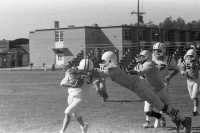
We initiated a multi-year study of youth football players to provide a more in-depth look at the question. We measured head impacts using helmet sensors during the 2016 football season. 112 players age 9-18 completed a battery of neurocognitive tests before and after the football season.
We found that neither the total burden of head impacts nor the intensity of individual impacts were associated with changes in testing performance from pre to post-season.
Sean C. Rose, MD
Pediatric sports neurologist and co-director
Complex Concussion Clinic
Nationwide Children’s Hospital
Assistant professor of Pediatrics
The Ohio State University
MedicalResearch.com: What is the background for this study? What are the main findings?
Response: The link between sub-concussive head impacts and declines in neurocognitive function has been reported by some studies, yet refuted by others. There is very little evidence that has been collected in children as they are sustaining these head impacts.
We initiated a multi-year study of youth football players to provide a more in-depth look at the question. We measured head impacts using helmet sensors during the 2016 football season. 112 players age 9-18 completed a battery of neurocognitive tests before and after the football season.
We found that neither the total burden of head impacts nor the intensity of individual impacts were associated with changes in testing performance from pre to post-season.





 Dr. Adrian Harel[/caption]
Dr. Adrian Harel, PhD
Chief Executive Officer
Medicortex Finland
MedicalResearch.com: What is the background for this study? What are the main findings?
Response: Every 15 seconds, someone in the United States suffers a new head injury. Of the 2.5M people treated in hospital emergency rooms each year, 80,000 become permanently disabled because of TBI. Currently, there are no reliable diagnostic tests to assess the presence or severity of an injury on-site, nor are there any pharmaceutical therapies that could stop the secondary injury from spreading. Accurate diagnostics would benefit especially mild cases of TBI (concussions), which, if occurring repeatedly, may cause neurodegenerative conditions such as Chronic Traumatic Encephalopathy (which is typical for athletes in NFL and Ice-hockey).
We have performed extensive preclinical research comparing fluid biopsies from normal and injured lab animals. The results showed some unique biomarkers released as a biodegradation products after head injury. The data served as the basis and confirmation for our patent applications to protect the biomarker concept.
Medicortex has completed a clinical proof-of-concept trial in collaboration with Turku University Hospital (Tyks). Samples from 12 TBI patients and 12 healthy volunteers were collected and analyzed for the presence and for the level of the biomarker in state-of-the-art laboratories. The study demonstrated the diagnostic potential of the new biomarker in humans and it confirmed the prior preclinical findings. This was a significant milestone for Medicortex.
Dr. Adrian Harel[/caption]
Dr. Adrian Harel, PhD
Chief Executive Officer
Medicortex Finland
MedicalResearch.com: What is the background for this study? What are the main findings?
Response: Every 15 seconds, someone in the United States suffers a new head injury. Of the 2.5M people treated in hospital emergency rooms each year, 80,000 become permanently disabled because of TBI. Currently, there are no reliable diagnostic tests to assess the presence or severity of an injury on-site, nor are there any pharmaceutical therapies that could stop the secondary injury from spreading. Accurate diagnostics would benefit especially mild cases of TBI (concussions), which, if occurring repeatedly, may cause neurodegenerative conditions such as Chronic Traumatic Encephalopathy (which is typical for athletes in NFL and Ice-hockey).
We have performed extensive preclinical research comparing fluid biopsies from normal and injured lab animals. The results showed some unique biomarkers released as a biodegradation products after head injury. The data served as the basis and confirmation for our patent applications to protect the biomarker concept.
Medicortex has completed a clinical proof-of-concept trial in collaboration with Turku University Hospital (Tyks). Samples from 12 TBI patients and 12 healthy volunteers were collected and analyzed for the presence and for the level of the biomarker in state-of-the-art laboratories. The study demonstrated the diagnostic potential of the new biomarker in humans and it confirmed the prior preclinical findings. This was a significant milestone for Medicortex.




 Dr. Zachary Keff[/caption]
Zachary Y. Kerr, PhD, MPH
Sports Injury Epidemiologist
Director, NCAA Injury Surveillance Program
Datalys Center for Sports Injury Research and Prevention
Indianapolis, IN 46202
MedicalResearch.com: What is the background for this study? What are the main findings?
Dr. Kerr: A 2013 Institutes of Medicine report called for more research on concussion in athletes aged 5-21 years. Although there is much research on the incidence of concussion across this age span, there is less related to outcomes such as symptoms and return to play time, let along comparisons by age.
In examining sport-related concussions that occurred in youth, high school, and college football, we found differences in the symptomatology and return to play time of concussed players. For example, the odds of return to play time being under 24 hours was higher in youth than in college. Also, over 40% of all concussions were returned to play in 2 weeks or more.
Dr. Zachary Keff[/caption]
Zachary Y. Kerr, PhD, MPH
Sports Injury Epidemiologist
Director, NCAA Injury Surveillance Program
Datalys Center for Sports Injury Research and Prevention
Indianapolis, IN 46202
MedicalResearch.com: What is the background for this study? What are the main findings?
Dr. Kerr: A 2013 Institutes of Medicine report called for more research on concussion in athletes aged 5-21 years. Although there is much research on the incidence of concussion across this age span, there is less related to outcomes such as symptoms and return to play time, let along comparisons by age.
In examining sport-related concussions that occurred in youth, high school, and college football, we found differences in the symptomatology and return to play time of concussed players. For example, the odds of return to play time being under 24 hours was higher in youth than in college. Also, over 40% of all concussions were returned to play in 2 weeks or more.