MedicalResearch.com Interview with:
[caption id="attachment_48278" align="alignleft" width="200"]

Dr. Sonik[/caption]
Rajan Sonik, PhD JD MPH
Research Scientist
Tucker-Seeley Research Lab
Leonard Davis School of Gerontology
Postdoctoral Research Fellow
Leonard D. Schaeffer Center for Health Policy and Economics
Leonard Davis School of Gerontology
University of Southern California
Los Angeles, CA 90089-3333
MedicalResearch.com: What is the background for this study? What are the main findings?
Response: Not everyone who is eligible for public benefits like Supplemental Security Income (SSI) tries to receive them. One distinguishing factor is that those who apply for benefits disproportionately experience shocks (e.g., divorce, job loss, health problems) and sharp increases in material hardships (e.g., food insecurity, housing insecurity) shortly before applying. Typically, these increases in hardships are then partially—but not fully—alleviated by receipt of the public benefits.
Given strong associations between these hardships and poor health outcomes, we wanted to examine whether health status might fluctuate before and after the receipt of public benefits as well. We examined SSI in particular given its focus on individuals with disabilities, keeping in mind the particular health vulnerabilities experienced by this population. In line with patterns previously observed for material hardships, we found in a nationally representative sample that the health status of eventual SSI recipients worsened significantly in the period prior to program entry. After enrollment began, the decline in health status stopped but was not fully reversed.
In the paper, we discuss why these findings were more likely to be driven by changes in material hardship levels rather than changes in disability status.




 Julia Cave Arbanas[/caption]
Julia Cave Arbanas
Project Manager and
Julia Cave Arbanas[/caption]
Julia Cave Arbanas
Project Manager and








 Dr. Childers[/caption]
Chris Childers, MD, PhD
Division of General Surgery
David Geffen School of Medicine at UCLA
Los Angeles, CA 90095
MedicalResearch.com: What is the background for this study?
Response: Patients with end-stage renal disease – poorly functioning kidneys – often have to receive dialysis. This typically requires a patient to visit an outpatient clinic several times a week to have their blood filtered by a machine. Over the past few years, two for-profit companies have increased their control over the outpatient dialysis market – DaVita and Fresenius. Combined they control approximately ¾ of the market. A number of concerns have been raised against these for-profit companies suggesting that the quality of care they deliver may be worse than the care delivered at not-for-profit companies. But, because they control so much of the market and because patients have to receive dialysis so frequently, patients may not have much choice in the clinic they visit.
Medicare covers patients who are 65 years or older and also patients on dialysis regardless of age. Medicare pays a fixed rate for dialysis which they believe is adequate to cover the clinics' costs. However, if a patient also has private insurance, the insurer is required to pay for dialysis instead of Medicare. Whereas Medicare rates are fixed by the federal government, private insurers have to negotiate the price they pay, and may pay much more as a result.
Dr. Childers[/caption]
Chris Childers, MD, PhD
Division of General Surgery
David Geffen School of Medicine at UCLA
Los Angeles, CA 90095
MedicalResearch.com: What is the background for this study?
Response: Patients with end-stage renal disease – poorly functioning kidneys – often have to receive dialysis. This typically requires a patient to visit an outpatient clinic several times a week to have their blood filtered by a machine. Over the past few years, two for-profit companies have increased their control over the outpatient dialysis market – DaVita and Fresenius. Combined they control approximately ¾ of the market. A number of concerns have been raised against these for-profit companies suggesting that the quality of care they deliver may be worse than the care delivered at not-for-profit companies. But, because they control so much of the market and because patients have to receive dialysis so frequently, patients may not have much choice in the clinic they visit.
Medicare covers patients who are 65 years or older and also patients on dialysis regardless of age. Medicare pays a fixed rate for dialysis which they believe is adequate to cover the clinics' costs. However, if a patient also has private insurance, the insurer is required to pay for dialysis instead of Medicare. Whereas Medicare rates are fixed by the federal government, private insurers have to negotiate the price they pay, and may pay much more as a result.


 Dr. Kishan[/caption]
Amar U. Kishan, MD
Assistant Professor
Department of Radiation Oncology
University of California, Los Angeles
MedicalResearch.com: What is the background for this study? What are the main findings?
Response: Typical external beam radiation courses range up to 8-9 weeks in length (39-45 treatments). There are data that shorter courses, delivering a higher dose per day, may be just as effective.
Stereotactic body radiotherapy (SBRT) really pushes this concept by condensing the treatment to just four to five treatments, with a high dose per day.
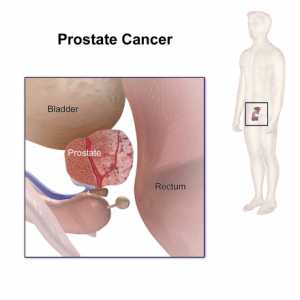
Here, we present the pooled results of the outcomes of 2142 men with low and intermediate risk prostate cancer and a median of 6.9 years of followup.
We demonstrate a very favorable efficacy and safety profile. Specifically, the rates of recurrences were 4.5% and 10.2% for low and intermediate risk disease at 7 years, and rates of late severe toxicity were 2.4% for urinary toxicity and 0.4% for gastrointestinal toxicity.
Dr. Kishan[/caption]
Amar U. Kishan, MD
Assistant Professor
Department of Radiation Oncology
University of California, Los Angeles
MedicalResearch.com: What is the background for this study? What are the main findings?
Response: Typical external beam radiation courses range up to 8-9 weeks in length (39-45 treatments). There are data that shorter courses, delivering a higher dose per day, may be just as effective.
Stereotactic body radiotherapy (SBRT) really pushes this concept by condensing the treatment to just four to five treatments, with a high dose per day.
Here, we present the pooled results of the outcomes of 2142 men with low and intermediate risk prostate cancer and a median of 6.9 years of followup.
We demonstrate a very favorable efficacy and safety profile. Specifically, the rates of recurrences were 4.5% and 10.2% for low and intermediate risk disease at 7 years, and rates of late severe toxicity were 2.4% for urinary toxicity and 0.4% for gastrointestinal toxicity.