MedicalResearch.com Interview with:
[caption id="attachment_62050" align="alignleft" width="150"]

Dr. Seto[/caption]
Mabel Seto, PhD
Harvard Aging Brain Study, Department of Neurology
Massachusetts General Hospital, Center for Alzheimer Research and Treatment
Department of Neurology
Brigham and Women’s Hospital
Harvard Medical School, Boston, Massachusetts
Vanderbilt Memory and Alzheimer’s Center
Vanderbilt University Medical Center
Nashville, Tennessee
MedicalResearch.com: What is the background for this study?
Response: The background for this study is that individuals with a family history of Alzheimer’s disease (i.e., one or more first-degree relatives) have a higher risk for the disease than individuals that don’t have a family history. Previous studies suggested a preferential maternal inheritance of AD, though they were limited in sample size and statistical power.
In our study, we wanted to focus on a larger, cognitively unimpaired sample. Using data from the Anti-Amyloid Treatment in Asymptomatic Alzheimer’s (A4) study, a randomized clinical trial aimed at AD prevention, we examined the relationship between a parental history of significant memory impairment as a proxy for AD (as some individuals may not have pursued formal diagnosis) and amyloid-beta burden in the offspring.


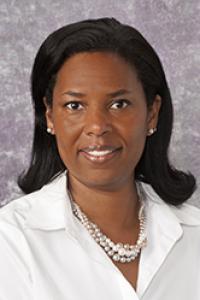
 Dr. Davis[/caption]
Esa M. Davis, M.D., M.P.H , F.A.A.F.P
Professor of Medicine and Family and Community Medicine
Associate Vice President of Community Health and
Senior Associate Dean of pPopulation Health and Community Medicine
University of Maryland School of Medicine
Dr. Davis joined the U.S. Preventive Services Task Force in January 2021
MedicalResearch.com: What is the background for this study? What are the main findings?
Response: Iron is important to overall health, and people need more iron when they are pregnant. This can make pregnant people at increased risk for iron deficiency, which can progress to anemia and cause complications for both moms and their babies. After reviewing the latest available research, the Task Force found that there is not enough evidence on whether pregnant people who do not have signs or symptoms of iron deficiency or anemia should be screened—or take iron supplements—to improve their health or the health of their baby.
Dr. Davis[/caption]
Esa M. Davis, M.D., M.P.H , F.A.A.F.P
Professor of Medicine and Family and Community Medicine
Associate Vice President of Community Health and
Senior Associate Dean of pPopulation Health and Community Medicine
University of Maryland School of Medicine
Dr. Davis joined the U.S. Preventive Services Task Force in January 2021
MedicalResearch.com: What is the background for this study? What are the main findings?
Response: Iron is important to overall health, and people need more iron when they are pregnant. This can make pregnant people at increased risk for iron deficiency, which can progress to anemia and cause complications for both moms and their babies. After reviewing the latest available research, the Task Force found that there is not enough evidence on whether pregnant people who do not have signs or symptoms of iron deficiency or anemia should be screened—or take iron supplements—to improve their health or the health of their baby. 
 Dr. Stevermer [/caption]
James Stevermer, M.D., M.S.P.H.Vice chair for clinical affairs
Professor of family and community medicine
University of Missouri
Medical director of MU Health Care Family Medicine–Callaway Physicians,
Dr. Stevermer joined the U.S. Preventive Service Task Force in January 2021.
MedicalResearch.com: What is the background for this study?
Response: HIV continues to be a significant public health issue. The good news is that PrEP is a safe, highly effective way to help prevent HIV in people at increased risk. There are now two ways people can take PrEP – as a pill or as a shot. We encourage healthcare professionals to have a conversation with their patients about their individual risk for HIV and determine if they should consider taking whichever form of PrEP would work best for them.
Dr. Stevermer [/caption]
James Stevermer, M.D., M.S.P.H.Vice chair for clinical affairs
Professor of family and community medicine
University of Missouri
Medical director of MU Health Care Family Medicine–Callaway Physicians,
Dr. Stevermer joined the U.S. Preventive Service Task Force in January 2021.
MedicalResearch.com: What is the background for this study?
Response: HIV continues to be a significant public health issue. The good news is that PrEP is a safe, highly effective way to help prevent HIV in people at increased risk. There are now two ways people can take PrEP – as a pill or as a shot. We encourage healthcare professionals to have a conversation with their patients about their individual risk for HIV and determine if they should consider taking whichever form of PrEP would work best for them.




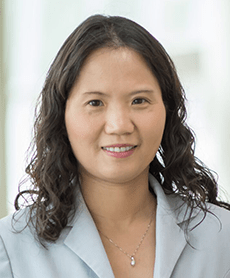 Dr. Dai[/caption]
Dr. Hongying Daisy Dai, PhD
Professor and Associate Dean of Research
The College of Public Health
University of Nebraska Medical Center.
MedicalResearch.com: What is the background for this study?
Response: Tobacco use landscape has been changing in the United States with fewer combustible cigarette smokers and more e-cigarette and other emerging tobacco users. Nicotine concentration level is a key product characteristic of modern e-cigarette products and high-nicotine vaping devices have recently become available. This study seeks to examine whether biomarkers of exposure to tobacco-related toxicants have changed since 2013 among adult nicotine e-cigarette users, non-nicotine e-cigarette users, and cigarette smokers.
Dr. Dai[/caption]
Dr. Hongying Daisy Dai, PhD
Professor and Associate Dean of Research
The College of Public Health
University of Nebraska Medical Center.
MedicalResearch.com: What is the background for this study?
Response: Tobacco use landscape has been changing in the United States with fewer combustible cigarette smokers and more e-cigarette and other emerging tobacco users. Nicotine concentration level is a key product characteristic of modern e-cigarette products and high-nicotine vaping devices have recently become available. This study seeks to examine whether biomarkers of exposure to tobacco-related toxicants have changed since 2013 among adult nicotine e-cigarette users, non-nicotine e-cigarette users, and cigarette smokers.

 Dr. Ogedegbe[/caption]
Gbenga Ogedegbe, MD, MPH
Dr. Adolph & Margaret Berger Professor of Population Health
Director, Division of Health & Behavior
Director Center for Healthful Behavior Change
Department of Population Health
NYU Langone Health
NYU School of Medicine
Member of the U.S. Preventive Services Task Force
MedicalResearch.com: What is the background for this study?
Response: Syphilis has become more common over the past 20 years, after reaching a record low in 2000. The Task Force found that screening people who are at increased risk for syphilis can identify the infection early so it can be treated before problems develop. For that reason, the Task Force recommends screening people who are at increased risk for syphilis infection.
Dr. Ogedegbe[/caption]
Gbenga Ogedegbe, MD, MPH
Dr. Adolph & Margaret Berger Professor of Population Health
Director, Division of Health & Behavior
Director Center for Healthful Behavior Change
Department of Population Health
NYU Langone Health
NYU School of Medicine
Member of the U.S. Preventive Services Task Force
MedicalResearch.com: What is the background for this study?
Response: Syphilis has become more common over the past 20 years, after reaching a record low in 2000. The Task Force found that screening people who are at increased risk for syphilis can identify the infection early so it can be treated before problems develop. For that reason, the Task Force recommends screening people who are at increased risk for syphilis infection.



 Dr. Thakrar[/caption]
Ashish Thakrar, MD
Internal Medicine & Addiction Medicine
National Clinician Scholars Program
University of Pennsylvania
MedicalResearch.com: What is the background for this study?
Response: About 1.8 million Americans are currently incarcerated, more than any other country in the world per capita. Of those 1.8 million, about 1 in 7 suffers from opioid addiction, putting them at high risk of overdose and death, particularly in the weeks following release.
Opioid use disorder is a treatable condition, particularly with the medications buprenorphine or methadone, but historically, prisons and jails have not offered treatment. Over the past five years, a few states and municipalities have enacted policies to provide access for OUD treatment. We examined whether these policies were actually improving access to treatment.
Dr. Thakrar[/caption]
Ashish Thakrar, MD
Internal Medicine & Addiction Medicine
National Clinician Scholars Program
University of Pennsylvania
MedicalResearch.com: What is the background for this study?
Response: About 1.8 million Americans are currently incarcerated, more than any other country in the world per capita. Of those 1.8 million, about 1 in 7 suffers from opioid addiction, putting them at high risk of overdose and death, particularly in the weeks following release.
Opioid use disorder is a treatable condition, particularly with the medications buprenorphine or methadone, but historically, prisons and jails have not offered treatment. Over the past five years, a few states and municipalities have enacted policies to provide access for OUD treatment. We examined whether these policies were actually improving access to treatment. 
 Dr. Budnitz[/caption]
Dr. Daniel S. Budnitz MD MPH CAPT, USPHS
Division of Healthcare Quality Promotion
Director, Centers for Disease Control and Prevention’s Medication Safety Program
Atlanta, Georgia
MedicalResearch.com: What is the background for this study?
Response: Medications are generally safe when used as prescribed or as directed on the label, but there can be risks in taking any medication. Adverse drug events are harms resulting from the use of medication.
The risk of adverse drug events is highest among older adults and very young children. Older adults have higher risks because they typically take more medications and are more likely to have underlying medical conditions. Very young children have higher risks because they often find and ingest medications meant for others.
Previous studies of medication safety have focused on harm from medications when taken for therapeutic reasons. Separate studies have focused on harm from specific types of non-therapeutic use (taking medications for recreational use or self-harm). This study examined the number of emergency department (ED) visits that resulted when people who took medications for any reason – as directed by a clinician or for other reasons, including recreational use or intentional self-harm.
Dr. Budnitz[/caption]
Dr. Daniel S. Budnitz MD MPH CAPT, USPHS
Division of Healthcare Quality Promotion
Director, Centers for Disease Control and Prevention’s Medication Safety Program
Atlanta, Georgia
MedicalResearch.com: What is the background for this study?
Response: Medications are generally safe when used as prescribed or as directed on the label, but there can be risks in taking any medication. Adverse drug events are harms resulting from the use of medication.
The risk of adverse drug events is highest among older adults and very young children. Older adults have higher risks because they typically take more medications and are more likely to have underlying medical conditions. Very young children have higher risks because they often find and ingest medications meant for others.
Previous studies of medication safety have focused on harm from medications when taken for therapeutic reasons. Separate studies have focused on harm from specific types of non-therapeutic use (taking medications for recreational use or self-harm). This study examined the number of emergency department (ED) visits that resulted when people who took medications for any reason – as directed by a clinician or for other reasons, including recreational use or intentional self-harm.