28 Sep How Digital Organization Supports Medical Training and Patient Care
Notice: This post is provided for background information only. Confirm current ERAS dates, program participation, and requirements with the official service and your medical school's advising office. Consult your healthcare provider for specific medical advice regarding care coordination or therapeutic services.
Applying for residency gives medical students an early lesson in managing information. Transcripts, recommendations, personal statements, and program requirements come from different sources — each has a purpose, a deadline, and someone responsible for it. Keeping those details organized takes attention, even when the application itself happens online. That responsibility continues in clinical practice: a physician may need information from another office, a therapist may need clarification about a referral, and a parent may need help understanding the next appointment. For an overview of the process, International Medical Aid's guide to ERAS explains application preparation and supporting documents. According to the AHRQ (Agency for Healthcare Research and Quality), care coordination involves organizing care activities and exchanging information among all the people involved in a patient's care — a skill that begins developing during medical training and depends on the same information-management habits that residency applications demand.
[caption id="attachment_76329" align="aligncenter" width="500"] Photo by Tara Winstead[/caption]

 If you’re currently working as a nurse, you are probably well aware of just how rewarding and fulfilling a job role it can be. You get to help patients from all walks of life every single day and make a real difference to not only people’s health but their lives more generally. It’s also a career in which there is a lot of scope for progression. There are so many different spheres within the field of nursing that you can choose to specialize in, whether it’s a particular age group (like pediatrics or gerontology) or a particular health condition (like oncology or emergency care).
Some of these paths involve training on the job, whereas others require you to return to college to study and obtain a postgraduate qualification. Among these, one of the highest possible qualifications you can aim for is the DNP, or Doctor of Nursing Practice.
If you’re currently working as a nurse, you are probably well aware of just how rewarding and fulfilling a job role it can be. You get to help patients from all walks of life every single day and make a real difference to not only people’s health but their lives more generally. It’s also a career in which there is a lot of scope for progression. There are so many different spheres within the field of nursing that you can choose to specialize in, whether it’s a particular age group (like pediatrics or gerontology) or a particular health condition (like oncology or emergency care).
Some of these paths involve training on the job, whereas others require you to return to college to study and obtain a postgraduate qualification. Among these, one of the highest possible qualifications you can aim for is the DNP, or Doctor of Nursing Practice. 


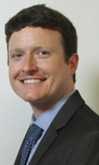

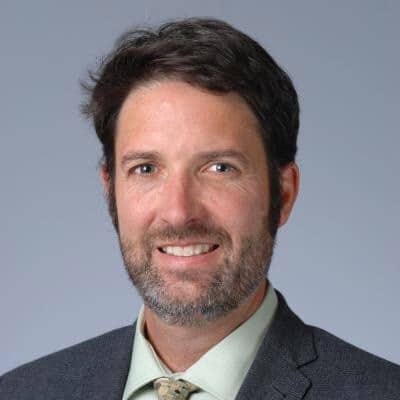
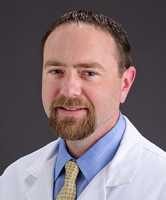
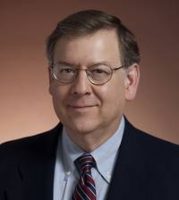
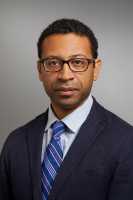
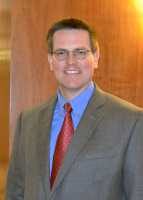
 Dr. Rattray[/caption]
Nicholas A. Rattray, Ph.D.
Research Scientist/Investigator
VA HSR&D Center for Health Information and Communication
Implementation Core, Precision Monitoring to Transform Care (PRISM) QUERI
Richard L. Roudebush Veterans Affairs Medical Center
Indiana University Center for Health Services & Outcomes Research
Regenstrief Institute, Inc.
Indianapolis, Indiana
on behalf of study co-authors re:
Rattray NA, Flanagan ME, Militello LG, Barach P, Franks Z, Ebright P, Rehman SU,
Gordon HS, Frankel RM
MedicalResearch.com: What is the background for this study? What are the main findings?
Response: End-of-shift handoffs pose a substantial patient safety risk. The transition of care from one doctor to another has been associated with delays in diagnosis and treatment, duplication of tests or treatment and patient discomfort, inappropriate care, medication errors and longer hospital stays with more laboratory testing. Handoff education varies widely in medical schools and residency training programs. Although there have been efforts to improve transfers of care, they have not shown meaningful improvement.
Led for the last decade by Richard Frankel, Ph.D., a senior health scientist at Regenstrief Institute and Indiana University and professor at Indiana University School of Medicine, our team has studied how health practitioners communicate during end-of-shift handoffs. In this current study, funded by VA Health Services and Research Development, we conducted interviews with 35 internal medicine and surgery residents at three VA medical centers about a recent handoff and analyzed the responses. Our team also video-recorded and analyzed more than 150 handoffs.
Published in the Journal of General Internal Medicine, this study explains how the person receiving the handoff can affect the interaction. Medical residents said they changed their delivery based on the doctor or resident who was taking over (i.e., training level, preference for fewer details, day or night shift). We found that handoff communication involves a complex combination of socio-technical information where residents balance relational factors against content and risk. It is not a mechanistic process of merely transferring clinical data but rather is based on learned habits of communication that are context-sensitive and variable, what we refer to as “recipient design”.
In another paper led by Laura Militello, we focus on how residents cognitively prepare for handoffs. In the paper published in The Joint Commission Journal of Quality and Patient Safety®, researchers detailed the tasks involved in cognitively preparing for handoffs. A third paper, published in BMC Medical Education, reports on the limited training that physicians receive during their residency. Residents said they were only partially prepared for enacting handoffs as interns, and clinical experience and enacting handoffs actually taught them the most.
Dr. Rattray[/caption]
Nicholas A. Rattray, Ph.D.
Research Scientist/Investigator
VA HSR&D Center for Health Information and Communication
Implementation Core, Precision Monitoring to Transform Care (PRISM) QUERI
Richard L. Roudebush Veterans Affairs Medical Center
Indiana University Center for Health Services & Outcomes Research
Regenstrief Institute, Inc.
Indianapolis, Indiana
on behalf of study co-authors re:
Rattray NA, Flanagan ME, Militello LG, Barach P, Franks Z, Ebright P, Rehman SU,
Gordon HS, Frankel RM
MedicalResearch.com: What is the background for this study? What are the main findings?
Response: End-of-shift handoffs pose a substantial patient safety risk. The transition of care from one doctor to another has been associated with delays in diagnosis and treatment, duplication of tests or treatment and patient discomfort, inappropriate care, medication errors and longer hospital stays with more laboratory testing. Handoff education varies widely in medical schools and residency training programs. Although there have been efforts to improve transfers of care, they have not shown meaningful improvement.
Led for the last decade by Richard Frankel, Ph.D., a senior health scientist at Regenstrief Institute and Indiana University and professor at Indiana University School of Medicine, our team has studied how health practitioners communicate during end-of-shift handoffs. In this current study, funded by VA Health Services and Research Development, we conducted interviews with 35 internal medicine and surgery residents at three VA medical centers about a recent handoff and analyzed the responses. Our team also video-recorded and analyzed more than 150 handoffs.
Published in the Journal of General Internal Medicine, this study explains how the person receiving the handoff can affect the interaction. Medical residents said they changed their delivery based on the doctor or resident who was taking over (i.e., training level, preference for fewer details, day or night shift). We found that handoff communication involves a complex combination of socio-technical information where residents balance relational factors against content and risk. It is not a mechanistic process of merely transferring clinical data but rather is based on learned habits of communication that are context-sensitive and variable, what we refer to as “recipient design”.
In another paper led by Laura Militello, we focus on how residents cognitively prepare for handoffs. In the paper published in The Joint Commission Journal of Quality and Patient Safety®, researchers detailed the tasks involved in cognitively preparing for handoffs. A third paper, published in BMC Medical Education, reports on the limited training that physicians receive during their residency. Residents said they were only partially prepared for enacting handoffs as interns, and clinical experience and enacting handoffs actually taught them the most.
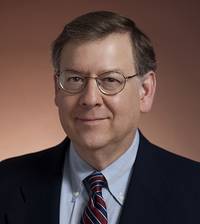


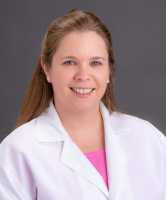
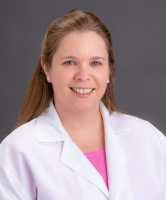




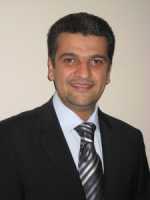
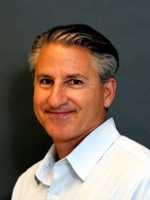 Dr. Gayer[/caption]
Gregory Gayer, PhD
Associate Professor
Chair of Basic Science Department
TUCOM California
MedicalResearch.com: What is the background for this study? What are the main findings?
Response: The prevalence of obesity in the United States continues to be a growing and remains a major health concern. Closely associated with obesity is an extensive list of chronic diseases, including hypertension, dyslipidemia, and type 2 diabetes. Unfortunately, physician bias against obese people may create a self-defeating environment that can produce less effective communication in a manner that could reduce the patient’s willingness to participate in their own health. Our overall goal is to prepare future physicians to appropriately engage the obese patient in order to optimize health care delivery.
This study was initiated in response to the ever increasing demand on the medical profession to properly care for the
Dr. Gayer[/caption]
Gregory Gayer, PhD
Associate Professor
Chair of Basic Science Department
TUCOM California
MedicalResearch.com: What is the background for this study? What are the main findings?
Response: The prevalence of obesity in the United States continues to be a growing and remains a major health concern. Closely associated with obesity is an extensive list of chronic diseases, including hypertension, dyslipidemia, and type 2 diabetes. Unfortunately, physician bias against obese people may create a self-defeating environment that can produce less effective communication in a manner that could reduce the patient’s willingness to participate in their own health. Our overall goal is to prepare future physicians to appropriately engage the obese patient in order to optimize health care delivery.
This study was initiated in response to the ever increasing demand on the medical profession to properly care for the