Posted at 14:07h
in
Cannabis,
Pain Research
Editor’ note: Cannabis and THCA/HEMP CBD products should have an active ingredient list on the container and have a Certificate of Analysis (COA).
Discuss your use of CBD products with your health care provider. Dosing of CBD is variable, especially since it is not FDA regulated. CBD may interfere with other medications and should not be used in individuals with certain health conditions, including liver issues. CBD skin care products can be absorbed through the skin and have similar effects. Do not use Cannabis products including edibles and CBD if you are pregnant, nursing or may become pregnant. Do not use cannabis products if driving or operating difficult or dangerous machinery. Children should not be exposed to cannabis or CBD products.
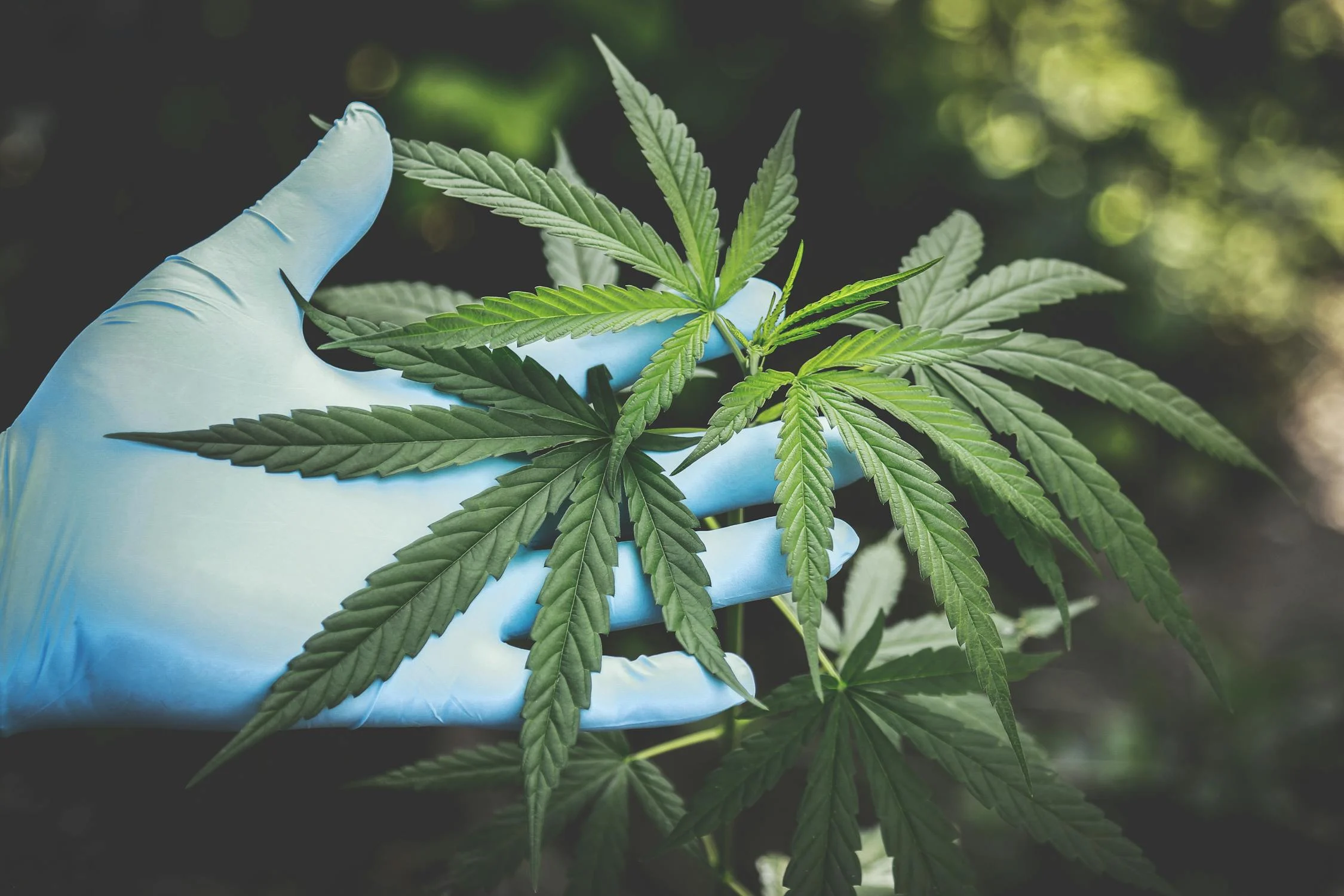
[caption id="attachment_66542" align="aligncenter" width="500"]

Photo by
Michael Fischer on
Pexels[/caption]
Medicinal cannabis is a revolutionary approach to pain management, particularly in patients where conventional medications fail to offer them adequate relief or create intolerable side effects. With ongoing research on cannabis and its medicinal properties, its effectiveness for pain relief has become more convincing. Here are some reasons why medicinal cannabis has risen in popularity in pain management.
Natural Pain Relief Without Risks from Opioids
Many countries have been grappling with an opioid crisis, which has motivated patients to seek cannabis as a much safer alternative. Medicinal cannabis minimizes the risks of addiction associated with opioids due to misuse and gives little risk of an overdose. To obtain medicinal cannabis legally, there are options like medical marijuana cards you can obtain from providers such as
Leafy Doc Mississippi.
Regarding how cannabis works in terms of pain relief, cannabinoids like THC bind to receptors in the brain and the immune system, modulating the experience of pain. The endocannabinoid system engages with trauma states mainly on account of pain, mood regulation, and inflammation. However, for long-term relief, medicinal cannabis is viewed as a considerably safer alternative compared to opioids.




 Elena Stains[/caption]
Elena Stains
Medical Student
Department of Medical Education
Geisinger Commonwealth School of Medicine
Scranton, PA
MedicalResearch.com: What is the background for this study?
Response: In 2019 to 2020, 2.5% of Americans reported using cannabis for medical needs, compared to 1.2% in 2013-2014, representing a 12.9% annual increase1. Forty states and the District of Columbia have legislation for some form of medical cannabis (MC) in 2024. Because MC is not federally legalized, each state creates its own legislation on the conditions that qualify a person for MC, without any standardized process to determine what qualifying conditions (QC) are proven to be aided by MC. Thus, the QCs chosen by states vary widely. Common QCs include cancer, dementia, and PTSD.
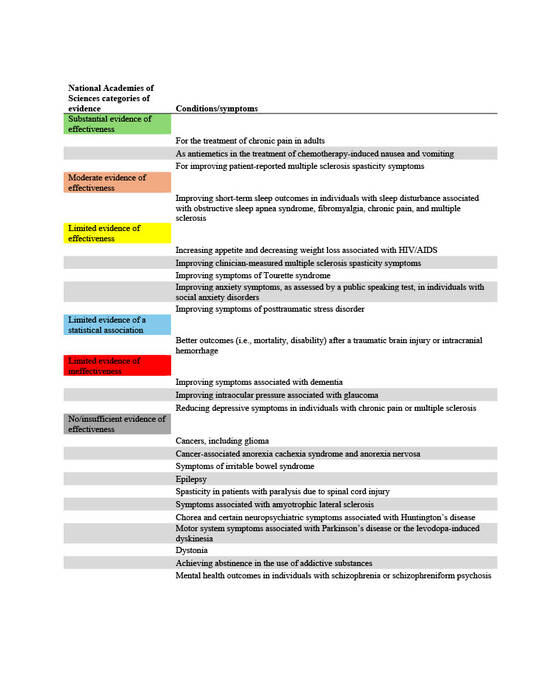
The National Academies of Sciences, Engineering, and Medicine (NAS) published a report in 2017 on the evidence for the therapeutic effects of cannabis and cannabinoids for over twenty conditions2. This report reviews the evidence of effectiveness of medical cannabis for the most common QCs chosen by states. The researchers at Geisinger Commonwealth School of Medicine aimed to compare the evidence found by the NAS report with the QCs of 38 states (including the District of Columbia) in both 2017 and 2024. QCs were categorized based on NAS-established level of evidence: limited, moderate, or substantial/conclusive evidence of effectiveness, limited evidence of ineffectiveness, or no/insufficient evidence to support or refute effectiveness (Table 1).
Elena Stains[/caption]
Elena Stains
Medical Student
Department of Medical Education
Geisinger Commonwealth School of Medicine
Scranton, PA
MedicalResearch.com: What is the background for this study?
Response: In 2019 to 2020, 2.5% of Americans reported using cannabis for medical needs, compared to 1.2% in 2013-2014, representing a 12.9% annual increase1. Forty states and the District of Columbia have legislation for some form of medical cannabis (MC) in 2024. Because MC is not federally legalized, each state creates its own legislation on the conditions that qualify a person for MC, without any standardized process to determine what qualifying conditions (QC) are proven to be aided by MC. Thus, the QCs chosen by states vary widely. Common QCs include cancer, dementia, and PTSD.
The National Academies of Sciences, Engineering, and Medicine (NAS) published a report in 2017 on the evidence for the therapeutic effects of cannabis and cannabinoids for over twenty conditions2. This report reviews the evidence of effectiveness of medical cannabis for the most common QCs chosen by states. The researchers at Geisinger Commonwealth School of Medicine aimed to compare the evidence found by the NAS report with the QCs of 38 states (including the District of Columbia) in both 2017 and 2024. QCs were categorized based on NAS-established level of evidence: limited, moderate, or substantial/conclusive evidence of effectiveness, limited evidence of ineffectiveness, or no/insufficient evidence to support or refute effectiveness (Table 1).
















 Dr. Di Ciano[/caption]
Patricia Di Ciano, PhD
Dr. Di Ciano[/caption]
Patricia Di Ciano, PhD


 Luke Cavanah[/caption]
Luke Cavanah, BS
Geisinger Commonwealth School of Medicine
Scranton, PA
MedicalResearch.com: What is the background for this study?
Response: It is well-known that schedule II stimulants, which are those that are highly addictive and include amphetamine, methylphenidate, and lisdexamfetamine, have had increasing use and misuse in the US.
Despite understanding the presence of this phenomenon, the reason for it is poorly understood. The purpose of this study was to see if rising rates of schedule II stimulants are related to the legalization of medical marijuana. We were interested in this because schedule II stimulants are primarily used as the treatment for attention-deficit hyperactivity disorder (ADHD), chronic cannabis use has been demonstrated to cause neurocognitive deficits resembling that of ADHD, and the conditions have been shown to affect similar brain regions.
Luke Cavanah[/caption]
Luke Cavanah, BS
Geisinger Commonwealth School of Medicine
Scranton, PA
MedicalResearch.com: What is the background for this study?
Response: It is well-known that schedule II stimulants, which are those that are highly addictive and include amphetamine, methylphenidate, and lisdexamfetamine, have had increasing use and misuse in the US.
Despite understanding the presence of this phenomenon, the reason for it is poorly understood. The purpose of this study was to see if rising rates of schedule II stimulants are related to the legalization of medical marijuana. We were interested in this because schedule II stimulants are primarily used as the treatment for attention-deficit hyperactivity disorder (ADHD), chronic cannabis use has been demonstrated to cause neurocognitive deficits resembling that of ADHD, and the conditions have been shown to affect similar brain regions.

 Dr. Kruger[/caption]
Jessica Kruger PhD
Clinical Associate Professor of Community Health and Health Behavior
University at Buffalo School of Public Health and Health Professions
MedicalResearch.com: What is the background for this study?
Response: The 2018 Farm Bill authorizing hemp production led to new cannabinoids in the consumer marketplace. As the market becomes increasingly saturated with suppliers, companies continually diversify available products.
The rapid emergence of novel cannabinoids outpaces systematic research necessary to inform regulations and harm reduction. Empirical evidence is needed to guide policies, practices, and education of consumers. Product manufacturers, social media participants, and cannabis oriented on-line news sources have claimed that THC-O-acetate is a "psychedelic" cannabinoid, producing experiences similar to those associated with LSD, psilocybin, mescaline, and DMT.
Dr. Kruger[/caption]
Jessica Kruger PhD
Clinical Associate Professor of Community Health and Health Behavior
University at Buffalo School of Public Health and Health Professions
MedicalResearch.com: What is the background for this study?
Response: The 2018 Farm Bill authorizing hemp production led to new cannabinoids in the consumer marketplace. As the market becomes increasingly saturated with suppliers, companies continually diversify available products.
The rapid emergence of novel cannabinoids outpaces systematic research necessary to inform regulations and harm reduction. Empirical evidence is needed to guide policies, practices, and education of consumers. Product manufacturers, social media participants, and cannabis oriented on-line news sources have claimed that THC-O-acetate is a "psychedelic" cannabinoid, producing experiences similar to those associated with LSD, psilocybin, mescaline, and DMT.

 Dr. Potnuru[/caption]
Paul Potnuru, MD
Assistant Professor
Anesthesiology, Critical Care and Pain Medicine
The John P. and Kathrine G. McGovern Medical School
The University of Texas Health Science Center at Houston
Dr. Potnuru[/caption]
Paul Potnuru, MD
Assistant Professor
Anesthesiology, Critical Care and Pain Medicine
The John P. and Kathrine G. McGovern Medical School
The University of Texas Health Science Center at Houston


 Dr. Miller[/caption]
Alex P. Miller, PhD
TranSTAR T32 Postdoctoral Fellow
Department of Psychiatry
Washington University School of Medicine
St. Louis, MO
MedicalResearch.com: What is the background for this study?
Response: Adolescent cannabis use is increasing in the United States. Prior research suggests that people who start using cannabis earlier are more likely to engage in problematic use and also experience greater mental health challenges and socioeconomic disadvantages overall. For example, children who begin using cannabis early are more likely to have behavioral problems and disorders and are more less likely to complete school.
In our study, we used data from the Adolescent Brain Cognitive Development (ABCD) Study, which is following nearly 12,000 kids across the nation to track behavior and brain development as well as health from middle childhood to young adulthood. We looked at what factors are associated with the initiation of cannabis use by age 12-14.
Dr. Miller[/caption]
Alex P. Miller, PhD
TranSTAR T32 Postdoctoral Fellow
Department of Psychiatry
Washington University School of Medicine
St. Louis, MO
MedicalResearch.com: What is the background for this study?
Response: Adolescent cannabis use is increasing in the United States. Prior research suggests that people who start using cannabis earlier are more likely to engage in problematic use and also experience greater mental health challenges and socioeconomic disadvantages overall. For example, children who begin using cannabis early are more likely to have behavioral problems and disorders and are more less likely to complete school.
In our study, we used data from the Adolescent Brain Cognitive Development (ABCD) Study, which is following nearly 12,000 kids across the nation to track behavior and brain development as well as health from middle childhood to young adulthood. We looked at what factors are associated with the initiation of cannabis use by age 12-14.