15 Aug Surgical Volume Standards Not Practical For Most Hospitals
Posted at 14:15h
in Author Interviews, JAMA, Outcomes & Safety, Surgical Research, University of Michigan
MedicalResearch.com Interview with:
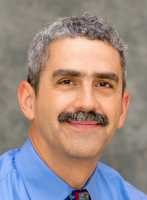
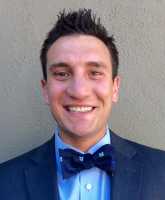
[caption id="attachment_50705" align="alignleft" width="160"] Dr. Sheetz[/caption]
Kyle Sheetz, MD, MSc
Research Fellow
Center for Healthcare Outcomes and Policy
University of Michigan
MedicalResearch.com: What is the background for this study? What are the main findings?
Response: Various patient safety organizations and clinical societies continue to advocate for volume thresholds as a means to improve the short-term safety and overall effectiveness of high risk cancer surgeries in the United States.
We asked two questions with this study:
1) What proportion of U.S. hospitals meet discretionary volume standards?
2) Do these standards differentiate hospitals based on short-term safety outcomes (mortality and complications)?
We found that a relatively low proportion of hospitals meet even modest volume standards put forth by the Leapfrog Group. These standards did not differentiate hospitals based on outcomes for 3 of 4 high risk cancer operations reported by the Leapfrog Group. However, using higher thresholds, we were able to demonstrate a significant relationship between higher hospital volume and better outcomes, which has been reported numerous times.

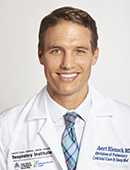


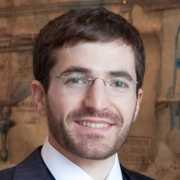

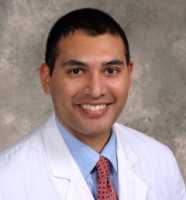
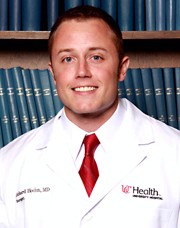
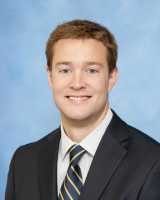
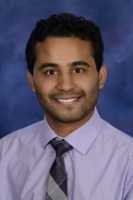 Dr. Sahil Agrawal[/caption]
Sahil Agrawal MD, MD
Heart and Vascular Center
St. Luke’s University Health Network
Bethlehem, PA 18015
MedicalResearch.com: What is the background for this study?
Dr. Agrawal: Patients admitted on a weekend have previously been known to have poorer outcomes compared to patients admitted on weekdays for various acute illnesses. With the advent of early fibrinolytic therapy and subsequently, emergent primary percutaneous coronary interventions (PCI), such discrepancies in outcomes have been largely resolved for ST-segment elevation myocardial infarctions (STEMI). In contrast, treatment of non-ST segment elevation myocardial infarction (NSTEMI) has remained less stringent such that invasive coronary angiography and potential intervention is often delayed for those presenting on a weekend rather than a week day. According to current ACC/AHA guidelines for NSTEMI, an early invasive strategy (EIS) is the preferred method of management unless barred by presence of contraindications (comorbid conditions) or patients’ preference. We were interested in investigating differences in utilization of EIS between patients admitted on a weekend versus those admitted on a weekday for an NSTEMI, and to evaluate the impact of such differences on in-hospital mortality in such patients.
Dr. Sahil Agrawal[/caption]
Sahil Agrawal MD, MD
Heart and Vascular Center
St. Luke’s University Health Network
Bethlehem, PA 18015
MedicalResearch.com: What is the background for this study?
Dr. Agrawal: Patients admitted on a weekend have previously been known to have poorer outcomes compared to patients admitted on weekdays for various acute illnesses. With the advent of early fibrinolytic therapy and subsequently, emergent primary percutaneous coronary interventions (PCI), such discrepancies in outcomes have been largely resolved for ST-segment elevation myocardial infarctions (STEMI). In contrast, treatment of non-ST segment elevation myocardial infarction (NSTEMI) has remained less stringent such that invasive coronary angiography and potential intervention is often delayed for those presenting on a weekend rather than a week day. According to current ACC/AHA guidelines for NSTEMI, an early invasive strategy (EIS) is the preferred method of management unless barred by presence of contraindications (comorbid conditions) or patients’ preference. We were interested in investigating differences in utilization of EIS between patients admitted on a weekend versus those admitted on a weekday for an NSTEMI, and to evaluate the impact of such differences on in-hospital mortality in such patients.
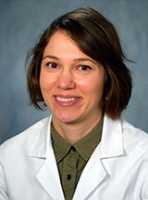
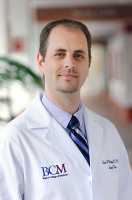 Dr. Daniel Murphy[/caption]
Daniel R. Murphy, M.D., M.B.A.
Assistant Professor - Interim Director of GIM at Baylor Clinic
Department of Medicine
Health Svc Research & General Internal Medicine
Baylor College of Medicine
Houston, TX
MedicalResearch.com: What is the background for this study? What are the main findings?
Dr. Murphy: Electronic health records (EHRs) have improved communication in health care, but they have not eliminated the problem of patients failing to receive appropriate and timely follow up after abnormal test results. For example, after a chest x-ray result where a radiologist identifies a potentially cancerous mass and suggests additional evaluation, about 8% of patients do not receive follow-up imaging or have a visit with an appropriate specialist within 30 days. Identifying patients experiencing a delay with traditional methods, like randomly reviewing charts, is not practical. Fortunately, EHRs collect large amounts of data each day that can be useful in automating the process of identifying such patients.
We evaluated whether an electronic “trigger” algorithm designed to detect delays in follow up of abnormal lung imaging tests could help medical facilities identify patients likely to have experienced a delay. Of 40,218 imaging tests performed, the trigger found 655 with a possible delay. Reviewing a subset of these records showed that 61% were truly delays in care that required action. We also found that the trigger had a sensitivity of 99%, indicating that it missed very few actual delays.
Dr. Daniel Murphy[/caption]
Daniel R. Murphy, M.D., M.B.A.
Assistant Professor - Interim Director of GIM at Baylor Clinic
Department of Medicine
Health Svc Research & General Internal Medicine
Baylor College of Medicine
Houston, TX
MedicalResearch.com: What is the background for this study? What are the main findings?
Dr. Murphy: Electronic health records (EHRs) have improved communication in health care, but they have not eliminated the problem of patients failing to receive appropriate and timely follow up after abnormal test results. For example, after a chest x-ray result where a radiologist identifies a potentially cancerous mass and suggests additional evaluation, about 8% of patients do not receive follow-up imaging or have a visit with an appropriate specialist within 30 days. Identifying patients experiencing a delay with traditional methods, like randomly reviewing charts, is not practical. Fortunately, EHRs collect large amounts of data each day that can be useful in automating the process of identifying such patients.
We evaluated whether an electronic “trigger” algorithm designed to detect delays in follow up of abnormal lung imaging tests could help medical facilities identify patients likely to have experienced a delay. Of 40,218 imaging tests performed, the trigger found 655 with a possible delay. Reviewing a subset of these records showed that 61% were truly delays in care that required action. We also found that the trigger had a sensitivity of 99%, indicating that it missed very few actual delays.
 Dr. Gabriele Messina[/caption]
Gabriele Messina, MD Dr.PH MSc
Research Professor of Public Health
University of Siena
Department of Molecular and Developmental Medicine
Area of Public Health. Room: 2057
Siena, Italy
MedicalResearch.com: What is the background for this study?
Dr. Messina: Studies conducted in the 1970s and 1980s conferred to environmental surfaces a marginal role in the transmission of health care associated infections (HAIs). Today, it is demonstrated that several pathogens such as C. difficile, VRE (Vancomycin-resistant Enterococcus) and MRSA (Methicillin-resistant Staphylococcus aureus) can survive even for months on inanimate surfaces. Up to 40% of HAIs can be spread by the hands of doctors and hospital staff after touching infected patient and/or contaminated surfaces; furthermore, people hospitalized in rooms previously occupied by patients infected by microorganism that can persist on surfaces present an increased risk to develop HAIs.
Dr. Gabriele Messina[/caption]
Gabriele Messina, MD Dr.PH MSc
Research Professor of Public Health
University of Siena
Department of Molecular and Developmental Medicine
Area of Public Health. Room: 2057
Siena, Italy
MedicalResearch.com: What is the background for this study?
Dr. Messina: Studies conducted in the 1970s and 1980s conferred to environmental surfaces a marginal role in the transmission of health care associated infections (HAIs). Today, it is demonstrated that several pathogens such as C. difficile, VRE (Vancomycin-resistant Enterococcus) and MRSA (Methicillin-resistant Staphylococcus aureus) can survive even for months on inanimate surfaces. Up to 40% of HAIs can be spread by the hands of doctors and hospital staff after touching infected patient and/or contaminated surfaces; furthermore, people hospitalized in rooms previously occupied by patients infected by microorganism that can persist on surfaces present an increased risk to develop HAIs.
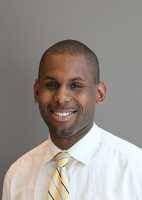 Michael Daniel[/caption]
Michael Daniel
The Johns Hopkins University School of Medicine
M.D. Candidate 2016
Michael G. Daniel is a graduating medical student at the Johns Hopkins School of Medicine. He will be attending the Osler Internal Medicine Residency Training Program next year at the Johns Hopkins Hospital. His research focus is on Patient Safety, Quality, and Outcomes improvement.
Summary:
Medical error ranks as the third leading cause of death in the United States, but is not recognized in national vital statistics because of a flawed reporting process. Using recent studies on preventable medical error and extrapolating the results to the 2013 U.S. hospital admissions we calculated a mortality rate or 251,454 deaths per year.
MedicalResearch.com: What made you want to research this topic?
Response: I decided to study medicine because I wanted to improve patient health. However, I realized that improving patient health is not only about curing a disease but is sometimes about fixing the way we deliver healthcare.
MedicalResearch.com: Is this news surprising to you?
Response: Yes, because all previous estimates of medical error were much lower and when I started the research I couldn’t use the CDC statistics to get current data.
Michael Daniel[/caption]
Michael Daniel
The Johns Hopkins University School of Medicine
M.D. Candidate 2016
Michael G. Daniel is a graduating medical student at the Johns Hopkins School of Medicine. He will be attending the Osler Internal Medicine Residency Training Program next year at the Johns Hopkins Hospital. His research focus is on Patient Safety, Quality, and Outcomes improvement.
Summary:
Medical error ranks as the third leading cause of death in the United States, but is not recognized in national vital statistics because of a flawed reporting process. Using recent studies on preventable medical error and extrapolating the results to the 2013 U.S. hospital admissions we calculated a mortality rate or 251,454 deaths per year.
MedicalResearch.com: What made you want to research this topic?
Response: I decided to study medicine because I wanted to improve patient health. However, I realized that improving patient health is not only about curing a disease but is sometimes about fixing the way we deliver healthcare.
MedicalResearch.com: Is this news surprising to you?
Response: Yes, because all previous estimates of medical error were much lower and when I started the research I couldn’t use the CDC statistics to get current data.