[caption id="attachment_20692" align="alignleft" width="150"]

Dr. Benjamin Neel[/caption]
More on Breast Cancer Research on MedicalResearch.com
MedicalResearch.com Interview with:
Dr. Benjamin Neel MD PhD
Professor, Department of Medicine
Director Perlmutter Cancer Center
NYU Langone Medical Center
Medical Research: What is the background for this study? What are the main findings?
Dr. Neel: Over the past 10 years, there have been major advances in cancer genomics--i.e., defining what changes in genes are found in different types of cancer cells. Sometimes, such studies have resulted in the identification of new drug targets, such as EGF receptor mutations or EML-ALK translocations in lung cancer, RAF mutations in melanoma and hairy cell leukemia, and KIT or PDGFR mutations in GIST. More often, though, either the genetic changes that genomic studies reveal are difficult to target by conventional small molecule drugs or we dont know which of the many mutations found in a given tumor are critical to its proliferation/survival.
"Functional genomics" is a parallel approach to tumor genomics, that aims to use large scale screening technology to identify which genes are essential to cancer cell survival/proliferation. This approach can reveal which genetic changes in cancer cells "drive" the cancer--but it also can find genes on which the cancer becomes dependent because of the other "driver" genes. One major approach to functional genomics uses short hairpin RNAs (a type of RNAinterference/RNAi) to "knock down" the expression of each gene in a cell. Scientists can generate a "library" of designer virus particles, each of which expresses a different hairpin that can "knockdown" a different gene. A large population of tumor cells is then infected with the virus, and scientists use gene sequencing or array based approaches to see which shRNAs become depleted from the starting population of shRNAs; this type of screen is called a "dropout screen".
Earlier studies, including by our group, performed dropout screens on smaller numbers of cancer cell lines. Yet because these screens involved only a few cell lines, they could not represent the large number of sub-types knownt to occur in, for example, breast cancer. Our study, by using 77 breast cancer lines, has adequate power to survey the landscape of breast cancer. Furthermore, by obtaining parallel genomic information, as well as some information on the breast cancer cell "proteome" (the proteins in these cells), we can couple genomic analysis with functional genomics. In addition, we had drug response information for a large number of these lines, and so were able to make some predictions for drugs that might prove additive for breast cancer therapy.
The result is a large number of potential new targets linked to genetic information, as well as new insights into how the different sub-types of breast cancer "rewire" their respective signaling diagrams compared with normal cells.

 Dr. Serena Nik Zainal[/caption]
Serena Nik-Zainal MD PhD
Wellcome Beit Fellow & Honorary Consultant in Clinical Genetics
CDF Group Leader
Wellcome Trust Sanger Institute
United Kingdom
MedicalResearch.com: What is the background for this study? What are the main findings?
Dr. Nik-Zainal: We have used the massive improvement in speed of "sequencing" (reading the human genetic material) in order to obtain comprehensive whole genome maps of 560 human breast cancer patients. This is the largest whole genome sequencing study of a single cancer type in the world. We wanted to forensically search these cancers, find all the important genes that drive breast cancer, find all the important mutation patterns that tell us something about why breast cells turn into cancer cells and then to pull it altogether for each patient. We wanted to be able to "profile" each cancer patient, to see if we could further our understanding of personal cancer genomes.
In all, we had 556 female and four male patients, and they were sought from all over the world – USA, Europe and Asia.
Dr. Serena Nik Zainal[/caption]
Serena Nik-Zainal MD PhD
Wellcome Beit Fellow & Honorary Consultant in Clinical Genetics
CDF Group Leader
Wellcome Trust Sanger Institute
United Kingdom
MedicalResearch.com: What is the background for this study? What are the main findings?
Dr. Nik-Zainal: We have used the massive improvement in speed of "sequencing" (reading the human genetic material) in order to obtain comprehensive whole genome maps of 560 human breast cancer patients. This is the largest whole genome sequencing study of a single cancer type in the world. We wanted to forensically search these cancers, find all the important genes that drive breast cancer, find all the important mutation patterns that tell us something about why breast cells turn into cancer cells and then to pull it altogether for each patient. We wanted to be able to "profile" each cancer patient, to see if we could further our understanding of personal cancer genomes.
In all, we had 556 female and four male patients, and they were sought from all over the world – USA, Europe and Asia.
 Dr. Reina Haque[/caption]
Reina Haque, PhD MPH
Research scientist
Kaiser Permanente Southern California Department of Research & Evaluation
MedicalResearch.com: What is the background for this study? What are the main findings?
Dr. Haque: The study fills an important knowledge gap about the long-term association of aromatase inhibitors on cardiovascular disease risk in breast cancer survivors.
This was a retrospective cohort study that included a cohort of 13,273 postmenopausal breast cancer survivors who were diagnosed with breast cancer, either estrogen or progesterone receptor positive, from 1991 to 2010. The patients were followed through 2011, or a maximum of 21 years. The study participants were divided into four groups based on the drugs they received: 31.7 percent were treated only with tamoxifen; 28.6 percent only with aromatase inhibitors; 20.2 percent used both; and 19.4 percent did not use any of these drugs. These oral drugs are used to combat breast cancer recurrence, but may have long-term side effects on other organs.
The study determined that the risk of cardiac ischemia (which can lead to a heart attack) and stroke were not elevated in patients who only took aromatase inhibitors compared to those who only took tamoxifen. These results provide reassurance that aromatase inhibitors may not increase risk of the potentially fatal cardiovascular outcomes compared to tamoxifen.
Dr. Reina Haque[/caption]
Reina Haque, PhD MPH
Research scientist
Kaiser Permanente Southern California Department of Research & Evaluation
MedicalResearch.com: What is the background for this study? What are the main findings?
Dr. Haque: The study fills an important knowledge gap about the long-term association of aromatase inhibitors on cardiovascular disease risk in breast cancer survivors.
This was a retrospective cohort study that included a cohort of 13,273 postmenopausal breast cancer survivors who were diagnosed with breast cancer, either estrogen or progesterone receptor positive, from 1991 to 2010. The patients were followed through 2011, or a maximum of 21 years. The study participants were divided into four groups based on the drugs they received: 31.7 percent were treated only with tamoxifen; 28.6 percent only with aromatase inhibitors; 20.2 percent used both; and 19.4 percent did not use any of these drugs. These oral drugs are used to combat breast cancer recurrence, but may have long-term side effects on other organs.
The study determined that the risk of cardiac ischemia (which can lead to a heart attack) and stroke were not elevated in patients who only took aromatase inhibitors compared to those who only took tamoxifen. These results provide reassurance that aromatase inhibitors may not increase risk of the potentially fatal cardiovascular outcomes compared to tamoxifen.
 Dr. Stamatia Destounis[/caption]
Stamatia Destounis, MD, FSBI, FACR
Elizabeth Wende Breast Care, LLC,
Clinical Professor of Imaging Sciences
University of Rochester
School of Medicine and Dentistry
Rochester NY 14620
MedicalResearch.com: What is the background for this study? What are the main findings?
Dr. Destounis: Identification of women who have an increased risk of breast cancer is important, as they are often eligible for additional screening methods, such as breast MRI. One criterion for eligibility for screening breast MRI is >20% lifetime risk of breast cancer, as determined by risk assessment models through genetic counseling.
At my facility, we have incorporated a genetics program. Through the program we are flagging and identifying a large volume of patients who are potentially eligible for additional services. This study was conducted to determine the value of screening MRI in the patient subgroup who have undergone genetic counseling at my facility. In this group we found 50% of patients who were referred for counseling were also recommended to have screening MRI. However, only 21.3% of those recommended actually pursued the exam. Of those patients who did have a screening MRI, 4 were diagnosed with breast cancer, all of which were invasive and node negative. We ultimately had a 10% biopsy rate and 50% cancer detection rate in this subgroup.
Dr. Stamatia Destounis[/caption]
Stamatia Destounis, MD, FSBI, FACR
Elizabeth Wende Breast Care, LLC,
Clinical Professor of Imaging Sciences
University of Rochester
School of Medicine and Dentistry
Rochester NY 14620
MedicalResearch.com: What is the background for this study? What are the main findings?
Dr. Destounis: Identification of women who have an increased risk of breast cancer is important, as they are often eligible for additional screening methods, such as breast MRI. One criterion for eligibility for screening breast MRI is >20% lifetime risk of breast cancer, as determined by risk assessment models through genetic counseling.
At my facility, we have incorporated a genetics program. Through the program we are flagging and identifying a large volume of patients who are potentially eligible for additional services. This study was conducted to determine the value of screening MRI in the patient subgroup who have undergone genetic counseling at my facility. In this group we found 50% of patients who were referred for counseling were also recommended to have screening MRI. However, only 21.3% of those recommended actually pursued the exam. Of those patients who did have a screening MRI, 4 were diagnosed with breast cancer, all of which were invasive and node negative. We ultimately had a 10% biopsy rate and 50% cancer detection rate in this subgroup.
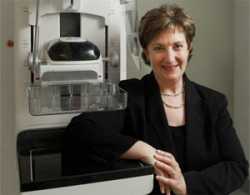 Dr. Elizabeth Rafferty[/caption]
Elizabeth A. Rafferty, MD
Department of Radiology,
Massachusetts General Hospital, Boston
Now with L&M Radiology, West Acton,
Massachusetts
MedicalResearch.com: What is the background for this study? What are the main findings?
Dr. Rafferty: Breast tomosynthesis has been approved for mammographic screening in the United States for just over 5 years, and many single center studies have demonstrated its improved performance for screening outcomes over digital mammography alone. Our previously published multi-center analysis, (JAMA 2014;311(24), the largest study on this topic to date, demonstrated significantly improved cancer detection and reduced recall rates for women undergoing tomosynthesis compared with digital mammography alone. In the current issue of JAMA we evaluate the differential screening performance after implementation of breast tomosynthesis as a function of breast density.
While tomosynthesis continues to be increasingly available, questions remained about which women should be imaged with this technique. In particular, does this technology offer additional benefit for all women, or only for women with dense breasts. The size of the database compiled by the centers participating in this study allowed us to evaluate this important question.
The most critical finding of our study was that the use of tomosynthesis for breast cancer screening significantly improved invasive cancer detection rates while simultaneously significantly reducing recall rates both for women with dense and non-dense breast tissue. Having said that, the magnitude of the benefit was largest for women with heterogeneously dense breast tissue; for this population, tomosynthesis increased the detection of invasive cancers by 50% while simultaneously reducing the recall rate by 14%.
Dr. Elizabeth Rafferty[/caption]
Elizabeth A. Rafferty, MD
Department of Radiology,
Massachusetts General Hospital, Boston
Now with L&M Radiology, West Acton,
Massachusetts
MedicalResearch.com: What is the background for this study? What are the main findings?
Dr. Rafferty: Breast tomosynthesis has been approved for mammographic screening in the United States for just over 5 years, and many single center studies have demonstrated its improved performance for screening outcomes over digital mammography alone. Our previously published multi-center analysis, (JAMA 2014;311(24), the largest study on this topic to date, demonstrated significantly improved cancer detection and reduced recall rates for women undergoing tomosynthesis compared with digital mammography alone. In the current issue of JAMA we evaluate the differential screening performance after implementation of breast tomosynthesis as a function of breast density.
While tomosynthesis continues to be increasingly available, questions remained about which women should be imaged with this technique. In particular, does this technology offer additional benefit for all women, or only for women with dense breasts. The size of the database compiled by the centers participating in this study allowed us to evaluate this important question.
The most critical finding of our study was that the use of tomosynthesis for breast cancer screening significantly improved invasive cancer detection rates while simultaneously significantly reducing recall rates both for women with dense and non-dense breast tissue. Having said that, the magnitude of the benefit was largest for women with heterogeneously dense breast tissue; for this population, tomosynthesis increased the detection of invasive cancers by 50% while simultaneously reducing the recall rate by 14%.














 Dr. Boolbol[/caption]
MedicalResearch.com Interview with:
Susan K. Boolbol, MD, FACS
Chief, Division of Breast Surgery
Chief, Appel-Venet Comprehensive Breast Service
Co-Director, Breast Surgery Fellowship
Mount Sinai Beth Israel
Associate Professor of Surgery
Icahn School of Medicine at Mount Sinai
New York, NY 10003
Medical Research: What is the background for these new recommendations?
Dr. Boolbol: To make this final recommendation, the Task Force conducted a comprehensive review of the science since its 2009 recommendation and considered the public comments it received on its 2015 draft recommendation statement. Based on all of this, the task force issued their recommendations.
Medical Research: What are the main changes from current guidelines?
Dr. Boolbol: Presently, there are several different guidelines and recommendations regarding screening mammography. Depending on the group issuing the guidelines, the recommendations vary from
Dr. Boolbol[/caption]
MedicalResearch.com Interview with:
Susan K. Boolbol, MD, FACS
Chief, Division of Breast Surgery
Chief, Appel-Venet Comprehensive Breast Service
Co-Director, Breast Surgery Fellowship
Mount Sinai Beth Israel
Associate Professor of Surgery
Icahn School of Medicine at Mount Sinai
New York, NY 10003
Medical Research: What is the background for these new recommendations?
Dr. Boolbol: To make this final recommendation, the Task Force conducted a comprehensive review of the science since its 2009 recommendation and considered the public comments it received on its 2015 draft recommendation statement. Based on all of this, the task force issued their recommendations.
Medical Research: What are the main changes from current guidelines?
Dr. Boolbol: Presently, there are several different guidelines and recommendations regarding screening mammography. Depending on the group issuing the guidelines, the recommendations vary from  Prof. Hennekens[/caption]
MedicalResearch.com Interview with:
Professor Charles Hennekens MD Dr.P.H
Sir Richard Doll Professor
Senior Academic Advisor to the Dean
Charles E. Schmidt College of Medicine
Florida Atlantic University
777 Glades Road
Boca Raton, FL 33431
Medical Research: What is the background for this study? What are the main findings?
Prof. Hennekens: Randomized evidence indicates clear benefits of mammography in middle age and, at present, most guidelines recommend regular mammography for women up to age 74. In collaboration with colleagues at Baylor Medical College and Meharry Medical School we were able to link the Surveillance, Epidemiology, and End Results (SEER) data to the Medicare administrative claims data. We found that, up to 84 years, screening was more common among whites than blacks and women receiving regular annual screening mammography had lower risks of mortality from breast cancer.
Prof. Hennekens[/caption]
MedicalResearch.com Interview with:
Professor Charles Hennekens MD Dr.P.H
Sir Richard Doll Professor
Senior Academic Advisor to the Dean
Charles E. Schmidt College of Medicine
Florida Atlantic University
777 Glades Road
Boca Raton, FL 33431
Medical Research: What is the background for this study? What are the main findings?
Prof. Hennekens: Randomized evidence indicates clear benefits of mammography in middle age and, at present, most guidelines recommend regular mammography for women up to age 74. In collaboration with colleagues at Baylor Medical College and Meharry Medical School we were able to link the Surveillance, Epidemiology, and End Results (SEER) data to the Medicare administrative claims data. We found that, up to 84 years, screening was more common among whites than blacks and women receiving regular annual screening mammography had lower risks of mortality from breast cancer.
 Dr. David Gallego Ortega PhD[/caption]
MedicalResearch.com Interview with:
David Gallego Ortega, PhD
Group Leader, Tumour Development Group Cancer Division
Garvan Institute of Medical Research
Conjoint Lecturer, St Vincent’s Clinical School, Faculty of Medicine, UNSW, Australia
National Breast Cancer Foundation and Cure Cancer Foundation Australia Fellow
Medical Research: What is the background for this study? What are the main findings?
Dr. Ortega: We have identified a protein that 'goes rogue’ in breast cancer. The protein, called Elf5, ‘tricks' the immune system producing inflammation so that the immune cells now help the breast cancer cells to spread throughout the body.
Cancer spread, or metastasis, is the ultimate cause of death of
Dr. David Gallego Ortega PhD[/caption]
MedicalResearch.com Interview with:
David Gallego Ortega, PhD
Group Leader, Tumour Development Group Cancer Division
Garvan Institute of Medical Research
Conjoint Lecturer, St Vincent’s Clinical School, Faculty of Medicine, UNSW, Australia
National Breast Cancer Foundation and Cure Cancer Foundation Australia Fellow
Medical Research: What is the background for this study? What are the main findings?
Dr. Ortega: We have identified a protein that 'goes rogue’ in breast cancer. The protein, called Elf5, ‘tricks' the immune system producing inflammation so that the immune cells now help the breast cancer cells to spread throughout the body.
Cancer spread, or metastasis, is the ultimate cause of death of  Dr. Jenny C. Chang[/caption]
MedicalResearch.com Interview with:
Jenny C. Chang, M.D.
Director, Houston Methodist Cancer Center
Professor of Medicine, Weill Cornell Medical College
Full Member, Houston Methodist Research Institute
Houston, Texas
MedicalResearch: What is the background for this study? What are the main findings?
Dr. Chang: The current treatment of triple negative breast cancer, which accounts for about 15% of all cases of breast cancer, is still based on surgery, radiotherapy, and classic chemotherapy because, unlike other types of breast cancer, it is not amenable to hormonal or targeted therapy. However, research findings suggest that cancer stem cells, which represent about 2% of all neoplastic cells, may play a role in disease relapses and the formation of distant metastases. As these cells may represent a therapeutic target, the aim of this study is to modify the micro-environment in which they reproduce by acting directly on the chemokines involved in inflammation because there is evidence indicating a possible mechanism of action of reparixin, a molecule developed by Dompé, an Italian biopharmaceutical company, in the targeted treatment of these cancers.
Dr. Jenny C. Chang[/caption]
MedicalResearch.com Interview with:
Jenny C. Chang, M.D.
Director, Houston Methodist Cancer Center
Professor of Medicine, Weill Cornell Medical College
Full Member, Houston Methodist Research Institute
Houston, Texas
MedicalResearch: What is the background for this study? What are the main findings?
Dr. Chang: The current treatment of triple negative breast cancer, which accounts for about 15% of all cases of breast cancer, is still based on surgery, radiotherapy, and classic chemotherapy because, unlike other types of breast cancer, it is not amenable to hormonal or targeted therapy. However, research findings suggest that cancer stem cells, which represent about 2% of all neoplastic cells, may play a role in disease relapses and the formation of distant metastases. As these cells may represent a therapeutic target, the aim of this study is to modify the micro-environment in which they reproduce by acting directly on the chemokines involved in inflammation because there is evidence indicating a possible mechanism of action of reparixin, a molecule developed by Dompé, an Italian biopharmaceutical company, in the targeted treatment of these cancers.