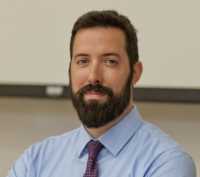
 MedicalResearch.com Interview with:
Michael B. Burns, Ph.D.
MedicalResearch.com Interview with:
Michael B. Burns, Ph.D.
HHMI Post-Doctoral Fellow
Dept. of Genetics, Cell Biology and Development
Dept. of Ecology, Evolution, and Behavior
Masonic Cancer Center
Dept. of Biology Teaching and Learning
University of Minnesota Twin Cities
St. Paul, MN 55108
Medical Research: What is the background for this study?
Dr. Burns: Recent technological advances have made it possible to survey all the of microbes that are in, on, and around us. One of the surprising things is the sheer quantity and diversity of the bacteria in our environments and our microbiomes. Many researchers have begun the systematic characterization of the microbes that are associated with specific disease states, including cancer. With regard to
colorectal cancer, there have been numerous studies that have identified specific bacteria that are linked to the presence of the disease. There have been many reports that have identified particular potentially important microbes that may be causing the cancer, driving the cancer, or some combination of the two. Among these microbes, one of the best studied so far is a group of bacteria called
Fusobacterium.
Medical Research: What are the main findings?
Dr. Burns: In our work, we set out to perform another characterization of the bacteria in the gut
microbiome that are specifically associated with colorectal tumors. We used samples of normal colon tissue from the same individuals as controls, which allowed us to account for much of the variability in the different bacteria we found that might have been simply the result of, for instance, diet. In our analysis, we confirmed the previous results related to
Fusobacterium, and additionally discovered a new potential culprit in colorectal cancer, a group of bacteria named
Providencia.
The finding of another new set of microbes that might be causing or driving cancer is not surprising. As indicated above, there are many groups who have found other potential candidate microbes that could be implicated in the disease. Our next question was to determine if there was some reason why there might be so many different bacteria that are linked with the disease and what it might be able to tell us about what these bacteria are doing. To that end, we used computational approaches to assess what these two groups of bacteria might be doing at a functional level and if there were any similarities. We found that there was a great deal in common between
Fusobacterium and
Providencia, including a finding that one of the common functions was related to a large group of virulence genes.

 Prof. Tine Rask Licht[/caption]
Tine Rask Licht, Professor
Head of Research Group on Gut Microbiology and Immunology
Technical University of Denmark
National Food Institute Søborg
Medical Research: What is the background for this study? What are the main findings?
Response: During childhood, the intestinal microbiota is under establishment. This period thus represents a ’window’, where the microbiota is likely to be more susceptible to be affected by external factors such as diet. Currently, it is well known that breast feeding has a major impact on the microbiota of young infants, but only very few studies have addressed the effect of the ‘next step’ in diet exposure, represented by complementary feeding.
We studied two cohorts of children, born to normal-weight and obese mothers, respectively, and mapped the composition of bacteria in their fecal microbiota at age 9 months and 18 months. We found that at 9 months, the microbiota was clearly affected by the composition of the complementary diet, but not by maternal obesity.
Prof. Tine Rask Licht[/caption]
Tine Rask Licht, Professor
Head of Research Group on Gut Microbiology and Immunology
Technical University of Denmark
National Food Institute Søborg
Medical Research: What is the background for this study? What are the main findings?
Response: During childhood, the intestinal microbiota is under establishment. This period thus represents a ’window’, where the microbiota is likely to be more susceptible to be affected by external factors such as diet. Currently, it is well known that breast feeding has a major impact on the microbiota of young infants, but only very few studies have addressed the effect of the ‘next step’ in diet exposure, represented by complementary feeding.
We studied two cohorts of children, born to normal-weight and obese mothers, respectively, and mapped the composition of bacteria in their fecal microbiota at age 9 months and 18 months. We found that at 9 months, the microbiota was clearly affected by the composition of the complementary diet, but not by maternal obesity.


 Dr. Casey Theriot[/caption]
MedicalResearch.com Interview with:
Casey M. Theriot, Ph.D.
Assistant Professor Infectious Disease
College of Veterinary Medicine
Department of Population Health and Pathobiology
North Carolina State University
Raleigh, NC 27607
Medical Research: What is the background for this study? What are the main findings?
Dr. Theriot: This study is an extension of the work we did in 2014 in our Nature Communications paper (Theriot et al. Antibiotic-induced shifts in the mouse gut microbiome and metabolome increase susceptibility to Clostridium difficile infection, 2014). We really wanted to know how different antibiotics that varied in their mechanism of action altered the gut microbiota in different ways and also in turn how this altered the bile acids present in the small and large intestine of mice. Primary bile acids are made by the host and are further converted to secondary bile acids by members of the microbiota in the large intestine. We know from previous work that secondary bile acids can inhibit the growth of C. difficile, but no one has looked in depth at the bile acid makeup in the actual gut before in the context of C. difficile. In this study we show that specific antibiotics that significantly alter the large intestinal gut microbiota and deplete all secondary bile acids allow for
Dr. Casey Theriot[/caption]
MedicalResearch.com Interview with:
Casey M. Theriot, Ph.D.
Assistant Professor Infectious Disease
College of Veterinary Medicine
Department of Population Health and Pathobiology
North Carolina State University
Raleigh, NC 27607
Medical Research: What is the background for this study? What are the main findings?
Dr. Theriot: This study is an extension of the work we did in 2014 in our Nature Communications paper (Theriot et al. Antibiotic-induced shifts in the mouse gut microbiome and metabolome increase susceptibility to Clostridium difficile infection, 2014). We really wanted to know how different antibiotics that varied in their mechanism of action altered the gut microbiota in different ways and also in turn how this altered the bile acids present in the small and large intestine of mice. Primary bile acids are made by the host and are further converted to secondary bile acids by members of the microbiota in the large intestine. We know from previous work that secondary bile acids can inhibit the growth of C. difficile, but no one has looked in depth at the bile acid makeup in the actual gut before in the context of C. difficile. In this study we show that specific antibiotics that significantly alter the large intestinal gut microbiota and deplete all secondary bile acids allow for Dr. Manning[/caption]
MedicalResearch.com Interview with:
Shannon D. Manning, Ph.D., M.P.H.
Dept. of Microbiology and Molecular Genetics
Michigan State University
E. Lansing, MI 48824
Medical Research: What is the background for this study? What are the main findings?
Dr. Manning: Diarrheal disease is a leading cause of morbidity and mortality in children under the age of five and is commonly caused by many different bacterial pathogens.
We have observed that infection with four different bacterial pathogens (Salmonella, Shigella, Shiga toxin-producing E. coli, and Campylobacter) all induce the proliferation of a population of microbes, namely Escherichia, which are already present in the gut of healthy individuals.
Dr. Manning[/caption]
MedicalResearch.com Interview with:
Shannon D. Manning, Ph.D., M.P.H.
Dept. of Microbiology and Molecular Genetics
Michigan State University
E. Lansing, MI 48824
Medical Research: What is the background for this study? What are the main findings?
Dr. Manning: Diarrheal disease is a leading cause of morbidity and mortality in children under the age of five and is commonly caused by many different bacterial pathogens.
We have observed that infection with four different bacterial pathogens (Salmonella, Shigella, Shiga toxin-producing E. coli, and Campylobacter) all induce the proliferation of a population of microbes, namely Escherichia, which are already present in the gut of healthy individuals.