16 Apr Home Responsibilities Encourage Physician Mothers in Procedural Specialties To Consider Career Change
Posted at 11:28h
in Author Interviews, Brigham & Women's - Harvard, Gender Differences, JAMA, Surgical Research
MedicalResearch.com Interview with:
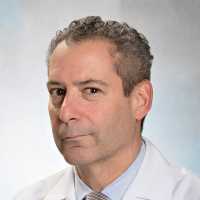
[caption id="attachment_48523" align="alignleft" width="200"] Dr. Melnitchouk[/caption]
Nelya Melnitchouk, MD,MSc
Director, Program in Peritoneal Surface Malignancy, HIPEC
Dr. Melnitchouk is an associate surgeon at Brigham and Women’s Hospital (BWH) and Brigham and Women’s Faulkner Hospital (BWFH) and
instructor of surgery at Harvard Medical School.
MedicalResearch.com: What is the background for this study? What are the main findings?
Response: Current literature on women in surgery show that female physicians, particularly those in procedural specialties, face many challenges in balancing responsibilities between work and home. We hypothesized that these challenges may affect career satisfaction more negatively for physician mothers in procedural specialties than those in nonprocedural specialties.
In our study, we found that physician mothers in procedural specialties who had more domestic responsibilities were more likely to report a desire to change careers than those in nonprocedural specialties.




 Dr. Reker[/caption]
Daniel Reker, PhD
Koch Institute for Integrative Cancer Research
Massachusetts Institute of Technology
MedicalResearch.com: What is the background for this study?
Response: We started thinking more about this topic following a clinical experience five years ago that Dr. Traverso was involved in where a patient suffering form Celiac disease received a prescription of a drug which potentially had gluten. This experience really opened our eyes for how little we knew about the inactive ingredients and how clinical workflows do not currently accommodate for such scenarios.
We therefore set up a large scale analysis to better understand the complexity of the inactive ingredient portion in a medication as well as how frequently critical ingredients are included that could potential affect sensitive patients.
Dr. Reker[/caption]
Daniel Reker, PhD
Koch Institute for Integrative Cancer Research
Massachusetts Institute of Technology
MedicalResearch.com: What is the background for this study?
Response: We started thinking more about this topic following a clinical experience five years ago that Dr. Traverso was involved in where a patient suffering form Celiac disease received a prescription of a drug which potentially had gluten. This experience really opened our eyes for how little we knew about the inactive ingredients and how clinical workflows do not currently accommodate for such scenarios.
We therefore set up a large scale analysis to better understand the complexity of the inactive ingredient portion in a medication as well as how frequently critical ingredients are included that could potential affect sensitive patients.


 Dr. Rhee[/caption]
Chanu Rhee, MD,MPH
Assistant Professor of Population Medicine
Harvard Medical School / Harvard Pilgrim Health Care Institute
Assistant Hospital Epidemiologist
Brigham and Women’s Hospital
MedicalResearch.com: What is the background for this study?
Response: Sepsis is the body’s reaction to a serious infection that results a cascade of inflammation in the body and organ dysfunction, such as low blood pressure, confusion, or failure of the lungs, kidneys, or liver. Sepsis is a major cause of death, disability, and cost in the U.S. and around the world. Growing recognition of this problem has led to numerous sepsis performance improvement initiatives in hospitals around the country. Some of these efforts have also been catalyzed by high-profile tragic cases of missed sepsis leading to death, which may have contributed to a perception that most sepsis deaths are preventable if doctors and hospitals were only better at recognizing it.
However, the extent to which sepsis-related deaths might be preventable with better hospital-based care is unknown. In my own experience as a critical care physician, a lot of sepsis patients we treat are extremely sick and even when they receive timely and optimal medical care, many do not survive. This led myself and my colleagues to conduct this study to better understand what types of patients are dying from sepsis and how preventable these deaths might be.
Dr. Rhee[/caption]
Chanu Rhee, MD,MPH
Assistant Professor of Population Medicine
Harvard Medical School / Harvard Pilgrim Health Care Institute
Assistant Hospital Epidemiologist
Brigham and Women’s Hospital
MedicalResearch.com: What is the background for this study?
Response: Sepsis is the body’s reaction to a serious infection that results a cascade of inflammation in the body and organ dysfunction, such as low blood pressure, confusion, or failure of the lungs, kidneys, or liver. Sepsis is a major cause of death, disability, and cost in the U.S. and around the world. Growing recognition of this problem has led to numerous sepsis performance improvement initiatives in hospitals around the country. Some of these efforts have also been catalyzed by high-profile tragic cases of missed sepsis leading to death, which may have contributed to a perception that most sepsis deaths are preventable if doctors and hospitals were only better at recognizing it.
However, the extent to which sepsis-related deaths might be preventable with better hospital-based care is unknown. In my own experience as a critical care physician, a lot of sepsis patients we treat are extremely sick and even when they receive timely and optimal medical care, many do not survive. This led myself and my colleagues to conduct this study to better understand what types of patients are dying from sepsis and how preventable these deaths might be.