Aspirin in Patients with Chronic Coronary Syndrome Receiving Oral Anticoagulation
MedicalResearch.com Interview with:
[caption id="attachment_70865" align="alignleft" width="200"]

Prof. Lemesle[/caption]
Gilles Lemesle, M.D., Ph.D
Lille University Hospital, Lille, France
Guillaume Cayla, M.D., Ph.D
Université de Montpellier, France
Martine Gilard, M.D., Ph.D
Hospital Cavale Blanche, Brest, France
MedicalResearch.com: What is the background for this study?
Response: Patients with chronic coronary syndrome (CCS) and receiving long-term oral anticoagulation (OAC), mainly but not solely for atrial fibrillation, are at high risk of both atherothrombotic events on one side and bleeding events on the other side.
Therefore, the optimal antithrombotic management for these patients with CCS requiring OAC after stenting is critical, especially in those patients at high residual atherothrombotic risk.
Previous studies reported that in this specific context, the addition of antiplatelet therapy on top of OAC increases bleeding without a clear benefit on ischemic outcomes. Nevertheless, these studies presented several limitations, which restricted the applicability of their results in clinical pratice. They were indeed all open-labelled, included patients without stenting and/or at low atherothrombotic risk, and focused on Asian patients who have different atherothrombotic and bleeding risks as compared to Europeans.
Thus, the rationale of the AQUATIC trial comes from the need to better identify the optimal antithrombotic regimen in high-risk patients with CCS and previous stenting, who receive long-term OAC, in order to optimize the atherothrombotic/bleeding risks in this population. The AQUATIC trial analyzed the efficacy and safety of adding aspirin to OAC, a combination that is still commonly used for this high-risk population in clinical daily practice.




 Dr. Bell[/caption]
Dr. Jack Bell
Liverpool Heart and Chest Hospital
Liverpool, UK
MedicalResearch.com: What is the background for this study?
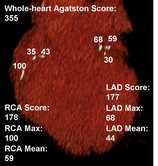
Response: Coronary computed tomography angiography (CCTA) is a non-invasive heart scan used in the first-line investigation of patients with suspected stable coronary artery disease (CAD). While CCTA clearly shows blockages in coronary arteries, it is limited in its ability to estimate reduced blood flow, which is necessary to diagnose angina.
An artificial intelligence-based tool (Heartflow) has been developed that analyses CCTA images and provides an estimate of blood flow: CT-derived fractional flow reserve (FFR-CT). The real-world, retrospective English FISH&CHIPS study demonstrated that including FFR-CT as a decision-making tool in the diagnosis of stable CAD reduces the number of subsequent invasive and non-invasive tests performed.
Whether FFR-CT could also be used prognostically, to predict future major cardiovascular events, was not fully understood. Previous studies have had small patient numbers, short follow-up and investigated combined cardiovascular outcomes. We performed an analysis on the national FISH&CHIPS population, which was large enough to determine if FFR-CT adds incremental value to traditional cardiovascular risk factors in predicting cardiovascular outcomes and death.
Dr. Bell[/caption]
Dr. Jack Bell
Liverpool Heart and Chest Hospital
Liverpool, UK
MedicalResearch.com: What is the background for this study?
Response: Coronary computed tomography angiography (CCTA) is a non-invasive heart scan used in the first-line investigation of patients with suspected stable coronary artery disease (CAD). While CCTA clearly shows blockages in coronary arteries, it is limited in its ability to estimate reduced blood flow, which is necessary to diagnose angina.
An artificial intelligence-based tool (Heartflow) has been developed that analyses CCTA images and provides an estimate of blood flow: CT-derived fractional flow reserve (FFR-CT). The real-world, retrospective English FISH&CHIPS study demonstrated that including FFR-CT as a decision-making tool in the diagnosis of stable CAD reduces the number of subsequent invasive and non-invasive tests performed.
Whether FFR-CT could also be used prognostically, to predict future major cardiovascular events, was not fully understood. Previous studies have had small patient numbers, short follow-up and investigated combined cardiovascular outcomes. We performed an analysis on the national FISH&CHIPS population, which was large enough to determine if FFR-CT adds incremental value to traditional cardiovascular risk factors in predicting cardiovascular outcomes and death. 







 Dr. Gaba[/caption]
Prakriti Gaba, MD
Cardiovascular Medicine Fellow
Brigham and Women's Hospital
[caption id="attachment_31114" align="alignleft" width="120"]
Dr. Gaba[/caption]
Prakriti Gaba, MD
Cardiovascular Medicine Fellow
Brigham and Women's Hospital
[caption id="attachment_31114" align="alignleft" width="120"] Dr. Deepak Bhatt[/caption]
Deepak L. Bhatt MD MPH
Director of Mount Sinai Fuster Heart Hospital
Dr. Valentin Fuster Professor of Cardiovascular Medicine
Icahn School of Medicine at Mount Sinai
MedicalResearch.com: What is the background for this study?
Response: Accurate classification of acute myocardial infarction is instrumental for the appropriate diagnosis and effective management of patients suffering from this widely prevalent cardiovascular condition.
In the past, there have been a variety of clinical scores published to advise clinicians on the best classifications schemes for patients with acute MI. These have included the Thrombolysis in Myocardial Infarction (TIMI) risk score, the HEART score, and the Killip classification. The strength of these traditional scores includes their practicality, as they can be implemented at the bedside to rapidly assist with prognostication. Nonetheless, as technologic advancements have made imaging and tissue identification more accessible, national and international committees are looking to revise traditional classification schemes of acute MI with novel ones leveraging multimodal approaches.
Dr. Deepak Bhatt[/caption]
Deepak L. Bhatt MD MPH
Director of Mount Sinai Fuster Heart Hospital
Dr. Valentin Fuster Professor of Cardiovascular Medicine
Icahn School of Medicine at Mount Sinai
MedicalResearch.com: What is the background for this study?
Response: Accurate classification of acute myocardial infarction is instrumental for the appropriate diagnosis and effective management of patients suffering from this widely prevalent cardiovascular condition.
In the past, there have been a variety of clinical scores published to advise clinicians on the best classifications schemes for patients with acute MI. These have included the Thrombolysis in Myocardial Infarction (TIMI) risk score, the HEART score, and the Killip classification. The strength of these traditional scores includes their practicality, as they can be implemented at the bedside to rapidly assist with prognostication. Nonetheless, as technologic advancements have made imaging and tissue identification more accessible, national and international committees are looking to revise traditional classification schemes of acute MI with novel ones leveraging multimodal approaches.







 Dr. Ribeiro[/caption]
Fernando Ribeiro PhD
School of Health Sciences
Institute of Biomedicine - iBiMED
University of Aveiro
Aveiro, Portugal
MedicalResearch.com: What is the background for this study? What are the main findings?
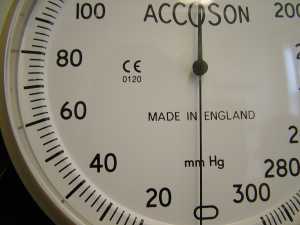
Response: Resistant hypertension is a puzzling problem without a clear solution. The available treatment options to lower blood pressure, namely medication and renal denervation, have had limited success, making nonpharmacological strategies good candidates to optimize the treatment of this condition.
Exercise training is consistently recommended as adjuvant therapy for patients with hypertension, yet, it is with a great delay that the efficacy of exercise training is being tested in patients with resistant hypertension.
Having that in mind, the EnRicH trial was designed to address whether the benefits of an exercise intervention with proven results in hypertensive individuals are extended to patients with resistant hypertension, a clinical population with low responsiveness to drug therapy. Exercise training was safe and associated with a significant and clinically relevant reduction in 24-hour, daytime ambulatory, and office blood pressure compared with control (usual care).
Dr. Ribeiro[/caption]
Fernando Ribeiro PhD
School of Health Sciences
Institute of Biomedicine - iBiMED
University of Aveiro
Aveiro, Portugal
MedicalResearch.com: What is the background for this study? What are the main findings?
Response: Resistant hypertension is a puzzling problem without a clear solution. The available treatment options to lower blood pressure, namely medication and renal denervation, have had limited success, making nonpharmacological strategies good candidates to optimize the treatment of this condition.
Exercise training is consistently recommended as adjuvant therapy for patients with hypertension, yet, it is with a great delay that the efficacy of exercise training is being tested in patients with resistant hypertension.
Having that in mind, the EnRicH trial was designed to address whether the benefits of an exercise intervention with proven results in hypertensive individuals are extended to patients with resistant hypertension, a clinical population with low responsiveness to drug therapy. Exercise training was safe and associated with a significant and clinically relevant reduction in 24-hour, daytime ambulatory, and office blood pressure compared with control (usual care).