MedicalResearch.com Interview with:
[caption id="attachment_55386" align="alignleft" width="100"]

Dr. Lara-Corrales[/caption]
Irene Lara-Corrales, MD
Associate Professor of Pediatrics at the University of Toronto
Staff physician in Pediatric Dermatology at the
Hospital for Sick Children in Toronto, Canada
She is a member of the
Society for Pediatric Dermatology.
[caption id="attachment_55387" align="alignleft" width="100"]

Dr. Boull[/caption]
Christina Boull, MD
Assistant Professor of Dermatology at the University of Minnesota
Program Director for the Advanced Dermatology Medical Student Rotation
Fellowship Director for the Pediatric Dermatology Fellowship
MedicalResearch.com: What is the background for this study?
Response: We got involved in this project a couple of years ago when many members of the
Pediatric Dermatology Research Alliance's (PeDRA) Skin Tumors and Reactions to Cancer Therapies (STARC) group started seeing many patients with skin toxicities given by targeted therapies. We recognized that this was a new and growing area of skin concerns that pediatric dermatologists were starting to see. Being such a new field, and with little known about these medications, we thought it would be important to put our cases together and describe what we were seeing.





 Dr. Falchi[/caption]
Dr Mario Falchi
Head of Bioinformatics for the School of Life Course Sciences
Department of Twin Research & Genetic Epidemiology
King’s College London
MedicalResearch.com: What is the background for this study?
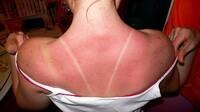
Response: The relationship between sun exposure and health is a double-edged sword, on one side there is the beneficial effect of vitamin D production and on the other the increased risk of skin cancer, depending on length and frequency of exposure, and on the individual skin type.
Despite public health campaigns, changing sun-seeking behaviour seems to be challenging for some people, even for those with a familial or personal history of skin cancer. Previous investigations have suggested that exposure to UV could be addictive.
Dr. Falchi[/caption]
Dr Mario Falchi
Head of Bioinformatics for the School of Life Course Sciences
Department of Twin Research & Genetic Epidemiology
King’s College London
MedicalResearch.com: What is the background for this study?
Response: The relationship between sun exposure and health is a double-edged sword, on one side there is the beneficial effect of vitamin D production and on the other the increased risk of skin cancer, depending on length and frequency of exposure, and on the individual skin type.
Despite public health campaigns, changing sun-seeking behaviour seems to be challenging for some people, even for those with a familial or personal history of skin cancer. Previous investigations have suggested that exposure to UV could be addictive. 




 Dr. Obisesan[/caption]
Funmi (Abiru) Obisesan, MD, MPH
Postdoctoral Fellow
Johns Hopkins Ciccarone Center for the Prevention of Cardiovascular Disease
Postdoctoral Fellow
Johns Hopkins Ciccarone Center for the Prevention of Cardiovascular Disease
MedicalResearch.com: What is the background for this study?
Response: E-cigarettes are conceived by many individuals to be less harmful than combustible cigarettes, resulting in their use among young individuals and other vulnerable subpopulations. The recent outbreak of EVALI (e-cigarette, or vaping, product-use associated lung injuries) which was directly associated with e-cigarette use, and the rapidly evolving e-cigarette market, as well as regulations concerning them necessitates the need for up-to-date analyses of e-cigarette use trends.
Dr. Obisesan[/caption]
Funmi (Abiru) Obisesan, MD, MPH
Postdoctoral Fellow
Johns Hopkins Ciccarone Center for the Prevention of Cardiovascular Disease
Postdoctoral Fellow
Johns Hopkins Ciccarone Center for the Prevention of Cardiovascular Disease
MedicalResearch.com: What is the background for this study?
Response: E-cigarettes are conceived by many individuals to be less harmful than combustible cigarettes, resulting in their use among young individuals and other vulnerable subpopulations. The recent outbreak of EVALI (e-cigarette, or vaping, product-use associated lung injuries) which was directly associated with e-cigarette use, and the rapidly evolving e-cigarette market, as well as regulations concerning them necessitates the need for up-to-date analyses of e-cigarette use trends. 




 Dr. Huang[/caption]
Jennifer Huang, MD
Dr. Huang is a pediatric dermatologist at Boston Children’s Hospital and Dana-Farber Cancer Institute.
She is an Associate Professor of Dermatology at Harvard Medical School.
Dr. Huang is a member of the
Dr. Huang[/caption]
Jennifer Huang, MD
Dr. Huang is a pediatric dermatologist at Boston Children’s Hospital and Dana-Farber Cancer Institute.
She is an Associate Professor of Dermatology at Harvard Medical School.
Dr. Huang is a member of the 



 Dr. Auger[/caption]
Katherine A. S. Auger, MD, MSc
Division of Hospital Medicine
James M. Anderson Center for Health Systems Excellence,
Cincinnati Children’s Hospital Medical Center
Department of Pediatrics, University of Cincinnati College of Medicine
Pediatric Research in Inpatient Settings Network
Cincinnati, Ohio
MedicalResearch.com: What is the background for this study? What are the main findings?
Response: All states closed schools in the spring of 2020 to try to mitigate the spread of COVID-19. Our study demonstrated a large, significant association between school closure and fewer COVID-19 cases and deaths even when accounting for other state policies.
Dr. Auger[/caption]
Katherine A. S. Auger, MD, MSc
Division of Hospital Medicine
James M. Anderson Center for Health Systems Excellence,
Cincinnati Children’s Hospital Medical Center
Department of Pediatrics, University of Cincinnati College of Medicine
Pediatric Research in Inpatient Settings Network
Cincinnati, Ohio
MedicalResearch.com: What is the background for this study? What are the main findings?
Response: All states closed schools in the spring of 2020 to try to mitigate the spread of COVID-19. Our study demonstrated a large, significant association between school closure and fewer COVID-19 cases and deaths even when accounting for other state policies.

 Dr. Ellingson[/caption]
Jarrod Ellingson PhD
Assistant Professor
Department of Psychiatry
Anschutz Medical Campus
University of Colorado Denver
MedicalResearch.com: What is the background for this study? What are the main findings?
Response: We know that cannabis use is associated with many negative outcomes, but there could be many of reasons for that. For example, socioeconomic factors and peer influences both affect adolescent cannabis use and poorer cognitive functioning. To account for some of those risk factors, we studied nearly 600 sibling pairs with moderate to heavy cannabis use. We found that, as a person uses more cannabis than their sibling, they tend to have worse memory recall than their sibling.
Dr. Ellingson[/caption]
Jarrod Ellingson PhD
Assistant Professor
Department of Psychiatry
Anschutz Medical Campus
University of Colorado Denver
MedicalResearch.com: What is the background for this study? What are the main findings?
Response: We know that cannabis use is associated with many negative outcomes, but there could be many of reasons for that. For example, socioeconomic factors and peer influences both affect adolescent cannabis use and poorer cognitive functioning. To account for some of those risk factors, we studied nearly 600 sibling pairs with moderate to heavy cannabis use. We found that, as a person uses more cannabis than their sibling, they tend to have worse memory recall than their sibling. 

 Kyla Fergason[/caption]
Kyla Fergason
Senior Undergraduate Student
Michael K. Scullin, Ph.D.
Principal Investigator
Baylor University
MedicalResearch.com: What is the background for this study? What are the main findings?
Response: There’s a fairly sizable literature suggesting that religious affiliation and religious engagement are associated with positive health outcomes. Therefore, we were surprised to find that agnostic/atheist individuals reported better sleep health than Christian individuals in the Baylor Religion Survey (BRS-5). 73% of agnostic/atheist individuals reported sleeping 7-9 hours/night whereas only 63% of Christian individuals met these consensus sleep guidelines. The most affected Christian denominations were Baptists (54.6%) and Catholics (62.3%). These results stood even after adjusting for age and gender. We predicted the opposite pattern.
And, it wasn’t just about longer sleep durations. Agnostic/atheist individuals even reported greater ease falling asleep compared to Christian individuals.
Kyla Fergason[/caption]
Kyla Fergason
Senior Undergraduate Student
Michael K. Scullin, Ph.D.
Principal Investigator
Baylor University
MedicalResearch.com: What is the background for this study? What are the main findings?
Response: There’s a fairly sizable literature suggesting that religious affiliation and religious engagement are associated with positive health outcomes. Therefore, we were surprised to find that agnostic/atheist individuals reported better sleep health than Christian individuals in the Baylor Religion Survey (BRS-5). 73% of agnostic/atheist individuals reported sleeping 7-9 hours/night whereas only 63% of Christian individuals met these consensus sleep guidelines. The most affected Christian denominations were Baptists (54.6%) and Catholics (62.3%). These results stood even after adjusting for age and gender. We predicted the opposite pattern.
And, it wasn’t just about longer sleep durations. Agnostic/atheist individuals even reported greater ease falling asleep compared to Christian individuals.  Dr. Glicksberg[/caption]
Benjamin Glicksberg, PhD
Assistant Professor of Genetics and Genomic Sciences
Member of the Mount Sinai COVID Informatics Center
Member of the Hasso Plattner Institute for Digital Healt
Icahn School of Medicine at Mount Sinai
MedicalResearch.com: What is the background for this study?
Response: Reports from health systems that detailed the clinical characteristics and outcomes of their COVID-19 patients were instrumental in helping other health systems rapidly adapt and know what to expect. There are few studies, however, that assess what happens to these patients after they were discharged from the hospital.
In our work, we address this gap by determining both how many individuals re-present to the hospital within 14 days, and what clinical characteristics of these patients differ from those who do not. Such information is critical in order to continue to refine optimal treatment plans and discharge decisions for patients of all backgrounds and clinical profiles. To provide more context to the question, we also determined if and how these factors changed between initial presentation and readmission to the hospital.
Dr. Glicksberg[/caption]
Benjamin Glicksberg, PhD
Assistant Professor of Genetics and Genomic Sciences
Member of the Mount Sinai COVID Informatics Center
Member of the Hasso Plattner Institute for Digital Healt
Icahn School of Medicine at Mount Sinai
MedicalResearch.com: What is the background for this study?
Response: Reports from health systems that detailed the clinical characteristics and outcomes of their COVID-19 patients were instrumental in helping other health systems rapidly adapt and know what to expect. There are few studies, however, that assess what happens to these patients after they were discharged from the hospital.
In our work, we address this gap by determining both how many individuals re-present to the hospital within 14 days, and what clinical characteristics of these patients differ from those who do not. Such information is critical in order to continue to refine optimal treatment plans and discharge decisions for patients of all backgrounds and clinical profiles. To provide more context to the question, we also determined if and how these factors changed between initial presentation and readmission to the hospital.