MedicalResearch.com Interview with:
[caption id="attachment_56565" align="alignleft" width="200"]

Dr. Devine[/caption]
Gregor J. Devine, Ph.D
Mosquito Control LaboratoryQIMR Berghofer Medical Research Institute
Brisbane, Queensland, Australia
MedicalResearch.com: What is the background for this study?
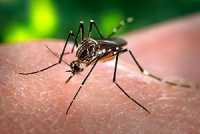
Scale of the problem: Dengue, Zika and chikungunya are all transmitted by the same mosquito species. That mosquito,
Aedes aegypti, is superbly adapted to the human, urban environment – it lays its eggs and develops in the standing water that collects in the myriad containers associated with modern living (plastic bottles, food packaging, buckets, planters, crumpled tarpaulins etc.). Unusually they rely almost entirely on human blood for their nutritional requirements and they subsequently bite multiple times during each egg laying cycle. That reliance on human blood means that they are usually found resting indoors, a behaviour that also offers them some protection from weather extremes and predators. Once infected, and having incubated the virus until it is transmissible, a mosquito that survives for just a couple of weeks can infect many humans within the same and neighbouring households.
In poorer tropical urban environments with dense human populations, unscreened houses, no air-conditioning, and innumerable rain-filled containers to develop in, Aedes aegypti proliferates and so do those diseases, causing ca 400M annual infections of dengue alone by some estimates. The economic impact of the dengue, which normally causes a high fever, muscle and joint pains and nausea, is pronounced; especially in poor households with few savings and no welfare system. Every year, about 500,000 of those dengue cases develop into severe dengue, or dengue haemorrhagic fever (typified by plasma leakage, severe bleeding and organ impairment). There are about 25,000 deaths annually.
The Zika pandemic of 2015-2016 resulted in 1000s of babies born with microcephaly and damage to their brains and eyes. For 1000s of other children, the impacts of Zika on their cognitive development did not manifest in their first, formative years. Chikungunya is endemic in Asia and Africa but between 2010 and 2014, outbreaks and epidemics spread across the Indian Ocean, the Caribbean, the Americas and the Pacific Islands. It causes severe, often debilitating joint pain in infected patients. Those affected also suffer from headaches, fever, severe muscle pain and conjunctivitis. Joint pain can persist in subacute or chronic form for several months or even years, particularly in older patients. The ubiquity of the mosquito Aedes aegypti across the tropics and sub tropics ensures that further epidemics of Zika and chikungunya will occur, outside their usual ranges. It’s simply impossible to predict when that will occur.



 Dr. Swerlick[/caption]
Robert A. Swerlick, MD
Professor and Alicia Leizman Stonecipher Chair of Dermatology
Emory University School of Medicine
Atlanta, GA 30322
MedicalResearch.com: What is the background for this study?
Response: Financial incentives have the potential to drive provider behavior, even unintentionally. The aim of this study was to evaluate differences in clinic “productivity” measures that occur in outpatient dermatology encounters. Specifically, we used data from 2016-2020 at one academic dermatology practice to evaluate differences in work relative value units (wRVUs, a measure of clinical productivity) and financial reimbursement by patient race, sex, and age. 66,463 encounters were included in this study, among which 70.1% of encounters were for white patients, 59.6% were for females, and the mean age was 55.9 years old.
Dr. Swerlick[/caption]
Robert A. Swerlick, MD
Professor and Alicia Leizman Stonecipher Chair of Dermatology
Emory University School of Medicine
Atlanta, GA 30322
MedicalResearch.com: What is the background for this study?
Response: Financial incentives have the potential to drive provider behavior, even unintentionally. The aim of this study was to evaluate differences in clinic “productivity” measures that occur in outpatient dermatology encounters. Specifically, we used data from 2016-2020 at one academic dermatology practice to evaluate differences in work relative value units (wRVUs, a measure of clinical productivity) and financial reimbursement by patient race, sex, and age. 66,463 encounters were included in this study, among which 70.1% of encounters were for white patients, 59.6% were for females, and the mean age was 55.9 years old. 



 Dr. Taub[/caption]
Pam R. Taub, MD, FACC, FASPC
Director of Step Family Foundation Cardiovascular Rehabilitation and Wellness Center
Associate Professor of Medicine
UC San Diego Health System
Division of Cardiovascular Medicine
MedicalResearch.com: What is the background for this study? Would you briefly explain what is meant by postural orthostatic tachycardia syndrome? Is it more common in patients who have incompletely recovered from a COVID-19 infection?
Response: Postural Orthostatic Tachycardia Syndrome (POTS) is a, complex multisystem clinical syndrome Patients experience a wide spectrum of symptoms of varying severity, which are often debilitating. Upon assuming an upright standing position from being supine, patients experience an increase in heart rate by 30 beats per minute (bpm) from supine position, This is often accompanied by lightheadedness, palpitations, dyspnea, mental clouding (“brain fog”), headaches.
POTS can occur after infections as it thought to be triggered by the immune system . The hypothesis is that when the body is fighting an infection some of the antibodies it produces can attack our regulatory systems that control heart rate and blood pressure.
We are seeing an increase in POTS cases occurring after COVID-19 infection. These patient are referred to as the “long haulers”
These long haulers have elevated heart rate, fatigue, brain fog and shortness of breath with activity consistent with POTS.
We are seeing that COVID-19 is another infection that can lead to POTS.
Some articles on this
Dr. Taub[/caption]
Pam R. Taub, MD, FACC, FASPC
Director of Step Family Foundation Cardiovascular Rehabilitation and Wellness Center
Associate Professor of Medicine
UC San Diego Health System
Division of Cardiovascular Medicine
MedicalResearch.com: What is the background for this study? Would you briefly explain what is meant by postural orthostatic tachycardia syndrome? Is it more common in patients who have incompletely recovered from a COVID-19 infection?
Response: Postural Orthostatic Tachycardia Syndrome (POTS) is a, complex multisystem clinical syndrome Patients experience a wide spectrum of symptoms of varying severity, which are often debilitating. Upon assuming an upright standing position from being supine, patients experience an increase in heart rate by 30 beats per minute (bpm) from supine position, This is often accompanied by lightheadedness, palpitations, dyspnea, mental clouding (“brain fog”), headaches.
POTS can occur after infections as it thought to be triggered by the immune system . The hypothesis is that when the body is fighting an infection some of the antibodies it produces can attack our regulatory systems that control heart rate and blood pressure.
We are seeing an increase in POTS cases occurring after COVID-19 infection. These patient are referred to as the “long haulers”
These long haulers have elevated heart rate, fatigue, brain fog and shortness of breath with activity consistent with POTS.
We are seeing that COVID-19 is another infection that can lead to POTS.
Some articles on this
 Rahul Subramanian[/caption]
Rahul Subramanian PhD candidate
Department of Ecology and Evolution
Biological Sciences Division
University of Chicago
Chicago, IL 60637
MedicalResearch.com: What is the background for this study? What are the main findings?
Response: Understanding the proportion of COVID-19 cases that become symptomatic, as well as the extent to which people without symptoms contribute to COVID-19 transmission, has important public health implications.
However, changes in PCR testing capacity over time have made these quantities hard to estimate precisely.
We used a model that incorporates daily changes in PCR testing capacity, cases, and serology to precisely estimate the proportion of cases that were symptomatic in New York City during the initial wave of the outbreak.
Only 1 in 7 to 1 in 5 cases were symptomatic.
Furthermore, non-symptomatic cases of the virus (this includes people who are either pre-symptomatic or asymptomatic) substantially contribute to community transmission, making up at least 50% of the driving force of SARS-CoV-2 infection.
Rahul Subramanian[/caption]
Rahul Subramanian PhD candidate
Department of Ecology and Evolution
Biological Sciences Division
University of Chicago
Chicago, IL 60637
MedicalResearch.com: What is the background for this study? What are the main findings?
Response: Understanding the proportion of COVID-19 cases that become symptomatic, as well as the extent to which people without symptoms contribute to COVID-19 transmission, has important public health implications.
However, changes in PCR testing capacity over time have made these quantities hard to estimate precisely.
We used a model that incorporates daily changes in PCR testing capacity, cases, and serology to precisely estimate the proportion of cases that were symptomatic in New York City during the initial wave of the outbreak.
Only 1 in 7 to 1 in 5 cases were symptomatic.
Furthermore, non-symptomatic cases of the virus (this includes people who are either pre-symptomatic or asymptomatic) substantially contribute to community transmission, making up at least 50% of the driving force of SARS-CoV-2 infection. 
 If you’re currently working as a nurse, you are probably well aware of just how rewarding and fulfilling a job role it can be. You get to help patients from all walks of life every single day and make a real difference to not only people’s health but their lives more generally. It’s also a career in which there is a lot of scope for progression. There are so many different spheres within the field of nursing that you can choose to specialize in, whether it’s a particular age group (like pediatrics or gerontology) or a particular health condition (like oncology or emergency care).
Some of these paths involve training on the job, whereas others require you to return to college to study and obtain a postgraduate qualification. Among these, one of the highest possible qualifications you can aim for is the DNP, or Doctor of Nursing Practice.
If you’re currently working as a nurse, you are probably well aware of just how rewarding and fulfilling a job role it can be. You get to help patients from all walks of life every single day and make a real difference to not only people’s health but their lives more generally. It’s also a career in which there is a lot of scope for progression. There are so many different spheres within the field of nursing that you can choose to specialize in, whether it’s a particular age group (like pediatrics or gerontology) or a particular health condition (like oncology or emergency care).
Some of these paths involve training on the job, whereas others require you to return to college to study and obtain a postgraduate qualification. Among these, one of the highest possible qualifications you can aim for is the DNP, or Doctor of Nursing Practice. 



 Tejasvi Hora[/caption]
Tejasvi Hora, PhD Candidate
Department of Geography and Environmental Management, University of Waterloo
Data Analyst, GEMINI, Unity Health Toronto
MedicalResearch.com: What is the background for this study?
Response: Death rates and resource use for COVID-19 hospitalization vary significantly worldwide, however, the characteristics and outcomes of COVID-19 hospitalizations in Canada have not been described in detail. Further, there is considerable uncertainty about how COVID-19 compares with influenza. In some circles, COVID-19 has been dismissed as being not more severe than “the flu”. We used data extracted from electronic health records of 7 hospitals in Ontario, Canada to describe characteristics and outcomes of hospitalization for COVID-19 and influenza.
Tejasvi Hora[/caption]
Tejasvi Hora, PhD Candidate
Department of Geography and Environmental Management, University of Waterloo
Data Analyst, GEMINI, Unity Health Toronto
MedicalResearch.com: What is the background for this study?
Response: Death rates and resource use for COVID-19 hospitalization vary significantly worldwide, however, the characteristics and outcomes of COVID-19 hospitalizations in Canada have not been described in detail. Further, there is considerable uncertainty about how COVID-19 compares with influenza. In some circles, COVID-19 has been dismissed as being not more severe than “the flu”. We used data extracted from electronic health records of 7 hospitals in Ontario, Canada to describe characteristics and outcomes of hospitalization for COVID-19 and influenza. 
 Dr. Gordon[/caption]
Terry Gordon PhD
Professor, Department of Environmental Medicine
NYU Grossman School of Medicine
NYU Langone Health
MedicalResearch.com: What is the background for this study?
Response: We are air pollution researcher and interested in unique exposure scenarios. Based on the work by Dr. Steve Chillrud, Columbia University, we did a study 5 years ago to assess air quality in over 30 subway stations in NYC. We found poor air quality in all of the underground stations but the air quality was better in some locations. So we wondered what would be air quality in different transit systems in NE United States. David Luglio, pre-doctoral candidate, led a team of students to monitor particles in the air of subway stations in metropolitan NYC's MTA, LIRR, and PATH systems, Boston, Philadelphia, and Washington, DC.
Dr. Gordon[/caption]
Terry Gordon PhD
Professor, Department of Environmental Medicine
NYU Grossman School of Medicine
NYU Langone Health
MedicalResearch.com: What is the background for this study?
Response: We are air pollution researcher and interested in unique exposure scenarios. Based on the work by Dr. Steve Chillrud, Columbia University, we did a study 5 years ago to assess air quality in over 30 subway stations in NYC. We found poor air quality in all of the underground stations but the air quality was better in some locations. So we wondered what would be air quality in different transit systems in NE United States. David Luglio, pre-doctoral candidate, led a team of students to monitor particles in the air of subway stations in metropolitan NYC's MTA, LIRR, and PATH systems, Boston, Philadelphia, and Washington, DC.

 Dr. Leonard[/caption]
Dr. Cathy Leonard PhD
Department of Infection and Immunity
Luxembourg Institute of Health
Luxembourg
MedicalResearch.com: What is the background for this study?
Response: Cat allergy is a rapidly increasing phenomenon characterized by hypersensitivity and an excessive immune response to certain allergens associated with cats, among which the major allergen Fel d 1, a protein typically found in their saliva, on their skin and fur. Cat allergy manifestations can range from mild forms like itchy nose or sneezing to the development of severe symptoms such as rhinitis and asthma, with potentially fatal outcomes.
Only Allergen‐specific immunotherapy (AIT )can ensure an effective and longer lasting treatment in the more advanced cases. AIT typically consists in the subcutaneous injection of gradually increasing doses of the allergen of interest, until a critical quantity is reached that induces long-term immune tolerance. Nevertheless, there is still the need to improve cat AIT in terms of efficacy and safety. We hypothesized that immune tolerance to the allergen could be boosted by improving the adjuvanticity of AIT solutions, thereby optimizing the production of antibodies against Fel d 1, while minimizing inflammation.
Dr. Leonard[/caption]
Dr. Cathy Leonard PhD
Department of Infection and Immunity
Luxembourg Institute of Health
Luxembourg
MedicalResearch.com: What is the background for this study?
Response: Cat allergy is a rapidly increasing phenomenon characterized by hypersensitivity and an excessive immune response to certain allergens associated with cats, among which the major allergen Fel d 1, a protein typically found in their saliva, on their skin and fur. Cat allergy manifestations can range from mild forms like itchy nose or sneezing to the development of severe symptoms such as rhinitis and asthma, with potentially fatal outcomes.
Only Allergen‐specific immunotherapy (AIT )can ensure an effective and longer lasting treatment in the more advanced cases. AIT typically consists in the subcutaneous injection of gradually increasing doses of the allergen of interest, until a critical quantity is reached that induces long-term immune tolerance. Nevertheless, there is still the need to improve cat AIT in terms of efficacy and safety. We hypothesized that immune tolerance to the allergen could be boosted by improving the adjuvanticity of AIT solutions, thereby optimizing the production of antibodies against Fel d 1, while minimizing inflammation. 
 Jill Sommerville[/caption]
Jill Sommerville M.Sc
Director of Medical at WaterWipes
MedicalResearch.com: What is the background for this study? How prevalent is diaper dermatitis? Is it more severe in some babies?
Response: The Utah study is an independent clinical study conducted by the University of Utah Hospital NICU, Salt Lake City and recently published in Advances in Neonatal Care journal. It was a year-long study conducted between January 2018 – March 2019. The NICU staff were interested in exploring a new Perineal Skin Care Guideline in their unit, encompassing use of WaterWipes, to decrease the incidence of diaper dermatitis. Their stated aim was to reduce diaper dermatitis by 20% within a 1-year period. The study involved 1,070 premature babies, 11% of which were born at less than 30 weeks of gestational age. The inclusion criteria for the study were all babies who stayed for more than 1 day in the NICU.
Diaper dermatitis is known to cause discomfort and emotional distress in all babies and can be a possible source of infection among NICU babies. Diaper dermatitis remains prevalent, especially in preterm babies. The reported incidence varies from 21% to 25% among newborn intensive care babies. 1
Diaper dermatitis in pre term babies can be multifactorial especially as babies born early have a less well developed stratum corneum, the outer most layer of skin. NICU babies are often exposed to antibiotics and fortified milk to help them catch up growth. Other medical complications in addition can lead to altered gut flora and altered stool composition resulting in more frequency of stool.
The presence of urine and frequent stools necessitates regular cleaning which can result in excessive rubbing of the skin or the use of wipes containing harsh ingredients that can damage the skin.
Jill Sommerville[/caption]
Jill Sommerville M.Sc
Director of Medical at WaterWipes
MedicalResearch.com: What is the background for this study? How prevalent is diaper dermatitis? Is it more severe in some babies?
Response: The Utah study is an independent clinical study conducted by the University of Utah Hospital NICU, Salt Lake City and recently published in Advances in Neonatal Care journal. It was a year-long study conducted between January 2018 – March 2019. The NICU staff were interested in exploring a new Perineal Skin Care Guideline in their unit, encompassing use of WaterWipes, to decrease the incidence of diaper dermatitis. Their stated aim was to reduce diaper dermatitis by 20% within a 1-year period. The study involved 1,070 premature babies, 11% of which were born at less than 30 weeks of gestational age. The inclusion criteria for the study were all babies who stayed for more than 1 day in the NICU.
Diaper dermatitis is known to cause discomfort and emotional distress in all babies and can be a possible source of infection among NICU babies. Diaper dermatitis remains prevalent, especially in preterm babies. The reported incidence varies from 21% to 25% among newborn intensive care babies. 1
Diaper dermatitis in pre term babies can be multifactorial especially as babies born early have a less well developed stratum corneum, the outer most layer of skin. NICU babies are often exposed to antibiotics and fortified milk to help them catch up growth. Other medical complications in addition can lead to altered gut flora and altered stool composition resulting in more frequency of stool.
The presence of urine and frequent stools necessitates regular cleaning which can result in excessive rubbing of the skin or the use of wipes containing harsh ingredients that can damage the skin.
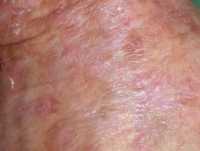
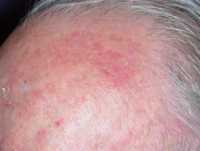 One example of actinic keratoses on scalp
 Response: The background for the study is the steady rise of cannabis use as a therapeutic in Israel and in many countries around the world. This largest increasing population of patients treated with medical cannabis is the older adults. However, very little data was published about cannabis treatment in older adults, and specifically about the cardiovascular and metabolic implications. T
he main finding of the study is that cannabis treatment for 3 months was associated with a reduction in both systolic and diastolic blood pressure values, as measured by consequent 24-hours ABPM tests. In addition, no significant changes were found in blood lipids profile, hemoglobin A1C, fasting insulin, C-reactive protein, kidney function tests, electrolytes, anthropometric measurements, and ECG parameters.
Response: The background for the study is the steady rise of cannabis use as a therapeutic in Israel and in many countries around the world. This largest increasing population of patients treated with medical cannabis is the older adults. However, very little data was published about cannabis treatment in older adults, and specifically about the cardiovascular and metabolic implications. T
he main finding of the study is that cannabis treatment for 3 months was associated with a reduction in both systolic and diastolic blood pressure values, as measured by consequent 24-hours ABPM tests. In addition, no significant changes were found in blood lipids profile, hemoglobin A1C, fasting insulin, C-reactive protein, kidney function tests, electrolytes, anthropometric measurements, and ECG parameters. 
 Dr. Garantziotis[/caption]
Stavros Garantziotis MD
Division of Intramural Research
National Institute of Environmental Health Sciences
Research Triangle Park, NC
MedicalResearch.com: What is the background for this study? How does hyaluronan differ from other medications for COPD? Is it used for other medical conditions?
Response: Hyaluronan is a natural sugar found in the human body, including in the lung. We have found that when the lungs are exposed to pollution, this sugar breaks down, and the breakdown fragments cause inflammation in the lung. We also found that if we give back the natural form of hyaluronan, it protects the lung from inflammation. Patients suffering from COPD also have a lot of hyaluronan breakdown in their lungs. We therefore reasoned, that giving them back the natural form of hyaluronan, as an inhalation treatment, would help them reduce inflammation. We tested this, as a first step, in the treatment acute inflammation of the lungs in COPD patients who are suffering an exacerbation of their disease.
Hyaluronan is different from existing medications in that it is a natural product of the body. It is used in Europe for conditions like cystic fibrosis, and after sinus surgery to humidify the airways. Because it is given by inhalation, it acts locally in the lungs.
Dr. Garantziotis[/caption]
Stavros Garantziotis MD
Division of Intramural Research
National Institute of Environmental Health Sciences
Research Triangle Park, NC
MedicalResearch.com: What is the background for this study? How does hyaluronan differ from other medications for COPD? Is it used for other medical conditions?
Response: Hyaluronan is a natural sugar found in the human body, including in the lung. We have found that when the lungs are exposed to pollution, this sugar breaks down, and the breakdown fragments cause inflammation in the lung. We also found that if we give back the natural form of hyaluronan, it protects the lung from inflammation. Patients suffering from COPD also have a lot of hyaluronan breakdown in their lungs. We therefore reasoned, that giving them back the natural form of hyaluronan, as an inhalation treatment, would help them reduce inflammation. We tested this, as a first step, in the treatment acute inflammation of the lungs in COPD patients who are suffering an exacerbation of their disease.
Hyaluronan is different from existing medications in that it is a natural product of the body. It is used in Europe for conditions like cystic fibrosis, and after sinus surgery to humidify the airways. Because it is given by inhalation, it acts locally in the lungs. 





 Elodie Warren[/caption]
Elodie C. Warren, MPH
Columbia University Mailman School of Public Health Graduate
MedicalResearch.com: What is the background for this study? What are the main findings?
Response: We know that the US has been experiencing an opioid crisis for the past two decades. And we know that among communities of color, rates of overdose deaths are continuing to increase, even though overall national rates decreased between 2017 and 2018.
To better understand how the opioid crisis has differently affected racial/ethnic groups, we looked at how heroin treatment admissions changed over time by race/ethnicity, age, and sex. We found that there were stark differences when comparing non-Hispanic Black men and women to non-Hispanic White men and women.
Importantly, our study suggests the existence of an aging cohort of Black men and women (likely including survivors of a heroin epidemic that hit urban areas more than 40 years ago) that continues to struggle with heroin addiction. This points to the need for targeted interventions in chronically underserved communities.
Elodie Warren[/caption]
Elodie C. Warren, MPH
Columbia University Mailman School of Public Health Graduate
MedicalResearch.com: What is the background for this study? What are the main findings?
Response: We know that the US has been experiencing an opioid crisis for the past two decades. And we know that among communities of color, rates of overdose deaths are continuing to increase, even though overall national rates decreased between 2017 and 2018.
To better understand how the opioid crisis has differently affected racial/ethnic groups, we looked at how heroin treatment admissions changed over time by race/ethnicity, age, and sex. We found that there were stark differences when comparing non-Hispanic Black men and women to non-Hispanic White men and women.
Importantly, our study suggests the existence of an aging cohort of Black men and women (likely including survivors of a heroin epidemic that hit urban areas more than 40 years ago) that continues to struggle with heroin addiction. This points to the need for targeted interventions in chronically underserved communities. 


 Ankur Dalsania[/caption]
Ankur Dalsania
Rutgers New Jersey Medical School (NJMS)
M.D. Candidate 2021
MedicalResearch.com: What is the background for this study?
Response: Similar to past pandemics, prior studies and news articles have highlighted the disproportionate impact of COVID-19 mortality in marginalized populations, especially Black Americans. Rather than biological differences, other factors like neighborhood conditions, educational attainment, economic stability, healthcare access, and social contexts have been hypothesized to influence the racial disparities.
Using county-level data, we sought to quantitatively determine how these factors, collectively referred to as social determinants of health, impact COVID-19 mortality in Black Americans.
Ankur Dalsania[/caption]
Ankur Dalsania
Rutgers New Jersey Medical School (NJMS)
M.D. Candidate 2021
MedicalResearch.com: What is the background for this study?
Response: Similar to past pandemics, prior studies and news articles have highlighted the disproportionate impact of COVID-19 mortality in marginalized populations, especially Black Americans. Rather than biological differences, other factors like neighborhood conditions, educational attainment, economic stability, healthcare access, and social contexts have been hypothesized to influence the racial disparities.
Using county-level data, we sought to quantitatively determine how these factors, collectively referred to as social determinants of health, impact COVID-19 mortality in Black Americans.