MedicalResearch.com Interview with:
[caption id="attachment_57885" align="alignleft" width="120"]

Dr. Schmitz[/caption]
Joy M. Schmitz, Ph.D.
Professor of Psychiatry Faillace Chair
McGovern Medical School
The University of Texas Health Science Center at Houston
Director, Center for Neurobehavioral Research on Addiction (CNRA)
[caption id="attachment_57886" align="alignleft" width="120"]

Dr. Lane[/caption]
Scott D. Lane Ph.D.
McGovern Medical School
Vice Chair For Research
Director Of Neurobehavioral Laboratory
Center For Neurobehavioral Research On Addiction
Director Of Research
University of Texas Health Science Center at Houston
Houston, TX
MedicalResearch.com: What is the background for this study?
Response: Addiction science has made considerable progress in understanding how cocaine and other addictive drugs impair the brain. Over time, cocaine can disrupt brain regions that help us think, plan, solve problems, and exert self-control. These disruptions in brain structure can be seen in neuroimaging studies that reveal impairment in the nerve fibers or
white matter (WM) tracts in the central and front parts of the brain. We conducted two systematic meta-analytic reviews of the literature to document the robustness of evidence showing alterations in WM integrity of chronic stimulant users relative to healthy control subjects who did not use cocaine or other drugs of abuse (Beard et al., 2019; Suchting et al., 2020). Importantly, WM impairments negatively predict treatment outcome, meaning individuals with greater levels of WM impairment are less likely to benefit from treatment and more likely to experience deficits in attention, working memory, and impulse control.
We reasoned that pharmacological interventions shown to protect WM integrity may help improve cognition and treatment outcomes in patients recovering from cocaine addiction. Pioglitazone, an approved medication for type 2 diabetes, has been shown to reduce inflammation and mediate protection after traumatic brain injury. The therapeutic potential of pioglitazone has prompted investigation of its role in neurodegenerative conditions, such as dementia, Alzheimer’s disease, and stroke. Similar to these brain diseases and injuries, pioglitazone might effectively protect the brain from the inflammatory damage created by cocaine use.



 Response: Point-of-care ultrasound is one of the most significant advances in bedside patient care, and its use is expanding across nearly all fields of medicine. In order to best prepare medical students for residency and beyond, it is imperative to begin POCUS training as early as possible. At the Lewis Katz School of Medicine at Temple University, we introduced POCUS education over a decade ago and have expanded it since then.
By providing each student with a Butterfly iQ device, we can augment our curriculum significantly. In addition to our robust pre-clinical sessions, now we will expand into the clinical years highlighting the utility of POCUS with actual patients.
This gift was made possible by the incredible generosity of Dr. Ronald Salvitti, MD ’63.
Response: Point-of-care ultrasound is one of the most significant advances in bedside patient care, and its use is expanding across nearly all fields of medicine. In order to best prepare medical students for residency and beyond, it is imperative to begin POCUS training as early as possible. At the Lewis Katz School of Medicine at Temple University, we introduced POCUS education over a decade ago and have expanded it since then.
By providing each student with a Butterfly iQ device, we can augment our curriculum significantly. In addition to our robust pre-clinical sessions, now we will expand into the clinical years highlighting the utility of POCUS with actual patients.
This gift was made possible by the incredible generosity of Dr. Ronald Salvitti, MD ’63. 


 Dr. Mahncke[/caption]
Henry Mahncke, PhD
Chief Executive Officer
Posit Science
Dr. Mahncke earned his PhD at UCSF in the lab where lifelong brain plasticity as discovered. At the request of his academic mentor, he currently leads a global team of more than 400 brain scientists engaged in designing, testing, refining, and validating the computerized brain exercises found in the BrainHQ app from Posit Science, where he serves as CEO.
This week, MedicalResearch.com interviews Dr. Mahncke about a new study, with breakthrough results for service members and Veterans grappling with the signature injury of recent wars.
MedicalResearch.com: What makes this study newsworthy?
Response: As the last troops come home from Afghanistan, the battle is not over for many who served and continue to grapple with the signature injury of recent conflicts — mild Traumatic Brain Injury (or mTBI). Typically, such injures were caused by blasts or concussions, and they’ve been diagnosed in more than 300,000 service members. Most recover within a couple days or weeks, but for many — some estimate fifteen percent — physical, psychological, emotional, and cognitive problems persist for years. Such injuries often go untreated, because treatments focus on in-person, customized, cognitive rehabilitation, which can be helpful, but is costly, time-consuming, requires travel for treatment, and relies on the craft and expertise of the healthcare provider.
Up until now, there’s been no effective intervention that’s highly-scalable and that can be delivered remotely. This study showed that remotely-administered BrainHQ computerized exercises improved overall cognitive performance in a population with very persistent cognitive issues. On average, patients in this study had cognitive issues for more than seven years. That means we finally have a tool shown effective in a gold-standard study that practitioners can employ in treating this large and underserved population, who sacrificed so much to serve our nation.
Dr. Mahncke[/caption]
Henry Mahncke, PhD
Chief Executive Officer
Posit Science
Dr. Mahncke earned his PhD at UCSF in the lab where lifelong brain plasticity as discovered. At the request of his academic mentor, he currently leads a global team of more than 400 brain scientists engaged in designing, testing, refining, and validating the computerized brain exercises found in the BrainHQ app from Posit Science, where he serves as CEO.
This week, MedicalResearch.com interviews Dr. Mahncke about a new study, with breakthrough results for service members and Veterans grappling with the signature injury of recent wars.
MedicalResearch.com: What makes this study newsworthy?
Response: As the last troops come home from Afghanistan, the battle is not over for many who served and continue to grapple with the signature injury of recent conflicts — mild Traumatic Brain Injury (or mTBI). Typically, such injures were caused by blasts or concussions, and they’ve been diagnosed in more than 300,000 service members. Most recover within a couple days or weeks, but for many — some estimate fifteen percent — physical, psychological, emotional, and cognitive problems persist for years. Such injuries often go untreated, because treatments focus on in-person, customized, cognitive rehabilitation, which can be helpful, but is costly, time-consuming, requires travel for treatment, and relies on the craft and expertise of the healthcare provider.
Up until now, there’s been no effective intervention that’s highly-scalable and that can be delivered remotely. This study showed that remotely-administered BrainHQ computerized exercises improved overall cognitive performance in a population with very persistent cognitive issues. On average, patients in this study had cognitive issues for more than seven years. That means we finally have a tool shown effective in a gold-standard study that practitioners can employ in treating this large and underserved population, who sacrificed so much to serve our nation.


 Dr. Ribeiro[/caption]
Fernando Ribeiro PhD
School of Health Sciences
Institute of Biomedicine - iBiMED
University of Aveiro
Aveiro, Portugal
MedicalResearch.com: What is the background for this study? What are the main findings?
Response: Resistant hypertension is a puzzling problem without a clear solution. The available treatment options to lower blood pressure, namely medication and renal denervation, have had limited success, making nonpharmacological strategies good candidates to optimize the treatment of this condition.
Exercise training is consistently recommended as adjuvant therapy for patients with hypertension, yet, it is with a great delay that the efficacy of exercise training is being tested in patients with resistant hypertension.
Having that in mind, the EnRicH trial was designed to address whether the benefits of an exercise intervention with proven results in hypertensive individuals are extended to patients with resistant hypertension, a clinical population with low responsiveness to drug therapy. Exercise training was safe and associated with a significant and clinically relevant reduction in 24-hour, daytime ambulatory, and office blood pressure compared with control (usual care).
Dr. Ribeiro[/caption]
Fernando Ribeiro PhD
School of Health Sciences
Institute of Biomedicine - iBiMED
University of Aveiro
Aveiro, Portugal
MedicalResearch.com: What is the background for this study? What are the main findings?
Response: Resistant hypertension is a puzzling problem without a clear solution. The available treatment options to lower blood pressure, namely medication and renal denervation, have had limited success, making nonpharmacological strategies good candidates to optimize the treatment of this condition.
Exercise training is consistently recommended as adjuvant therapy for patients with hypertension, yet, it is with a great delay that the efficacy of exercise training is being tested in patients with resistant hypertension.
Having that in mind, the EnRicH trial was designed to address whether the benefits of an exercise intervention with proven results in hypertensive individuals are extended to patients with resistant hypertension, a clinical population with low responsiveness to drug therapy. Exercise training was safe and associated with a significant and clinically relevant reduction in 24-hour, daytime ambulatory, and office blood pressure compared with control (usual care).
 Dr. Pierce[/caption]
John Pierce, PhD
Professor Emeritus
Department of Family Medicine and Public Health
Moores Cancer Center Director for Population Sciences
Co-leader of the Cancer Prevention program
UC San Diego
MedicalResearch.com: What is the background for this study? What are the main findings?
Response: Graphic Warning Labels are to be implemented in the US in July 2022, depending on litigation. This will be about 10 years after they were first proposed. Meanwhile, 120 other countries have implemented them already.
The FDA states that their purpose for the warnings is to provide a constant reminder to smokers about the health consequences of smoking, not to force them to quit.
In our study, 3 months of having cigarettes repackaged into graphic warning packs was associated with smokers thinking more about quitting and not getting as much pleasure out of their cigarettes. However, thinking about quitting is only the first step to conquering a nicotine addiction.
Dr. Pierce[/caption]
John Pierce, PhD
Professor Emeritus
Department of Family Medicine and Public Health
Moores Cancer Center Director for Population Sciences
Co-leader of the Cancer Prevention program
UC San Diego
MedicalResearch.com: What is the background for this study? What are the main findings?
Response: Graphic Warning Labels are to be implemented in the US in July 2022, depending on litigation. This will be about 10 years after they were first proposed. Meanwhile, 120 other countries have implemented them already.
The FDA states that their purpose for the warnings is to provide a constant reminder to smokers about the health consequences of smoking, not to force them to quit.
In our study, 3 months of having cigarettes repackaged into graphic warning packs was associated with smokers thinking more about quitting and not getting as much pleasure out of their cigarettes. However, thinking about quitting is only the first step to conquering a nicotine addiction. 
 Dr. Lopez[/caption]
Maria Luisa S. Sequeira Lopez, MD, FAHA
Harrison Distinguished Professor in Pediatrics and Biology
University of Virginia
Charlottesville, VA 22908
MedicalResearch.com: What is the background for this study?
Response: The renin-angiotensin system (RAS) is crucial in the regulation of the blood pressure (BP). Synthesis and secretion of renin is the key regulated event in the operation of the RAS.
One of the main mechanisms that control renin synthesis and release is the baroreceptor mechanism whereby a decrease in blood pressure results in increased release of renin by juxtaglomerular (JG) cells.
In spite of its enormous importance, the nature and location of the renal baroreceptor was still unknown. This was due in great part to the lack of appropriate in vitro and in vivo models to confidently allow tracking of the fate and isolation of renin cells, and the lack of tools to study the chromatin in scarce cells.
Dr. Lopez[/caption]
Maria Luisa S. Sequeira Lopez, MD, FAHA
Harrison Distinguished Professor in Pediatrics and Biology
University of Virginia
Charlottesville, VA 22908
MedicalResearch.com: What is the background for this study?
Response: The renin-angiotensin system (RAS) is crucial in the regulation of the blood pressure (BP). Synthesis and secretion of renin is the key regulated event in the operation of the RAS.
One of the main mechanisms that control renin synthesis and release is the baroreceptor mechanism whereby a decrease in blood pressure results in increased release of renin by juxtaglomerular (JG) cells.
In spite of its enormous importance, the nature and location of the renal baroreceptor was still unknown. This was due in great part to the lack of appropriate in vitro and in vivo models to confidently allow tracking of the fate and isolation of renin cells, and the lack of tools to study the chromatin in scarce cells. 
 Prof. Stewart[/caption]
Willie Stewart, MBChB, PhD, DipFMS, FRCPath, FRCP Edin
Consultant Neuropathologist
Honorary Professor
Department of Neuropathology
Queen Elizabeth University Hospital
Glasgow, UK
MedicalResearch.com: What is the background for this study?
Response: There is concern over the association between participation in contact sports and later life risk of dementia and associated neurodegenerative disease. Much of this comes from observations of a specific form of neurodegenerative pathology - chronic traumatic encephalopathy (CTE)- linked to history of traumatic brain injury (TBI) and repetitive head impacts in autopsy studies of relatively small numbers of former athletes, including boxers and soccer players. Nevertheless, although this brain injury linked pathology is described, surprisingly little is known about what this might mean for later life health, specifically risk of dementia.
In a previous study published from our programme of research looking at "Football's Influence on Lifelong health and Dementia risk' (the FIELD Study), we demonstrated that former professional soccer players had an approximately three-and-a-half-fold higher mortality from neurodegenerative disease than matched general population controls. However, these mortality data did not allow us to consider the relationships between varying head injury/impact exposure variables, such as player position and career length, and risk of neurodegenerative disease.
Prof. Stewart[/caption]
Willie Stewart, MBChB, PhD, DipFMS, FRCPath, FRCP Edin
Consultant Neuropathologist
Honorary Professor
Department of Neuropathology
Queen Elizabeth University Hospital
Glasgow, UK
MedicalResearch.com: What is the background for this study?
Response: There is concern over the association between participation in contact sports and later life risk of dementia and associated neurodegenerative disease. Much of this comes from observations of a specific form of neurodegenerative pathology - chronic traumatic encephalopathy (CTE)- linked to history of traumatic brain injury (TBI) and repetitive head impacts in autopsy studies of relatively small numbers of former athletes, including boxers and soccer players. Nevertheless, although this brain injury linked pathology is described, surprisingly little is known about what this might mean for later life health, specifically risk of dementia.
In a previous study published from our programme of research looking at "Football's Influence on Lifelong health and Dementia risk' (the FIELD Study), we demonstrated that former professional soccer players had an approximately three-and-a-half-fold higher mortality from neurodegenerative disease than matched general population controls. However, these mortality data did not allow us to consider the relationships between varying head injury/impact exposure variables, such as player position and career length, and risk of neurodegenerative disease. 



 Dr. Blumenthal[/caption]
Kimberly G. Blumenthal, MD, MSc
Massachusetts General Hospital
The Mongan Institute
Boston, MA 02114
[caption id="attachment_57828" align="alignleft" width="100"]
Dr. Blumenthal[/caption]
Kimberly G. Blumenthal, MD, MSc
Massachusetts General Hospital
The Mongan Institute
Boston, MA 02114
[caption id="attachment_57828" align="alignleft" width="100"] Dr. Krantz[/caption]
Matthew S. Krantz, MD
Division of Allergy, Pulmonary and Critical Care Medicine
Department of Medicine,
Vanderbilt University Medical Center,
Nashville, Tennessee
MedicalResearch.com: What is the background for this study?
Response: During the initial COVID-19 vaccine campaign with healthcare workers in December 2020, there was an unexpected higher than anticipated rate of immediate allergic reactions after Pfizer and Moderna mRNA vaccines. This prompted both patient and provider concerns, particularly in those with underlying allergic histories, on the associated risks for immediate allergic reactions with the mRNA vaccines.
Because of the significantly improved effectiveness of two doses of an mRNA vaccine compared to one dose, it was important to determine if those who experienced immediate allergic reaction symptoms after their first dose could go on to tolerate a second dose safely.
Dr. Krantz[/caption]
Matthew S. Krantz, MD
Division of Allergy, Pulmonary and Critical Care Medicine
Department of Medicine,
Vanderbilt University Medical Center,
Nashville, Tennessee
MedicalResearch.com: What is the background for this study?
Response: During the initial COVID-19 vaccine campaign with healthcare workers in December 2020, there was an unexpected higher than anticipated rate of immediate allergic reactions after Pfizer and Moderna mRNA vaccines. This prompted both patient and provider concerns, particularly in those with underlying allergic histories, on the associated risks for immediate allergic reactions with the mRNA vaccines.
Because of the significantly improved effectiveness of two doses of an mRNA vaccine compared to one dose, it was important to determine if those who experienced immediate allergic reaction symptoms after their first dose could go on to tolerate a second dose safely. 


 Dr. Correa[/caption]
Andres F. Correa, MD
Assistant Professor
Department of Surgical Oncology, and
[caption id="attachment_57815" align="alignleft" width="150"]
Dr. Correa[/caption]
Andres F. Correa, MD
Assistant Professor
Department of Surgical Oncology, and
[caption id="attachment_57815" align="alignleft" width="150"] Dr. Bernstein[/caption]
Adrien Bernstein, MD
Second Year Urologic Oncology Fellow
Fox Chase Cancer Center
MedicalResearch.com: What is the background for this study?
Response: Unfortunately, it has been well-established that historically Black Americans experience increased cancer specific mortality compared to white patients. In prostate cancer specifically studies have shown that when access to care is equitable this gap resolves. This suggests that biological factors are not driving these differences but rather the result of the complex interplay of social determinants and systemic inequities in our healthcare system.
Early in the pandemic, multiple studies demonstrated that minority communities disproportionately shouldered poor COVID-19 outcomes. On March 13th 2020, the American College of Surgeons recommended against elective procedures; however, the definition of an elective oncologic case was left to the discretion of the provider. As prostate cancer treatment can be safely deferred up to a year follow diagnosis, management of prostate cancer during the initial lockdown period of the COVID-19 Pandemic provided a useful analysis of the differential restrictions placed on non-emergent health care during the Pandemic.
Dr. Bernstein[/caption]
Adrien Bernstein, MD
Second Year Urologic Oncology Fellow
Fox Chase Cancer Center
MedicalResearch.com: What is the background for this study?
Response: Unfortunately, it has been well-established that historically Black Americans experience increased cancer specific mortality compared to white patients. In prostate cancer specifically studies have shown that when access to care is equitable this gap resolves. This suggests that biological factors are not driving these differences but rather the result of the complex interplay of social determinants and systemic inequities in our healthcare system.
Early in the pandemic, multiple studies demonstrated that minority communities disproportionately shouldered poor COVID-19 outcomes. On March 13th 2020, the American College of Surgeons recommended against elective procedures; however, the definition of an elective oncologic case was left to the discretion of the provider. As prostate cancer treatment can be safely deferred up to a year follow diagnosis, management of prostate cancer during the initial lockdown period of the COVID-19 Pandemic provided a useful analysis of the differential restrictions placed on non-emergent health care during the Pandemic. 
 MedicalResearch.com Interview with:
Eleonora Leucci, Ph.D Assistant Professor
Laboratory for RNA Cancer Biology
Department of Oncology
KU Leuven
MedicalResearch.com: What is the background for this study?
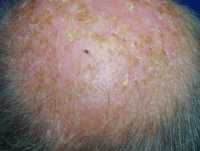
Response: Back in 2016, while I was characterising the RNA SAMMSON as essential for mitochondrial translation in melanoma, I noticed that its inhibition was causing cell death across a large spectrum of melanoma cell lines and models, irrespectively of their genetic background and cell state. At that time I still did not know why the effect was so pronounced on melanoma cells, but I knew that antibiotics of the tetracycline family could also block mitochondrial translation and I thought about repurposing them to treat melanoma.
MedicalResearch.com Interview with:
Eleonora Leucci, Ph.D Assistant Professor
Laboratory for RNA Cancer Biology
Department of Oncology
KU Leuven
MedicalResearch.com: What is the background for this study?
Response: Back in 2016, while I was characterising the RNA SAMMSON as essential for mitochondrial translation in melanoma, I noticed that its inhibition was causing cell death across a large spectrum of melanoma cell lines and models, irrespectively of their genetic background and cell state. At that time I still did not know why the effect was so pronounced on melanoma cells, but I knew that antibiotics of the tetracycline family could also block mitochondrial translation and I thought about repurposing them to treat melanoma.







 Dr. Strauss[/caption]
David Strauss, MD, PhD
Director, Division of Applied Regulatory Science
[caption id="attachment_57763" align="alignleft" width="150"]
Dr. Strauss[/caption]
David Strauss, MD, PhD
Director, Division of Applied Regulatory Science
[caption id="attachment_57763" align="alignleft" width="150"] Dr. Keire[/caption]
David Keire, PhD
Director, Office of Testing and Research
U.S. Food and Drug Administration
Center for Drug Evaluation and Research
MedicalResearch.com: What is the background for this study?
Response: In 2019, the US Food and Drug Administration (FDA) received a citizen petition indicating that ranitidine, a widely used prescription and over-the-counter drug, contained the probable human carcinogen N-nitrosodimethylamine (NDMA). In addition, the petitioner proposed that ranitidine could convert to NDMA in humans; however, this was based on a small clinical study with limitations and an in vitro study that included high level of supplemental nitrite. In response, the FDA immediately alerted the public and began an investigation.
The FDA’s initial research found that the procedures previously used to quantify NDMA were not appropriate for assessing its presence in ranitidine, owing to the use of high temperatures that could convert ranitidine to NDMA during that analysis. New lower-temperature analytical methods found that the amounts of NDMA contained in ranitidine products were 3,000-fold lower than those reported in the citizen petition; however, these lower amounts of NDMA were still above the FDA-acceptable level and could increase over time, prompting the FDA to request the market withdrawal of ranitidine products.
The FDA noted, however, that if ranitidine products could be manufactured to control NDMA amounts, they could be allowed back on the market—but additional information would first be needed to understand whether NDMA could form in vivo from ranitidine in humans.
Dr. Keire[/caption]
David Keire, PhD
Director, Office of Testing and Research
U.S. Food and Drug Administration
Center for Drug Evaluation and Research
MedicalResearch.com: What is the background for this study?
Response: In 2019, the US Food and Drug Administration (FDA) received a citizen petition indicating that ranitidine, a widely used prescription and over-the-counter drug, contained the probable human carcinogen N-nitrosodimethylamine (NDMA). In addition, the petitioner proposed that ranitidine could convert to NDMA in humans; however, this was based on a small clinical study with limitations and an in vitro study that included high level of supplemental nitrite. In response, the FDA immediately alerted the public and began an investigation.
The FDA’s initial research found that the procedures previously used to quantify NDMA were not appropriate for assessing its presence in ranitidine, owing to the use of high temperatures that could convert ranitidine to NDMA during that analysis. New lower-temperature analytical methods found that the amounts of NDMA contained in ranitidine products were 3,000-fold lower than those reported in the citizen petition; however, these lower amounts of NDMA were still above the FDA-acceptable level and could increase over time, prompting the FDA to request the market withdrawal of ranitidine products.
The FDA noted, however, that if ranitidine products could be manufactured to control NDMA amounts, they could be allowed back on the market—but additional information would first be needed to understand whether NDMA could form in vivo from ranitidine in humans.

 Dr, Ferguson[/caption]
Michael Ferguson, PhD
Instructor in Neurology | Harvard Medical School
Lecturer on Neurospirituality | Harvard Divinity School
Center for Brain Circuit Therapeutics
Brigham and Women’s Hospital
MedicalResearch.com: What is the background for this study?
Response: Over 80% of the global population consider themselves religious with even more identifying as spiritual, but the neural substrates of spirituality and religiosity remain unresolved.
MedicalResearch.com: What are the main findings? Where is this circuit located in the brain? What other effects does this circuit control or influence?
Response: We found that brain lesions associated with self-reported spirituality map to a human brain circuit centered on the periaqueductal grey.
Dr, Ferguson[/caption]
Michael Ferguson, PhD
Instructor in Neurology | Harvard Medical School
Lecturer on Neurospirituality | Harvard Divinity School
Center for Brain Circuit Therapeutics
Brigham and Women’s Hospital
MedicalResearch.com: What is the background for this study?
Response: Over 80% of the global population consider themselves religious with even more identifying as spiritual, but the neural substrates of spirituality and religiosity remain unresolved.
MedicalResearch.com: What are the main findings? Where is this circuit located in the brain? What other effects does this circuit control or influence?
Response: We found that brain lesions associated with self-reported spirituality map to a human brain circuit centered on the periaqueductal grey.