MedicalResearch.com Interview with:
[caption id="attachment_56124" align="alignleft" width="200"]

Dr. Khurram Jamil[/caption]
Khurram Jamil, MD
Vice President, Clinical Research in Hepatology
Critical Care Division, Mallinckrodt
MedicalResearch.com: What is the background for the new data of terlipressin presented during Kidney Week 2020 Reimagined? Would you briefly describe hepatorenal syndrome type 1? Whom does it affect and how frequently does it progress to ESRD?
Response: Results from two post-hoc analyses of terlipressin, an investigational agent in the U.S. for adults with hepatorenal syndrome type 1 (HRS-1), were presented at Kidney Week 2020 Reimagined, the annual meeting of the American Society of Nephrology. The first was an
oral presentation titled, “Terlipressin Improves Renal Replacement Therapy–Free Survival in Hepatorenal Syndrome Type 1” and included a pooled post-hoc analysis to assess the incidence of renal replacement therapy (RRT) and its impact on survival among patients from three Phase 3 trials. The second was a
poster presentation titled, “Treatment of Hepatorenal Syndrome Type 1 with Terlipressin Reduces Need for Renal Replacement Therapy After Liver Transplantation,” which focused on a post-hoc analysis of the CONFIRM study and evaluated the need for RRT among patients who had liver transplantation within 90 days of HRS treatment.
HRS-1 is an acute and life-threatening syndrome involving acute kidney failure in people with cirrhosis.
[i] HRS-1 can progress to life-threatening renal failure within days,
i and has a median survival time of approximately two weeks and greater than 80 percent mortality within three months if left untreated.
[ii],[iii] It is often a challenge to effectively diagnose in a timely manner due to its diagnosis of exclusion.
iii
In general, the average patient with hepatorenal syndrome (HRS type 1 or type 2) is in their 50s,
[iv] and up to 73 percent of HRS patients are men.
[v] HRS-1 is estimated to affect between 30,000 and 40,000 patients in the U.S. annually.
[vi],[vii]


 Dr. Halpern-Felsher[/caption]
Bonnie Halpern-Felsher, PhD, FSAHM (pronouns: she/her)
Professor of Pediatrics
Taube Endowed Research Faculty Scholar
Professor (by courtesy), Epidemiology and Population Health
Professor (by courtesy), Psychiatry and Behavioral Sciences
Director of Fellows’ Scholarship, Department of Pediatrics
Director of Research, Division of Adolescent Medicine
Co-leader, Scholarly Concentrations, Pediatrics Residency Program
MedicalResearch.com: What is the background for this study? What are the main findings?
Response: To examine adolescent and young adult e-cigarette use during the COVID-19 pandemic.
There were 4 main findings:
Dr. Halpern-Felsher[/caption]
Bonnie Halpern-Felsher, PhD, FSAHM (pronouns: she/her)
Professor of Pediatrics
Taube Endowed Research Faculty Scholar
Professor (by courtesy), Epidemiology and Population Health
Professor (by courtesy), Psychiatry and Behavioral Sciences
Director of Fellows’ Scholarship, Department of Pediatrics
Director of Research, Division of Adolescent Medicine
Co-leader, Scholarly Concentrations, Pediatrics Residency Program
MedicalResearch.com: What is the background for this study? What are the main findings?
Response: To examine adolescent and young adult e-cigarette use during the COVID-19 pandemic.
There were 4 main findings:


 Dr. Rosi[/caption]
Susanna Rosi, Ph.D.
Lewis and Ruth Cozen Chair II
Dr. Rosi[/caption]
Susanna Rosi, Ph.D.
Lewis and Ruth Cozen Chair II

 Dr. Singh[/caption]
Gurmukh Singh, MD, PhD, MBA
Department of Pathology, Section of Clinical Pathology
Walter Shepeard Professor of Pathology
Section Chief, Clinical Pathology.
Associate Medical Director, Clinical Laboratory GRMC and
Children's Hospital of Georgia
MedicalResearch.com: What is the background for this study? Would you briefly explain what is meant by the obesity paradox?
Response: Obese people tend to get more diseases, such as hypertension, diabetes, cancer etc. However, when they get seriously ill, e.g., sick enough to require admission to intensive care treatment unit (ICU), obese people tend to have better outcomes than normal weight people.
Dr. Singh[/caption]
Gurmukh Singh, MD, PhD, MBA
Department of Pathology, Section of Clinical Pathology
Walter Shepeard Professor of Pathology
Section Chief, Clinical Pathology.
Associate Medical Director, Clinical Laboratory GRMC and
Children's Hospital of Georgia
MedicalResearch.com: What is the background for this study? Would you briefly explain what is meant by the obesity paradox?
Response: Obese people tend to get more diseases, such as hypertension, diabetes, cancer etc. However, when they get seriously ill, e.g., sick enough to require admission to intensive care treatment unit (ICU), obese people tend to have better outcomes than normal weight people.




 Dr. Spampinato[/caption]
Maria Vittoria Spampinato, MD
Neuroradiology Division Director
Department of Radiology and Radiological Science
Medical University of South Carolina
Charleston, SC 29425-3230
MedicalResearch.com: What is the background for this study? What are the main findings?
Response: Alzheimer’s disease (AD) represents a major public health crisis worldwide. More than 5 million people currently have AD in the United States. AD is a slowly progressing neurodegenerative brain disorder with a long preclinical phase. Many people with AD first suffer from mild cognitive impairment (MCI), a decline in cognitive abilities like memory and thinking skills that is greater than that associated with normal aging. A person with MCI is at an increased risk of developing AD or another dementia, although some individuals with MCI remain cognitively stable or improve.
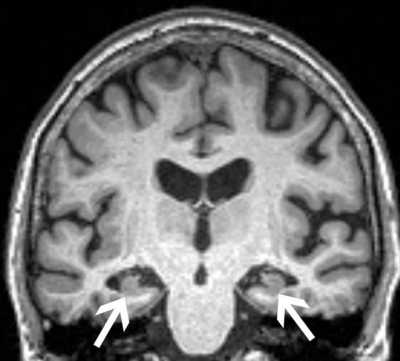
Anxiety is frequently observed in individuals with MCI. The reported prevalence of anxiety in MCI patients varies between 10 and 50%. In this study we evaluated a cohort of 339 individuals with MCI participating in the Alzheimer’s Disease Neuroimaging Initiative study (ADNI2). During the five years of study participation, 72 patients experienced cognitive decline and were diagnosed with AD. We did not find difference in age, gender and education among patients with and without AD conversion. Patients who progressed had greater atrophy of the hippocampi and entorhinal cortex on their MRI scan, as expected (hippocampal atrophy is often used as a marker of neurodegeneration in AD), as well as greater prevalence of APOE4 is the strongest known genetic risk factor for AD. Patients who progressed to Alzheimer’s disease also had greater severity of anxiety during the study, as measured using the Neuropsychiatric Inventory-Questionnaire. Next we determined the effect of the MRI findings (hippocampal and entorhinal cortex atrophy), of the genetic risk factor (APOE4) and of the severity of anxiety on the time to progression to AD. We found that higher levels of anxiety were associated with faster progression from MCI to AD, independently of whether they had a genetic risk factor for Alzheimer’s disease or brain volume loss. We still need to understand better the association between anxiety disorders and cognitive decline. We do not know whether increased levels of anxiety are a consequence of cognitive decline or if anxiety exacerbates to cognitive decline. If we were able to find in the future that anxiety is actually contributing to cognitive decline, then we should more aggressively screen for anxiety disorders in the elderly population.
Dr. Spampinato[/caption]
Maria Vittoria Spampinato, MD
Neuroradiology Division Director
Department of Radiology and Radiological Science
Medical University of South Carolina
Charleston, SC 29425-3230
MedicalResearch.com: What is the background for this study? What are the main findings?
Response: Alzheimer’s disease (AD) represents a major public health crisis worldwide. More than 5 million people currently have AD in the United States. AD is a slowly progressing neurodegenerative brain disorder with a long preclinical phase. Many people with AD first suffer from mild cognitive impairment (MCI), a decline in cognitive abilities like memory and thinking skills that is greater than that associated with normal aging. A person with MCI is at an increased risk of developing AD or another dementia, although some individuals with MCI remain cognitively stable or improve.
Anxiety is frequently observed in individuals with MCI. The reported prevalence of anxiety in MCI patients varies between 10 and 50%. In this study we evaluated a cohort of 339 individuals with MCI participating in the Alzheimer’s Disease Neuroimaging Initiative study (ADNI2). During the five years of study participation, 72 patients experienced cognitive decline and were diagnosed with AD. We did not find difference in age, gender and education among patients with and without AD conversion. Patients who progressed had greater atrophy of the hippocampi and entorhinal cortex on their MRI scan, as expected (hippocampal atrophy is often used as a marker of neurodegeneration in AD), as well as greater prevalence of APOE4 is the strongest known genetic risk factor for AD. Patients who progressed to Alzheimer’s disease also had greater severity of anxiety during the study, as measured using the Neuropsychiatric Inventory-Questionnaire. Next we determined the effect of the MRI findings (hippocampal and entorhinal cortex atrophy), of the genetic risk factor (APOE4) and of the severity of anxiety on the time to progression to AD. We found that higher levels of anxiety were associated with faster progression from MCI to AD, independently of whether they had a genetic risk factor for Alzheimer’s disease or brain volume loss. We still need to understand better the association between anxiety disorders and cognitive decline. We do not know whether increased levels of anxiety are a consequence of cognitive decline or if anxiety exacerbates to cognitive decline. If we were able to find in the future that anxiety is actually contributing to cognitive decline, then we should more aggressively screen for anxiety disorders in the elderly population. 





 Dr. Goyal[/caption]
Dr. Monika K. Goyal, MD
Associate Division Chief, Emergency Medicine
Children’s National Hospital
Department of Pediatrics, School of Medicine and Health Sciences
The George Washington University
Washington, District of Columbia
MedicalResearch.com: What is the background for this study?
Response: There has been growing attention to the disproportionate use of police force in communities of color. Therefore, we sought to investigate whether Black and Hispanic teenagers have higher rates of death due to police shootings when compared to white youth.
Dr. Goyal[/caption]
Dr. Monika K. Goyal, MD
Associate Division Chief, Emergency Medicine
Children’s National Hospital
Department of Pediatrics, School of Medicine and Health Sciences
The George Washington University
Washington, District of Columbia
MedicalResearch.com: What is the background for this study?
Response: There has been growing attention to the disproportionate use of police force in communities of color. Therefore, we sought to investigate whether Black and Hispanic teenagers have higher rates of death due to police shootings when compared to white youth.


 Dr. Flaherty[/caption]
Michael R. Flaherty, DO
Attending, Pediatric Critical Care Medicine
Co-Director, Trauma and Injury Prevention Outreach Program, MGH
Instructor in Pediatrics,
Harvard Medical School
Boston, MA 02114
MedicalResearch.com: What is the background for this study? What are the main findings?
Response: This study was a joint collaboration between Massachusetts General Hospital and Boston Children’s Hospital. The Consumer Product Safety Commission (CPSC) found an increasing incidence of rare earth magnet ingestions by children causing serious injury; Injuries are particularly serious when a child ingests two of these small magnets, or a magnet with another metal object – this can lead to bowel walls becoming attached and kinked, leading to catastrophic bowel injury and/or death.
The Consumer Product Safety Commission initiated campaigns to limit sales in 2012 with voluntary recalls and safety standards, as well as public awareness campaigns, legislative advocacy, and lawsuits. In October 2014, the CPSC published their final rule, “Safety Standard for Magnet Sets,” which prohibited the sale of magnets based on a pre-specified size and power scale, essentially eliminating the ability to sell SREMs. This rule was appealed by largest manufacturer of these magnets, Zen Magnets, LLC., and in November 2016 this rule was legally reversed by the U.S. Court of Appeals Tenth Circuit resulting in a resurgence of these magnets on the market.
Dr. Flaherty[/caption]
Michael R. Flaherty, DO
Attending, Pediatric Critical Care Medicine
Co-Director, Trauma and Injury Prevention Outreach Program, MGH
Instructor in Pediatrics,
Harvard Medical School
Boston, MA 02114
MedicalResearch.com: What is the background for this study? What are the main findings?
Response: This study was a joint collaboration between Massachusetts General Hospital and Boston Children’s Hospital. The Consumer Product Safety Commission (CPSC) found an increasing incidence of rare earth magnet ingestions by children causing serious injury; Injuries are particularly serious when a child ingests two of these small magnets, or a magnet with another metal object – this can lead to bowel walls becoming attached and kinked, leading to catastrophic bowel injury and/or death.
The Consumer Product Safety Commission initiated campaigns to limit sales in 2012 with voluntary recalls and safety standards, as well as public awareness campaigns, legislative advocacy, and lawsuits. In October 2014, the CPSC published their final rule, “Safety Standard for Magnet Sets,” which prohibited the sale of magnets based on a pre-specified size and power scale, essentially eliminating the ability to sell SREMs. This rule was appealed by largest manufacturer of these magnets, Zen Magnets, LLC., and in November 2016 this rule was legally reversed by the U.S. Court of Appeals Tenth Circuit resulting in a resurgence of these magnets on the market. 




 Dr. Kubik[/caption]
Martha Kubik, Ph.D., R.N.
Professor and director of the School of Nursing
College of Health and Human Services at George Mason University
USPSTF Task Force Member
MedicalResearch.com: What is the background for this study? What are the main findings? Has the recommendation changed over the last decade?
Response: High blood pressure is becoming more common among children and teens in the United States and can have serious negative health effects in childhood and adulthood, such as kidney and heart disease. However, there is not enough research to know whether treating high blood pressure in young people improves cardiovascular health in adulthood.
The Task Force continued to find that there is not enough evidence to recommend for or against screening for high blood pressure in children and teens who do not have signs or symptoms.
Dr. Kubik[/caption]
Martha Kubik, Ph.D., R.N.
Professor and director of the School of Nursing
College of Health and Human Services at George Mason University
USPSTF Task Force Member
MedicalResearch.com: What is the background for this study? What are the main findings? Has the recommendation changed over the last decade?
Response: High blood pressure is becoming more common among children and teens in the United States and can have serious negative health effects in childhood and adulthood, such as kidney and heart disease. However, there is not enough research to know whether treating high blood pressure in young people improves cardiovascular health in adulthood.
The Task Force continued to find that there is not enough evidence to recommend for or against screening for high blood pressure in children and teens who do not have signs or symptoms.