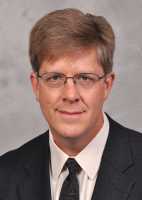
MedicalResearch.com Interview with:
[caption id="attachment_46135" align="alignleft" width="200"]
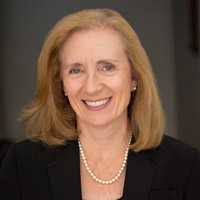
Dr. Mangione[/caption]
Dr. Carol Mangione, M.D., M.S.P.H., F.A.C.P.
Division Chief of General Internal Medicine and Health Services Research
Professor of Medicine
Barbara A. Levey, MD, and Gerald S. Levey, MD, endowed chair in Medicine David Geffen School of Medicine University of California, Los Angeles (UCLA)
Professor of public health at the UCLA Fielding School of Public Health.
MedicalResearch.com: What is the background for this study? What are the main findings?
Response: Every year, too many American women are faced with the challenge of dealing with a cancer diagnosis related to potentially harmful mutations of the
BRCA1 and
BRCA2 genes. However, the Task Force found that there are several steps women can take to determine if they’re potentially at increased risk for
BRCA gene mutations – and if genetic counseling and
BRCA testing are needed.
It is important to note that while some women can benefit from risk assessment, counseling, and testing, these services are not for everyone.


 Dr. Caughey[/caption]
Aaron B. Caughey, M.D., M.P.P., M.P.H., Ph.D.
Professor and ChairDepartment of Obstetrics and Gynecology
Associate dean for Women’s Health Research and Policy
Oregon Health & Science University in Portland, OR.
Founder and Chair, Centers for Disease Control and Prevention–funded
Oregon Perinatal Collaborative
MedicalResearch.com: What is the background for this study? What are the main findings?
Response: Preeclampsia is one of the most serious health problems that can occur during pregnancy. It can lead to preterm birth, and in some cases even death of the pregnant person and their baby.
The Task Force looked at the latest available evidence and found that low-dose aspirin can help prevent preeclampsia in pregnant people who are at highest risk, and it can also protect their babies. This new final recommendation is consistent with the Task Force’s 2014 recommendation statement and has the potential to save many lives.
Dr. Caughey[/caption]
Aaron B. Caughey, M.D., M.P.P., M.P.H., Ph.D.
Professor and ChairDepartment of Obstetrics and Gynecology
Associate dean for Women’s Health Research and Policy
Oregon Health & Science University in Portland, OR.
Founder and Chair, Centers for Disease Control and Prevention–funded
Oregon Perinatal Collaborative
MedicalResearch.com: What is the background for this study? What are the main findings?
Response: Preeclampsia is one of the most serious health problems that can occur during pregnancy. It can lead to preterm birth, and in some cases even death of the pregnant person and their baby.
The Task Force looked at the latest available evidence and found that low-dose aspirin can help prevent preeclampsia in pregnant people who are at highest risk, and it can also protect their babies. This new final recommendation is consistent with the Task Force’s 2014 recommendation statement and has the potential to save many lives.

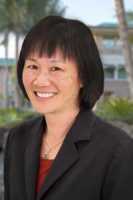

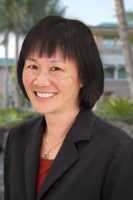 Dr. Chien-Wen Tseng[/caption]
Chien-Wen Tseng, M.D., M.P.H., M.S.E.E.
The Hawaii Medical Service Association Endowed Chair
Health Services and Quality Research
Professor, and Associate Research Director
Department of Family Medicine and Community Health
University of Hawaii John A. Burns School of Medicine
MedicalResearch.com: What is the background for this study? What are the main findings?
Response: Gaining weight during pregnancy is natural but gaining too little or too much weight can be harmful for pregnant people and their babies. For the first time, the Task Force reviewed the evidence and found that counseling pregnant people on healthy weight gain during pregnancy can lower their risk for diabetes during pregnancy, emergency cesarean deliveries, and babies born with a birth weight that is too high. Pregnant people may not know what amount of weight gain is healthy during pregnancy, or how weight gain can affect their pregnancy and baby.
We recommend that clinicians offer all pregnant people counseling on healthy weight gain throughout their pregnancy for healthier, safer pregnancies.
Dr. Chien-Wen Tseng[/caption]
Chien-Wen Tseng, M.D., M.P.H., M.S.E.E.
The Hawaii Medical Service Association Endowed Chair
Health Services and Quality Research
Professor, and Associate Research Director
Department of Family Medicine and Community Health
University of Hawaii John A. Burns School of Medicine
MedicalResearch.com: What is the background for this study? What are the main findings?
Response: Gaining weight during pregnancy is natural but gaining too little or too much weight can be harmful for pregnant people and their babies. For the first time, the Task Force reviewed the evidence and found that counseling pregnant people on healthy weight gain during pregnancy can lower their risk for diabetes during pregnancy, emergency cesarean deliveries, and babies born with a birth weight that is too high. Pregnant people may not know what amount of weight gain is healthy during pregnancy, or how weight gain can affect their pregnancy and baby.
We recommend that clinicians offer all pregnant people counseling on healthy weight gain throughout their pregnancy for healthier, safer pregnancies. 

 Dr. Wong[/caption]
John B. Wong, M.D.
Chief Scientific Officer
Vice chair for Clinical Affairs
Chief of the Division of Clinical Decision Making and
Primary care Clinician
Department of Medicine at Tufts Medical Center
MedicalResearch.com: What is the background for this study?
Response: Hypertension affects nearly half of all adults in the United States and is a major risk factor for many serious health conditions. Fortunately, by screening all adults for hypertension, clinicians can improve their patient’s health. The Task Force continues to recommend screening all adults for hypertension so that they can get the care they need to help prevent health conditions such as heart attack, stroke, and kidney failure.
Dr. Wong[/caption]
John B. Wong, M.D.
Chief Scientific Officer
Vice chair for Clinical Affairs
Chief of the Division of Clinical Decision Making and
Primary care Clinician
Department of Medicine at Tufts Medical Center
MedicalResearch.com: What is the background for this study?
Response: Hypertension affects nearly half of all adults in the United States and is a major risk factor for many serious health conditions. Fortunately, by screening all adults for hypertension, clinicians can improve their patient’s health. The Task Force continues to recommend screening all adults for hypertension so that they can get the care they need to help prevent health conditions such as heart attack, stroke, and kidney failure.
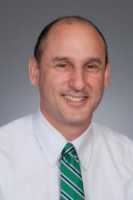



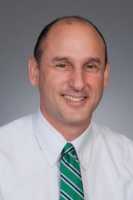 Dr. Silverstein[/caption]
Dr. Michael Silverstein M.D., M.P.H
Professor of Pediatrics
Director of the Division of General Academic Pediatrics
Vice Chair of Research, Department of Pediatrics
Boston University School of Medicine
MedicalResearch.com: What is the background for this study? What are the main findings?
Response: Tobacco use is the leading preventable cause of disease, disability, and death in the United States and quitting is one of the best things people can do for their health. Additionally, smoking during pregnancy can cause serious harms to both the pregnant person and the baby.
The Task Force continues to recommend that clinicians ask all adults and pregnant people about their tobacco use, advise those who use tobacco to quit, and connect them to proven, safe methods to help them quit.
Dr. Silverstein[/caption]
Dr. Michael Silverstein M.D., M.P.H
Professor of Pediatrics
Director of the Division of General Academic Pediatrics
Vice Chair of Research, Department of Pediatrics
Boston University School of Medicine
MedicalResearch.com: What is the background for this study? What are the main findings?
Response: Tobacco use is the leading preventable cause of disease, disability, and death in the United States and quitting is one of the best things people can do for their health. Additionally, smoking during pregnancy can cause serious harms to both the pregnant person and the baby.
The Task Force continues to recommend that clinicians ask all adults and pregnant people about their tobacco use, advise those who use tobacco to quit, and connect them to proven, safe methods to help them quit. 


 Dr. Kubik[/caption]
Martha Kubik, Ph.D., R.N.
Professor and director of the School of Nursing
College of Health and Human Services at George Mason University
USPSTF Task Force Member
MedicalResearch.com: What is the background for this study? What are the main findings? Has the recommendation changed over the last decade?
Response: High blood pressure is becoming more common among children and teens in the United States and can have serious negative health effects in childhood and adulthood, such as kidney and heart disease. However, there is not enough research to know whether treating high blood pressure in young people improves cardiovascular health in adulthood.
The Task Force continued to find that there is not enough evidence to recommend for or against screening for high blood pressure in children and teens who do not have signs or symptoms.
Dr. Kubik[/caption]
Martha Kubik, Ph.D., R.N.
Professor and director of the School of Nursing
College of Health and Human Services at George Mason University
USPSTF Task Force Member
MedicalResearch.com: What is the background for this study? What are the main findings? Has the recommendation changed over the last decade?
Response: High blood pressure is becoming more common among children and teens in the United States and can have serious negative health effects in childhood and adulthood, such as kidney and heart disease. However, there is not enough research to know whether treating high blood pressure in young people improves cardiovascular health in adulthood.
The Task Force continued to find that there is not enough evidence to recommend for or against screening for high blood pressure in children and teens who do not have signs or symptoms.