MedicalResearch.com Interview with:
[caption id="attachment_46863" align="alignleft" width="200"]

Dr. Ingunn Olea Lund[/caption]
Dr. Ingunn Olea Lund, PhD
The Norwegian Institute of Public Health
Oslo, Norway
MedicalResearch.com: What is the background for this study?
Response: There are significant amounts of research on children of parents with alcohol use disorders – where the children are shown to be at risk of several adverse outcomes, including mental disorders, substance use disorders, suicide, impaired school performance, and employment problems. There is very little previous research on how other, more normal levels of parental drinking may influence child outcomes, such as mental health. This is a grave oversight, as there are vastly more parents with normal drinking patterns than there are parents who suffer from an alcohol use disorder. This means that there are potentially a lot more cases of adverse effect for children, and the number of children at risk may be higher than previously assumed.
In addition to parents' alcohol use, several other risk factors in the family that may affect child mental health outcomes, such as parents' mental health and socio-economic status. Researchers have tended to look at these risk factors separately, but as these risks tend to co-occur, it may be more informative to consider them together.
To our knowledge, this is the first study that examines possible harm from normal levels of parental drinking, alone or in combination with other parental risk factors, on children’s anxiety and depression.
The sample consists of more than 8700 triads: children and both their parents. We combined information from three health registries with survey data where both adolescents and their parents provided information about health and social conditions. The health registers include information about the children 's actual contact with the health care system; we used information about whether children received diagnoses and/or treatment for anxiety and/or depression.


 Sitara Weerakoon[/caption]
Sitara Weerakoon, MPH (she/her)
PhD Candidate | Epidemiology & Biostatistics
Graduate Research Assistant
Center for Pediatric Population Health
UTHealth
MedicalResearch.com: What is the background for this study? What are the main findings?
Response: Measures to control the spread of COVID-19 included stay-at-home mandates and business lockdown policies which resulted in many facing a loss of income or employment and more time spent isolated at home. Life stressors (like job loss and social isolation) have been shown to be associated with increased drinking at unhealthy levels. Those with a history of mental health problems may be even more at risk.
We aimed to see if binge drinking (5 or more drinks [male] or 4 or more drinks [female] in one session) and levels of alcohol consumption among binge drinkers were impacted by these pandemic-related factors. We found that increased time spent at home (in weeks) was associated with a 19% increase in the odds of binge drinking and binge drinkers with a previous diagnosis of depression and current depression symptoms (during the early months of the pandemic) had a 237% greater odds of drinking more alcohol (vs drinking the same amount) compared to those with no history and current symptoms of depression.
Sitara Weerakoon[/caption]
Sitara Weerakoon, MPH (she/her)
PhD Candidate | Epidemiology & Biostatistics
Graduate Research Assistant
Center for Pediatric Population Health
UTHealth
MedicalResearch.com: What is the background for this study? What are the main findings?
Response: Measures to control the spread of COVID-19 included stay-at-home mandates and business lockdown policies which resulted in many facing a loss of income or employment and more time spent isolated at home. Life stressors (like job loss and social isolation) have been shown to be associated with increased drinking at unhealthy levels. Those with a history of mental health problems may be even more at risk.
We aimed to see if binge drinking (5 or more drinks [male] or 4 or more drinks [female] in one session) and levels of alcohol consumption among binge drinkers were impacted by these pandemic-related factors. We found that increased time spent at home (in weeks) was associated with a 19% increase in the odds of binge drinking and binge drinkers with a previous diagnosis of depression and current depression symptoms (during the early months of the pandemic) had a 237% greater odds of drinking more alcohol (vs drinking the same amount) compared to those with no history and current symptoms of depression.

 Dr. Pollard[/caption]
Michael S. Pollard, Ph.D.
Professor, Pardee RAND Graduate School
Senior Sociologist
RAND Corporation
Santa Monica, CA 90407-2138
MedicalResearch.com: What is the background for this study? What are the main findings?
Response: There are ample anecdotal jokes and stories about increased alcohol use during COVID-19 and stay-at-home orders. Our study provides robust longitudinal evidence that people drank more frequently, and for women in particular, more heavily, and with more negative consequences, during the initial stages of COVID-19 compared to their own behaviors from a year earlier (May/June 2020 compared to May/June 2019). Women’s alcohol consumption was most significantly changed, with a 17% increase in number of days drinking, and a 41% increase in days of binge drinking (when they had four or more drinks in a couple of hours). This means that, nationally, one in five women drank heavily one more day a month than the same time in 2019, on average. Women also reported a 39% increase in alcohol-related problems, such as “I took foolish risks” or “I failed to do what was expected of me” because of drinking alcohol.
Dr. Pollard[/caption]
Michael S. Pollard, Ph.D.
Professor, Pardee RAND Graduate School
Senior Sociologist
RAND Corporation
Santa Monica, CA 90407-2138
MedicalResearch.com: What is the background for this study? What are the main findings?
Response: There are ample anecdotal jokes and stories about increased alcohol use during COVID-19 and stay-at-home orders. Our study provides robust longitudinal evidence that people drank more frequently, and for women in particular, more heavily, and with more negative consequences, during the initial stages of COVID-19 compared to their own behaviors from a year earlier (May/June 2020 compared to May/June 2019). Women’s alcohol consumption was most significantly changed, with a 17% increase in number of days drinking, and a 41% increase in days of binge drinking (when they had four or more drinks in a couple of hours). This means that, nationally, one in five women drank heavily one more day a month than the same time in 2019, on average. Women also reported a 39% increase in alcohol-related problems, such as “I took foolish risks” or “I failed to do what was expected of me” because of drinking alcohol.
 Dr. Zhang[/caption]
Ruiyuan Zhang, MD, MS
Department of Epidemiology and Biostatistics
University of Georgia College of Public Health
Athens, Georgia
MedicalResearch.com: What is the background for this study?
Response: Although there are several studies that focused on the effect of alcohol drinking on cognitive function, their findings were still mixed. So we want to use some new analysis techniques on this topic to see if we can have new findings.
MedicalResearch.com: What are the main findings?
Response: The main finding of our study is that low-to-moderate alcohol drinking is associated with better cognitive function outcomes.
Dr. Zhang[/caption]
Ruiyuan Zhang, MD, MS
Department of Epidemiology and Biostatistics
University of Georgia College of Public Health
Athens, Georgia
MedicalResearch.com: What is the background for this study?
Response: Although there are several studies that focused on the effect of alcohol drinking on cognitive function, their findings were still mixed. So we want to use some new analysis techniques on this topic to see if we can have new findings.
MedicalResearch.com: What are the main findings?
Response: The main finding of our study is that low-to-moderate alcohol drinking is associated with better cognitive function outcomes.

 Dr. Kistler[/caption]
Professor Peter M Kistler MBBS, PhD, FRACP
Head of Clinical Electrophysiology Research
Baker Heart and Diabetes Institute
Head of Electrophysiology at The Alfred hospital
Professor of Medicine
University of Melbourne.
MedicalResearch.com: What is the background for this study?
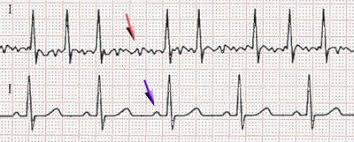
Response: There is a well known association between alcohol intake and atrial fibrillation form population based studies which demonstrate that for every 1 standard drink the incidence of AFib increases by 8%.
This is the first randomised study to determine of alcohol reduction/abstinence leads to a reduction in AFib episodes and time to recurrence.
Dr. Kistler[/caption]
Professor Peter M Kistler MBBS, PhD, FRACP
Head of Clinical Electrophysiology Research
Baker Heart and Diabetes Institute
Head of Electrophysiology at The Alfred hospital
Professor of Medicine
University of Melbourne.
MedicalResearch.com: What is the background for this study?
Response: There is a well known association between alcohol intake and atrial fibrillation form population based studies which demonstrate that for every 1 standard drink the incidence of AFib increases by 8%.
This is the first randomised study to determine of alcohol reduction/abstinence leads to a reduction in AFib episodes and time to recurrence.


















 Dr. Dermody[/caption]
Dr. Sarah Dermody, PhD
Assistant Professor
School of Psychological Science
Oregon State University
Corvallis Oregon
MedicalResearch.com: What is the background for this study? What are the main findings?
Response: Drinking alcohol is a risk factor for sustained smoking. In a sample of daily cigarette smokers receiving treatment for alcohol use disorder, we examined if reductions in drinking corresponded with reductions in nicotine metabolism as indexed by the nicotine metabolite ratio. The nicotine metabolite ratio is important because it is associated with smoking level and lapses. We found that for men, alcohol use and the nicotine metabolite ratio reduced significantly; however, for women, neither drinking nor nicotine metabolite ratio changed.
Dr. Dermody[/caption]
Dr. Sarah Dermody, PhD
Assistant Professor
School of Psychological Science
Oregon State University
Corvallis Oregon
MedicalResearch.com: What is the background for this study? What are the main findings?
Response: Drinking alcohol is a risk factor for sustained smoking. In a sample of daily cigarette smokers receiving treatment for alcohol use disorder, we examined if reductions in drinking corresponded with reductions in nicotine metabolism as indexed by the nicotine metabolite ratio. The nicotine metabolite ratio is important because it is associated with smoking level and lapses. We found that for men, alcohol use and the nicotine metabolite ratio reduced significantly; however, for women, neither drinking nor nicotine metabolite ratio changed.



 Dr. Mangione[/caption]
Dr. Carol Mangione M.D., M.S.P.H., F.A.C.P
Ronald Reagan UCLA Medical Center
Division Chief of General Internal Medicine and Health Services Research
Professor of Medicine.
Barbara A. Levey, MD, and Gerald S. Levey, MD
Endowed chair in medicine David Geffen School of Medicine
University of California
MedicalResearch.com: What is the background for this study? What are the main findings?
Response: Unhealthy alcohol use is relatively common and is increasing among U.S. adults. Alcohol use is the third leading cause of preventable death in the U.S. and contributes to more than 88,000 deaths per year. In pregnancy, it also leads to birth defects and developmental problems in children. The Task Force found that screening tests and brief counseling interventions can help detect and reduce unhealthy alcohol use among adults, and in turn help prevent negative consequences related to alcohol use. For adolescents ages 12 to 17, clinicians should use their best judgment when deciding whether or not to screen and refer their patients to counseling, until we have better studies available.
Dr. Mangione[/caption]
Dr. Carol Mangione M.D., M.S.P.H., F.A.C.P
Ronald Reagan UCLA Medical Center
Division Chief of General Internal Medicine and Health Services Research
Professor of Medicine.
Barbara A. Levey, MD, and Gerald S. Levey, MD
Endowed chair in medicine David Geffen School of Medicine
University of California
MedicalResearch.com: What is the background for this study? What are the main findings?
Response: Unhealthy alcohol use is relatively common and is increasing among U.S. adults. Alcohol use is the third leading cause of preventable death in the U.S. and contributes to more than 88,000 deaths per year. In pregnancy, it also leads to birth defects and developmental problems in children. The Task Force found that screening tests and brief counseling interventions can help detect and reduce unhealthy alcohol use among adults, and in turn help prevent negative consequences related to alcohol use. For adolescents ages 12 to 17, clinicians should use their best judgment when deciding whether or not to screen and refer their patients to counseling, until we have better studies available.