MedicalResearch.com Interview with:
[caption id="attachment_53875" align="alignleft" width="143"]

Dr. Garcia[/caption]
Santiago Garcia, MD FACC
Interventional Cardiologist, Minneapolis Heart Institute
®
Researcher, Minneapolis Heart Institute Foundation
®
MedicalResearch.com: What is the background for this study?
Response: We analyzed and quantified ST-segment elevation myocardial infarction (STEMI) activations for 9 high-volume (>100 primary percutaneous angioplasties per year) cardiac catheterization laboratories in the US. These centers represent different geographic areas and levels of COVID-19 exposure in the US. The data analyzed was from January 1, 2019 to March 31, 2020.
Participating centers included 1-Minneapolis Heart Institute, Minneapolis, MN, 2- Beaumont Hospital Royal Oak, Royal Oak, MI, 3- The Christ Hospital, Cincinnati, OH, 4- Massachusetts General Hospital, Boston, MA, 5- UMass Memorial Medical Center, Worcester, MA, 6- Iowa Heart, Des Moines, IA, 7- Northwell Health Hospital, Manhasset, NY, 8- Prairie Cardiovascular, Springfield, IL, and 9- Swedish Medical Center, Seattle, WA.
























 Deborah M Eaton
Doctorate Student / Research Assistant
Temple University
MedicalResearch.com: What is the background for this study?
Response: Heart failure (HF) with preserved ejection fraction (HFpEF) accounts for approximately 50% of cases of HF and to date clinical trials with HFpEF patients have failed to produce positive outcomes. Part of this is likely due to the lack of HFpEF animal models for preclinical testing. Our lab addressed this gap in knowledge by developing an animal model that mimics critical features of the human HFpEF phenotype. We performed an in-depth cardiopulmonary characterization highlighting that the model has characteristics of human disease. We then tested the effects of a pan-HDAC inhibitor, vorinostat/SAHA, in collaboration with Dr. Timothy McKinsey, who is an expert in HDAC inhibitors and recently published work1 that laid the foundation for this study.
Deborah M Eaton
Doctorate Student / Research Assistant
Temple University
MedicalResearch.com: What is the background for this study?
Response: Heart failure (HF) with preserved ejection fraction (HFpEF) accounts for approximately 50% of cases of HF and to date clinical trials with HFpEF patients have failed to produce positive outcomes. Part of this is likely due to the lack of HFpEF animal models for preclinical testing. Our lab addressed this gap in knowledge by developing an animal model that mimics critical features of the human HFpEF phenotype. We performed an in-depth cardiopulmonary characterization highlighting that the model has characteristics of human disease. We then tested the effects of a pan-HDAC inhibitor, vorinostat/SAHA, in collaboration with Dr. Timothy McKinsey, who is an expert in HDAC inhibitors and recently published work1 that laid the foundation for this study. 




 Dr. Kistler[/caption]
Professor Peter M Kistler MBBS, PhD, FRACP
Head of Clinical Electrophysiology Research
Baker Heart and Diabetes Institute
Head of Electrophysiology at The Alfred hospital
Professor of Medicine
University of Melbourne.
MedicalResearch.com: What is the background for this study?
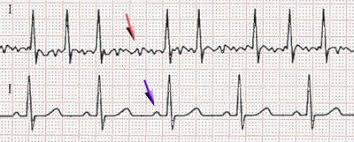
Response: There is a well known association between alcohol intake and atrial fibrillation form population based studies which demonstrate that for every 1 standard drink the incidence of AFib increases by 8%.
This is the first randomised study to determine of alcohol reduction/abstinence leads to a reduction in AFib episodes and time to recurrence.
Dr. Kistler[/caption]
Professor Peter M Kistler MBBS, PhD, FRACP
Head of Clinical Electrophysiology Research
Baker Heart and Diabetes Institute
Head of Electrophysiology at The Alfred hospital
Professor of Medicine
University of Melbourne.
MedicalResearch.com: What is the background for this study?
Response: There is a well known association between alcohol intake and atrial fibrillation form population based studies which demonstrate that for every 1 standard drink the incidence of AFib increases by 8%.
This is the first randomised study to determine of alcohol reduction/abstinence leads to a reduction in AFib episodes and time to recurrence.