[caption id="attachment_45809" align="alignleft" width="160"]

Dr. Vinson[/caption]
MedicalResearch.com Interview with:
David R. Vinson, MD
Department of Emergency Medicine
Kaiser Permanente Sacramento Medical Center Sacramento, CA
MedicalResearch.com: What is the background for this study? What are the main findings?
Response: At least one-third of emergency department (ED) patients with acute blood clots in the lung, or pulmonary embolism (PE), are eligible for expedited discharged to home, either directly from the ED or after a short (<24 hour) period of observation. Yet in in most hospitals in the U.S. and around the world nearly all ED patients with acute PE are hospitalized. These unnecessary hospitalizations are a poor use of health care resources, tie up inpatient beds, and expose patients to the cost, inconvenience, and risk of inpatient care. The better-performing medical centers have two characteristics in common: they help their physicians identify which PE patients are candidates for outpatient care and they facilitate timely post-discharge follow-up. At Kaiser Permanente Northern California (KPNC), we have had the follow-up system in place for some time, but didn’t have a way to help our physicians sort out which patients with acute PE would benefit from home management.
To correct this, we designed a secure, web-based clinical decision support system that was integrated with the electronic health record. When activated, it presented to the emergency physician the validated PE Severity Index, which uses patient demographics, vital signs, examination findings, and past medical history to classify patients into different risk strata, correlated with eligibility for home care. To make use of the PE Severity Index easier and more streamlined for the physician, the tool drew in information from the patient’s comprehensive medical records to accurately auto-populate the PE Severity Index. The tool then calculated for the physician the patient’s risk score and estimated 30-day mortality, and also offered a site-of-care recommendation, for example, “outpatient management is often possible.” The tool also reminded the physician of relative contraindications to outpatient management. At the time, only 10 EDs in KPNC had an on-site physician researcher, who for this study served as physician educator, study promotor, and enrollment auditor to provide physician-specific feedback. These 10 EDs functioned as the intervention sites, while the other 11 EDs within KPNC served as concurrent controls. Our primary outcome was the percentage of eligible ED patients with acute PE who had an expedited discharge to home, as defined above.
During the 16-month study period (8-month pre-intervention and 8-months post-intervention), we cared for 1,703 eligible ED patients with acute PE. Adjusted home discharge increased at intervention sites from 17% to 28%, a greater than 60% relative increase. There were no changes in home discharge observed at the control sites (about 15% throughout the 16-month study). The increase in home discharge was not associated with an increase in short-term return visits or major complications.


 Dr. Hollingsworth[/caption]
Alex Hollingsworth PhD
Assistant Professor
O'Neill School of Public and Environmental Affairs
Indiana University
MedicalResearch.com: What is the background for this study? What are the main findings?
Response: I've been working with Coady Wing and Ashley Bradford on a few different studies of the effects of recreational marijuana laws on drug and alcohol use.
Soon after EVALI became a major issue, the prevailing theory from the CDC and others was that EVALI was caused by the use of vitamin E acetate in illegal THC vaping products.
Our group read about this and we thought about some of the things that often happen in black markets for illegal drugs. For instance, during the alcohol prohibition era, bootleg alcohol producers often made and sold alcohol products that were not that safe to drink. In more recent years, there are cases where black market sellers of illegal drugs like heroin try to increase profit margins by adding other substances, which can be harmful.
We thought that maybe something like that could be happening in EVALI. Perhaps people in states where recreational marijuana is legal tended to purchase marijuana products from the legal market and the legal market was not selling any marijuana vaping products that included vitamin E acetate.
Dr. Hollingsworth[/caption]
Alex Hollingsworth PhD
Assistant Professor
O'Neill School of Public and Environmental Affairs
Indiana University
MedicalResearch.com: What is the background for this study? What are the main findings?
Response: I've been working with Coady Wing and Ashley Bradford on a few different studies of the effects of recreational marijuana laws on drug and alcohol use.
Soon after EVALI became a major issue, the prevailing theory from the CDC and others was that EVALI was caused by the use of vitamin E acetate in illegal THC vaping products.
Our group read about this and we thought about some of the things that often happen in black markets for illegal drugs. For instance, during the alcohol prohibition era, bootleg alcohol producers often made and sold alcohol products that were not that safe to drink. In more recent years, there are cases where black market sellers of illegal drugs like heroin try to increase profit margins by adding other substances, which can be harmful.
We thought that maybe something like that could be happening in EVALI. Perhaps people in states where recreational marijuana is legal tended to purchase marijuana products from the legal market and the legal market was not selling any marijuana vaping products that included vitamin E acetate.
 Aurika Savickaite[/caption]
Aurika Savickaite RN
Adult Gerontology Acute Care Nurse Practitioner
Bulletproof Coach
University of Chicago Medicine
MedicalResearch.com: Would you briefly explain what is meant by helmet-based ventilation? How does it work?
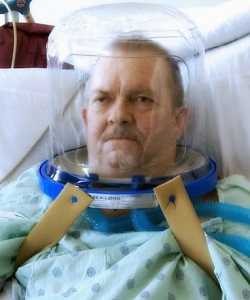
Response: For patients in respiratory failure, noninvasive positive pressure ventilation (NIPPV) is usually delivered through a nasal mask or facemask. Many patients develop pain, discomfort – even claustrophobia -- from using NIPPV systems. The transparent helmet was developed to improve the tolerance of noninvasive ventilation. It allows the patient to see, read, speak and drink without interrupting noninvasive positive-pressure ventilation (NPPV).
The helmet has a sealed connection and a soft collar that adheres to the neck which helps prevent the air leaks that are very common with nasal- or face masks. High positive end-expiratory pressure (PEEP) is vital in treating patients in respiratory failure and thanks to helmets “none to minimum air leak” system, PEEP can be set high (up to 25). NIPPV via a nasal- or full-face mask typically begins to show air leaks when the required pressure exceeds 15-20cm H2O.
Aurika Savickaite[/caption]
Aurika Savickaite RN
Adult Gerontology Acute Care Nurse Practitioner
Bulletproof Coach
University of Chicago Medicine
MedicalResearch.com: Would you briefly explain what is meant by helmet-based ventilation? How does it work?
Response: For patients in respiratory failure, noninvasive positive pressure ventilation (NIPPV) is usually delivered through a nasal mask or facemask. Many patients develop pain, discomfort – even claustrophobia -- from using NIPPV systems. The transparent helmet was developed to improve the tolerance of noninvasive ventilation. It allows the patient to see, read, speak and drink without interrupting noninvasive positive-pressure ventilation (NPPV).
The helmet has a sealed connection and a soft collar that adheres to the neck which helps prevent the air leaks that are very common with nasal- or face masks. High positive end-expiratory pressure (PEEP) is vital in treating patients in respiratory failure and thanks to helmets “none to minimum air leak” system, PEEP can be set high (up to 25). NIPPV via a nasal- or full-face mask typically begins to show air leaks when the required pressure exceeds 15-20cm H2O.