MedicalResearch.com Interview with:
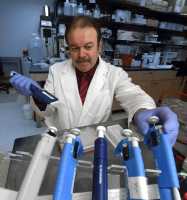
[caption id="attachment_56124" align="alignleft" width="200"]

Dr. Khurram Jamil[/caption]
Khurram Jamil, MD
Vice President, Clinical Research in Hepatology
Critical Care Division, Mallinckrodt
MedicalResearch.com: What is the background for the new data of terlipressin presented during Kidney Week 2020 Reimagined? Would you briefly describe hepatorenal syndrome type 1? Whom does it affect and how frequently does it progress to ESRD?
Response: Results from two post-hoc analyses of terlipressin, an investigational agent in the U.S. for adults with hepatorenal syndrome type 1 (HRS-1), were presented at Kidney Week 2020 Reimagined, the annual meeting of the American Society of Nephrology. The first was an
oral presentation titled, “Terlipressin Improves Renal Replacement Therapy–Free Survival in Hepatorenal Syndrome Type 1” and included a pooled post-hoc analysis to assess the incidence of renal replacement therapy (RRT) and its impact on survival among patients from three Phase 3 trials. The second was a
poster presentation titled, “Treatment of Hepatorenal Syndrome Type 1 with Terlipressin Reduces Need for Renal Replacement Therapy After Liver Transplantation,” which focused on a post-hoc analysis of the CONFIRM study and evaluated the need for RRT among patients who had liver transplantation within 90 days of HRS treatment.
HRS-1 is an acute and life-threatening syndrome involving acute kidney failure in people with cirrhosis.
[i] HRS-1 can progress to life-threatening renal failure within days,
i and has a median survival time of approximately two weeks and greater than 80 percent mortality within three months if left untreated.
[ii],[iii] It is often a challenge to effectively diagnose in a timely manner due to its diagnosis of exclusion.
iii
In general, the average patient with hepatorenal syndrome (HRS type 1 or type 2) is in their 50s,
[iv] and up to 73 percent of HRS patients are men.
[v] HRS-1 is estimated to affect between 30,000 and 40,000 patients in the U.S. annually.
[vi],[vii]




 Kathryn Foti, PhD, MPH
Postdoctoral fellow
Department of Epidemiology
Johns Hopkins Bloomberg School of Public Health
MedicalResearch.com: What is the background for this study?
Response: The Kidney Disease: Improving Global Outcomes (KDIGO) 2021 Clinical Practice Guideline for the Management of Blood Pressure (BP) in Chronic Kidney Disease (CKD) provides recommendations for the management of BP in individuals with nondialysis CKD, incorporating new evidence since the publication of its previous guideline in 2012.
The 2021 KDIGO guideline recommends a target systolic BP <120 mmHg based on standardized office BP measurement. This BP goal is largely informed by the findings of the SPRINT trial which found targeting SBP <120 mmHg compared with <140 mmHg reduced the risk of cardiovascular disease by 25% and all-cause mortality by 27%. The benefits were similar for participants with and without CKD.
In our study, we sought to examine the potential implications of the 2021 KDIGO guideline for BP lowering among US adults with CKD compared to the 2012 KDIGO guideline (target BP ≤130/80 mmHg in adults with albuminuria or ≤140/90 mmHg or under without albuminuria) and the 2017 American College of Cardiology/American Heart Association (target BP <130/80 mmHg) guideline. Additionally, we determined implications of the 2021 KDIGO guideline for angiotensin converting enzyme inhibitor (ACEi) or angiotensin II-receptor blocker (ARB) use for those with albuminuria (recommended at systolic BP ≥120 mmHg) compared to the 2012 KDIGO guideline (recommended at BP >130/80 mmHg).
Kathryn Foti, PhD, MPH
Postdoctoral fellow
Department of Epidemiology
Johns Hopkins Bloomberg School of Public Health
MedicalResearch.com: What is the background for this study?
Response: The Kidney Disease: Improving Global Outcomes (KDIGO) 2021 Clinical Practice Guideline for the Management of Blood Pressure (BP) in Chronic Kidney Disease (CKD) provides recommendations for the management of BP in individuals with nondialysis CKD, incorporating new evidence since the publication of its previous guideline in 2012.
The 2021 KDIGO guideline recommends a target systolic BP <120 mmHg based on standardized office BP measurement. This BP goal is largely informed by the findings of the SPRINT trial which found targeting SBP <120 mmHg compared with <140 mmHg reduced the risk of cardiovascular disease by 25% and all-cause mortality by 27%. The benefits were similar for participants with and without CKD.
In our study, we sought to examine the potential implications of the 2021 KDIGO guideline for BP lowering among US adults with CKD compared to the 2012 KDIGO guideline (target BP ≤130/80 mmHg in adults with albuminuria or ≤140/90 mmHg or under without albuminuria) and the 2017 American College of Cardiology/American Heart Association (target BP <130/80 mmHg) guideline. Additionally, we determined implications of the 2021 KDIGO guideline for angiotensin converting enzyme inhibitor (ACEi) or angiotensin II-receptor blocker (ARB) use for those with albuminuria (recommended at systolic BP ≥120 mmHg) compared to the 2012 KDIGO guideline (recommended at BP >130/80 mmHg).