MedicalResearch.com Interview with:
[caption id="attachment_38822" align="alignleft" width="300"]

Placenta - Wikipedia Image[/caption]
Daniel C Benyshek, PhD
Professor, Department of Anthropology
Adjunct Professor, UNLV School of Medicine
Co-Director, Metabolism, Anthropometry and Nutrition Lab
UNLV
Sharon M. Young, PhD (first author)
MedicalResearch.com: What is the background for this study?
Response: Over the last several decades, human maternal placentophagy (postpartum ingestion of the placenta by the mother) has emerged as a rare but increasingly popular practice among women in industrialized countries seeking its many purported health benefits. Human placentophagy advocates, including many midwives, placenta encapsulation specialists, lactation consultants, and mothers who have experienced positive results previously from the practice, regularly claim improved lactation, energy levels, and postpartum mood, among other benefits, as a result of placentophagy. These advocates regularly speculate that these self-reported effects are likely due to (beneficial) changes to postpartum maternal hormone profiles as a result of the practice. While maternal placentophagy is ubiquitous among land mammals, including our closest primate relatives, recent research has shown that human maternal placentophagy is unknown as a traditional cultural practice. The conspicuous cross-cultural absence of maternal placentophagy among humans (as a long-standing traditional practice) thus remains a mystery. Our study is an important first step in the scientific (evolutionary and clinical) investigation of this rare but increasingly popular maternal practice.
Our study was a double-blind, and placebo controlled trial, meaning that there was a placenta group and a placebo group, and the participants and researchers didn't know which supplement a participant had until the end of the study. We included 27 healthy women, recruited during pregnancy, who met with the researchers 4 times across pregnancy and early postpartum. At each meeting, they answered questionnaires on topics of interest (e.g., mood, energy, bonding, social support etc.), and we collected blood and saliva samples. At the first two meetings, they were not yet taking a placenta or placebo supplement, so we could collect baseline measures for their hormones and questionnaire data. After the second meeting, they were instructed to take either placenta or placebo supplements. Once the study had ended, we compared data between the two groups to identify any differences.


 Dr. Mikkola[/caption]
Tomi Mikkola MD
Associate Professor
Helsinki University Hospital
Department of Obstetrics and Gynecology
Helsinki, Finland
MedicalResearch.com: What is the background for this study? What are the main findings?
Response: In Finland we have perhaps the most comprehensive and reliable medical registers in the world. Thus, with my research group I have conducted various large studies evaluating association of postmenopausal hormone therapy use and various major diseases (see e.g. the references in the B;MJ paper). There has been various smaller studies indicating that hormone therapy might be protective for all kinds of dementias, also Alzheimer’s disease.
However, we have quite recently shown that hormone therapy seems to lower the mortality risk of vascular dementia but not Alzheimer’s disease (Mikkola TS et al. J Clin Endocrinol Metab 2017;102:870-7). Now in this upcoming BMJ-paper we report in a very large case-control study (83 688 women with Alzheimer’s disease and same number of control women without the disease) that systemic hormone therapy was associated with a 9-17% increased risk of Alzheimer’s disease.
Furthermore, this risk increase is particularly in women using hormone therapy long, for more than 10 years. This was somewhat surprising finding, but it underlines the fact that mechanisms behind Alzheimer’s disease are likely quite different than in vascular dementia, where the risk factors are similar as in cardiovascular disease. We have also shown how hormone therapy protects against cardiovascular disease, particularly in women who initiate hormone therapy soon after menopause.
Dr. Mikkola[/caption]
Tomi Mikkola MD
Associate Professor
Helsinki University Hospital
Department of Obstetrics and Gynecology
Helsinki, Finland
MedicalResearch.com: What is the background for this study? What are the main findings?
Response: In Finland we have perhaps the most comprehensive and reliable medical registers in the world. Thus, with my research group I have conducted various large studies evaluating association of postmenopausal hormone therapy use and various major diseases (see e.g. the references in the B;MJ paper). There has been various smaller studies indicating that hormone therapy might be protective for all kinds of dementias, also Alzheimer’s disease.
However, we have quite recently shown that hormone therapy seems to lower the mortality risk of vascular dementia but not Alzheimer’s disease (Mikkola TS et al. J Clin Endocrinol Metab 2017;102:870-7). Now in this upcoming BMJ-paper we report in a very large case-control study (83 688 women with Alzheimer’s disease and same number of control women without the disease) that systemic hormone therapy was associated with a 9-17% increased risk of Alzheimer’s disease.
Furthermore, this risk increase is particularly in women using hormone therapy long, for more than 10 years. This was somewhat surprising finding, but it underlines the fact that mechanisms behind Alzheimer’s disease are likely quite different than in vascular dementia, where the risk factors are similar as in cardiovascular disease. We have also shown how hormone therapy protects against cardiovascular disease, particularly in women who initiate hormone therapy soon after menopause.
 Dr. Lischke[/caption]
Dr. Alexander Lischke, Dipl.-Psych.
Universität Greifswald
Institut für Psychologie
Physiologische und Klinische Psychologie/Psychotherapie
University of Greifswald, Germany
MedicalResearch.com: What is the background for this study?
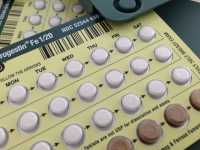
Response: We know for a long time that cyclic variations in womens' estrogen and progesterone levels affect their emotion recognition abilities by modulating neural activity in brain regions implicated in emotion processing. We also know that oral contraceptives suppress cyclic variations in womens' estrogen and progesterone levels. We, thus, assumed that oral contraceptives would affect womens' emotion recognition abilities due to the aforementioned suppression of cylic variations in estrogen and progesterone levels that modulate neural activity in brain regions during emotion processing. To test this assumption, at least with respect to the behavioral effects of oral contraceptive use on emotion recognition, we performed the current study.
We recruited regular cylcling women with and without oral contraceptive use for our study. None of the women were in psychotherapeutical or psychopharmacological treatment at the time of the study. During the study, women performed a emotion recognition task that required the recognition of complex emotional expressions like, for example, pride or contempt.
Dr. Lischke[/caption]
Dr. Alexander Lischke, Dipl.-Psych.
Universität Greifswald
Institut für Psychologie
Physiologische und Klinische Psychologie/Psychotherapie
University of Greifswald, Germany
MedicalResearch.com: What is the background for this study?
Response: We know for a long time that cyclic variations in womens' estrogen and progesterone levels affect their emotion recognition abilities by modulating neural activity in brain regions implicated in emotion processing. We also know that oral contraceptives suppress cyclic variations in womens' estrogen and progesterone levels. We, thus, assumed that oral contraceptives would affect womens' emotion recognition abilities due to the aforementioned suppression of cylic variations in estrogen and progesterone levels that modulate neural activity in brain regions during emotion processing. To test this assumption, at least with respect to the behavioral effects of oral contraceptive use on emotion recognition, we performed the current study.
We recruited regular cylcling women with and without oral contraceptive use for our study. None of the women were in psychotherapeutical or psychopharmacological treatment at the time of the study. During the study, women performed a emotion recognition task that required the recognition of complex emotional expressions like, for example, pride or contempt.