Medicalresearch.com Interview with:
Dr. Pedro Recabal, MD and
Memorial Sloan Kettering Cancer Center Department of Surgery,
Urology Service New York, NY
Urology service, Fundacion Arturo Lopez Perez, Santiago, Chile
Dr. Vincent P. Laudone,
Memorial Sloan Kettering Cancer Center Department of Surgery
Urology Service New York, NY
Medicalresearch.com What is the background for this study?
Response: One of the most concerning adverse events that may arise following surgery for prostate cancer (radical prostatectomy) is postoperative erectile dysfunction. The loss of erectile function after surgery is most frequently caused by intraoperative injury to the neurovascular bundles, tiny packages of blood vessels and nerves that conduct the impulses responsible for erection. It is known that if both bundles are removed, patients seldom recover erectile function. Accordingly, neurovascular bundle preservation during Radical prostatectomy has proven benefits in terms of erectile function recovery.
However, as these bundles are intimately associated with the posterolateral aspects of the prostate, they must be carefully separated from the surface of the prostate without cutting them, applying excessive traction, or using cautery, all of which could produce irreversible damage and the consequent loss of function. During this dissection, the surgeon risks cutting into the prostatic capsule , which could result in leaving tumor behind. In some cases, the tumor extends beyond the prostate into the neurovascular bundles, and an attempt to preserve these structures could also result in incomplete tumor removal, defeating the purpose of radical prostatectomy.
Therefore, many urologists treating patients with “aggressive” tumors (such as the patients in our cohort) would try to avoid leaving cancer behind by removing not only the prostate but also the tissue around it, including the neurovascular bundles. In other words, if you had to chose between removing all the cancer but loosing erectile function, or preserving erectile function but risking an incomplete cancer removal, most patients and surgeons naturally lean towards the first option. Also, in many centers, patients with aggressive prostate cancers are managed with combined treatments (multimodal therapy), by adding hormonal therapy and/or radiotherapy, which could also result in erectile dysfunction. As such, many surgeons believe that there is no rationale for attempting to preserve the neurovascular bundles in these “high-risk” patients because most will end up with erectile dysfunction .
However, with the advent of MRI (and integrating other clinical information such as location of the positive biopsies, and intraoperative cues), surgeons can now have a better idea of where the cancer is located, which may aid in surgical planning. For instance, if a tumor is located in the anterior prostate, removing the neurovascular bundles (located on the posterolateral aspects) would provide no oncologic benefit, regardless of the aggressiveness of the tumor. Similarly, if the tumor compromises only the left side, removing the right neurovascular bundle is unlikely to help the patient, but can instead result in harm.
Moreover, neurovascular bundle preservation is not an all-or-none procedure; on each side, these bundles can be completely preserved (meaning dissecting exactly along the border between the prostate and the bundle); partially preserved (meaning preserving some of the nerves that are further away from the prostate, and removing the ones that are closer to the prostate); or completely removed along with the prostate (This has been graded in a scale from 1 to 4, where 1 represents complete preservation, and 4 represents complete removal of the neurovascular bundle, with 2 and 3 being partial preservation. This grade is recorded by the surgeon for each side, at the end of the procedure.) As such, sometimes it’s possible to preserve part of the bundle, even if there is a tumor on the same side
We designed a retrospective study to look at how high volume surgeons at MSKCC performed radical prostatectomy in high risk patients (how frequently and to what extent where the neurovascular bundles preserved), and what were the outcomes in terms of positive surgical margins (a surrogate for “leaving tumor behind”); use of additional oncologic treatments such as hormone therapy or radiotherapy, and finally, erectile function recovery in patients with functional erections before the operation. The patients in our cohort had at least one NCCN-defined high risk criteria (Gleason score ≥ 8; PSA ≥ 20 ng/ml; Clinical stage ≥ T3).

 Bendix Carstensen[/caption]
Bendix Carstensen
Department of Clinical Epidemiology Steno Diabetes Center
Gentofte
Medical Research: What is the background for this study? What are the main findings?
Response: It has long been known that all diabetes patients have elevated risk of cancer (10-15%). Patients on insulin slightly more (20-25%). Type 1 patients is only a small fraction (10%) of all diabetes patients, but they ALL take insulin. If insulin has a role in cancer occurrence it would be expected to be particularly pronounced in type 1 patients, and increasing by duration.
But it is not, the risk of cancer is 15% elevated (if we disregard prostate, breast and other cancers only occurring in one of the sexes), and there is no increase in the excess risk by duration of insulin use. Breast cancer risk is 10% lower and prostate cancer risk some 40% lower. Overall there is very little increased cancer risk - 1% for men 7% for women.
Bendix Carstensen[/caption]
Bendix Carstensen
Department of Clinical Epidemiology Steno Diabetes Center
Gentofte
Medical Research: What is the background for this study? What are the main findings?
Response: It has long been known that all diabetes patients have elevated risk of cancer (10-15%). Patients on insulin slightly more (20-25%). Type 1 patients is only a small fraction (10%) of all diabetes patients, but they ALL take insulin. If insulin has a role in cancer occurrence it would be expected to be particularly pronounced in type 1 patients, and increasing by duration.
But it is not, the risk of cancer is 15% elevated (if we disregard prostate, breast and other cancers only occurring in one of the sexes), and there is no increase in the excess risk by duration of insulin use. Breast cancer risk is 10% lower and prostate cancer risk some 40% lower. Overall there is very little increased cancer risk - 1% for men 7% for women.













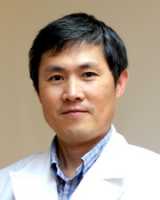






 Dr. Grace Wang[/caption]
MedicalResearch.com Interview with:
Dr. Grace Wang MD FACS
Assistant Professor of Surgery
Division of Vascular and Endovascular Surgery
Hospital of the University of Pennsylvania
Medical Research: What is the background for this study?
Dr. Wang: PAD is a major source of morbidity and mortality resulting in functional impairment, limb loss, as well as death. Despite epidemiologic studies which have contributed to our understanding of PAD prevalence and its association with traditional atherosclerotic risk factors, there have been conflicting studies published on the incidence of PAD and differences in treatment outcomes in women versus men. Patients with chronic kidney disease (CKD) are at particularly high risk for
Dr. Grace Wang[/caption]
MedicalResearch.com Interview with:
Dr. Grace Wang MD FACS
Assistant Professor of Surgery
Division of Vascular and Endovascular Surgery
Hospital of the University of Pennsylvania
Medical Research: What is the background for this study?
Dr. Wang: PAD is a major source of morbidity and mortality resulting in functional impairment, limb loss, as well as death. Despite epidemiologic studies which have contributed to our understanding of PAD prevalence and its association with traditional atherosclerotic risk factors, there have been conflicting studies published on the incidence of PAD and differences in treatment outcomes in women versus men. Patients with chronic kidney disease (CKD) are at particularly high risk for