27 Aug What Research Says About Telemedicine and Access to Specialist Healthcare
Mental Health Notice: If you or someone you know is experiencing a mental health crisis, call or text 988 (Suicide & Crisis Lifeline, 24/7), text HOME to 741741 (Crisis Text Line), or call 911 in an emergency.
Access to specialist care remains one of the most persistent inequalities in global healthcare. In many low- and middle-income countries, patients travel long distances, wait weeks for consultations, and abandon care entirely because a qualified specialist is simply not available. Even in high-income settings, rural populations, older adults, and patients with limited mobility face similar structural barriers.
Telemedicine has become one of the most researched responses to this problem. Over the past decade, the evidence has grown quickly. A PMC review of 191 systematic reviews highlighted three key benefits: better patient outcomes, lower costs, and higher patient satisfaction across a wide range of medical specialties. This article examines what the current evidence tells us about telemedicine's role in specialist access, where it has shown the strongest impact, and where research still points to important gaps.
According to the World Health Organization, telehealth has the potential to improve access to quality health services, particularly for underserved and rural populations, and WHO member states have increasingly incorporated telehealth into national digital health strategies as a means of addressing specialist shortages.
[caption id="attachment_75764" align="aligncenter" width="500"] Pexels.com[/caption]





















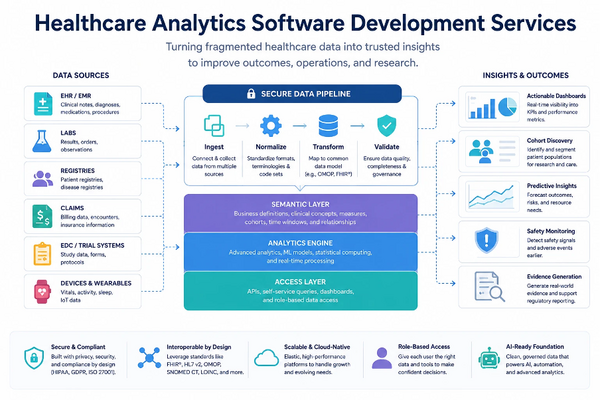
 Illustration: healthcare analytics connects data infrastructure with practical decision support.[/caption]