MedicalResearch.com Interview with:
Mary J Hamel, M.D.
MedicalResearch.com Interview with:
Mary J Hamel, M.D.
Chief, Strategic and Applied Sciences Unit,
And Deputy Branch Chief for Science, CDC Malaria Branch
US Centers for Disease Control and Prevention
1600 Clifton Rd, NE, MS A06
Atlanta GA 30333
Dr. Hamel was principal investigator at the Siaya site in western Kenya.
Medical Research: What is the background for this study? What are the main findings?
Dr. Hamel: Major progress has been made in malaria control during the past decade with the scale up of proven interventions including insecticide treated nets (ITNs), indoor residual spraying, effective diagnosis and treatment for malaria, and intermittent preventive treatment of malaria in pregnancy. Nonetheless, malaria remains a major cause of morbidity and mortality, and a leading cause of pediatric death worldwide. An estimated 198 million cases of malaria and 580,000 deaths occurred in 2013 – most of these in African children.
Now we face additional challenges in malaria control – the emergence of insecticide and drug resistance threatens some of our most effective interventions. New tools are needed to reach the goal of malaria elimination and eventual eradication. Vaccines are some of our most cost-effective interventions, and an effective malaria vaccine would be an important addition to our current malaria control tools.
This week, the RTS,S Clinical Trials Partnership published the final vaccine efficacy and safety results from the RTS,S/AS01 malaria vaccine phase 3 trial in
the Lancet (Efficacy and safety of RTS,S/AS01 malaria vaccine with or without a booster dose in infants and children in Africa: final results of a phase 3, individually randomised, controlled trial, http://www.thelancet.com/journals/lancet/article/PIIS0140-6736(15)60721-8/abstract). This large randomized controlled double-blind phase 3 clinical trial was conducted in 11 sites in 7 African countries across a range of malaria transmission levels. In all, 15,460 children and young infants were enrolled in two age-categories, those first vaccinated at 5-17 months of age (referred to as children), and those first vaccinated at 6-12 weeks of age (referred to as young infants) who received the RTS,S/AS01 vaccine along with their routine childhood immunizations. Participants were randomized into 3 groups – the first group received three doses of the RTS,S/AS01 vaccine followed 18 months later by a booster dose; the second group received three doses of the RTS,S/AS01 vaccine without a booster; and the third group received a comparator vaccine. All participants received an ITN. Children were followed for an average of 48 months and infants for an average of 38 months.
We found that vaccine efficacy was modest. Vaccine efficacy against clinical malaria in children was 36% with a booster and 28% without, and vaccine efficacy against severe malaria was 32% with a booster and non-significant without. Efficacy results in young infants were lower than those in children– vaccine efficacy against clinical malaria was 36% with a booster and 28% without, and vaccine efficacy against severe malaria was non-significant.
However, impact, defined as the number of cases averted per 1000 participants vaccinated, was substantial in both age-categories, and highest where malaria burden was greatest. In children who received the booster, during 4 years follow-up, 1700 cases of clinical malaria were averted per 1000 children vaccinated. In young infants, during 3 years follow-up, nearly 1000 cases were averted per 1000 young infants vaccinated.
The safety findings were comparable overall in the different study arms, but two safety findings are notable. Meningitis occurred more frequently among children (but not young infants) who received RTS,S/AS01 than among those who received the comparator vaccines. There was no relationship between when the vaccine was administered and when meningitis occurred, most cases occurred in only two study sites, and the finding may be due to chance. If RTS,S/AS01 is licensed, post-licensing studies will be done to establish the significance of this finding. Both children and young infants experienced more episodes of fever and associated febrile convulsions during the 7 days following vaccination; convulsions occurred in 2.2 - 2.5/1000 vaccine doses.

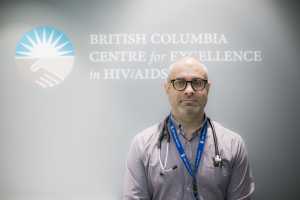 Dr. Keith Ahamad, a clinician scientist at the BC Centre for Excellence in HIV/AIDS and a Family Doctor trained and certified in Addiction Medicine.
He is Division Lead for Addiction Medicine in the department of Family and Community Medicine at Providence Health Care, and is also an addiction physician at the St. Paul’s Addiction Medicine Consult Service, the Immunodeficiency Clinic and Vancouver Detox. He is also Lead Study Clinician for CHOICES, a US National Institutes of Drug Abuse (NIDA) funded clinical trial looking at an opioid receptor blocker (Vivitrol) to treat opioid or alcohol addiction in HIV positive patients.
MedicalResearch: What is the background for this study?
Dr. Ahamad: Previous methadone research has mostly been done in restrictive settings, such as the USA, where methadone can only be dispensed through restrictive methadone programs and cannot be prescribed through primary care physician’s offices. Since a systematic review in 2012, randomised controlled trials have compared methadone treatment provided at restrictive specialty clinics with primary care clinics, which have shown the benefits of primary care models of methadone delivery on heroin treatment outcomes, but not on HIV incidence.
MedicalResearch: What are the main findings?
Dr. Ahamad: After adjusting for factors commonly associated with HIV, methadone remained independently associated in protecting against HIV in this group of injection drug users. Those study participants who were not prescribed methadone at baseline were almost four times more likely to contract HIV during study follow up.
MedicalResearch: What should clinicians and patients take away from your report?
Dr. Ahamad: Methadone is an effective medication in treating opioid addiction. Through international randomized control trials, we already know that when prescribed though primary care offices, access to this life-saving medication is increased, effective, and increases patient satisfaction. Now, through our study, we have evidence that when delivered in this manner, it also decreases the spread of HIV.
Dr. Keith Ahamad, a clinician scientist at the BC Centre for Excellence in HIV/AIDS and a Family Doctor trained and certified in Addiction Medicine.
He is Division Lead for Addiction Medicine in the department of Family and Community Medicine at Providence Health Care, and is also an addiction physician at the St. Paul’s Addiction Medicine Consult Service, the Immunodeficiency Clinic and Vancouver Detox. He is also Lead Study Clinician for CHOICES, a US National Institutes of Drug Abuse (NIDA) funded clinical trial looking at an opioid receptor blocker (Vivitrol) to treat opioid or alcohol addiction in HIV positive patients.
MedicalResearch: What is the background for this study?
Dr. Ahamad: Previous methadone research has mostly been done in restrictive settings, such as the USA, where methadone can only be dispensed through restrictive methadone programs and cannot be prescribed through primary care physician’s offices. Since a systematic review in 2012, randomised controlled trials have compared methadone treatment provided at restrictive specialty clinics with primary care clinics, which have shown the benefits of primary care models of methadone delivery on heroin treatment outcomes, but not on HIV incidence.
MedicalResearch: What are the main findings?
Dr. Ahamad: After adjusting for factors commonly associated with HIV, methadone remained independently associated in protecting against HIV in this group of injection drug users. Those study participants who were not prescribed methadone at baseline were almost four times more likely to contract HIV during study follow up.
MedicalResearch: What should clinicians and patients take away from your report?
Dr. Ahamad: Methadone is an effective medication in treating opioid addiction. Through international randomized control trials, we already know that when prescribed though primary care offices, access to this life-saving medication is increased, effective, and increases patient satisfaction. Now, through our study, we have evidence that when delivered in this manner, it also decreases the spread of HIV.