MedicalResearch.com Interview with:
[caption id="attachment_56244" align="alignleft" width="197"]

Dr. Schellekens[/caption]
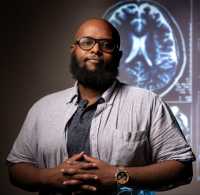
Harrië
t Schellekens MSc PhD
Lecturer
Department of Anatomy & Neuroscience,
and APC Microbiome Ireland SFI Research Centre
University College Cork, Cork, IRELAND.
MedicalResearch.com: What is the background for this study?
Response: There has been an increased emphasis on gut microbiota-targeted therapeutics for the amelioration of obesity. Recent studies have identified several probiotic strains with different anti-obesity effects, including members of the genus
Bifidobacterium, but the exact mechanisms of action are still lacking.
Moreover, positive effects in animal studies often do not translate in human studies.
The APC Microbiome Ireland has set up a “culture-to-product” platform, a well catalogued and quality controlled collection of bacteria with potential biofunctional activities. In my laboratory, I have developed a state-of the art “bug-to-drug” screening approach, using high-throughput biochemical and cellular assays, to fully characterize bacteria and identify the most promising bacterial strains with specific desirable probiotic and functional properties. This careful
in vitro screening of APC’s strains (or customer strains) is designed to identify the most potent candidates that can impact on host physiology and overall gut-brain axis function, e.g. by producing microbial metabolites or neuroactives, altering gut-barrier function, reducing inflammation, or modifying G-protein coupled receptors. This comprehensive screening approach facilitates the precise selection and prediction of the best strains that are likely to yield a specific positive health effects in subsequent animal and human studies, based on their
in vitro probiotic and functional properties.







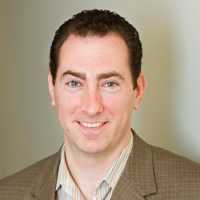
 Dr. Etkin[/caption]
Amit Etkin, MD, PhD
Department of Psychiatry and Behavioral Sciences
Wu Tsai Neurosciences Institute, Stanford Universitu
Stanford, CA
MedicalResearch.com: What is the mission of Cohen Veterans Bioscience - CVB?
Dr. Etkin[/caption]
Amit Etkin, MD, PhD
Department of Psychiatry and Behavioral Sciences
Wu Tsai Neurosciences Institute, Stanford Universitu
Stanford, CA
MedicalResearch.com: What is the mission of Cohen Veterans Bioscience - CVB?
 Response: Cohen Veterans Bioscience (CVB) is a non-profit 501(c)(3) research biotech dedicated to fast-tracking the development of diagnostic tests and personalized therapeutics for the millions of Veterans and civilians who suffer the devastating effects of trauma-related and other brain disorders.
MedicalResearch.com: How can patients with PTSD or MDD benefit from this information?
Response: With the discovery of this new brain imaging biomarker, patients who suffer from PTSD or MDD may be guided towards the most effective treatment without waiting months and months to find a treatment that may work for them.
MedicalResearch.com: What is the background for this study?
Response: This study, which was supported with a grant from Cohen Veterans Bioscience, grants from the National Institute of Mental Health (NIMH and other supporters, derives from our work over the past few years which has pointed to the critical importance of understanding how patients with a variety of psychiatric disorders differ biologically. The shortcomings of our current diagnostic system have become very clear over the past 1-2 decades, but the availability of tools for transcending these limitations on the back of objective biological tests has not kept pace with the need for those tools.
In prior work, we have used a variety of methods, including different types of brain imaging, to identify brain signals that underpin key biological differences within and across traditional psychiatric diagnoses. We have also developed specialized AI tools for decoding complex patterns of brain activity in order to understand and quantify biological heterogeneity in individual patients. These developments have then, in turn, converged with the completion of a number of large brain imaging-coupled clinical trials, which have provided a scale of these types of data not previously available in the field.
Response: Cohen Veterans Bioscience (CVB) is a non-profit 501(c)(3) research biotech dedicated to fast-tracking the development of diagnostic tests and personalized therapeutics for the millions of Veterans and civilians who suffer the devastating effects of trauma-related and other brain disorders.
MedicalResearch.com: How can patients with PTSD or MDD benefit from this information?
Response: With the discovery of this new brain imaging biomarker, patients who suffer from PTSD or MDD may be guided towards the most effective treatment without waiting months and months to find a treatment that may work for them.
MedicalResearch.com: What is the background for this study?
Response: This study, which was supported with a grant from Cohen Veterans Bioscience, grants from the National Institute of Mental Health (NIMH and other supporters, derives from our work over the past few years which has pointed to the critical importance of understanding how patients with a variety of psychiatric disorders differ biologically. The shortcomings of our current diagnostic system have become very clear over the past 1-2 decades, but the availability of tools for transcending these limitations on the back of objective biological tests has not kept pace with the need for those tools.
In prior work, we have used a variety of methods, including different types of brain imaging, to identify brain signals that underpin key biological differences within and across traditional psychiatric diagnoses. We have also developed specialized AI tools for decoding complex patterns of brain activity in order to understand and quantify biological heterogeneity in individual patients. These developments have then, in turn, converged with the completion of a number of large brain imaging-coupled clinical trials, which have provided a scale of these types of data not previously available in the field.

 Dr. Gerstung[/caption]
Moritz Gerstung PhD
Group Leader: Computational cancer biology
EMBL-European Bioinformatics Institute
MedicalResearch.com: What is the background for this study?
Response: We have learned a lot in the last ten years about the molecular nature about various cancers thanks to the resources created by TCGA, ICGC and many other initiatives. Similarly, digital pathology has progressed hugely due to new AI algorithms. Yet it hasn’t been explored deeply how a cancer’s genetic makeup and its histopathological appearance are related. Here computers can be very helpful as they can process large amounts of digital microscopy slide images and test whether there are any recurrent histopathological patterns in relation to hundreds or thousands of genetic and other molecular abnormalities.
Dr. Gerstung[/caption]
Moritz Gerstung PhD
Group Leader: Computational cancer biology
EMBL-European Bioinformatics Institute
MedicalResearch.com: What is the background for this study?
Response: We have learned a lot in the last ten years about the molecular nature about various cancers thanks to the resources created by TCGA, ICGC and many other initiatives. Similarly, digital pathology has progressed hugely due to new AI algorithms. Yet it hasn’t been explored deeply how a cancer’s genetic makeup and its histopathological appearance are related. Here computers can be very helpful as they can process large amounts of digital microscopy slide images and test whether there are any recurrent histopathological patterns in relation to hundreds or thousands of genetic and other molecular abnormalities. 

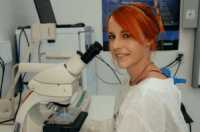 Dr. Brooks[/caption]
Dr. Kelly Brooks PhD
Research Officer
QIMR Berghofer Medical Research Institute
MedicalResearch.com: What is the background for this study?
[caption id="attachment_54258" align="alignleft" width="200"]
Dr. Brooks[/caption]
Dr. Kelly Brooks PhD
Research Officer
QIMR Berghofer Medical Research Institute
MedicalResearch.com: What is the background for this study?
[caption id="attachment_54258" align="alignleft" width="200"]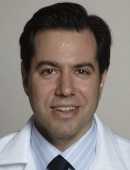
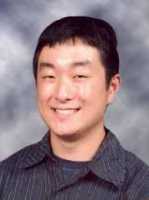



 Dr. Jeffrey Smith[/caption]
Jeffrey R. Smith, MD PhD
Department of Medicine, Division of Genetic Medicine
Vanderbilt-Ingram Cancer Center, and Vanderbilt Genetics Institute
Vanderbilt University Medical Center
Medical Research Service
Tennessee Valley Healthcare System, Veterans Administration
Nashville, TN
MedicalResearch.com: What is the background for this study?
Response: Roughly 20% of men with prostate cancer have a family history of the disease, and 5% meet criteria for hereditary prostate cancer. Although prostate cancer has the greatest heritability of all common cancers (twice that of breast cancer), extensive heterogeneity of its inherited causes has presented a considerable obstacle for traditional pedigree-based genetic investigative approaches. Inherited causes across, as well as within families are diverse.
This study introduced a new familial case-control study design that uses extent of family history as a proxy for genetic burden. It compared a large number of men with prostate cancer, each from a separate family with a strong history of the disease, to screened men with no personal or family history. The study comprehensively deconstructs how the 8q24 chromosomal region impacts risk of hereditary prostate cancer, introducing several new analytical approaches. The locus had been known to alter risk of prostate, breast, colon, ovarian, and numerous additional cancers.
Dr. Jeffrey Smith[/caption]
Jeffrey R. Smith, MD PhD
Department of Medicine, Division of Genetic Medicine
Vanderbilt-Ingram Cancer Center, and Vanderbilt Genetics Institute
Vanderbilt University Medical Center
Medical Research Service
Tennessee Valley Healthcare System, Veterans Administration
Nashville, TN
MedicalResearch.com: What is the background for this study?
Response: Roughly 20% of men with prostate cancer have a family history of the disease, and 5% meet criteria for hereditary prostate cancer. Although prostate cancer has the greatest heritability of all common cancers (twice that of breast cancer), extensive heterogeneity of its inherited causes has presented a considerable obstacle for traditional pedigree-based genetic investigative approaches. Inherited causes across, as well as within families are diverse.
This study introduced a new familial case-control study design that uses extent of family history as a proxy for genetic burden. It compared a large number of men with prostate cancer, each from a separate family with a strong history of the disease, to screened men with no personal or family history. The study comprehensively deconstructs how the 8q24 chromosomal region impacts risk of hereditary prostate cancer, introducing several new analytical approaches. The locus had been known to alter risk of prostate, breast, colon, ovarian, and numerous additional cancers.