MedicalResearch.com Interview with:
[caption id="attachment_45750" align="alignleft" width="189"]

Nicholas Reed AuD[/caption]
Nicholas S. Reed, AuD
Assistant Professor | Department of Otolaryngology-Head/Neck Surgery
Core Faculty | Cochlear Center for Hearing and Public Health
Johns Hopkins University School of Medicine
Johns Hopkins University Bloomberg School of Public Health
MedicalResearch.com: What is the background for this study?
Response: This study was a true team effort. It was funded by AARP and AARP Services, INC and the research was a collaboration of representatives from Johns Hopkins University, OptumLabs, University of California – San Francisco, and AARP Services, INC. Given all of the resent research on downstream effects of hearing loss on important health outcomes such as cognitive decline, falls, and dementia, the aim was to explore how persons with hearing loss interacted with the healthcare system in terms of cost and utilization.
MedicalResearch.com: What are the main findings?
Response: Over a 10 year period, untreated hearing loss (hearing aid users were excluded from this study as they are difficult to capture in the claims database) was associated with higher healthcare spending and utilization. Specifically, over 10 years, persons with untreated hearing loss spent 46.5% more, on average, on healthcare (to the tune of approximately $22000 more) than those without evidence of hearing loss. Furthermore, persons with untreated hearing loss had 44% and 17% higher risk for 30-day readmission and emergency department visit, respectively.
Similar relationships were seen across other measures where persons with untreated hearing loss were more likely to be hospitalized and spent longer in the hospital compared to those without evidence of hearing loss.



 Dr. McLoughlin Brady[/caption]
Tammy M. Brady, MD, PhD (she/her/hers)
Vice Chair for Clinical Research, Dept of Pediatrics
Associate Director, Welch Center for Prevention, Epidemiology, and Clinical Research
Associate Professor of Pediatrics, Division of Pediatric Nephrology
Medical Director, Pediatric Hypertension Program
Johns Hopkins University
Baltimore, MD 21287
MedicalResearch.com: What is the background for this study? What are the main findings?
Response: Accurate BP measurement is key to identification and treatment of hypertension which serves ultimately to prevent cardiovascular disease. Our study describes substantial measurement error that can occur in a common office and home BP measurement scenario: use of a regular cuff size for all individuals regardless of arm size. Many office triage measurements occur without individualized cuff selection and most home BP devices come with one cuff size – and our study shows that using a regular cuff size for people who have larger arms – those who require a large adult cuff or an extra-large adult cuff – can lead to blood pressure readings that are almost 5 and 20 mmHg greater than their actual BP, respectively. Those require a small adult cuff can have BP readings that are almost 4 mmHg lower than their actual BP.
Dr. McLoughlin Brady[/caption]
Tammy M. Brady, MD, PhD (she/her/hers)
Vice Chair for Clinical Research, Dept of Pediatrics
Associate Director, Welch Center for Prevention, Epidemiology, and Clinical Research
Associate Professor of Pediatrics, Division of Pediatric Nephrology
Medical Director, Pediatric Hypertension Program
Johns Hopkins University
Baltimore, MD 21287
MedicalResearch.com: What is the background for this study? What are the main findings?
Response: Accurate BP measurement is key to identification and treatment of hypertension which serves ultimately to prevent cardiovascular disease. Our study describes substantial measurement error that can occur in a common office and home BP measurement scenario: use of a regular cuff size for all individuals regardless of arm size. Many office triage measurements occur without individualized cuff selection and most home BP devices come with one cuff size – and our study shows that using a regular cuff size for people who have larger arms – those who require a large adult cuff or an extra-large adult cuff – can lead to blood pressure readings that are almost 5 and 20 mmHg greater than their actual BP, respectively. Those require a small adult cuff can have BP readings that are almost 4 mmHg lower than their actual BP.

 Dr. Cheng-Ying Ho[/caption]
Cheng-Ying Ho, MD, PhD
Associate Professor
Department of Pathology
Johns Hopkins University School of Medicine
MedicalResearch.com: What is the background for this study?
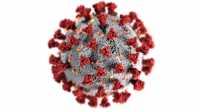
Response: Smell loss is one of the most common symptoms of COVID-19 infection. The mechanism of COVID-19-related smell loss is unclear. Previous studies mainly focused on the effect of the viral infection on the lining of the nasal cavity. We went a step beyond to examine the olfactory bulb, a region that transmits smell-related signals to the brain.
Dr. Cheng-Ying Ho[/caption]
Cheng-Ying Ho, MD, PhD
Associate Professor
Department of Pathology
Johns Hopkins University School of Medicine
MedicalResearch.com: What is the background for this study?
Response: Smell loss is one of the most common symptoms of COVID-19 infection. The mechanism of COVID-19-related smell loss is unclear. Previous studies mainly focused on the effect of the viral infection on the lining of the nasal cavity. We went a step beyond to examine the olfactory bulb, a region that transmits smell-related signals to the brain.
 Dr. Blankson[/caption]
Joel N. Blankson, MD, PhD
Department of Infectious Diseases
Associate Professor
Cellular and Molecular Medicine Program
Johns Hopkins
MedicalResearch.com: What is the background for this study? Which vaccines did you evaluate?
Response: Prior studies from several groups including our own have found T cell cross-recognition of peptides from SARS-CoV-2 and the common cold coronaviruses.
We asked whether as a result of this cross-reactivity, immunization with the SARS-CoV-2 vaccine would also enhance T cell responses to the common cold coronaviruses.
Prior studies also suggested that antibodies elicited from the mRNA vaccines had a reduced ability to neutralize the emerging variants of concern.
Most of the study participants had received the Pfizer vaccine, but a few had received the Moderna vaccine.
Dr. Blankson[/caption]
Joel N. Blankson, MD, PhD
Department of Infectious Diseases
Associate Professor
Cellular and Molecular Medicine Program
Johns Hopkins
MedicalResearch.com: What is the background for this study? Which vaccines did you evaluate?
Response: Prior studies from several groups including our own have found T cell cross-recognition of peptides from SARS-CoV-2 and the common cold coronaviruses.
We asked whether as a result of this cross-reactivity, immunization with the SARS-CoV-2 vaccine would also enhance T cell responses to the common cold coronaviruses.
Prior studies also suggested that antibodies elicited from the mRNA vaccines had a reduced ability to neutralize the emerging variants of concern.
Most of the study participants had received the Pfizer vaccine, but a few had received the Moderna vaccine. 


 Dr. Vandrey[/caption]
Ryan Vandrey, Ph.D.
Associate Professor
Behavioral Pharmacology Research Unit
Johns Hopkins University School of Medicine
Baltimore, MD 21224
MedicalResearch.com: What is the background for this study?
Response: The background for this study is that 33 states in the U.S. have legalized medicinal cannabis use and millions of people are using cannabis for therapeutic purposes, but we have very little data on the broad health impacts of medicinal cannabis use.
We surveyed medicinal cannabis users and non-using controls who had a variety of health problems and found that the cannabis users reported better health, quality of life, and less healthcare utilization compared with controls. Because we worried about group characteristics accounting for the differences observed, we then did an analysis of people who switched groups over time (e.g. non-users who later initiated cannabis use or cannabis users who later quit) and found the same differences emerged in the same individuals over time. Important to note here is that not all individuals who used cannabis benefited from it and that most participants were using high CBD varieties of cannabis in conjunction with more traditional treatments.
Dr. Vandrey[/caption]
Ryan Vandrey, Ph.D.
Associate Professor
Behavioral Pharmacology Research Unit
Johns Hopkins University School of Medicine
Baltimore, MD 21224
MedicalResearch.com: What is the background for this study?
Response: The background for this study is that 33 states in the U.S. have legalized medicinal cannabis use and millions of people are using cannabis for therapeutic purposes, but we have very little data on the broad health impacts of medicinal cannabis use.
We surveyed medicinal cannabis users and non-using controls who had a variety of health problems and found that the cannabis users reported better health, quality of life, and less healthcare utilization compared with controls. Because we worried about group characteristics accounting for the differences observed, we then did an analysis of people who switched groups over time (e.g. non-users who later initiated cannabis use or cannabis users who later quit) and found the same differences emerged in the same individuals over time. Important to note here is that not all individuals who used cannabis benefited from it and that most participants were using high CBD varieties of cannabis in conjunction with more traditional treatments.




 Dr. Rebholz[/caption]
Casey M. Rebholz, PhD, MS, MNSP, MPH, FAHA
Assistant Professor, Department of Epidemiology
Johns Hopkins Bloomberg School of Public Health
Core Faculty, Welch Center for Prevention, Epidemiology, and Clinical Research
Baltimore, MD 21287
MedicalResearch.com: What is the background for this study? What are the main findings?
Response: Individual beverages have been previously shown to influence risk of a wide range of cardiometabolic diseases. Less is known about beverage consumption and kidney disease risk.
In this study population, we found that one such beverage pattern consisted of soda, sugar-sweetened beverages, and water, and that higher adherence to the sugar-sweetened beverage pattern was associated with greater odds of developing incident kidney disease, even after accounting for demographic characteristics and established risk factors.
Dr. Rebholz[/caption]
Casey M. Rebholz, PhD, MS, MNSP, MPH, FAHA
Assistant Professor, Department of Epidemiology
Johns Hopkins Bloomberg School of Public Health
Core Faculty, Welch Center for Prevention, Epidemiology, and Clinical Research
Baltimore, MD 21287
MedicalResearch.com: What is the background for this study? What are the main findings?
Response: Individual beverages have been previously shown to influence risk of a wide range of cardiometabolic diseases. Less is known about beverage consumption and kidney disease risk.
In this study population, we found that one such beverage pattern consisted of soda, sugar-sweetened beverages, and water, and that higher adherence to the sugar-sweetened beverage pattern was associated with greater odds of developing incident kidney disease, even after accounting for demographic characteristics and established risk factors. 

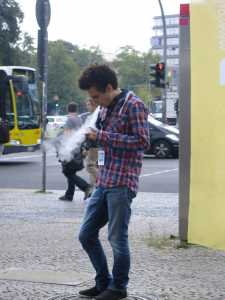
 Faiz Gani, PhD
Postdoctoral research fellow
Department of Surgery
Johns Hopkins University School of Medicine
MedicalResearch.com: What is the background for this study? What are the main findings?
Response: Firearm related injuries are a leading cause of injury and death in the United States, yet, due to combination of factors, limited data exist that evaluate these injuries, particularly among younger patients (patients younger than 18 years).
The objective of this study was to describe emergency department utilization for firearm related injuries and to quantitate the financial burden associated with these injuries.
In our study of over 75,000 emergency department visits, we observed that each year, over 8,300 children and adolescents present to the emergency department for the treatment / management of a gunshot injury. Within this sub-population of patients, we observed that these injuries are most frequent among patients aged 15-17 years and while these injuries decreased over time initially, were observed to increase again towards the end of the time period studied.
In addition to describing the clinical burden of these injuries, we also sought to describe the financial burden associated with these injuries. For patients discharged from the emergency department, the average (median) charge associated with their care was $2,445, while for patients admitted as inpatients for further care, the average (median) charge was $44,966.
Collectively these injuries resulted in $2.5 billion in emergency department and hospital charges over the time period studied. This translates to an annual financial burden of approximately $270 million.
Faiz Gani, PhD
Postdoctoral research fellow
Department of Surgery
Johns Hopkins University School of Medicine
MedicalResearch.com: What is the background for this study? What are the main findings?
Response: Firearm related injuries are a leading cause of injury and death in the United States, yet, due to combination of factors, limited data exist that evaluate these injuries, particularly among younger patients (patients younger than 18 years).
The objective of this study was to describe emergency department utilization for firearm related injuries and to quantitate the financial burden associated with these injuries.
In our study of over 75,000 emergency department visits, we observed that each year, over 8,300 children and adolescents present to the emergency department for the treatment / management of a gunshot injury. Within this sub-population of patients, we observed that these injuries are most frequent among patients aged 15-17 years and while these injuries decreased over time initially, were observed to increase again towards the end of the time period studied.
In addition to describing the clinical burden of these injuries, we also sought to describe the financial burden associated with these injuries. For patients discharged from the emergency department, the average (median) charge associated with their care was $2,445, while for patients admitted as inpatients for further care, the average (median) charge was $44,966.
Collectively these injuries resulted in $2.5 billion in emergency department and hospital charges over the time period studied. This translates to an annual financial burden of approximately $270 million.