MedicalResearch.com Interview with:
[caption id="attachment_58626" align="alignleft" width="150"]

Dr. Freedman[/caption]
Stephen Freedman MDCM, MSc
Professor of Pediatrics and Emergency Medicine
Alberta Children’s Hospital Foundation Professor in Child Health and Wellness
Alberta Children’s Hospital Research Institute, Cumming School of Medicine
University of Calgary
MedicalResearch.com: What is the background for this study?
Response: During the early stages of the global 2019 coronavirus disease (COVID-19) pandemic, children represented fewer than 5% of reported cases. However, children now represent a significant percent of all new COVID-19 cases. Similarly, pediatric hospitalizations due to COVID-19, are now at an all-time high.
Although COVID-19 is generally mild in children, severe outcomes and death do occur. The risk of severe outcomes among SARS-CoV-2 infected children is poorly understood with estimates varying considerably between study designs, settings, and regions. Studies generally include large administrative databases (i.e. community based), hospitalized populations, and children admitted to the intensive care unit (ICU).
Identified risk factors for severe COVID-19 in children have included young (i.e. 1-3 months) or old (15-18 years) pediatric age group, male sex, and pre-existing medical condition. However, data from large prospective cohort studies which include children with early or mild stages of disease seeking emergency department (ED) care are lacking.
To address this knowledge gap we sought to quantify the frequency of and risk factors for severe outcomes in SARS-CoV-2 infected children enrolled in a prospective ED-based cohort study.

 Dr. Dryden-Peterson[/caption]
SCOTT DRYDEN-PETERSON, MD
Assistant Professor, Medicine, Harvard Medical School
Research Affiliate, Immunology and Infectious Diseases
Harvard T.H. Chan School Of Public Health
Associate Physician, Medicine, Infectious Diseases
Brigham And Women's Hospital
Research Associate, Botswana Harvard AIDS Institute
MedicalResearch.com: What is the background for this study?
Response: The combination of the antiviral medicine nirmatrelvir and ritonavir (Paxlovid) which boosts antiviral levels was found to reduce the need for hospitalization by nearly 90% among unvaccinated people. Whether nirmatrelvir plus ritonavir can also help vaccinated people was uncertain.
Dr. Dryden-Peterson[/caption]
SCOTT DRYDEN-PETERSON, MD
Assistant Professor, Medicine, Harvard Medical School
Research Affiliate, Immunology and Infectious Diseases
Harvard T.H. Chan School Of Public Health
Associate Physician, Medicine, Infectious Diseases
Brigham And Women's Hospital
Research Associate, Botswana Harvard AIDS Institute
MedicalResearch.com: What is the background for this study?
Response: The combination of the antiviral medicine nirmatrelvir and ritonavir (Paxlovid) which boosts antiviral levels was found to reduce the need for hospitalization by nearly 90% among unvaccinated people. Whether nirmatrelvir plus ritonavir can also help vaccinated people was uncertain.



 Dr. Georgiou[/caption]
Archelle Georgiou, MD
Chief Health Officer for Starkey
Starkey Hearing Technologies
Eden Prairie, Minnesota
MedicalResearch.com: What is the background for this study?
Response: In August 2021, Starkey introduced a vaccination incentive program for employees in the U.S. to provide education on COVID-19 and encourage vaccinations. The program encouraged employees to watch and acknowledge online educational information and report their vaccination status. Those fully vaccinated and who submitted proof of vaccination by September 2021, including employees who were vaccinated prior to the incentive announcement, received $1,000.
Dr. Georgiou[/caption]
Archelle Georgiou, MD
Chief Health Officer for Starkey
Starkey Hearing Technologies
Eden Prairie, Minnesota
MedicalResearch.com: What is the background for this study?
Response: In August 2021, Starkey introduced a vaccination incentive program for employees in the U.S. to provide education on COVID-19 and encourage vaccinations. The program encouraged employees to watch and acknowledge online educational information and report their vaccination status. Those fully vaccinated and who submitted proof of vaccination by September 2021, including employees who were vaccinated prior to the incentive announcement, received $1,000. 
 Dr. Otter[/caption]
Ashley Otter, PhD
Research scientist within Diagnostic Support
for the rare/imported pathogens laboratory (RIPL)
Public Health England (PHE)
MedicalResearch.com: What is the background for this study?
Response: The SIREN study is a national research project covering all four nations of the United Kingdom. Almost 45,000 healthcare workers from across the UK were enrolled midway through 2020, each providing monthly samples for antibody testing and fortnightly PCR testing. Using samples from participants from this project, we were able to take a snapshot of ~6,000 participants at different stages after they received their vaccination to see how different factors affect their antibody responses.
Dr. Otter[/caption]
Ashley Otter, PhD
Research scientist within Diagnostic Support
for the rare/imported pathogens laboratory (RIPL)
Public Health England (PHE)
MedicalResearch.com: What is the background for this study?
Response: The SIREN study is a national research project covering all four nations of the United Kingdom. Almost 45,000 healthcare workers from across the UK were enrolled midway through 2020, each providing monthly samples for antibody testing and fortnightly PCR testing. Using samples from participants from this project, we were able to take a snapshot of ~6,000 participants at different stages after they received their vaccination to see how different factors affect their antibody responses.
 Dr. Cheng-Ying Ho[/caption]
Cheng-Ying Ho, MD, PhD
Associate Professor
Department of Pathology
Johns Hopkins University School of Medicine
MedicalResearch.com: What is the background for this study?
Response: Smell loss is one of the most common symptoms of COVID-19 infection. The mechanism of COVID-19-related smell loss is unclear. Previous studies mainly focused on the effect of the viral infection on the lining of the nasal cavity. We went a step beyond to examine the olfactory bulb, a region that transmits smell-related signals to the brain.
Dr. Cheng-Ying Ho[/caption]
Cheng-Ying Ho, MD, PhD
Associate Professor
Department of Pathology
Johns Hopkins University School of Medicine
MedicalResearch.com: What is the background for this study?
Response: Smell loss is one of the most common symptoms of COVID-19 infection. The mechanism of COVID-19-related smell loss is unclear. Previous studies mainly focused on the effect of the viral infection on the lining of the nasal cavity. We went a step beyond to examine the olfactory bulb, a region that transmits smell-related signals to the brain.

 Dr. Rathmann[/caption]
Prof. Wolfgang Rathmann MSPH
Prof. of Epidemiology
Deputy Director, Institute for Biometrics and Epidemiology,
German Diabetes Center, Heinrich Heine University
Düsseldorf, Germany
MedicalResearch.com: What is the background for this study?
Response: Diabetes is associated with a poor prognosis of COVID-19. There have been raised concerns about a bidirectional relationship between diabetes and COVID-19. Recent studies raised the possibility that SARS-CoV-2 can cause diabetes. However, there is a lack of studies investigating the incidence of diabetes after recovery from COVID-19 in mild cases.
To provide more evidence, we analyzed electronic health records from 1,171 general and internal medicine practices across Germany between March 2020 and January 2021. This included 35,865 patients who were diagnosed with COVID-19. The incidence of diabetes after COVID-19 was compared with patients, who were diagnosed with an acute upper respiratory tract infection (AURI), matched for sex, age, and comorbidities including obesity, high blood pressure, high cholesterol, heart attack, and stroke.
Dr. Rathmann[/caption]
Prof. Wolfgang Rathmann MSPH
Prof. of Epidemiology
Deputy Director, Institute for Biometrics and Epidemiology,
German Diabetes Center, Heinrich Heine University
Düsseldorf, Germany
MedicalResearch.com: What is the background for this study?
Response: Diabetes is associated with a poor prognosis of COVID-19. There have been raised concerns about a bidirectional relationship between diabetes and COVID-19. Recent studies raised the possibility that SARS-CoV-2 can cause diabetes. However, there is a lack of studies investigating the incidence of diabetes after recovery from COVID-19 in mild cases.
To provide more evidence, we analyzed electronic health records from 1,171 general and internal medicine practices across Germany between March 2020 and January 2021. This included 35,865 patients who were diagnosed with COVID-19. The incidence of diabetes after COVID-19 was compared with patients, who were diagnosed with an acute upper respiratory tract infection (AURI), matched for sex, age, and comorbidities including obesity, high blood pressure, high cholesterol, heart attack, and stroke.

 Johonniuss Chemweno
CEO of VIPStarNetwork
MedicalResearch.com: What is the mission of VIP StarNetwork?
Response: VIP StarNetwork’s mission is to expand access to healthcare services and information, especially in underserved and underprivileged communities. Our comprehensive group of health experts, leading physicians, and healthcare executives are working to create a meaningful and safe environment to ensure that patients have equitable and streamlined access to vaccines and other forms of care.
Johonniuss Chemweno
CEO of VIPStarNetwork
MedicalResearch.com: What is the mission of VIP StarNetwork?
Response: VIP StarNetwork’s mission is to expand access to healthcare services and information, especially in underserved and underprivileged communities. Our comprehensive group of health experts, leading physicians, and healthcare executives are working to create a meaningful and safe environment to ensure that patients have equitable and streamlined access to vaccines and other forms of care.
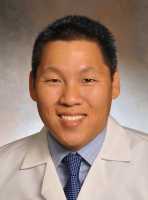 Dr. Kao-Ping Chua[/caption]
Kao-Ping Chua, MD, PhD
Assistant Professor,
Department of Pediatrics
Assistant Professor,
Health Management and Policy
School of Public Health
University of Michigan
MedicalResearch.com: What is the background for this study?
Response: In 2020, most insurers waived the cost of COVID-19 hospitalization for patients. In early 2021, many major insurers started to abandon those waivers. By August 2021, the vast majority of insurers had started billing patients for COVID-19 hospitalizations again.
Dr. Kao-Ping Chua[/caption]
Kao-Ping Chua, MD, PhD
Assistant Professor,
Department of Pediatrics
Assistant Professor,
Health Management and Policy
School of Public Health
University of Michigan
MedicalResearch.com: What is the background for this study?
Response: In 2020, most insurers waived the cost of COVID-19 hospitalization for patients. In early 2021, many major insurers started to abandon those waivers. By August 2021, the vast majority of insurers had started billing patients for COVID-19 hospitalizations again.

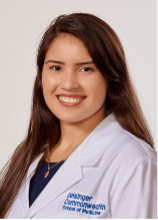






 Dr. Pollitt[/caption]
Krystal Pollitt, PhD, P.Eng.
Assistant Professor of Epidemiology (Environmental Health Sciences)
Assistant Professor in Chemical and Environmental Engineering
Affiliated Faculty, Yale Institute for Global Health
Yale School of Public Health
MedicalResearch.com: What is the background for this study?
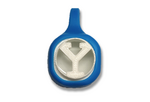
Response: People infected with COVID-19 can release SARS-CoV-2 virus in aerosol and droplets when they exhale. This can be from coughing or sneezing but also when they speaker or just breathe. While the larger droplets can settle to the ground quickly (seconds to minutes), smaller aerosol can remain in the air in longer periods (minutes to hours). SARS-CoV-2 can be transmitted by inhaling aerosol or droplets containing infectious virus. The Fresh Air Clip enables detection of droplet and aerosol containing virus.
Dr. Pollitt[/caption]
Krystal Pollitt, PhD, P.Eng.
Assistant Professor of Epidemiology (Environmental Health Sciences)
Assistant Professor in Chemical and Environmental Engineering
Affiliated Faculty, Yale Institute for Global Health
Yale School of Public Health
MedicalResearch.com: What is the background for this study?
Response: People infected with COVID-19 can release SARS-CoV-2 virus in aerosol and droplets when they exhale. This can be from coughing or sneezing but also when they speaker or just breathe. While the larger droplets can settle to the ground quickly (seconds to minutes), smaller aerosol can remain in the air in longer periods (minutes to hours). SARS-CoV-2 can be transmitted by inhaling aerosol or droplets containing infectious virus. The Fresh Air Clip enables detection of droplet and aerosol containing virus.

 Shuchi Anand, MD MS (she/her)
Assistant Professor in Medicine
Director, Center for Tubulointerstitial Kidney Disease
Stanford University School of Medicine
MedicalResearch.com: What is the background for this study? What are the main findings?
Response: A majority of people on dialysis who completed vaccination as of September 2021 have had a decline in antibody response to levels that would render them vulnerable to infection. Antibody response immediately after vaccination and circulating antibody response is strongly associated with risk for breakthrough after the initial vaccination series.
Shuchi Anand, MD MS (she/her)
Assistant Professor in Medicine
Director, Center for Tubulointerstitial Kidney Disease
Stanford University School of Medicine
MedicalResearch.com: What is the background for this study? What are the main findings?
Response: A majority of people on dialysis who completed vaccination as of September 2021 have had a decline in antibody response to levels that would render them vulnerable to infection. Antibody response immediately after vaccination and circulating antibody response is strongly associated with risk for breakthrough after the initial vaccination series.