MedicalResearch.com Interview with:
[caption id="attachment_29908" align="alignleft" width="200"]
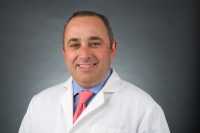
Dr. Dmitri Alden[/caption]
Dr. Dmitri Alden MD, FACS
Surgical Oncologist, specializes in liver cancer, bile duct cancer, metastatic ovarian cancer and pancreatic cancer at Lenox Hill Hospital, NY
Dr. Alden is an advocate of the role of empathy in medicine and discusses his passion for compassionate care in this interview.
Please see his bio and website at
http://www.liversurgeryny.com.
MedicalResearch.com: Why do you feel that empathy is a vital part of treating a patient?
Response: Over the last decade many physicians, patients and other professionals began to recognize that medical care is much more than treatment with medications or an act of surgery. Healing involves pain and suffering and dealing with psychological issues connected to the stress of being taken out of one’s normal life routine. Pain is now considered a “vital sign” and only recently it became mandatory to address it properly and document it in a medical record. Empathy in my opinion is a “vital sign” of any relationship that forms between a patient and a medical professional. When expressed genuinely, it makes a tremendous impact on patient’s overall experience and recovery.
MedicalResearch.com: How do you define empathy in regards to medical treatment?
Response: Empathy is understanding and true genuine caring. Patients and doctors create a unique and very personal relationship built on trust and “chemistry”. The doctor’s ability to express empathy, step in the patient’s shoes, get to know their life, loves, personal problems and to structure care around this unique individual enhances the patient’s belief in the route of treatment chosen and the doctor’s ability to provide a cure.
MedicalResearch.com: Do you feel that the medical system doesn't emphasize empathy enough?
Response: Doctors are trained without an emphasis on empathy. They focus on acquiring immense amounts of information that need to be learned during medical school and residency. Emotions are currently left to the side in order to succeed. The end product is often a machine that knows what to do in any medical situation but has difficulty to connect on an emotional level. I feel that empathy is also a very important step towards achieving successful outcomes because a patient will feel more invested in following the doctor's advice if he feels there is compassion and understanding.

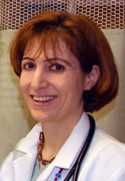
 Dr. Karen Hauer[/caption]
Karen E. Hauer, MD, PhD
Associate Dean, Competency Assessment and Professional Standards
Professor of Medicine, UCSF
San Francisco, CA 94143
MedicalResearch.com: What is the background for this study?
Response: As part of the Accreditation Council for Graduate Medical Education (ACGME)’s Next Accreditation System, residency programs are now required to rate residents using the Milestones. Evidence of validity of Milestone ratings is needed to show whether this rating system measures meaningful aspects of residents’ practice.
In the field of internal medicine, we compared ratings of residents using the old evaluation form, the pre-2015 Resident Annual Evaluation Summary (RAES), which has a non-developmental rating scale that rates residents from unsatisfactory to superior on a 9-point scale, with developmental Milestone ratings. This was a cross-sectional study of all United States internal medicine residency programs in 2013-14, including 21,284 internal medicine residents. Milestone ratings are submitted by residency program directors working with Clinical Competency Committees. We correlated RAES and Milestone ratings by training year; correlated ratings of Medical Knowledge milestones using the two systems with American Board of Internal Medicine (ABIM) certification examination scores; and examined ratings of unprofessional behavior using the two systems.
Dr. Karen Hauer[/caption]
Karen E. Hauer, MD, PhD
Associate Dean, Competency Assessment and Professional Standards
Professor of Medicine, UCSF
San Francisco, CA 94143
MedicalResearch.com: What is the background for this study?
Response: As part of the Accreditation Council for Graduate Medical Education (ACGME)’s Next Accreditation System, residency programs are now required to rate residents using the Milestones. Evidence of validity of Milestone ratings is needed to show whether this rating system measures meaningful aspects of residents’ practice.
In the field of internal medicine, we compared ratings of residents using the old evaluation form, the pre-2015 Resident Annual Evaluation Summary (RAES), which has a non-developmental rating scale that rates residents from unsatisfactory to superior on a 9-point scale, with developmental Milestone ratings. This was a cross-sectional study of all United States internal medicine residency programs in 2013-14, including 21,284 internal medicine residents. Milestone ratings are submitted by residency program directors working with Clinical Competency Committees. We correlated RAES and Milestone ratings by training year; correlated ratings of Medical Knowledge milestones using the two systems with American Board of Internal Medicine (ABIM) certification examination scores; and examined ratings of unprofessional behavior using the two systems.


















 Dr. Sunita Sah[/caption]
Sunita Sah MD PhD
Management & Organizations
Johnson Graduate School of Management
Cornell University
MedicalResearch.com: What is the background for this study? What are the main findings?
Dr. Sah: Physicians often recommend the treatment they specialize in, e.g., surgeons are more likely to recommend surgery than non-surgeons. Results from an observational study and a randomized controlled laboratory experiment found that when physicians revealed their bias toward their own specialty, patients were more likely to report increased trust in the physician’s expertise and take the treatment in accordance with the physician’s specialty.
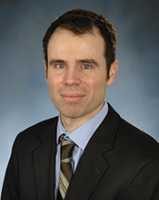
Dr. Sunita Sah[/caption]
Sunita Sah MD PhD
Management & Organizations
Johnson Graduate School of Management
Cornell University
MedicalResearch.com: What is the background for this study? What are the main findings?
Dr. Sah: Physicians often recommend the treatment they specialize in, e.g., surgeons are more likely to recommend surgery than non-surgeons. Results from an observational study and a randomized controlled laboratory experiment found that when physicians revealed their bias toward their own specialty, patients were more likely to report increased trust in the physician’s expertise and take the treatment in accordance with the physician’s specialty.