 MedicalResearch.com Interview with:
Alan Cheng, MD, FACC, FAHA, FHRS
MedicalResearch.com Interview with:
Alan Cheng, MD, FACC, FAHA, FHRS
Associate Professor of Medicine and Pediatrics
Director, Arrhythmia Device Service
Johns Hopkins University School of Medicine
Baltimore, MD
Medical Research: What is the background for this study? What are the main findings?
Dr. Cheng: Sudden cardiac death (SCD) has been the most common way in which people in the United States die. While it's hard to accurately identify who is a higher risk for SCD, we have learned from a number of studies over the past 30-40 years that people with significant reductions in their heart function (measured as the ejection fraction (EF)) is one group of individuals at high risk for
Sudden cardiac death. In fact, the current American College of Cardiology and American Heart Association guidelines state that people with an EF below 35% are at high enough risk for Sudden cardiac death that these patients should undergo implantation of an implantable cardioverter defibrillator (or ICD for short), a device capable of monitoring the heart 24/7 and shocking the heart out of any arrhythmias that could lead to Sudden cardiac death. The data they cite for this recommendation are so compelling that they currently recommend implanting ICDs in patients not only among those who already experienced an Sudden cardiac death event, but also those who have not. Implanting an ICD to prevent Sudden cardiac death
before they have had Sudden cardiac death is known as primary prevention and this accounts for about 70-80% of all ICD implants in the United States.
While the
EF is the best metric out there to determine if a patient should get an ICD, it has its limitations. Because of these limitations, we have been interested for a long time in better understanding how the EF and other metrics affect a patient's risk for Sudden cardiac death.
In this study, we followed 538 patients who were recipients of a primary prevention ICD who underwent repeat assessment of their EF during followup in order to determine if changes in their EF over time altered their risk for ICD shocks for ventricular arrhythmias or death. Over a median of almost 5 years of followup, we found that 40% of the cohort had improvements in their EF. And when the EF does improve, the risk goes down for ICD shocks for ventricular arrhythmias as well as for death.

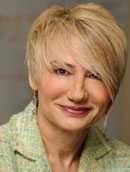 Dr. Natalia Trayanova[/caption]
Natalia Trayanova PhD, FHRS, FAHA
Murray B. Sachs Endowed Chair
Professor of Biomedical Engineering
Joint Appointment, Medicine
Johns Hopkins University
Institute for Computational Medicine
Johns Hopkins University
Baltimore, MD
MedicalResearch.com: What is the background for this study? What are the main findings?
Dr. Trayanova: The methodology for modeling cardiac electrical function has matured sufficiently that we can now create computational models of the electrical functioning of the entire heart. My research is focused on translating this methodology into the clinic. The goal is to create, if you will, "a virtual heart for every patient", that will enable the physician to play our scenarios that manifest the heart dysfunction in the given patient, and to enable physicians to make personalized decisions about patient treatment. The present paper is the first application of this overall vision.
The motivation for this particular paper was that determining which patients are at risk for sudden cardiac death represents a major unmet clinical need. Patients at risk receive life-saving implantable defibrillators (ICDs), but because of the low sensitivity and specificity of current approach (based on low ejection fraction), risk assessment is inaccurate. Thus, many patients receive ICDs without needing them, while others die of sudden cardiac death because they are not targeted for ICD therapy under the current clinical recommendations. Our goal was to develop a non-invasive personalized virtual-heart risk assessment tool that has the potential to ultimately prevent sudden cardiac death and avoid unnecessary ICD implantations.
Dr. Natalia Trayanova[/caption]
Natalia Trayanova PhD, FHRS, FAHA
Murray B. Sachs Endowed Chair
Professor of Biomedical Engineering
Joint Appointment, Medicine
Johns Hopkins University
Institute for Computational Medicine
Johns Hopkins University
Baltimore, MD
MedicalResearch.com: What is the background for this study? What are the main findings?
Dr. Trayanova: The methodology for modeling cardiac electrical function has matured sufficiently that we can now create computational models of the electrical functioning of the entire heart. My research is focused on translating this methodology into the clinic. The goal is to create, if you will, "a virtual heart for every patient", that will enable the physician to play our scenarios that manifest the heart dysfunction in the given patient, and to enable physicians to make personalized decisions about patient treatment. The present paper is the first application of this overall vision.
The motivation for this particular paper was that determining which patients are at risk for sudden cardiac death represents a major unmet clinical need. Patients at risk receive life-saving implantable defibrillators (ICDs), but because of the low sensitivity and specificity of current approach (based on low ejection fraction), risk assessment is inaccurate. Thus, many patients receive ICDs without needing them, while others die of sudden cardiac death because they are not targeted for ICD therapy under the current clinical recommendations. Our goal was to develop a non-invasive personalized virtual-heart risk assessment tool that has the potential to ultimately prevent sudden cardiac death and avoid unnecessary ICD implantations.
 Dr. Emily Severance[/caption]
Emily G. Severance, Ph.D
Stanley Division of Developmental Neurovirology
Department of Pediatrics
Johns Hopkins University School of Medicine
Baltimore, MD
MedicalResearch.com: What is the background for this study? What are the main findings?
Dr. Severance: This research stems in part from anecdotal dialogues that we had with people with psychiatric disorders and their families, and repeatedly the issue of yeast infections came up. We found that Candida overgrowth was more prevalent in people with mental illness compared to those without psychiatric disorders and the patterns that we observed occurred in a surprisingly sex-specific manner. The levels of IgG antibodies directed against the Candida albicans were elevated in males with schizophrenia and bipolar disorder compared to controls. In females, there were no differences in antibody levels between these groups, but in women with mental illness who had high amounts of these antibodies, we found significant memory deficits compared to those without evidence of past infection.
Dr. Emily Severance[/caption]
Emily G. Severance, Ph.D
Stanley Division of Developmental Neurovirology
Department of Pediatrics
Johns Hopkins University School of Medicine
Baltimore, MD
MedicalResearch.com: What is the background for this study? What are the main findings?
Dr. Severance: This research stems in part from anecdotal dialogues that we had with people with psychiatric disorders and their families, and repeatedly the issue of yeast infections came up. We found that Candida overgrowth was more prevalent in people with mental illness compared to those without psychiatric disorders and the patterns that we observed occurred in a surprisingly sex-specific manner. The levels of IgG antibodies directed against the Candida albicans were elevated in males with schizophrenia and bipolar disorder compared to controls. In females, there were no differences in antibody levels between these groups, but in women with mental illness who had high amounts of these antibodies, we found significant memory deficits compared to those without evidence of past infection.
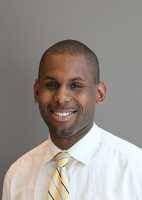 Michael Daniel[/caption]
Michael Daniel
The Johns Hopkins University School of Medicine
M.D. Candidate 2016
Michael G. Daniel is a graduating medical student at the Johns Hopkins School of Medicine. He will be attending the Osler Internal Medicine Residency Training Program next year at the Johns Hopkins Hospital. His research focus is on Patient Safety, Quality, and Outcomes improvement.
Summary:
Medical error ranks as the third leading cause of death in the United States, but is not recognized in national vital statistics because of a flawed reporting process. Using recent studies on preventable medical error and extrapolating the results to the 2013 U.S. hospital admissions we calculated a mortality rate or 251,454 deaths per year.
MedicalResearch.com: What made you want to research this topic?
Response: I decided to study medicine because I wanted to improve patient health. However, I realized that improving patient health is not only about curing a disease but is sometimes about fixing the way we deliver healthcare.
MedicalResearch.com: Is this news surprising to you?
Response: Yes, because all previous estimates of medical error were much lower and when I started the research I couldn’t use the CDC statistics to get current data.
Michael Daniel[/caption]
Michael Daniel
The Johns Hopkins University School of Medicine
M.D. Candidate 2016
Michael G. Daniel is a graduating medical student at the Johns Hopkins School of Medicine. He will be attending the Osler Internal Medicine Residency Training Program next year at the Johns Hopkins Hospital. His research focus is on Patient Safety, Quality, and Outcomes improvement.
Summary:
Medical error ranks as the third leading cause of death in the United States, but is not recognized in national vital statistics because of a flawed reporting process. Using recent studies on preventable medical error and extrapolating the results to the 2013 U.S. hospital admissions we calculated a mortality rate or 251,454 deaths per year.
MedicalResearch.com: What made you want to research this topic?
Response: I decided to study medicine because I wanted to improve patient health. However, I realized that improving patient health is not only about curing a disease but is sometimes about fixing the way we deliver healthcare.
MedicalResearch.com: Is this news surprising to you?
Response: Yes, because all previous estimates of medical error were much lower and when I started the research I couldn’t use the CDC statistics to get current data.

 Dr. Victor Serebruany[/caption]
MedicalResearch.com Interview with:
Dr. Victor Serebruany[/caption]
MedicalResearch.com Interview with: Dr. Green[/caption]
MedicalResearch.com Interview with:
Ariel R. Green, M.D., M.P.H
Assistant Professor of Medicine
Johns Hopkins University School of Medicine
Medical Research: What is the background for this study? What are the main findings?
Response: Implantable cardioverter-defibrillators (ICDs) are widely used to prevent sudden cardiac death in patients with systolic heart failure. Older adults with heart failure often have multiple coexisting conditions and are frail, increasing their risk of death from non-cardiac causes. Our understanding of outcomes in older patients with ICDs is limited.
Medical Research: What should clinicians and patients take away from your report?
Response: Our major finding was that more than 10% of patients currently receiving ICDs for primary prevention of sudden cardiac death (meaning that they have never had a potentially lethal arrhythmia but are at risk for one, usually due to systolic heart failure) are frail or have dementia. Patients with these geriatric conditions had substantially higher mortality within the first year after ICD implantation than those without these conditions.
Dr. Green[/caption]
MedicalResearch.com Interview with:
Ariel R. Green, M.D., M.P.H
Assistant Professor of Medicine
Johns Hopkins University School of Medicine
Medical Research: What is the background for this study? What are the main findings?
Response: Implantable cardioverter-defibrillators (ICDs) are widely used to prevent sudden cardiac death in patients with systolic heart failure. Older adults with heart failure often have multiple coexisting conditions and are frail, increasing their risk of death from non-cardiac causes. Our understanding of outcomes in older patients with ICDs is limited.
Medical Research: What should clinicians and patients take away from your report?
Response: Our major finding was that more than 10% of patients currently receiving ICDs for primary prevention of sudden cardiac death (meaning that they have never had a potentially lethal arrhythmia but are at risk for one, usually due to systolic heart failure) are frail or have dementia. Patients with these geriatric conditions had substantially higher mortality within the first year after ICD implantation than those without these conditions.  Dr. Leigh Peterson[/caption]
MedicalResearch.com Interview with:
Leigh A. Peterson, PhD, MHS
Post-doctoral fellow
Department of Surgery - Bayview
Johns Hopkins School of Medicine
Medical Research: What is the background for this study? What are the main findings?
Dr. Peterson: From our previous study published in Obesity Surgery earlier this year, we knew that vitamin D deficiency and insufficiency was very common in our bariatric surgery candidates (71.4% < 20 ng/ml and 92.9% < 30 ng/ml). We wanted to explore the effect of this deficiency on adverse outcomes after bariatric surgery such as wound healing, infection, and extended hospital stay.
We turned to the Nationwide Inpatient Sample to answer this question, as it would contain enough surgeries to detect changes in even less frequent outcomes such as wound infection. But blood concentration of vitamin D is not available, so we used a traditional method to estimate group vitamin D status with season and geography.
Dr. Leigh Peterson[/caption]
MedicalResearch.com Interview with:
Leigh A. Peterson, PhD, MHS
Post-doctoral fellow
Department of Surgery - Bayview
Johns Hopkins School of Medicine
Medical Research: What is the background for this study? What are the main findings?
Dr. Peterson: From our previous study published in Obesity Surgery earlier this year, we knew that vitamin D deficiency and insufficiency was very common in our bariatric surgery candidates (71.4% < 20 ng/ml and 92.9% < 30 ng/ml). We wanted to explore the effect of this deficiency on adverse outcomes after bariatric surgery such as wound healing, infection, and extended hospital stay.
We turned to the Nationwide Inpatient Sample to answer this question, as it would contain enough surgeries to detect changes in even less frequent outcomes such as wound infection. But blood concentration of vitamin D is not available, so we used a traditional method to estimate group vitamin D status with season and geography.