

05 Jul Prostate Cancer: Men With Genetic Risk at Increased Risk of Dying Early
Posted at 14:56h
in Author Interviews, Brigham & Women's - Harvard, Genetic Research, JAMA, Karolinski Institute, Prostate Cancer
MedicalResearch.com Interview with:
[caption id="attachment_62249" align="alignleft" width="204"] Dr. Plym[/caption]
Anna Plym PhD
Department of Medical Epidemiology and Biostatistics,
Karolinska Institutet, Stockholm, Sweden
Department of Epidemiology, Harvard T. H. Chan School of Public Health
Department of Urology, Brigham and Women’s Hospital
Harvard Medical School, Boston, Massachusetts
MedicalResearch.com: What is the background for this study?
Response: Prostate cancer is one of the leading causes of cancer death among men, with approximately one third of the deaths occurring before the age of 75 years. There is a need for a better understanding of the risk factors for those early deaths. Our previous research has indicated that inherited factors play a major role.




 Dr. Dickerman[/caption]
Dr. Barbra Dickerman, PhD
CAUSALab investigator and instructor
Department of Epidemiology
Harvard T.H. Chan School of Public Health
MedicalResearch.com: What is the background for this study?
Response: Early randomized trials showed that the BNT162b2 (Pfizer-BioNTech) and mRNA-1273 (Moderna) vaccines were both remarkably effective at preventing symptomatic disease, when comparing each vaccine with no vaccine. However, head-to-head comparisons of these vaccines have been lacking, leaving open the question of which vaccine is more effective.
In this study, we analyzed the VA’s high-quality databases in a way that emulated the design of the hypothetical trial that would have answered this question. Specifically, we used the findings from the original trials to benchmark our methods and then extended them to provide novel evidence for the comparative effectiveness of these two vaccines in a real-world setting and across diverse subgroups and different time periods.
Dr. Dickerman[/caption]
Dr. Barbra Dickerman, PhD
CAUSALab investigator and instructor
Department of Epidemiology
Harvard T.H. Chan School of Public Health
MedicalResearch.com: What is the background for this study?
Response: Early randomized trials showed that the BNT162b2 (Pfizer-BioNTech) and mRNA-1273 (Moderna) vaccines were both remarkably effective at preventing symptomatic disease, when comparing each vaccine with no vaccine. However, head-to-head comparisons of these vaccines have been lacking, leaving open the question of which vaccine is more effective.
In this study, we analyzed the VA’s high-quality databases in a way that emulated the design of the hypothetical trial that would have answered this question. Specifically, we used the findings from the original trials to benchmark our methods and then extended them to provide novel evidence for the comparative effectiveness of these two vaccines in a real-world setting and across diverse subgroups and different time periods. 

 Dr. Jinhee Hur[/caption]
Jinhee Hur, PhD
Research Fellow
Department of Nutrition
Harvard T.H. Chan School of Public Health
Boston, MA 02115
MedicalResearch.com: What is the background for this study?
Response: Early-onset colorectal cancer (EO-CRC, age <50 years at diagnosis) is rapidly rising in the US since the mid-1980s, with an unclear understanding of its etiology and contributors to the rise. Sugar-sweetened beverages (SSBs) exert adverse metabolic repercussions throughout the life course, including insulin resistance and inflammation. Higher SSB intake can induce obesity, which has been linked to risk of EO-CRC. A recent experimental study also suggests that high fructose corn syrup, a primary sweetener in SSBs, may promote colon tumor growth, independent of metabolic dysregulation. In the US, SSB consumption has dramatically increased during the 2nd half of the 20th century, and adolescents and young adults have been the heaviest SSB drinkers across all age groups. Thus, we expect SSBs may be an emerging risk factor for EO-CRC and likely contribute to the rising incidence of EO-CRC.
Dr. Jinhee Hur[/caption]
Jinhee Hur, PhD
Research Fellow
Department of Nutrition
Harvard T.H. Chan School of Public Health
Boston, MA 02115
MedicalResearch.com: What is the background for this study?
Response: Early-onset colorectal cancer (EO-CRC, age <50 years at diagnosis) is rapidly rising in the US since the mid-1980s, with an unclear understanding of its etiology and contributors to the rise. Sugar-sweetened beverages (SSBs) exert adverse metabolic repercussions throughout the life course, including insulin resistance and inflammation. Higher SSB intake can induce obesity, which has been linked to risk of EO-CRC. A recent experimental study also suggests that high fructose corn syrup, a primary sweetener in SSBs, may promote colon tumor growth, independent of metabolic dysregulation. In the US, SSB consumption has dramatically increased during the 2nd half of the 20th century, and adolescents and young adults have been the heaviest SSB drinkers across all age groups. Thus, we expect SSBs may be an emerging risk factor for EO-CRC and likely contribute to the rising incidence of EO-CRC.





 Dr. Shoaff[/caption]
Jessica Shoaff, MPH, PhD
Postdoctoral Research Fellow and
[caption id="attachment_55259" align="alignleft" width="150"]
Dr. Shoaff[/caption]
Jessica Shoaff, MPH, PhD
Postdoctoral Research Fellow and
[caption id="attachment_55259" align="alignleft" width="150"] Dr. Korrick[/caption]
Susan A. Korrick, MD
Pulmonary and Critical Care
Assistant Professor in the Department of Environmental Health
Harvard Medical School · Harvard T. H. Chan School of Public Health
Brigham and Women's Hospital
Channing Laboratory Boston, MA 02115
MedicalResearch.com: What is the background for this study? What are the main findings?
Response: Our study posed the question: Do teenagers’ exposures to chemicals that are often found in consumer products increase behaviors that are common among individuals diagnosed with Attention-Deficit/Hyperactivity Disorder (ADHD)? Our results suggest that teenagers exposed to chemicals often found in consumer products (particularly phthalates) may have increased behaviors that are common among individuals diagnosed with ADHD. However, we did not study the diagnosis of ADHD (most of our study teens did not have ADHD). This means our results cannot answer the question of whether these chemical exposures increase the likelihood of being diagnosed with ADHD. Also, in our study design, chemical exposures and ADHD-related behaviors were measured at the same time, so it is not possible to know with certainty whether the chemical exposures altered behavior or behavior altered chemical exposures.
Dr. Korrick[/caption]
Susan A. Korrick, MD
Pulmonary and Critical Care
Assistant Professor in the Department of Environmental Health
Harvard Medical School · Harvard T. H. Chan School of Public Health
Brigham and Women's Hospital
Channing Laboratory Boston, MA 02115
MedicalResearch.com: What is the background for this study? What are the main findings?
Response: Our study posed the question: Do teenagers’ exposures to chemicals that are often found in consumer products increase behaviors that are common among individuals diagnosed with Attention-Deficit/Hyperactivity Disorder (ADHD)? Our results suggest that teenagers exposed to chemicals often found in consumer products (particularly phthalates) may have increased behaviors that are common among individuals diagnosed with ADHD. However, we did not study the diagnosis of ADHD (most of our study teens did not have ADHD). This means our results cannot answer the question of whether these chemical exposures increase the likelihood of being diagnosed with ADHD. Also, in our study design, chemical exposures and ADHD-related behaviors were measured at the same time, so it is not possible to know with certainty whether the chemical exposures altered behavior or behavior altered chemical exposures. 

 Dr. Weisskopf[/caption]
Marc Weisskopf, PhD, ScD
Cecil K. and Philip Drinker Professor of Environmental Epidemiology and Physiology
Departments of Environmental Health and Epidemiology
Harvard T.H. Chan School of Public Health
Boston, MA 02115
MedicalResearch.com: What is the background for this study?
Response: There is a long history of health disparities by race. We were interested to see whether these also show up in professional football players, with the thought that perhaps the advantages that come with being an elite athlete in a sport (e.g. related to income, potential access to carte, prestige) might minimize health disparities.
Dr. Weisskopf[/caption]
Marc Weisskopf, PhD, ScD
Cecil K. and Philip Drinker Professor of Environmental Epidemiology and Physiology
Departments of Environmental Health and Epidemiology
Harvard T.H. Chan School of Public Health
Boston, MA 02115
MedicalResearch.com: What is the background for this study?
Response: There is a long history of health disparities by race. We were interested to see whether these also show up in professional football players, with the thought that perhaps the advantages that come with being an elite athlete in a sport (e.g. related to income, potential access to carte, prestige) might minimize health disparities. 

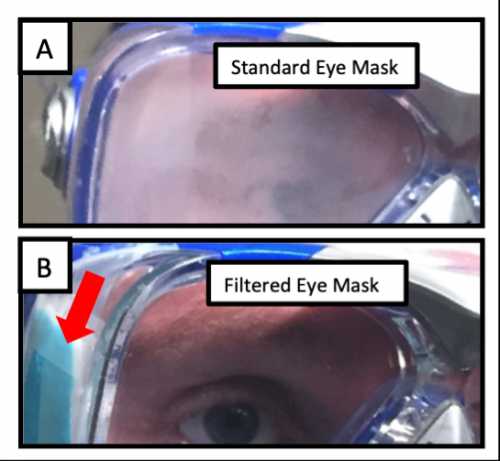

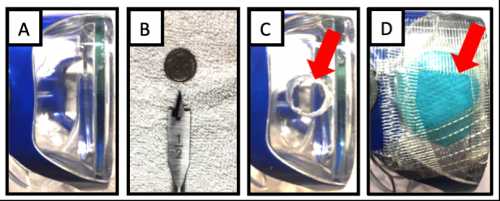 The building of the filtered eye mask prototype.[/caption]














 Frank Qian[/caption]
Frank Qian, MPH
Department of Nutrition
Harvard T. H. Chan School of Public Health
Boston, Massachusetts
MedicalResearch.com: What is the background for this study?
Response: Plant-based diets have really grown in popularity in the last several years, particularly among the younger generation in the United States, many of whom are adopting a plant-based or vegetarian/vegan diet. However, the quality of such a diet can vary drastically. While many prior studies have demonstrated beneficial associations for risk of type 2 diabetes with healthful plant-based foods such as fruits, vegetables, nuts/seeds, whole grains, and legumes, the opposite is true for less healthful plant-based foods such as potatoes and refined grains such as white rice. In addition, some animal-based foods, such as dairy and fish, have shown protective associations against the development of type 2 diabetes, so strict vegetarian diets which exclude these foods may miss out on the potential benefits.
Given these divergent findings, we sought to pool all the available data from prior cohort studies to analyze whether the overall association of a diet which emphasizes plant-based foods (both healthful and unhealthful) are related to risk of type 2 diabetes.
Frank Qian[/caption]
Frank Qian, MPH
Department of Nutrition
Harvard T. H. Chan School of Public Health
Boston, Massachusetts
MedicalResearch.com: What is the background for this study?
Response: Plant-based diets have really grown in popularity in the last several years, particularly among the younger generation in the United States, many of whom are adopting a plant-based or vegetarian/vegan diet. However, the quality of such a diet can vary drastically. While many prior studies have demonstrated beneficial associations for risk of type 2 diabetes with healthful plant-based foods such as fruits, vegetables, nuts/seeds, whole grains, and legumes, the opposite is true for less healthful plant-based foods such as potatoes and refined grains such as white rice. In addition, some animal-based foods, such as dairy and fish, have shown protective associations against the development of type 2 diabetes, so strict vegetarian diets which exclude these foods may miss out on the potential benefits.
Given these divergent findings, we sought to pool all the available data from prior cohort studies to analyze whether the overall association of a diet which emphasizes plant-based foods (both healthful and unhealthful) are related to risk of type 2 diabetes.