Posted at 22:35h
in
Author Interviews,
HIV,
PLoS
[caption id="attachment_21005" align="alignleft" width="200"]

Dr. Julian Falutz[/caption]
MedicalResearch.com Interview with:
Julian Falutz, MD
Director, HIV Metabolic Clinic MUHC,
Coordinator of Chronic Viral Illness Service, HIV and Aging Clinic
McGill University Health Center
Medical Research: What is the background for this study? What are the main findings?
Dr. Falutz: The long-term use of antiretroviral therapy (ART) in HIV-infected patients is associated with body composition changes, including visceral adipose tissue (VAT) accumulation. HIV-infected patients with excess VAT may be at increased risk of type 2 diabetes, cardiovascular diseases, and mortality.
Tesamorelin is a synthetic analog of human growth hormone-releasing factor, also known as growth hormone-releasing hormone (GHRH), which is indicated for the treatment of excess abdominal fat in HIV-infected patients with lipodystrophy.
The objectives of our paper were to
1) evaluate the utility of patient characteristics and validated disease-risk scores, including indicator variables for the metabolic syndrome and the Framingham Risk Score (FRS), as predictors of visceral adipose tissue reduction during tesamorelin therapy, and
2) to explore the characteristics of patients who reached a threshold of VAT <140 cm
2, a level associated with lower risk of adverse health outcomes, after 6 months of treatment with tesamorelin.
The basis of the report was a pooled analysis of the two pivotal, randomized Phase 3 trials of tesamorelin in 806 HIV-infected patients with excess abdominal fat. Our results indicate that presence of metabolic syndrome, high triglycerides, and white race are associated with a greater likelihood of responding to 6 months of tesamorelin treatment. The most robust response appears to be in subjects with VAT above 140 cm
2, as well as those in the overweight range for body mass index (BMI) measures.

 Dr. Brinda Emu[/caption]
Brinda Emu MD
Assistant Professor of Medicine (Infectious Diseases
Yale University
New Haven, CT
MedicalResearch.com: What is the background for this study?
Response: Ibalizumab is a fully humanized monoclonal antibody that targets the CD4 receptor. This Phase III registrational study enrolled individuals with HIV infection that harbor high levels of multi-drug resistance, with limited treatment options. At IDWeek in October, 2016, data was presented that demonstrated patients experienced a significant decrease in viral load after receiving a single loading dose of ibalizumab 2,000 mg intravenously (IV) in addition to their failing antiretroviral therapies (ART) (or no therapy). Seven days after this loading dose, 83% of patients achieved a ≥ 0.5 log10 decrease from baseline compared with 3% during the seven-day control period .These results were statistically significant (p<0.0001).
At CROI, additional data on the Week 24 results from this study are now presented.
Dr. Brinda Emu[/caption]
Brinda Emu MD
Assistant Professor of Medicine (Infectious Diseases
Yale University
New Haven, CT
MedicalResearch.com: What is the background for this study?
Response: Ibalizumab is a fully humanized monoclonal antibody that targets the CD4 receptor. This Phase III registrational study enrolled individuals with HIV infection that harbor high levels of multi-drug resistance, with limited treatment options. At IDWeek in October, 2016, data was presented that demonstrated patients experienced a significant decrease in viral load after receiving a single loading dose of ibalizumab 2,000 mg intravenously (IV) in addition to their failing antiretroviral therapies (ART) (or no therapy). Seven days after this loading dose, 83% of patients achieved a ≥ 0.5 log10 decrease from baseline compared with 3% during the seven-day control period .These results were statistically significant (p<0.0001).
At CROI, additional data on the Week 24 results from this study are now presented.







 Dr. James M. Smith[/caption]
Dr. James M. Smith Ph.D
Laboratory Branch, Division of HIV/AIDS Prevention
Centers for Disease Control and Prevention
Atlanta, Georgia
MedicalResearch.com: What is the background for this study?
Dr. Smith: Our laboratory has been developing a macaque model for testing drug release, safety and efficacy of intravaginal rings (IVR) for preexposure prophylaxis (PrEP) against HIV for several years. The initial studies involved both matrix rings, where the drug is dispersed in the silicone matrix of the device, and reservoir rings, which are essentially a polymer tube filled with drug. In collaboration with the Oak Crest Institute of Science and Auritec Pharmaceuticals, Inc., we began testing a new type of intravaginal ring, the pod-IVR. In this innovative design the ring itself is a scaffold that contains compressed polymer-coated drug tablets, or pods, within the ring. Each pod is separate, allowing for a customizable release rate for each drug by varying the number and diameter of the drug release ports for each individual pod. The macaque pod-IVR can accommodate up to six pods whereas the human pod-IVR can accommodate up to 10 pods. The IVR design was developed to allow the delivery of drug combinations and for simple, cost-effective manufacturing.
Dr. James M. Smith[/caption]
Dr. James M. Smith Ph.D
Laboratory Branch, Division of HIV/AIDS Prevention
Centers for Disease Control and Prevention
Atlanta, Georgia
MedicalResearch.com: What is the background for this study?
Dr. Smith: Our laboratory has been developing a macaque model for testing drug release, safety and efficacy of intravaginal rings (IVR) for preexposure prophylaxis (PrEP) against HIV for several years. The initial studies involved both matrix rings, where the drug is dispersed in the silicone matrix of the device, and reservoir rings, which are essentially a polymer tube filled with drug. In collaboration with the Oak Crest Institute of Science and Auritec Pharmaceuticals, Inc., we began testing a new type of intravaginal ring, the pod-IVR. In this innovative design the ring itself is a scaffold that contains compressed polymer-coated drug tablets, or pods, within the ring. Each pod is separate, allowing for a customizable release rate for each drug by varying the number and diameter of the drug release ports for each individual pod. The macaque pod-IVR can accommodate up to six pods whereas the human pod-IVR can accommodate up to 10 pods. The IVR design was developed to allow the delivery of drug combinations and for simple, cost-effective manufacturing.
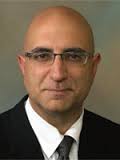 Dr. Joseph Alvarnas[/caption]
Joseph Alvarnas, MD
Associate clinical professor
Department of hematology and Director of value-based analytics
City of Hope National Medical Center
Duarte, CA
MedicalResearch.com: What is the background for this study?
Dr. Alvarnas: Patients with HIV infection have a significantly increased risk of non-Hodgkin lymphoma and Hodgkin lymphoma. Prior to the availability of effective anti-retroviral therapy, HIV-infected patients with lymphoma had very poor treatment outcomes. Following the availability of effective anti-HIV therapy, patient outcomes for HIV-infected patients now parallel those of non-infected patients. Historically, however, HIV infection has been used as a criterion for not offering patients autologous blood stem cell transplantation outside of centers with unique expertise. The purpose of this trial was to evaluate outcomes, complication rates, and immunological reconstitution of HIV-infected patients following autologous blood stem cell transplantation.
Dr. Joseph Alvarnas[/caption]
Joseph Alvarnas, MD
Associate clinical professor
Department of hematology and Director of value-based analytics
City of Hope National Medical Center
Duarte, CA
MedicalResearch.com: What is the background for this study?
Dr. Alvarnas: Patients with HIV infection have a significantly increased risk of non-Hodgkin lymphoma and Hodgkin lymphoma. Prior to the availability of effective anti-retroviral therapy, HIV-infected patients with lymphoma had very poor treatment outcomes. Following the availability of effective anti-HIV therapy, patient outcomes for HIV-infected patients now parallel those of non-infected patients. Historically, however, HIV infection has been used as a criterion for not offering patients autologous blood stem cell transplantation outside of centers with unique expertise. The purpose of this trial was to evaluate outcomes, complication rates, and immunological reconstitution of HIV-infected patients following autologous blood stem cell transplantation.
 Dr. Steven Kyle Grinspoon[/caption]
Steven Grinspoon, MD
Professor of Medicine, Harvard Medical School
MGH Endowed Chair in Neuroendocrinology and Metabolism
Director, MGH Program in Nutritional Metabolism
and Nutrition Obesity Research Center at Harvard
MGH
Boston, MA 02114
MedicalResearch.com: What is the background for this study? What are the main findings?
Dr. Grinspoon: Numerous epidemiologic studies have shown that people living with HIV face a 1.5 to 2-fold increased risk of heart attack, or myocardial infarction, as compared to individuals without the virus. Mechanisms underlying the increased risk of myocardial infarction in HIV are incompletely understood. It is possible that among people living with HIV, increased systemic immune activation fuels arterial inflammation. Arterial inflammation may, in turn, promote the development of high-risk morphology coronary atherosclerotic plaque, which is liable to rupture and result in myocardial infarction.
For people diagnosed with HIV, the overall health benefits of immediate antiretroviral therapy (ART) are clear. However, the effects of newly-initiated antiretroviral therapy on arterial inflammation have not previously been studied. In this study, we set out to assess among a cohort of treatment-naive HIV-infected subjects, the effects of newly-initiated ART with a contemporary regimen on both immune function and arterial inflammation. We found that among treatment-naive HIV-infected individuals without clinical cardiovascular disease, newly initiated combined antiretroviral therapy has discordant effects to restore immune function without reducing the degree of arterial inflammation.
Dr. Steven Kyle Grinspoon[/caption]
Steven Grinspoon, MD
Professor of Medicine, Harvard Medical School
MGH Endowed Chair in Neuroendocrinology and Metabolism
Director, MGH Program in Nutritional Metabolism
and Nutrition Obesity Research Center at Harvard
MGH
Boston, MA 02114
MedicalResearch.com: What is the background for this study? What are the main findings?
Dr. Grinspoon: Numerous epidemiologic studies have shown that people living with HIV face a 1.5 to 2-fold increased risk of heart attack, or myocardial infarction, as compared to individuals without the virus. Mechanisms underlying the increased risk of myocardial infarction in HIV are incompletely understood. It is possible that among people living with HIV, increased systemic immune activation fuels arterial inflammation. Arterial inflammation may, in turn, promote the development of high-risk morphology coronary atherosclerotic plaque, which is liable to rupture and result in myocardial infarction.
For people diagnosed with HIV, the overall health benefits of immediate antiretroviral therapy (ART) are clear. However, the effects of newly-initiated antiretroviral therapy on arterial inflammation have not previously been studied. In this study, we set out to assess among a cohort of treatment-naive HIV-infected subjects, the effects of newly-initiated ART with a contemporary regimen on both immune function and arterial inflammation. We found that among treatment-naive HIV-infected individuals without clinical cardiovascular disease, newly initiated combined antiretroviral therapy has discordant effects to restore immune function without reducing the degree of arterial inflammation.
 Robert Bonacci[/caption]
Robert Bonacci MPH, MD Candidate’16
University of Pennsylvania School of Medicine
MedicalResearch.com: What is the background for this study?
Response: During the mid-2000’s, the HIV incidence rate stubbornly persisted around 50,000 infections per year. Responding to this trend, President Obama released the first comprehensive US National HIV/AIDS Strategy (NHAS) in 2010. The NHAS hoped to spur a more coordinated national response and set ambitious targets for reducing HIV incidence (25 percent) and the transmission rate (30 percent), among other goals, by 2015.
To evaluate whether the U.S. achieved the NHAS goals by 2015, we used mathematical models drawing on data from the U.S. Centers for Disease Control and Prevention (CDC) on HIV prevalence and mortality for 2007 to 2012, and our own previously published incidence estimates from 2008-2012. Changes seen from 2010 through 2012 were extrapolated for the time period 2013 through 2015.
Robert Bonacci[/caption]
Robert Bonacci MPH, MD Candidate’16
University of Pennsylvania School of Medicine
MedicalResearch.com: What is the background for this study?
Response: During the mid-2000’s, the HIV incidence rate stubbornly persisted around 50,000 infections per year. Responding to this trend, President Obama released the first comprehensive US National HIV/AIDS Strategy (NHAS) in 2010. The NHAS hoped to spur a more coordinated national response and set ambitious targets for reducing HIV incidence (25 percent) and the transmission rate (30 percent), among other goals, by 2015.
To evaluate whether the U.S. achieved the NHAS goals by 2015, we used mathematical models drawing on data from the U.S. Centers for Disease Control and Prevention (CDC) on HIV prevalence and mortality for 2007 to 2012, and our own previously published incidence estimates from 2008-2012. Changes seen from 2010 through 2012 were extrapolated for the time period 2013 through 2015.




 Dr. Martin Hoenigl[/caption]
Martin Hoenigl, MD
Postdoctoral Fellow
AntiViral Research Center, Department of Medicine
University of California, San Diego
Medical Research: What is the background for this study?
Response: The detection of acute HIV infection (AHI) is critical to HIV prevention and treatment strategies. Many field-based testing programs rely on point-of-care HIV antibody testing, which will reliably identify persons with established infection, but fail to detect persons with AHI. In many of these programs additional tests for AHI are only performed / recommended in persons presenting with signs and symptoms consistent with an acute retroviral syndrome (ARS). These signs and symptoms are unspecific and include fatigue, headache, pharyngitis, skin rash, GI symptoms, night sweats and others. However, the proportion of persons with
Dr. Martin Hoenigl[/caption]
Martin Hoenigl, MD
Postdoctoral Fellow
AntiViral Research Center, Department of Medicine
University of California, San Diego
Medical Research: What is the background for this study?
Response: The detection of acute HIV infection (AHI) is critical to HIV prevention and treatment strategies. Many field-based testing programs rely on point-of-care HIV antibody testing, which will reliably identify persons with established infection, but fail to detect persons with AHI. In many of these programs additional tests for AHI are only performed / recommended in persons presenting with signs and symptoms consistent with an acute retroviral syndrome (ARS). These signs and symptoms are unspecific and include fatigue, headache, pharyngitis, skin rash, GI symptoms, night sweats and others. However, the proportion of persons with 




 Dr. Christina Polyak[/caption]
MedicalResearch.com Interview with:
Dr. Christina Polyak MD MPH
Acting Instructor with the University of Washington
Clinical research physician at the U.S. Military HIV Research Program
Walter Reed Army Institute of Research at WRAIR
Bethesda, MD 20817
Medical Research: What is the background for this study? What are the main findings?
Dr. Polyak: Today, 35 million people are infected with HIV, the virus that causes AIDS. (CTX) is low-cost and widely utilized broad spectrum antibiotic used to prevent opportunistic infections in patients with HIV. CTX prophylaxis is recommended by the World Health Organization (WHO) for HIV infected adults in settings with high infectious disease prevalence. In these settings, the threshold for CTX discontinuation is undefined. We designed a study to determine whether CTX discontinuation was non-inferior to continued CTX-prophylaxis in decreasing morbidity in adults with evidence of immune reconstitution (CD4 >350 and 18 months on ART). Our findings show that combined morbidity/mortality was significantly higher in the CTX discontinuation arm (RR=2.27, 95% CI 1.52-3.38;p<0.001), driven by malaria morbidity. This suggests that CTX discontinuation among ART-treated, immune-reconstituted adults in malaria-endemic regions resulted in increased incidence of malaria but not pneumonia or diarrhea. These data helped inform and support the 2014 WHO CTX guidelines.
Dr. Christina Polyak[/caption]
MedicalResearch.com Interview with:
Dr. Christina Polyak MD MPH
Acting Instructor with the University of Washington
Clinical research physician at the U.S. Military HIV Research Program
Walter Reed Army Institute of Research at WRAIR
Bethesda, MD 20817
Medical Research: What is the background for this study? What are the main findings?
Dr. Polyak: Today, 35 million people are infected with HIV, the virus that causes AIDS. (CTX) is low-cost and widely utilized broad spectrum antibiotic used to prevent opportunistic infections in patients with HIV. CTX prophylaxis is recommended by the World Health Organization (WHO) for HIV infected adults in settings with high infectious disease prevalence. In these settings, the threshold for CTX discontinuation is undefined. We designed a study to determine whether CTX discontinuation was non-inferior to continued CTX-prophylaxis in decreasing morbidity in adults with evidence of immune reconstitution (CD4 >350 and 18 months on ART). Our findings show that combined morbidity/mortality was significantly higher in the CTX discontinuation arm (RR=2.27, 95% CI 1.52-3.38;p<0.001), driven by malaria morbidity. This suggests that CTX discontinuation among ART-treated, immune-reconstituted adults in malaria-endemic regions resulted in increased incidence of malaria but not pneumonia or diarrhea. These data helped inform and support the 2014 WHO CTX guidelines.