Blood Tests May Hold Clues to Pace of Alzheimer’s Disease Progression

Release Date: 10/03/2011

Johns Hopkins-led research suggests levels of certain fats in blood might predict rate of cognitive decline.

A team of scientists, led by Johns Hopkins researchers, say they may have found a way to predict how quickly patients with Alzheimer’s disease (AD) will lose cognitive function by looking at ratios of two fatty compounds in their blood. The finding, they say, could provide useful information to families and caregivers, and might also suggest treatment targets for this heartbreaking and incurable neurodegenerative disorder.

Past research has shown that cognitive function declines at different rates in AD patients, with roughly one-third not declining at all in five years, one-third declining at a moderate rate, and the other third declining quickly. Accurately predicting the pace of cognitive decline would help patients and caregivers better prepare and, if treatments are developed, help doctors aggressively target those whose descent into dementia is likely to be accelerated. Currently there are no predictably effective treatments that prevent, slow or stop AD, though the researchers caution that more studies need to be done before their blood fat test proves its value.

“We’re confident there’s a relationship between these lipids and AD progression, but this work is not yet ready to be used clinically,” according to Michelle Mielke, Ph.D., adjunct assistant professor of psychiatry at the Johns Hopkins University School of Medicine and lead author of an article about the work published in the Journal of Alzheimer’s Disease.

Mielke’s team analyzed data from 120 probable Alzheimer’s patients at the Alzheimer’s Disease and Memory Disorders Center at Baylor College of Medicine in Texas, measuring a variety of fats found in the patients’ blood, as well as conducting cognitive assessments during an average of 4.2 visits over 2.3 years. The researchers found that the higher the level of plasma sphingomyelins and the lower the level of ceramide — two types of fat found in cells throughout the body — the slower the progression of the dementia of Alzheimer’s disease.

Although the researchers emphasize that the link between the fats and AD is not well understood, ceramides are involved in inflammation and cell death. If there are fewer of these cell-killing ceramides circulating — which in turn may be killing off fewer important brain cells — the result may be slower disease progression, Mielke says. Meanwhile, a previous study by Mielke and her team showed that higher ceramide levels were associated with greater shrinkage of the brain’s memory center over one year in patients with mild cognitive impairment. Basic science data has also linked ceramide levels and levels of the protein amyloid beta, the accumulation of which has been tied to Alzheimer’s disease.

If the blood fat ratios do turn out to be important, Mielke says there may be ways to use this discovery to slow cognitive decline. For example, an enzyme known as sphingomyelinase metabolizes sphingomyelins into ceramides. It is possible, she says, that if a sphingomyelinase inhibitor were used to slow down the process of breaking down sphingomyelins into ceramides, the progression of the disease could be interrupted.

Though much research has been done to find ways to halt Alzheimer’s, so far the only approved therapy treats symptoms of cognitive decline in some patients for a short period of time. It does nothing to alter the course of the disease.

“And none of the other compounds in clinical trials to date are showing any benefits,” says Mielke, who is also an associate consultant in the division of epidemiology at the Mayo Clinic. “Perhaps we need to shift our focus. The answers could be in these lipids, which can be measured in the blood.”

Other Hopkins researchers contributing to this work include Norman J. Haughey, Ph.D.; Vera Venkata Ratnam Bandaru, Ph.D.; and Constantine G. Lyketsos, M.D.

Study finds genetic ‘overlap’ between schizophrenia, bipolar disorder

Knowledge about the biological origin of diseases like schizophrenia, bipolar disorder and other psychiatric conditions is critical to improving diagnosis and treatment.

In an effort to push the field forward, three UCLA researchers, along with scientists from more than 20 countries, have been taking part in one of the largest collaborative efforts in psychiatry — a genome-wide study involving more than 50,000 study participants aimed at identifying which genetic variants make people susceptible to psychiatric disease.

This collaborative, the Psychiatric Genome-Wide Association Study Consortium (PGC), now reports in the current online edition of the journal Nature Genetics that it has discovered that common genetic variants contribute to a person’s risk of schizophrenia and bipolar disorder.

The PGC’s studies provide new molecular evidence that 11 regions on the genome are strongly associated with these diseases, including six regions not previously observed. The researchers also found that several of these DNA variations contribute to both diseases.

The findings, the researchers say, represent a significant advance in understanding the causes of these chronic, severe and debilitating disorders.

The UCLA researchers who contributed to the schizophrenia study are Roel A. Ophoff, a professor of psychiatry and human genetics and one of the founding principal investigators of the schizophrenia portion of the study; Dr. Nelson Freimer, a professor of psychiatry and director of the Center for Neurobehavioral Genetics at the Semel Institute for Neuroscience and Human Behavior at UCLA; and Rita Cantor, a professor of psychiatry and human genetics.

Schizophrenia and bipolar disorder are common and often devastating brain disorders. Some of the most prominent symptoms of schizophrenia are persistent delusions, hallucinations and cognitive problems. Bipolar disorder is characterized by severe, episodic mood swings. Both affect about 1 percent of the world’s population and usually strike in late adolescence or early adulthood.

Despite the availability of treatments, these illnesses are usually chronic, and patients’ response to treatment is often incomplete, leading to prolonged disability and personal suffering. Family history, which reflects genetic inheritance, is a strong risk factor for both schizophrenia and bipolar disorder, and it has generally been assumed that dozens of genes, along with environmental factors, contribute to disease risk.

In the schizophrenia study, a total of seven locations on the genome were implicated in the disease, five of which had not been identified before. When similar data from the bipolar disorder study, which ran concurrently, were combined with results from the schizophrenia study, three gene locations were identified that proved to be involved in both disorders, suggesting a “genetic overlap” between schizophrenia and bipolar disorder.

“Genetic factors play an important role in the susceptibility to develop schizophrenia,” Ophoff said, “but identifying these genetic factors has been very difficult. We know that schizophrenia is not caused by a single gene that explains everything but an interplay of many genetic and non-genetic factors.”

At the same time, he said, the disease itself is not uniform but manifests itself in different ways; currently, there is no objective biological marker or “sign” that can be used for diagnosis.

“This so-called heterogeneity at the genetic and clinical level is the biggest challenge for genetic studies of neuropsychiatric disorders,” Ophoff said. “One way to deal with these difficulties is to increase the size of the study so there is sufficient ‘power’ to detect genetic effects, even amidst this clinical and genetic diversity.”

The fact that even this large study resulted in a limited number of schizophrenia and bipolar genes demonstrates once again, he said, the complex nature of the disease.

The research was funded by numerous European, American and Australian funding bodies. Funds for coordination of the consortium were provided by the National Institute of Mental Health in the U.S.


Aerobic exercise may reduce the risk of dementia

ROCHESTER, Minn. – Any exercise that gets the heart pumping may reduce the risk of dementia and slow the condition’s progression once it starts, reported a Mayo Clinic study published this month in Mayo Clinic Proceedings. Researchers examined the role of aerobic exercise in preserving cognitive abilities and concluded that it should not be overlooked as an important therapy against dementia.

The researchers broadly defined exercise as enough aerobic physical activity to raise the heart rate and increase the body’s need for oxygen. Examples include walking, gym workouts and activities at home such as shoveling snow or raking leaves.

“We culled through all the scientific literature we could find on the subject of exercise and cognition, including animal studies and observational studies, reviewing over 1,600 papers, with 130 bearing directly on this issue. We attempted to put together a balanced view of the subject,” says J. Eric Ahlskog, M.D., Ph.D., a neurologist at Mayo Clinic. “We concluded that you can make a very compelling argument for exercise as a disease-modifying strategy to prevent dementia and mild cognitive impairment, and for favorably modifying these processes once they have developed.” The researchers note that brain imaging studies have consistently revealed objective evidence of favorable effects of exercise on human brain integrity. Also, they note, animal research has shown that exercise generates trophic factors that improve brain functioning, plus exercise facilitates brain connections (neuroplasticity).

More research is needed on the relationship between exercise and cognitive function, the study’s authors say, but they encourage exercise, in general, especially for those with or worried about cognitive issues.

“Whether addressing our patients in primary care or neurology clinics, we should continue to encourage exercise for not only general health, but also cognitive health,” Dr. Ahlskog says.

###

Co-authors include Yonas Geda, M.D.; Neill Graff-Radford, M.D.; and Ronald Petersen, Ph.D., M.D.

Researchers report distinct features of Autistic brain in novel analysis of MRI scans

STANFORD, Calif. – Researchers at the Stanford University School of Medicine and Lucile Packard Children’s Hospital have used a novel method for analyzing brain-scan data to distinguish children with autism from typically developing children. Their discovery reveals that the gray matter in a network of brain regions known to affect social communication and self-related thoughts has a distinct organization in people with autism. The findings will be published online Sept. 2 in Biological Psychiatry.

While autism diagnoses are now based entirely on clinical observations and a battery of psychiatric and educational tests, researchers have been making advances toward identifying anatomical features in the brain that would help to determine whether a person is autistic.

“The new findings give a uniquely comprehensive view of brain organization in children with autism and uncover a relationship between the severity of brain-structure differences and the severity of autism symptoms,” said Vinod Menon, PhD, a professor of psychiatry and behavioral sciences and of neurology and neurological sciences, who led the research.

“We are getting closer to being able to use brain-imaging technology to help in the diagnosis and treatment of individuals with autism,” said child psychiatrist Antonio Hardan, MD, who is the study’s other senior author and an associate professor of psychiatry and behavioral sciences at Stanford. Hardan treats patients with autism at Packard Children’s.

Brain scans are not likely to completely replace traditional methods of autism diagnosis, which rely on behavioral assessments, Hardan added, but they may eventually aid diagnosis in toddlers.

Autism occurs in about one in every 110 children. It is a disabling developmental disorder that impairs a child’s language skills, social interactions and the ability to sense how one is perceived by others.

The study compared MRI data from 24 autistic children aged 8 to 18 with scan data from 24 age-matched, typically developing children. The data was collected at the University of Pittsburgh.

“We jumped at the results,” Menon said. “Our approach allows us to examine the structure of the autistic brain in a more meaningful manner.” The new findings expand scientists’ basic knowledge of the core brain deficits in autism, he added.

The analysis method, called “multivariate searchlight classification,” divided the brain with a three-dimensional grid, then examined one cube of the brain at a time, and identified regions in which the pattern of gray matter volume could be used to discriminate between children with autism and typically developing children.

Instead of comparing the sizes of individual brain structures, as prior studies have done, the new analysis generated something akin to a topographical map of the entire brain. The scientists essentially mapped the autistic brain’s distinct cliffs and valleys, uncovering subtle differences in the physical organization of the gray matter.

Such analysis may be a more useful approach than previous tacks. Earlier studies, for instance, suggested that people with autism may have larger brains in toddlerhood or have a large defect in one brain structure. This study took a different approach and discovered several autism-associated differences in the Default Mode Network, a set of brain structures important for social communication and self-related thoughts. Specific structures that differed included the posterior cingulate cortex, the medial prefrontal cortex and the medial temporal lobes. These findings align well with recent theoretical and functional MRI studies of the autistic brain, which also point to differences in the Default Mode Network, Menon said.

Once Menon and his team had found where the differences in autistic brains were located, they were able to use their analysis to classify whether individual children in the study had autism. They used a subset of their data to “train” the mathematical algorithm, then ran the remaining brain scans through the algorithm to classify the children.

“We could discriminate between typically developing and autistic children with 92 percent accuracy on the basis of gray matter volume in the posterior cingulate cortex,” said Lucina Uddin, PhD, the study’s first author. Uddin is an instructor in psychiatry and behavioral sciences at Stanford.

In addition, the children with the most severe communication deficits, as measured on a standard behavioral scale for diagnosing individuals with autism, had the biggest brain structure differences. Severe impairments in social behavior and repetitive behavior also showed a trend toward association with more severe brain differences.

Menon and his team plan to repeat the study in younger children and to extend it to larger groups of subjects. If the results are upheld, the new method offers the possibility of several applications in autism diagnosis and treatment. For instance, brain scans might eventually help distinguish autism from other behavioral disorders such as attention deficit hyperactivity disorder, or might predict whether high-risk children, such as those with autistic siblings, will go on to develop autism themselves. Brain scanning might also be able to predict what type of deficits will occur in a child with a new autism diagnosis, allowing clinicians to target their treatments to a child’s predicted deficits.

“Scans would likely be used alongside clinical expertise, giving that extra hint from the brain data,” Uddin said.

When such integrated assessments are possible, the researchers hope they will allow clinicians to build detailed profiles of each patient. “We hope we’ll eventually be able to tell parents, ‘Your child will probably respond to this treatment, or your child is unlikely to respond to that treatment,’” Hardan said. “In my mind, that’s the future.”

###

Other Stanford scientists who collaborated on the project were research scientist Srikanth Ryali, PhD; postdoctoral scholar Tianwen Chen, PhD; and research assistants Christina Young and Amirah Khouzam. Nancy Minshew, MD, from the University of Pittsburgh, also contributed to the project.

Sporadic Mutations cause more than half the cases of Schizophrenia

Columbia University Medical Center researchers have shown that new, or “de novo,” protein-altering mutations—genetic errors that are present in patients but not in their parents—play a role in more than 50 percent of “sporadic” —i.e., not hereditary—cases of schizophrenia. The findings will be published online on August 7, 2011, in Nature Genetics.

A group led by Maria Karayiorgou, MD, and Joseph A. Gogos, MD, PhD, examined the genomes of patients with schizophrenia and their families, as well as healthy control groups. All were from the genetically isolated, European-descent Afrikaner population of South Africa.

These findings build on earlier studies by Karayiorgou, professor of psychiatry at Columbia University Medical Center. More than 15 years ago, Karayiorgou and her colleagues described a rare de novo mutation that accounts for 1-2 percent of sporadic cases of schizophrenia. With advances in technology, three years ago the Columbia team was able to search the entire genome for similar lesions that insert or remove small chunks of DNA. The mutations found accounted for about 10 percent of sporadic cases.

Encouraged by their progress, they wondered whether other, previously undetectable, de novo mutations accounted for an even greater percentage of sporadic cases. Using state-of-the-art “deep sequencing,” they examined the nucleotide bases of almost all the genes in the human genome. This time they found 40 mutations, all from different genes and most of them protein-altering. The results point the way to finding more, perhaps even hundreds, of mutations that contribute to the genetics of schizophrenia—a necessary step toward understanding how the disease develops.

“Identification of these damaging de novo mutations has fundamentally transformed our understanding of the genetic basis of schizophrenia,” says Bin Xu, PhD, assistant professor of clinical neurobiology at Columbia University Medical Center and first author of the study.

“The fact that the mutations are all from different genes,” says Karayiorgou, “is particularly fascinating. It suggests that many more mutations than we suspected may contribute to schizophrenia. This is probably because of the complexity of the neural circuits that are affected by the disease; many genes are needed for their development and function.” Karayiorgou and her team will now search for recurring mutations, which may provide definitive evidence that any specific mutation contributes to schizophrenia.

The potentially large number of mutations makes a gene-therapy approach to treating schizophrenia unlikely. Researchers suspect, however, that all of the mutations affect the same neural circuitry mechanisms. “Using innovative neuroscience methods,” says co-author Dr. Joseph Gogos, MD, PhD, and associate professor of physiology and neuroscience at Columbia University Medical Center, “we hope to identify those neural circuit dysfunctions, so we can target them for drug development.”

The study’s results also help to explain two puzzles: the persistence of schizophrenia, despite the fact that those with the disease do not tend to pass down their mutations through children; and the high global incidence of the disease, despite large environmental variations.

###

The study’s authors are Bin Xu (CUMC), J. Louw Roos (University of Pretoria), Phillip Dexheimer (HudsonAlpha Institute), Braden Boone (HudsonAlpha Institute), Brooks Plummer (HudsonAlpha Institute), Shawn Levy (HudsonAlpha Institute), Joseph A. Gogos (CUMC), and Maria Karayiorgou (CUMC).

The study was supported by NIMH, the Lieber Center for Schizophrenia Research at Columbia University, and NARSAD.

The authors declare no financial conflict of interest.

Study examines relapses after hospitalization for depression

For Immediate Release – August 3, 2011 – (Toronto) – Twenty-five percent of people who were hospitalized for depression were readmitted or visited an emergency room again for depression within 30 days of discharge, according to a new study by the Centre for Addiction and Mental Health (CAMH). The results are published in this month’s edition of the Canadian Journal of Psychiatry.

A team led by Dr. Elizabeth Lin, Scientist in CAMH’s Social and Epidemiological Research Department, tracked hospitalizations for depression across Ontario and found that one-third of patients did not receive follow-up care. “The data tell us that while 63% of people who were hospitalized did see a physician within a month of leaving hospital, many did not, resulting in increased visits to the ER or repeat hospital stays,” said Dr. Lin. “We also found that men, older people and those who live in rural communities were more likely to fall into this group.”

The period immediately following discharge from an acute incident of depression is the most critical time for monitoring risk of relapse and suicidal behaviours. The data shows that more than 13,000 people were discharged from a hospital stay for depression and of these nearly 5,000 people did not receive appropriate follow-up care.

The study looked at the follow-up care received by those in Ontario who had been hospitalized for acute myocardial infarction, or heart failure, and found that 99% of patients had a follow-up visit to a physician within 30 days of leaving the hospital. “The differences in these rates tell us that there is room for better integration of care and transition planning for people with mental illness,” notes Dr. Lin.

She adds that it is not always a matter of needing more services. “It is the way that health care providers work together that needs improvement. Hospitals, general practitioners, family health teams and other community partners need to be better coordinated, so that patients receive appropriate care before another hospital stay — or use of emergency services becomes necessary.”

In underserved areas, coordination of available resources is especially crucial. A better integrated system of care for those with mental illness could save the healthcare system upwards of $8M and 14,000 hospital days, the estimated costs of these ED visits and readmissions. The Ontario Government’s recently released mental health strategy is a good start to better integration and coordination of our system of care.

This research is part of a larger study titled POWER (the Project for an Ontario Women’s Health Evidence-Based Report), and is funded by Echo: Improving Women’s Health in Ontario, an agency of the Ontario Ministry of Health and Long-Term Care. It is the first study in the province to provide a comprehensive overview of women’s health in relation to gender, income, education, ethnicity and geography.

The power of positive thoughts and emotions to treat depression

New Rochelle, NY, August 3, 2011—Positive activity interventions (PAIs) offer a safe, low-cost, and self-administered approach to managing depression and may offer hope to individuals with depressive disorders who do not respond or have access to adequate medical therapy, according to a comprehensive review article in The Journal of Alternative and Complementary Medicine, a peer-reviewed journal published by Mary Ann Liebert, Inc. The article, “Delivering Happiness: Translating Positive Psychology Intervention Research for Treating Major and Minor Depressive Disorders” is available free online at http://www.liebertpub.com/acm.

More than 100 million people worldwide suffer from depression, and an estimated 70-90% either do not receive sufficient medical treatment, do not respond to therapy, or do not have access to quality care. As a result, there is an immense unmet need for alternative, economical, and effective strategies for treating major and minor depression.

Kristin Layous, Joseph Chancellor, and Sonja Lyubomirsky, PhD, University of California, Riverside, and Lihong Wang, MD, PhD, and P. Murali Doraiswamy, MBBS, Duke University (Durham, NC), reviewed the medical literature covering the effectiveness of PAIs in treating depression. PAIs, such as counting one’s blessings, practicing optimism, performing acts of kindness, and using one’s unique strengths, “teach patients ways to increase their positive cognitions, emotions, and behaviors without professional help,” explain the authors.

They discuss the views of PAIs presented in the literature, propose models for how PAIs might relieve depression and describe how it might be possible to translate the potential benefits of PAIs into clinical treatments for patients with depressive disorders. The authors also propose goals for future research on PAIs.

“This is ground-breaking work of global significance. It applies in all cultures at all times but especially in our pharmaceutically dominated culture of dependence. Because it is in many ways common sense, it is all the more important to have scientific validation and more low cost highly effective means to help people submerged in the sea of depression,” says Journal Editor Kim A. Jobst, MA, DM, MRCP, MFHom.

New brain imaging research reveals why autistic individuals confuse pronouns

PITTSBURGH—Autism is a mysterious developmental disease because it often leaves complex abilities intact while impairing seemingly elementary ones. For example, it is well documented that autistic children often have difficulty correctly using pronouns, sometimes referring to themselves as “you” instead of “I.”

A new brain imaging study published in the journal “Brain” by scientists at Carnegie Mellon University provides an explanation as to why autistic individuals’ use of the wrong pronoun is more than simply a word choice problem. Marcel Just, Akiki Mizuno and their collaborators at CMU’s Center for Cognitive Brain Imaging (CCBI) found that errors in choosing a self-referring pronoun reflect a disordered neural representation of the self, a function processed by at least two brain areas — one frontal and one posterior.

“The psychology of self — the thought of one’s own identity — is especially important in social interaction, a facet of behavior that is usually disrupted in autism,” said Just, a leading cognitive neuroscientist and the D.O. Hebb Professor of Psychology at CMU who directs the CCBI. “Most children don’t need to receive any instruction in which pronoun to use. It just comes naturally, unless a child has autism.”

For the study, the research team used functional magnetic resonance imaging (fMRI) to compare the brain activation pattern and the synchronization of activation across brain areas in young adults with high-functioning autism with control participants during a language task that required rapid pronoun comprehension.

The results revealed a significantly diminished synchronization in autism between a frontal area (the right anterior insula) and a posterior area (precuneus) during pronoun use in the autism group. The participants with autism also were slower and less accurate in their behavioral processing of the pronouns. In particular, the synchronization was lower in autistic participants’ brains between the right anterior insula and precuneus when answering a question that contained the pronoun “you,” querying something about the participant’s view.

“Shifting from one pronoun to another, depending on who the speaker is, constitutes a challenge not just for children with autism but also for adults with high-functioning autism, particularly when referring to one’s self,” Just said. “The functional collaboration of two brain areas may play a critical role for perspective shifting by supporting an attention shift between oneself and others.

“Pronoun reversals also characterize an atypical understanding of the social world in autism. The ability to flexibly shift viewpoints is vital to social communication, so the autistic impairment affects not just language but social communication,” Just added.

Autism was documented for the first time in 1943, in a landmark article by Dr. Leo Kanner of Johns Hopkins University. In that first article, Kanner noted the puzzling misuse of pronouns by children with the disorder. “When he [the child] wanted his mother to pull his shoe off, he said: ‘Pull off your shoe.’” Kanner added that, “Personal pronouns are repeated [by the child with autism] just as heard, with no change to suit the altered situation.” Because his mother referred to him as “you,” so did the child.

Just’s previous brain imaging research in autism has shown that other facets of thinking that are disrupted in autism, such as social difficulties and language impairments, also may be attributed to a reduced communication bandwidth between the frontal and posterior parts of the brain. He refers to this as the “Theory of Frontal-Posterior Underconnectivity.” In each of these types of thinking, the processing is done by a set of different brain regions that includes key frontal regions, and the lower frontal-posterior bandwidth limits how well the frontal regions can contribute to the brain’s networked computations.

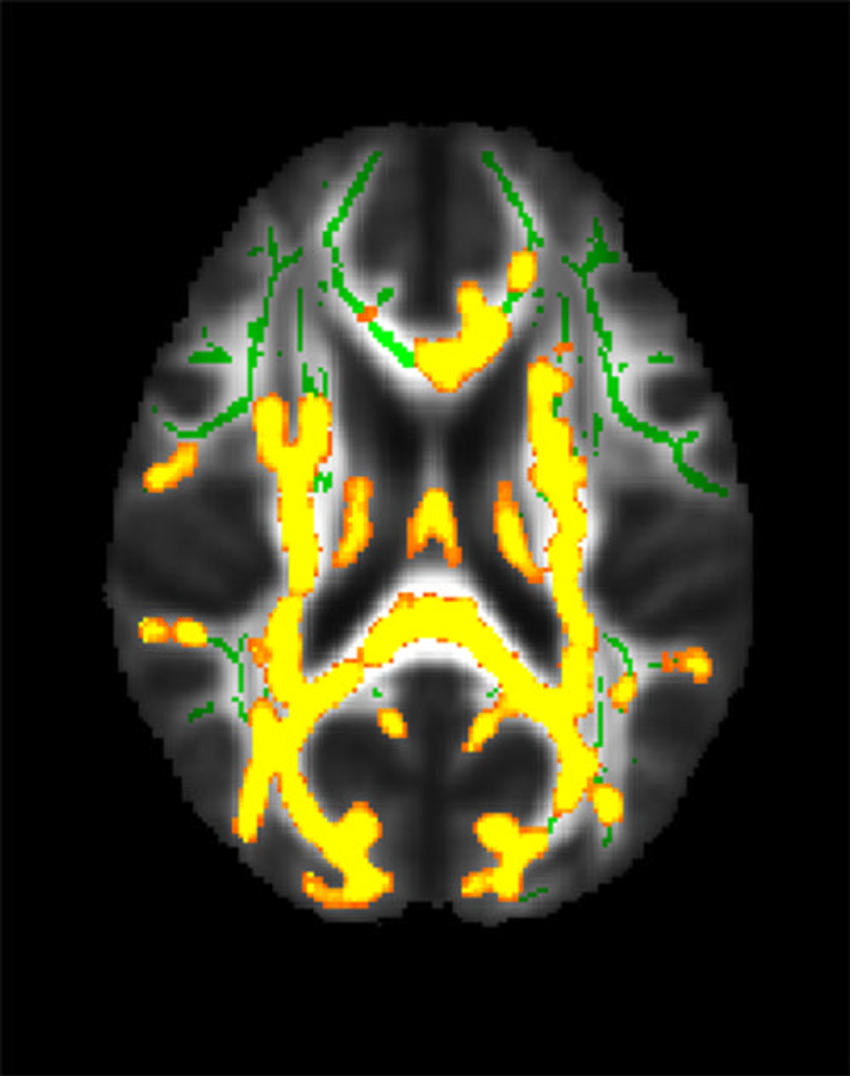
The brain’s communication network is its white matter, the 45 percent of the brain that consists of myelinated (insulated) axons that carry information between brain regions. An emerging view is that the white matter is compromised in autism, specifically in the frontal-posterior tracts. In a groundbreaking study published in 2009, Just and his colleagues showed for the first time that compromised white matter in children with reading difficulties could be repaired with extensive behavioral therapy. Their imaging study showed that the brain locations that had been abnormal prior to the remedial training improved to normal levels after the training, and the reading performance in individual children improved by an amount that corresponded to the amount of white matter change. Ongoing research at the CCBI is assessing the white matter in detail, measuring its integrity and topology, trying to pinpoint the difference in the autistic brain’s networks.

“This new understanding of what causes pronoun confusion in autism helps make sense of the larger problems of autism as well as the idiosyncrasies,” Just said. “Moreover, it points to new types of therapies that may help rehab the white matter in autism.”

###

In addition to Just and Mizuno, a psychology doctoral candidate and first author of the study, the research team included CMU’s Yanni Liu, a postdoctoral associate, and Timothy A. Keller, a senior research psychologist; Duquesne University’s Diane L. Williams, an assistant professor of speech-language pathology; and the University of Pittsburgh School of Medicine’s Nancy J. Minshew, a professor of psychiatry and neurology.

This research was funded by the National Institute of Child Health and Human Development and the Autism Speaks Foundation.

Research Supports Upcoming Alzheimer’s Disease Guidelines

Reston, Va.–Two new studies published in the August issue of The Journal of Nuclear Medicine (JNM) provide insight intothe potential of positron emission tomography (PET) to differentiate between types of dementia and to identify pharmaceuticals to slow the progress of dementia. With proposed National Institute on Aging (NIA) and the Alzheimer’s Association guidelines for detecting Alzheimer’s-related brain changesexpected in September, these articles give a preview of what may be to come.

Earlier this year, the NIA and the Alzheimer’s Association released new criteria and guidelines for the diagnosis of Alzheimer’s disease. The new proposed guidelines available this fall will offer additional information regarding the development of tests to measure biological changes in the brain, blood, or spinal fluid to diagnose Alzheimer’s at an earlier stage.

Earlier diagnosis of Alzheimer’s disease is the focus of the JNM article “Amyloid Imaging with 18F-Florbetaben in Alzheimer Disease and Other Dementias.” In this study researchers compared cortical amyloid deposition using 18F-florbetaben and PET in 109 controls and subjects with mild cognitive impairment (MCI), frontotemporal lobar degeneration, dementia with Lewy bodies, vascular dementia, Parkinson’s disease and Alzheimer’s disease.

The results show that 18F-florbetaben performs with the same high accuracy as previously reported with 11C-Pittsburgh Compound B—the most specific and widely used amyloid imaging agent—for distinguishing between certain types of neurodegenerative dementia, particularly for diagnosis of Alzheimer’s disease from frontotemporal dementia.

“The difference between 11C-Pittsburgh Compound B and 18F-florbetaben is that the 18F-florbetaben has a longer half life and is more affordable, making it appropriate for clinical use,” said Christopher Rowe, MD, FRACP, one of the authors of the study.  “This distinction profoundly affects treatment and prognosis and has genetic implications for the family.”

In addition to detecting Alzheimer’s disease earlier, molecular imaging can also be used in clinical trials to help develop pharmaceuticals to prevent or delay the onset of dementia. This is particularly of importance to patients with MCI who have yet to develop Alzheimer’s disease.

“We urgently need tools for conducting drug trials for MCI more efficiently,” noted Karl Herholz, MD, lead author of the study “Evaluation of a Calibrated 18F-FDG PET Score as a Biomarker for Progression of Alzheimer’s Disease and Mild Cognitive Impairment.” He continued, “Clinical outcome parameters show large variability and little sensitivity to progression at that stage, making these trials extremely costly and cumbersome. By using imaging biomarkers as primary outcome parameters, clinical trials can be performed with smaller sample sizes or shorter trial duration without loss of study power.”

The study evaluated a predefined quantitative measure—a PET score—that was extracted automatically from 18F-FDG PET scans using a sample of controls, patients with MCI and patients with Alzheimer’s disease. The PET scores provided a much higher test-retest reliability than standard neuropsychologic test scores (Alzheimer’s Disease Assessment Scale-Cognitive and Mini-Mental State Examination) and superior strength for measuring progression, as well as a valid measurement of cognitive impairment. As such, the PET scores can be considered a valid imaging biomarker to monitor the progression of MCI to Alzheimer’s disease.

“Prevention of dementia by drugs applied at MCI stage would greatly improve quality of life for patients and reduce costs of dementia care and treatment. Thus, development of such drugs and efficient tools for testing them are extremely important,” concluded Herholz.

Alzheimer’s disease is an irreversible, progressive brain disease that slowly destroys memory and thinking skills and, eventually, the ability to carry out the simplest tasks of daily living. Although treatment can slow the progression of the disease and help manage its symptoms, there is no cure for Alzheimer’s disease. The Alzheimer’s Association estimates that more five million people are currently living with the disorder.

Authors of the article “Amyloid Imaging with 18F-Florbetaben in Alzheimer Disease and Other Dementias” include: Victor Villemagne, Department of Nuclear Medicine and Centre for PET, Austin Health, Heidelberg, Victoria, Australia, Department of Medicine, University of Melbourne, Parkville, Victoria, Australia and The Mental Health Research Institute of Victoria, Parkville, Victoria, Australia; Kevin Ong and Christopher Rowe, Department of Nuclear Medicine and Centre for PET, Austin Health, Heidelberg, Victoria, Australia and Department of Medicine, University of Melbourne, Parkville, Victoria, Australia; Rachel S. Mulligan, Svetlana Pejoska, Gareth Jones, Graeme O’Keefe, Uwe Ackerman, Henri Tochon-Danguy and J. Gordon Chan, Department of Nuclear Medicine and Centre for PET, Austin Health, Heidelberg, Victoria, Australia; Colin L. Masters, The Mental Health Research Institute of Victoria, Parkville, Victoria, Australia; and Gerhard Holl, Cornelia B. Reininger, Lueder Fels, Barbara Putz and Beate Rhode, Bayer Schering Pharma, Berlin, Germany.

Authors of the article “Evaluation of a Calibrated 18F-FDG PET Score as a Biomarker for Progression in Alzheimer Disease and Mild Cognitive Impairment” include: Karl Herholz, Sarah Westwood and Cathleen Haense, Wolfson Molecular Imaging Centre, School of Cancer and Enabling Sciences, University of Manchester, Manchester, United Kingdom, and Graham Dunn, School of Community Based Medicine, University of Manchester, Manchester, United Kingdom.


Atherosclerosis linked to Dementia

American Stroke Association Scientific Statement

Statement Highlights:
• High blood pressure is related to the development of age-related vascular cognitive impairment.
• Maintaining a healthy heart may also maintain a healthy functioning brain, according to the statement.
• Screening elderly patients for heart and stroke risk factors may also identify those at risk of dementia.

DALLAS, July 21 — The same artery-clogging process (atherosclerosis) that causes heart disease can also result in age-related vascular cognitive impairments (VCI), according to a new American Heart Association/American Stroke Association scientific statement published online in Stroke: Journal of the American Heart Association.

Cognitive impairment, also known as dementia, includes difficulty with thinking, reasoning and memory, and can be caused by vascular disease, Alzheimer’s disease, a combination of both and other causes.

Atherosclerosis is a build- up of plaque in the arteries associated with elevated blood pressure, cholesterol, smoking and other risk factors. When it restricts or blocks blood flow to the brain, it is called cerebrovascular disease, which can result in vascular cognitive impairment.

Alzheimer’s disease is a progressive brain disorder that damages and destroys brain cells.
“We have learned that cerebrovascular disease and Alzheimer’s disease may work together to cause cognitive impairment and the mixed disorder may be the most common type of dementia in older persons,” said Philip B. Gorelick, M.D., M.P.H., co-chair of the writing group for the statement and director of the Center for Stroke Research at the University of Illinois College of Medicine at Chicago.

The prevalence of dementia increases with advancing age and affects about 30 percent of people over 80 years of age, costing more than $40,000 per patient annually in the United States, according to the statement authors. . .

Treating risk factors for heart disease and stroke with lifestyle changes and medical management may prevent or slow the development of dementia in some people, Gorelick said. Physical activity, healthy diet, healthy body weight, tobacco avoidance as well as blood pressure and cholesterol management could significantly help many people maintain their mental abilities as they age.

“Generally speaking, what is good for the heart is good for the brain,” Gorelick said. “Although it is not definitely proven yet, treatment or prevention of major risk factors for stroke and heart disease may prove to also preserve cognitive function with age.”

Understanding common causes of late-life cognitive impairment and dementia has advanced and many of the traditional risk factors for stroke also are risk markers for Alzheimer’s disease and vascular cognitive impairment. For example:

• Reducing high blood pressure is recommended to reduce the risk of vascular cognitive impairment. High blood pressure in mid-life may be an important risk factor for cognitive decline later in life.
• Controlling high cholesterol and abnormal blood sugar may also help reduce the risk of vascular cognitive impairment, although more study is needed to confirm the role of these interventions.
• Smoking cessation could lessen the risk of vascular cognitive impairment.
• Increasing physical exercise, consuming a moderate level of alcohol (i.e., up to 2 drinks for men and 1 drink for non-pregnant women) for those who currently consume alcohol; and maintaining a healthy weight may also lessen the risk of VCI, but more study is needed to confirm usefulness.
• Taking B vitamins or anti-oxidant supplements, however, does not prevent vascular cognitive impairment, heart disease or stroke.

Identifying people at risk for cognitive impairment is a promising strategy for preventing or postponing dementia and for public health cost savings, the writers said. “We encourage clinicians to use screening tools to detect cognitive impairment in their older patients and continue to treat vascular risks according to nationally- or regionally-accepted guidelines.”
Vascular cognitive impairment is most obvious after a stroke, but there could be cognitive repercussions from small strokes, microbleeds or areas of diminished blood flow in the brain that cause no obvious neurological symptoms, according to the statement.

In many cases, the risk factors for vascular cognitive impairment are the same as for stroke, including high blood pressure, high cholesterol, abnormalities in heart rhythm and diabetes.
The American Academy of Neurology and the Alzheimer’s Association have endorsed the statement.

Other members of the writing group include: Angelo Scuteri, co-chair, M.D., Ph.D.; David Bennett, M.D.; Sandra E. Black, M.D.; Charles DeCarli, M.D.; Helena C. Chui, M.D.; Steven M. Greenberg, M.D., Ph.D.; Randall T. Higashida, M.D.; Costantino Iadecola, M.D.; Lenore J. Launer, M.D.; Stephane Laurent, M.D.; Oscar L. Lopez, M.D.; David Nyenhuis, Ph.D.; Ronald C. Petersen, M.D., Ph.D.; Julie A. Schneider, M.D.; Christophe Tzourio, M.D., Ph.D.; Donna K. Arnett, Ph.D.; Ruth Lindquist, Ph.D., R.N.; Peter M. Nilsson, M.D., Ph.D.; Gustavo C. Roman, M.D.; Frank W. Sellke, M.D.; and Sudha Seshadri, M.D. Author disclosures are on the manuscript.

###
NR11-1102 (Stroke/Gorelick)

Additional resources:
• For information about emotional and behavioral challenges after stroke, visit www.strokeassociation.org/LifeAfterStroke