MedicalResearch.com Interview with:
[caption id="attachment_28848" align="alignleft" width="200"]

Dr. Richard Spritz,[/caption]
Richard A. Spritz, M.D.
Professor and Director,
Human Medical Genetics and Genomics Program
University of Colorado School of Medicine.
Aurora, CO 80045 USA
MedicalResearch.com: What is the background for this study? What are the main findings?
Response: Vitiligo is an autoimmune disease in which depigmented skin results from destruction of skin melanocytes, with strong epidemiologic association with several other autoimmune diseases that include autoimmune thyroid disease, type 1 diabetes, rheumatoid arthritis, pernicious anemia, systemic lupus erythematosus, and Addison’s disease.
In previous genetic linkage and genome-wide association studies (GWAS) of vitiligo patients of European-derived white ancestry (EUR), we identified 27 vitiligo susceptibility loci. In the present study, we carried out a third GWAS of vitiligo in EUR subjects. The combined analysis, with almost 5,000 vitiligo cases and 40,000 non-vitiligo controls, identified a total 23 new confirmed vitiligo loci, as well as seven with suggestive significance.

 Dr. Andrew Blauvelt[/caption]
Andrew Blauvelt, M.D., M.B.A.
President and Investigator
Oregon Medical Research Center
Portland, OR 97223
MedicalResearch.com: What is the background for this study? What are the main findings?
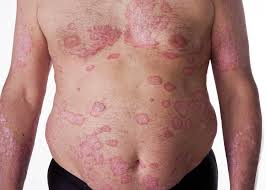
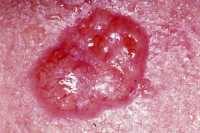
Response: Findings from the guselkumab Phase 3 VOYAGE 1 study showed that patients with moderate to severe plaque psoriasis receiving the anti-interleukin (IL)-23 monoclonal antibody (mAb) achieved significant improvements in skin clearance compared with patients receiving placebo and patients receiving Humira® (adalimumab), a TNF blocker. The Phase 3 study and head-to-head analysis of guselkumab vs. adalimumab in the treatment of moderate to severe plaque psoriasis also showed the significant efficacy of guselkumab maintained through week 48 compared with adalimumab, and the robust efficacy of guselkumab in meeting all primary and major secondary endpoints.
Dr. Andrew Blauvelt[/caption]
Andrew Blauvelt, M.D., M.B.A.
President and Investigator
Oregon Medical Research Center
Portland, OR 97223
MedicalResearch.com: What is the background for this study? What are the main findings?
Response: Findings from the guselkumab Phase 3 VOYAGE 1 study showed that patients with moderate to severe plaque psoriasis receiving the anti-interleukin (IL)-23 monoclonal antibody (mAb) achieved significant improvements in skin clearance compared with patients receiving placebo and patients receiving Humira® (adalimumab), a TNF blocker. The Phase 3 study and head-to-head analysis of guselkumab vs. adalimumab in the treatment of moderate to severe plaque psoriasis also showed the significant efficacy of guselkumab maintained through week 48 compared with adalimumab, and the robust efficacy of guselkumab in meeting all primary and major secondary endpoints.