Dr. Sumarsono[/caption]
Andrew Sumarsono, MD
UT Southwestern Medical Center
MedicalResearch.com: What is the background for this study?
Response: There are currently 12 types of medications used to treat type 2 diabetes. With approximately 30 million adults living with diabetes in the United States, the rising cost of insulin has raised concerns about the affordability of diabetes care.
We evaluated trends in total spending and number of prescriptions of all diabetes therapies among Medicare Part D beneficiaries between 2012 and 2017.
Phoebe Tran
Doctoral Student
Department of Chronic Disease Epidemiology
Yale School of Medicine
MedicalResearch.com: What is the background for this study?
Response: As the prevalence of diabetes risk factors such as obesity, high blood pressure, high cholesterol, and physical inactivity are considerably higher in US individuals residing in rural areas compared to their urban counterparts, rural residents face increased risk of developing diabetes. Diabetes screening is a useful tool that can be used to identify people with newly developed type 2 diabetes and offer them early treatment. In this study, we examined whether there are differences in diabetes screening levels between rural and urban areas across the US using nationally representative survey data from 2011, 2013, 2015, and 2017.
Dr. Myerson[/caption]
Rebecca Myerson, PhD
Assistant Professor, Population Health Sciences
School of Medicine and Public Health
University of Wisconsin, Madison
MedicalResearch.com: What is the background for this study?
Response: Many people with diabetes are undiagnosed, and those who are diagnosed often are untreated and uncontrolled. Increasing access to health insurance for patients with health care needs was a goal of the Affordable Care Act.
We analyzed information from 11 years of the National Health and Nutrition Examination Survey, which gathers data that are nationally representative of the civilian population. The biennial survey includes biomarkers, including HbA1c, a measure of blood-sugar control. Using the NHANES data allowed the researchers to identify those with undiagnosed diabetes.
Dr Sopio Tatulashvili
Avicenne Hospital
Bobigny, France
MedicalResearch.com: What is the background for this study?
Response: Diabetes and pre-diabetes are associated with increased cardiovascular morbidity and mortality. Early screening and the treatment of glucose metabolism disorders could lower the risk of further complications. Furthermore, type 2 diabetes can be prevented. For this purpose, it is of major importance to better identify the risk factors of type 2 diabetes. Hormonal factors are increasingly suspected to play a role in the etiology of type 2 diabetes. The aim of this study was to determine the associations between various hormonal factors and the risk of incident type 2 diabetes in the large prospective female E3N (Etude Épidémiologique de Femmes de la Mutuelle Générale de L’Education Nationale) cohort study. Based on a very detailed set of information available in 83,799 women from the large prospective E3N cohort study followed for 22 years, we have been able to clarify the relationships between various hormonal factors and type 2 diabetes risk.
Dr. David Berg[/caption]
Dr. David Berg MD
Senior Fellow in Cardiovascular Medicine and
Critical Care Medicine
Brigham and Women’s Hospital
Postdoctoral Research Fellow with the TIMI Study Group.
MedicalResearch.com: What is the background for this study?
Response: Heart failure is a frequent and important complication of type 2 diabetes mellitus (T2DM), but there are limited tools for identifying which patients with T2DM are at the highest risk of developing heart failure.
In this study, we developed and validated the TIMI Risk Score for Heart Failure in Diabetes [TRS-HF(DM)], a novel clinical risk score that identifies patients with T2DM who are at heightened risk for hospitalization due to heart failure.
Fortunately, the risk score also identifies patients who have the greatest absolute reduction in the risk of hospitalization for heart failure with a new class of glucose-lowering therapies called sodium-glucose cotransporter-2 (SGLT2) inhibitors.
Dr. Deepak L. Bhatt[/caption]
Deepak L. Bhatt, MD, MPH, FACC, FAHA, FSCAI, FESC
Professor of Medicine, Harvard Medical School
Executive Director of Interventional Cardiovascular Programs,
Brigham and Women’s Hospital Heart & Vascular Center
MedicalResearch.com: What is the background for this study?
Response: Dual antiplatelet therapy (DAPT) is known to improve outcomes in patients with acute coronary syndromes (ACS), prior myocardial infarction (MI), or recent coronary stenting. What was unknown is whether patients with diabetes and stable coronary artery disease – a group generally believed to be at high ischemic risk – would benefit from initiation of long-term DAPT with low-dose aspirin plus ticagrelor versus low-dose aspirin (plus placebo). This is what THEMIS was designed to test, with THEMIS-PCI designed prospectively to examine those patients specifically who had a history of previous percutaneous coronary intervention (PCI).
Dr. Nicolau[/caption]
Jose Carlos Nicolau, MD PhD
Heart Institute
University of Sao Paulo Medical School,
Sao Paulo, Brazil
MedicalResearch.com: What is the background for this study?
Response: There are few evidence about the late phase (1-3 years) of patients with diabetes and myocardial infarction, especially regarding quality of life (qol) and health resource utilization. Our study showed that the population with diabetes (dm), compared with the population without diabetes, have worse quality of life, more hospitalizations, and when hospitalized showed a longer hospital stay. Additionally, as expected, dm population have worse outcomes, including the composite of cv death, myocardial infarction or stroke, and all-cause death.
Prof. John McMurray[/caption]
Prof. John McMurray
Professor of Cardiology
Institute of Cardiovascular & Medical Sciences
University of Glasgow
MedicalResearch.com: What is the background for this study?
Response: SGLT2 inhibitors prevent the development of heart failure (HF) in patients with type 2 diabetes (T2D) – can they be used to treat patients with established heart failure? Also, although introduced as a glucose-lowering treatment for T2D, experimental evidence suggests these drugs may have non-glucose mediated benefits. So, might they be a treatment for HF even in patients without diabetes?
Prof. Danchin[/caption]
Nicolas Danchin MD, FESC
Professor of Medicine, Consultant Cardiologist
Intensive Cardiac Care Unit
Hôpital Européen Georges Pompidou
Paris, France
MedicalResearch.com: What is the background for this study?
Response: FAST-MI is a programme of nationwide French surveys, carried out every 5 years in France since 2005 in patients hospitalised with STEMI or NSTEMI. Patients are included consecutively for one month and 10-year follow-up is organized. We can thus analyse patients' outcomes in relation with their profile. Knowing that diabetic patients represent a large proportion of patients with AMI, we thought it would be worthwhile determining whether they suffered specific complications, and in particular, heart failure, both at the acute stage and in the subsequent months.
Prof. Dr. Christoph Kaleta
Institute for Experimental Medicine
Institute for Experimental Medicine, Kiel University
Kiel, Germany
MedicalResearch.com: What is the background for this study?
Response: Even though Metformin is the first-line treatment option in type-2 diabetic patients, its specific mechanism of action has remained elusive so far. Moreover, metformin is of particular interest as an anti-aging drug since it's usage has been shown to be associated with a lower incidence of several aging diseases in type-2 diabetic patients taking metformin when compared to matched healthy controls.
While previous work was able to show pronounced changes in the microbiota of patients taking metformin and a health-promoting effect of metformin-adapted microbiota, how this beneficial effect could be mediated has remained unclear.
Dr. Hooper[/caption]
Lee Hooper PhD, RD
Reader in Research Synthesis, Nutrition & Hydration
Norwich Medical School
University of East Anglia
England, UK
MedicalResearch.com: What is the background for this study?
Response: The World Health Organization asked us to carry out a set of studies (systematic reviews of randomised controlled trials) assessing health effects of omega-3 and omega-6, which are polyunsaturated fats. This is because the WHO are planning to update their dietary guidance on fats in the near future.
Worries about effects of long chain omega-3 on control of diabetes have long existed, and some experimental studies have suggested that omega-3 supplementation and diets high in PUFA and omega-3 raise fasting glucose. Pollutants such as methylmercury and polychlorinated biphenyl levels exceeding recommended thresholds are rarer now, but have been reported in seafoods and fish oil supplements; elevated mercury levels interrupt insulin signalling, raising fasting glucose, in mouse models. Body concentrations of organic pollutants are correlated with prevalence of diabetes in the US, but other cross sectional studies have suggested either no association with or benefits of eating fish on glycaemic control. Systematic reviews of observational studies have suggested both positive and negative associations with glucose metabolism, but strong evidence shows that omega-3 supplements reduce raised triglycerides and have little or no effect on body weight. Theories suggest that omega-3 and omega-6 fats compete in some metabolic pathways so that the omega-3/omega-6 ratio is more important than absolute intakes of either.
Dr. Jeff Scherrer[/caption]
Jeff Scherrer, Ph.D.
Associate professor; Research director
Department of Family and Community Medicine
Saint Louis University Center for Health Outcomes Research
MedicalResearch.com: What is the background for this study?
Response: This study was part of a larger NIH grant to determine if PTSD is associated with poor health behaviors and subsequently whether PTSD remains an independent risk factor for diabetes and heart disease. Our second focus of the grant was to measure if those patients who experience clinically meaningful PTSD improvement have improved health behaviors (e.g. seeking help to lose weight) and a lower risk for diabetes and heart disease.
The rationale for this study of PTSD improvement and lower risk for diabetes is supported from other investigators' findings that PTSD treatment completion is often followed by improvement in sleep, depression, pain and general physical complaints and lower blood pressure. Because we have found the association between PTSD and incident diabetes is largely explained by obesity, depression and other comorbid conditions that are more common in patients with vs. without PTSD, we hypothesized that improvements in PTSD would be associated with lower risk of diabetes either directly or due to improvements in these comorbid diabetes risk factors.
Dr. Kazemian[/caption]
Pooyan Kazemian, Ph.D.
Instructor in Medicine
Massachusetts General Hospital
MedicalResearch.com: What is the background for this study?
Response: Advances in diabetes care can meaningfully improve outcomes only if they effectively reach the populations at risk. However, it is not known if recent innovations in diabetes treatment and care models have reached the United States population at risk.
Dr. Mauras[/caption]
Nelly Mauras, MD
Chief, Division of Pediatric Endocrinology,
Nemours Children’s Health System
Professor of Pediatrics
Mayo College of Medicine
MedicalResearch.com: What is the background for this study?
Response: Keeping blood sugars close to normal in young children with diabetes is often limited by parental fears of the risks of low blood sugars and impaired cognitive development. Dr. Nelly Mauras, at the Nemours Children’s Health System in Jacksonville FL, along with Dr. Allan Reiss at Stanford University are co-principal investigators of the Diabetes Research in Children Network, a 5-center consortium performing studies in children with diabetes, also including the University of Iowa, Washington University St Louis and Yale University.
The investigators recruited 144 children with type 1 diabetes who were 4-7 years old and performed brain imaging (MRIs), did special cognitive tests, and monitored blood sugars using continuous glucose monitors. These studies were repeated after 18 months, approximately 54 months and 74 months, to examine changes in the brain and compare the results with those of 70 children the same age who do not have diabetes.
Individuals who used statins for the longest period of time (more than 2 years) had an even greater risk (3 times greater) for developing type 2 diabetes mellitus, after adjusting for confounding factors....
Dr. Khan[/caption]
Naeem Khan MD
Vice President at AstraZeneca
MedicalResearch.com: What is the background for this study? What are the main findings?
Response: A pre-specified exploratory analysis of renal data from the DECLARE-TIMI 58 trial, the largest SGLT-2 inhibitor (SGLT-2i) cardiovascular outcomes trial (CVOT) conducted to date, showed that FARXIGA (dapagliflozin) reduced the composite of kidney function decline, end-stage renal disease (ESRD) or renal death by 47% in patients with type 2 diabetes (T2D).
Additionally, FARXIGA reduced the relative risk of a cardio-renal composite of kidney function decline, ESRD, or renal or cardiovascular (CV) death by 24% compared to placebo.
The analysis evaluated 17,160 patients with type 2 diabetes and predominantly preserved renal function, irrespective of underlying atherosclerotic CV disease (ASCVD).
The major driver for increases in average total payments for a 30-day supply of insulin were explained by increases in payments for existing products and not by changes in the market share of insulin types....
Dr. Alejandro[/caption]
Dr. Rodolfo Alejandro, MD
Professor of Medicine
University of Miami Miller School of Medicine
Co-Director of the Cell Transplant Center
Director/Attending Physician of the Clinical Cell Transplant Program
Diabetes Research Institute
www.DiabetesResearch.org
MedicalResearch.com: What is the background for this study? What are the main findings?
Response: In type 1 diabetes, the insulin-producing islets cells of the pancreas have been mistakenly destroyed by the immune system, requiring patients to manage their blood sugar levels through a daily regimen of insulin therapy. Islet transplantation has allowed some patients to live without the need for insulin injections after receiving a transplant of donor cells. Some patients who have received islet transplants have been insulin independent for more than a decade, as DRI researchers have published. Currently, islet transplantation remains an experimental procedure limited to a select group of adult patients with type 1 diabetes.Although not all subjects remain insulin independent, like the subjects described in this presentation, after an islet transplant a significant number of them continue with excellent graft function for over 10 years that allows them to have near-normal glucose metabolism in the absence of severe hypoglycemia on small doses of insulin.
In 2016, the National Institutes of Health-sponsored Clinical Islet Transplantation Consortium reported results from its Food and Drug Administration (FDA)-authorized Phase 3 multi-center trial, of which the DRI was a part, indicating that islet transplantation was effective in preventing severe hypoglycemia (low blood sugar levels), a particularly feared complication in type 1 diabetes that can lead to seizures, loss of consciousness and even death.
The study was a significant step toward making islet transplantation an approved treatment for people with type 1 diabetes and reimbursable through health insurance, as it is in several other countries around the world.
Dr. Karastergiou[/caption]Kalypso Karastergiou, MD, PhD
Assistant Professor, Medicine, Endocrinology, Diabetes and Bone Disease
Diabetes, Obesity and Metabolism Institute
Icahn School of Medicine at Mount Sinai
MedicalResearch.com: What is the background for this study?
Response: Multiple studies, epidemiological as well as clinical, have established that body shape is an important and independent predictor of cardiovascular and metabolic disease risk and ultimately total mortality. Subjects that preferentially store weight in the abdominal area (often described as android, upper-body or apple-shape obesity) are at increased risk, whereas those who preferentially store weight in the lower body, in the gluteofemoral area (gynoid, lower-body or pear-shape), appear to be protected. The former is more common in men, whereas the latter in women, especially premenopausal women.
The overarching questions in the field are:
Dr. Pittas[/caption]
Anastassios G. Pittas, M.D MS
Professor
Co-Director, Diabetes and Lipid Center;
Tufts Medical Center
MedicalResearch.com: What is the background for this study? What are the main findings?
Response: Observational studies have consistently reported an association between low blood vitamin D level and development of type 2 diabetes. However, whether vitamin D supplementation lowers risk of developing diabetes is not known. We designed and conducted the Vitamin D and diabetes (D2d) study to answer this question. We randomized 2,423 people with prediabetes to 4,000 IU/day of vitamin D3 or placebo and followed them for new-onset diabetes with blood tests every 6 months for an average of 2.5 years. About 80% of participants had sufficient vitamin D level at baseline (25-hydroxyvitamin D level >= 20 ng/mL). The trial was designed to show a reduction of 25% or more in diabetes risk with vitamin D.
The study was unable to show a reduction of 25% or more. At the end of the study, there was a 12% reduction in risk of developing diabetes with vitamin D, which missed statistical significance (hazard ration 0.88; 95% confidence interval 0.75 to 1.04). In a small subgroup of participants with vitamin D deficiency at baseline (25-hydroxyvitamin D level < 12 ng/mL) there was 62% reduction in risk of diabetes with vitamin D (hazard ration 0.38; 95% confidence interval 0.18 to 0.80).
Mr. Thulasiraj[/caption]
Thulasiraj Ravilla
Executive Director – LAICO &
Director – Opeations
Aravind Eye Care System
Tamilnadu, India
MedicalResearch.com: What is the background for this study? What are the main findings?
Response: Diabetic Retinopathy (DR) is a visual consequence of diabetes and various other studies have reported that in India, 10% to 30% of adults with diabetes have DR, with higher rates found in older people and urban areas. Undetected DR leads to vision loss and eventually blindness. Thus early identification of DR is critical to initiate appropriate treatment to reduce the rate of vision loss.
Conventional approaches of requesting diabetologists to refer patients with diabetes to an ophthalmologist has been ineffective due to compliance issues, both by the diabetologists and the patients. Similarly screening through outreach eye camps have not been found to be effective in India and other developing countries owing to inadequate eye care resources. Teleretinal screening for Diabetic Retinopathy is increasingly being used in India. Evidence from randomized clinical trials on the benefits of teleretinal screening is limited. Whatever evidence is there are from high income countries, which often have little relevance to developing countries.
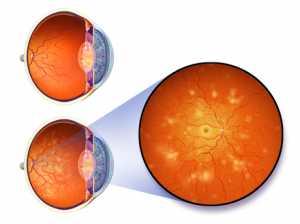
Illustration depicting diabetic retinopathy[/caption]
Robert L. Vitti, MD, MBA
Vice President and Head, Ophthalmology
Regeneron Pharmaceuticals
Dr. Vitti discusses the recent announcement that the FDA has approved EYLEA to treat all stages of diabetic retinopathy.
MedicalResearch.com: Can you provide additional background on this approval? Would you briefly explain diabetic retinopathy and it's impact on patients?
Response: The FDA has approved EYLEA (aflibercept) Injection to treat all stages of diabetic retinopathy (DR). DR is the leading cause of blindness among working-aged American adults. Approximately 8 million people live with DR, a complication of diabetes characterized by damage to the blood vessels in the retina (per 2010 data).
The disease generally starts as non-proliferative diabetic retinopathy (NPDR) and often has no warning signs or symptoms. Over time, NPDR often progresses to proliferative diabetic retinopathy (PDR), a stage in which abnormal blood vessels grow on the surface of the retina and into the vitreous cavity, potentially causing severe vision loss.
Monica Perazzolo
Research Centre for Musculoskeletal Science and Sports Medicine
School of Healthcare Science, Faculty of Science and Engineering,
Manchester Metropolitan University, Manchester, UK
Department of Biomedical and Neuromotor Sciences
University of Bologna, Bologna, Italy
MedicalResearch.com: What is the background for this study? What are the main findings?
Response: Our research on motor control in diabetes focussed on the effect of diabetic peripheral neuropathy on driving. Drivers with diabetic peripheral neuropathy showed a less well controlled use of the accelerator pedal and sometimes larger, faster steering corrections needed to stay in lane when driving a simulator compared to healthy drivers and people with diabetes but no neuropathy.
Despite these negative findings, an important result is that drivers with diabetic peripheral neuropathy demonstrated an improvement in their driving with practice.
Dr. Andrew[/caption]
Professor Ruth Andrew PhD
Chair of Pharmaceutical Endocrinology
University/BHF Centre for Cardiovascular Science
Queen's Medical Research Institute
University of Edinburgh
MedicalResearch.com: What is the background for this study? What are the main findings?
Response: Our research group has been interested for a number of years in how stress hormones (called glucocorticoids) influence the risk of heart disease and diabetes. Glucocorticoids help us control stress and regulate how the body handles its fuel, for example the carbohydrate and fat we eat. However exposure to high levels of glucocorticoids, can increase the risk of diabetes, obesity and high blood pressure.
We studied men with prostate disease who took 5α-reductase inhibitors, because over and above the beneficial actions of these drugs in the prostate, they also slow down inactivation of glucocorticoids. We had carried out some short term studies with the drugs in humans and found that they reduced the ability of insulin to regulate blood glucose. Therefore in the study we have just published in the BMJ, we examined how patients receiving these drugs long-term responded and particularly we were able to show that over an 11 year period that there was a small additional risk of developing type 2 diabetes, the type of disease common in older people, compared with other types of treatments.
Prof. Car[/caption]
Associate Professor Josip Car
MD, PhD, DIC, MSc, FFPH, FRCP (Edin)
Associate Professor of Health Services Outcomes Research,
Director, Health Services Outcomes Research Programme and Director
Centre for Population Health Sciences
Principal Investigator, Population Health & Living Laboratory
MedicalResearch.com: What is the background for this study?
Response: In 2018, almost 8% of people with diabetes who owned a smartphone used a diabetes app to support self-management. Currently, most apps are not regulated by the US Food and Drug Administration (FDA). We downloaded and assessed 371 diabetes self-management apps, to see if they provided evidence-based decision support and patient education.