Posted at 22:36h
in
Author Interviews
For nurses, managing the demands of their profession while taking care of their own well-being can be a significant challenge. Long hours, high stress, and emotional demands can take a toll, making self-care an essential component of their routine. This article explores practical self-care strategies tailored for nurses on the go, offering advice on maintaining physical health, mental clarity, and emotional stability. By integrating these practices into their daily lives, nurses can enhance their resilience and provide the best care for their patients while also taking care of themselves.
Prioritizing Physical Health
Physical health is the foundation of a nurse's ability to perform their duties. Regular exercise, even in short bursts, can significantly improve physical stamina and overall health. Simple activities like taking the stairs instead of the elevator, a quick walk during breaks, or stretching exercises can be integrated into a busy schedule. Proper nutrition is also crucial; packing healthy snacks such as fruits, nuts, and yogurt can help sustain energy throughout long shifts. Staying hydrated is equally important, as dehydration can lead to fatigue and decreased cognitive function.
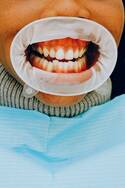
In addition to maintaining an active lifestyle and healthy eating habits, regular health checkups are vital for nurses to monitor their overall well-being. Routine screenings can help identify potential issues early, such as high blood pressure or vitamin deficiencies, which are common among healthcare professionals due to demanding schedules. According to this
dentist in Virginia Beach VA, scheduling annual physicals and dental visits ensures that nurses remain in optimal health to meet the physical and mental demands of their profession




 Dr. Shah[/caption]
Silvi Shah, MD,MS,FASN,FACP
Associate Professor
Internal Medicine | College of Medicine
University of Cincinnati College of Medicine
MedicalResearch.com: What is the background for this study?
Response: AKI (Acute Kidney Injury) is a major contributor to end-stage kidney disease (ESKD).
About a third of patients with ESKD recover kidney function due to AKI. The study looked at the health outcomes of 22,922 patients from the U.S. Renal Data System from 2005 to 2014 to construct a clinical scoring system to predict kidney recovery within 90 days and 12 months after the start of dialysis for kidney failure patients due to acute kidney injury (AKI)
Dr. Shah[/caption]
Silvi Shah, MD,MS,FASN,FACP
Associate Professor
Internal Medicine | College of Medicine
University of Cincinnati College of Medicine
MedicalResearch.com: What is the background for this study?
Response: AKI (Acute Kidney Injury) is a major contributor to end-stage kidney disease (ESKD).
About a third of patients with ESKD recover kidney function due to AKI. The study looked at the health outcomes of 22,922 patients from the U.S. Renal Data System from 2005 to 2014 to construct a clinical scoring system to predict kidney recovery within 90 days and 12 months after the start of dialysis for kidney failure patients due to acute kidney injury (AKI)

 Dr. Kosinski[/caption]
Dr. Larry Kosinski, MD
Gastroenterologist and
Dr. Kosinski[/caption]
Dr. Larry Kosinski, MD
Gastroenterologist and 

 The High-Stress Environment of Nursing
 The knees are equally essential for us all — athlete or not. It’s the single most important joint for basic mobility. But, for MMA practitioners, it means much more than that. Due to the dynamic nature of the sport, the knees go through immense strain during training and fights. From kicking, takedowns, and submission defense, the knees do the heavy lifting for it all. To make matters worse, a “leg kick” to the knee can sometimes be enough to cause a fracture then and there.
With all that in mind, it makes sense that ligament tears, strains, and knee sprains aren’t uncommon in this sport. Problems usually stem from insufficient rest or overuse, conditioning, poor technique, or just bad luck (for example if you’re fighting Justin Gaethje, the meanest leg-kicker).
Your best bet against these risk factors is to build and maintain optimal knee health all year round. Have a proactive approach by incorporating knee rehab and strengthening exercises. Even if your knees aren’t injured, they can still be inflamed or overworked, so some rehabilitation movements could go a long way.
The knees are equally essential for us all — athlete or not. It’s the single most important joint for basic mobility. But, for MMA practitioners, it means much more than that. Due to the dynamic nature of the sport, the knees go through immense strain during training and fights. From kicking, takedowns, and submission defense, the knees do the heavy lifting for it all. To make matters worse, a “leg kick” to the knee can sometimes be enough to cause a fracture then and there.
With all that in mind, it makes sense that ligament tears, strains, and knee sprains aren’t uncommon in this sport. Problems usually stem from insufficient rest or overuse, conditioning, poor technique, or just bad luck (for example if you’re fighting Justin Gaethje, the meanest leg-kicker).
Your best bet against these risk factors is to build and maintain optimal knee health all year round. Have a proactive approach by incorporating knee rehab and strengthening exercises. Even if your knees aren’t injured, they can still be inflamed or overworked, so some rehabilitation movements could go a long way.


 Dr. Alexis[/caption]
Andrew F. Alexis, MD, MPH
Vice-Chair for Diversity and Inclusion
Department of Dermatology
Dermatologist
Center for Diverse Skin Complexions
Weill Cornell Medicine – NY
MedicalResearch.com: What are the main types of skin cancer? Is the incidence changing?
Response: The 3 main types of skin cancer are melanoma, squamous cell carcinoma (SCC) and basal cell carcinoma (BCC). Skin cancer is the most common cancer in the United States1 and 1 in 5 Americans will develop skin cancer in their lifetime. (2)
The overall incidence has changed as follows:
• Melanoma: Rates doubled over past 30 years from 1982 to 2011.3 It differs by age group.
o Adolescents and adults age 30 and younger: incidence rate is declining
o Older age groups (e.g. 80 and older): incidence rate is increasing
• Squamous Cell Cancer:
o Incidence increased 263% between 1976-1984 and 2000-20104
• Basal Cell Cancer:
o Incidence increased 145% between 1976-1984 and 2000-20104
Dr. Alexis[/caption]
Andrew F. Alexis, MD, MPH
Vice-Chair for Diversity and Inclusion
Department of Dermatology
Dermatologist
Center for Diverse Skin Complexions
Weill Cornell Medicine – NY
MedicalResearch.com: What are the main types of skin cancer? Is the incidence changing?
Response: The 3 main types of skin cancer are melanoma, squamous cell carcinoma (SCC) and basal cell carcinoma (BCC). Skin cancer is the most common cancer in the United States1 and 1 in 5 Americans will develop skin cancer in their lifetime. (2)
The overall incidence has changed as follows:
• Melanoma: Rates doubled over past 30 years from 1982 to 2011.3 It differs by age group.
o Adolescents and adults age 30 and younger: incidence rate is declining
o Older age groups (e.g. 80 and older): incidence rate is increasing
• Squamous Cell Cancer:
o Incidence increased 263% between 1976-1984 and 2000-20104
• Basal Cell Cancer:
o Incidence increased 145% between 1976-1984 and 2000-20104


 Exercise triggers the release of endorphins, chemicals in the brain that act as natural painkillers and mood lifters. This biochemical shift is crucial for


 Dr. Parekh[/caption]
Ankit Parekh, PhD
Director of the Sleep And Circadian Analysis (SCAN) Group
Assistant Professor of Medicine
(Pulmonary, Critical Care and Sleep Medicine)
Icahn School of Medicine at Mount Sinai
MedicalResearch.com: What is the background for this study? What are the main findings?
Response: Sleep apnea is associated with incident cardiovascular disease, and is a common chronic condition affecting over a billion people worldwide. In diagnosing and treating sleep apnea, it is imperative to establish the type of sleep apnea—whether it is obstructive or central sleep apnea. The differential contribution of central vs. obstructive sleep apnea toward incidental cardiovascular disease in those with significant sleep apnea has not been well studied.
Our group has developed an automated algorithm that deduces on a breath-by-breath level whether reductions in airflow are predominantly due to obstructive or central phenomena. Our algorithm uses several features that are known to be key in distinguishing the type of events and derives a probability of obstruction across each “small” (reduced amplitude) breath. The breath-by-breath probability is then used to determine whether a patient’s burden of sleep apnea is predominantly obstructive or central.
In this work, we analyzed sleep study data from The Osteoporotic Fractures in Men (MrOS) cohort (N=2793) consisting of elderly men, across two visits separated on average by 6.5 years, and derived the probability of obstruction on a breath-by-breath level. The median probability of obstruction for each subject was computed and analyzed against outcomes of cardiovascular disease. We also assessed the stability of the metric in those without any prevalent cardiovascular disease. We find that median probability of obstruction was stable across the two visits, and those with any incident cardiovascular disease had a lower median probability of obstruction: patients with incident cardiovascular outcomes had a significant burden of sleep apnea that was predominantly “central” in nature.
Dr. Parekh[/caption]
Ankit Parekh, PhD
Director of the Sleep And Circadian Analysis (SCAN) Group
Assistant Professor of Medicine
(Pulmonary, Critical Care and Sleep Medicine)
Icahn School of Medicine at Mount Sinai
MedicalResearch.com: What is the background for this study? What are the main findings?
Response: Sleep apnea is associated with incident cardiovascular disease, and is a common chronic condition affecting over a billion people worldwide. In diagnosing and treating sleep apnea, it is imperative to establish the type of sleep apnea—whether it is obstructive or central sleep apnea. The differential contribution of central vs. obstructive sleep apnea toward incidental cardiovascular disease in those with significant sleep apnea has not been well studied.
Our group has developed an automated algorithm that deduces on a breath-by-breath level whether reductions in airflow are predominantly due to obstructive or central phenomena. Our algorithm uses several features that are known to be key in distinguishing the type of events and derives a probability of obstruction across each “small” (reduced amplitude) breath. The breath-by-breath probability is then used to determine whether a patient’s burden of sleep apnea is predominantly obstructive or central.
In this work, we analyzed sleep study data from The Osteoporotic Fractures in Men (MrOS) cohort (N=2793) consisting of elderly men, across two visits separated on average by 6.5 years, and derived the probability of obstruction on a breath-by-breath level. The median probability of obstruction for each subject was computed and analyzed against outcomes of cardiovascular disease. We also assessed the stability of the metric in those without any prevalent cardiovascular disease. We find that median probability of obstruction was stable across the two visits, and those with any incident cardiovascular disease had a lower median probability of obstruction: patients with incident cardiovascular outcomes had a significant burden of sleep apnea that was predominantly “central” in nature.

 As technology continues to evolve within the healthcare sector, creating new opportunities for enhancing patient care, it's crucial that empathy doesn't get lost in the shuffle. Innovative tools and systems should be seen as avenues to deepen our understanding and connection with patients, rather than as barriers to the human touch. Embracing technology with empathetic intention can lead to an even greater level of personalized care.
One specific area where empathy can play a transformative role is in addressing
As technology continues to evolve within the healthcare sector, creating new opportunities for enhancing patient care, it's crucial that empathy doesn't get lost in the shuffle. Innovative tools and systems should be seen as avenues to deepen our understanding and connection with patients, rather than as barriers to the human touch. Embracing technology with empathetic intention can lead to an even greater level of personalized care.
One specific area where empathy can play a transformative role is in addressing 

 Dr. Haigh[/caption]
Cathryn Haigh, Ph.D.
Dr. Haigh[/caption]
Cathryn Haigh, Ph.D.

 In recent years, our communities have faced unprecedented challenges to public health and hygiene, especially after the most recent global pandemic. Beyond the immediate crises, longstanding issues like poor dietary choices and the rising stress levels in people worldwide have further highlighted the critical need for robust health and hygiene practices.
These concerns, while global in scale, demand local solutions—initiatives that begin in our own neighborhoods. Promoting health and hygiene at a community level not only addresses these urgent issues but also sets the foundation for broader national change. This article offers ten tips for anyone eager to lead such transformative efforts within their community, underscoring that even the smallest steps can pave the way to significant health improvements for all.
In recent years, our communities have faced unprecedented challenges to public health and hygiene, especially after the most recent global pandemic. Beyond the immediate crises, longstanding issues like poor dietary choices and the rising stress levels in people worldwide have further highlighted the critical need for robust health and hygiene practices.
These concerns, while global in scale, demand local solutions—initiatives that begin in our own neighborhoods. Promoting health and hygiene at a community level not only addresses these urgent issues but also sets the foundation for broader national change. This article offers ten tips for anyone eager to lead such transformative efforts within their community, underscoring that even the smallest steps can pave the way to significant health improvements for all.


 According to the
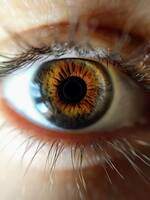



 The reaction triggers the symptoms you recognize as your allergy, such as a runny nose and itchy eyes.